VS

Mercedes CLA Coupe vs VW ID.7 comparison

Compare performance (354 HP vs 340 HP), boot space and price (39,600 £ vs 46,400 £ ) at a glance. Find out which car is the better choice for you – Mercedes CLA Coupe or VW ID.7?

Mercedes CLA Coupe vs VW ID.7: Key differences

Mercedes CLA Coupe

4.8 (2 Reviews)
rate
  • a bit cheaper
  • only slightly more power
  • a bit more efficient
  • a bit more electric range
  • a bit quicker 0–100 km/h
  • noticeably lighter
details

VW ID.7

4 (4 Reviews)
rate
  • noticeably more trunk space
details

All details on performance, efficiency, range and trunk space can be found in the technical comparison below – including user reviews for both models.

By Achim Sedelmaier

CLA Coupe

Luxury Meets Innovation: Mercedes CLA Coupé VS VW ID.7

When it comes to modern automotive excellence, two names stand out this season: the Mercedes CLA Coupé and the VW ID.7. Both are paragons of their respective classes, offering unique features and groundbreaking technology. As they square off, we delve into the intricacies that define these models and how they claim their space on the market.

ID.7

Performance and Power: The Heart of the Machines

The Mercedes CLA Coupé, true to its luxury lineage, offers a diverse range of engines from Petrol MHEV to Diesel and Plugin Hybrid options. A particular highlight is its impressive power spread, ranging from 150 HP to a staggering 421 HP. Drivers can enjoy the visceral thrill of acceleration with 0-100 km/h times as low as 4.1 seconds in the top-range model. The CLA Coupé is engineered for speed, achieving a maximum speed of 270 km/h while maintaining a balance with fuel economy, offering consumption rates as low as 4.9 - 8.9 L/100km, depending on the engine choice.

On the other hand, the VW ID.7 champions pure electric driving. Available in rear-wheel and all-wheel drive configurations, it boasts a robust power capacity, peaking at 340 HP with a swift 0-100 km/h in 5.4 seconds. Its astonishing range, stretching up to 709 km, redefines long-distance electric travel, making range anxiety a thing of the past. Composed efficiency sees the ID.7 consuming an economical 13.6-16.2 kWh/100km, paired with a remarkable zero CO2 emissions, reflecting its green credentials as a leader of sustainable motoring.


CLA Coupe

Technological Advancements and Interior Comfort

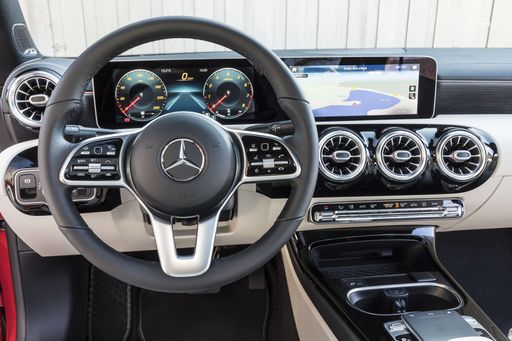
Infused with cutting-edge technology, the CLA Coupé presents a luxurious cabin equipped with the latest in automotive tech. Featuring a modern infotainment system, sophisticated driver aids, and a meticulously crafted interior, it promises premium comfort and convenience. It accommodates five passengers with a four-door coupe styling that doesn’t compromise on trunk capacity, offering up to 460 liters of storage space.

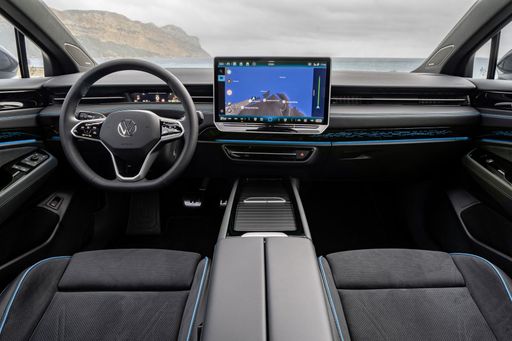
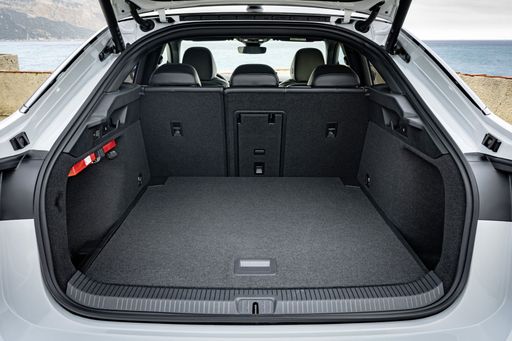
The VW ID.7, in contrast, stands as a marvel of contemporary electric vehicle innovation. Its interior is designed for function and flair, incorporating advanced tech systems aiming to offer a seamless driving experience. Roomy and practical, the ID.7 offers a generous cargo space of 532 liters, aided by its hatchback body style that allows for flexible space usage. The interiors are replete with sustainable materials, emphasizing eco-conscious luxury.

ID.7

Design and Exterior Features

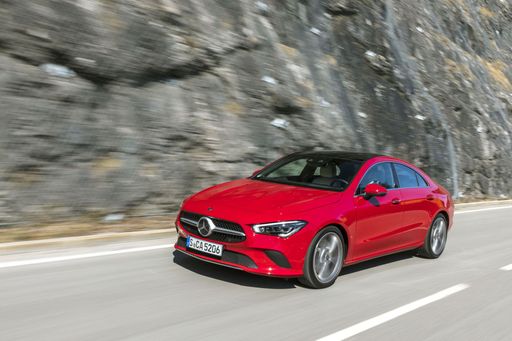
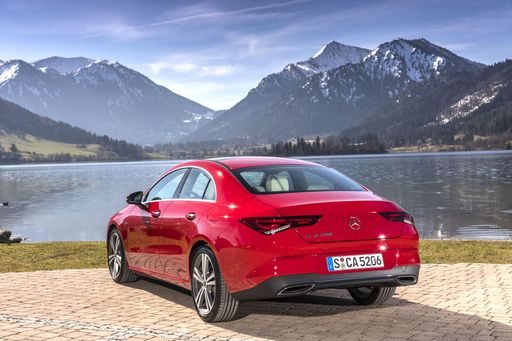
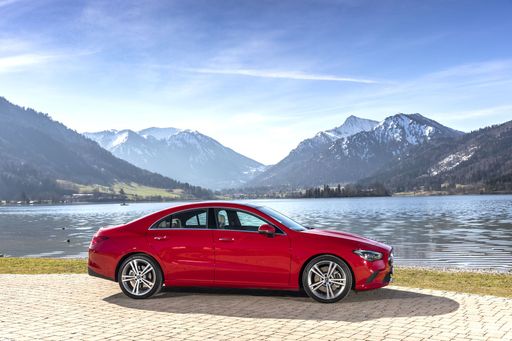
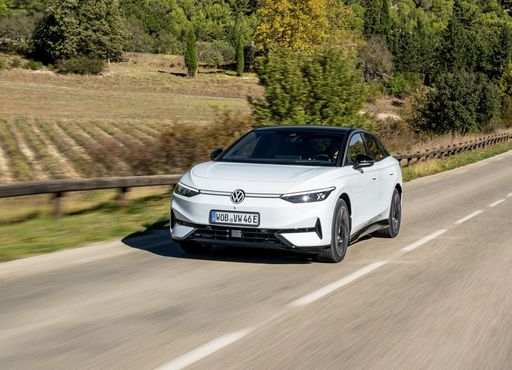
Externally, the Mercedes CLA Coupé radiates elegance and style, characterized by its aerodynamic silhouette and bold design cues. With dimensions of 4695 mm in length and a height of 1430 mm, its coupe-like features offer both beauty and practical performance aerodynamics.

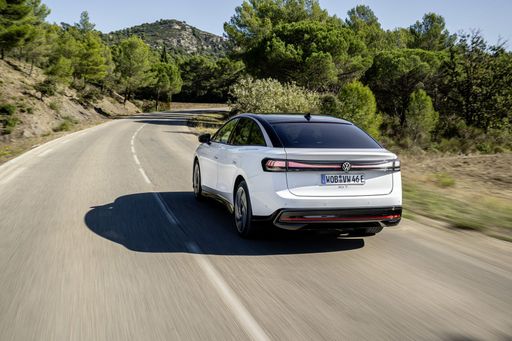
The VW ID.7 exudes a futuristic aura, encapsulating a harmonious blend of esthetic appeal and aerodynamic efficiency. Measuring 4961 mm in length and standing 1536 mm tall, this hatchback not only looks striking but also cuts through the air with minimal drag, enhancing its electric range capabilities.

CLA Coupe

Verdict: Personal Preferences and Priorities

In conclusion, choosing between the Mercedes CLA Coupé and the VW ID.7 boils down to personal priorities. The CLA Coupé is an excellent choice for traditionalists who appreciate the blend of conventional luxury with modern tech. Meanwhile, those seeking cutting-edge electric mobility will find the VW ID.7 a perfect companion, offering state-of-the-art innovations and sustainability at its core.

Both vehicles are titans in their domain, and whether you lean toward luxury or sustainability, they collectively underline ongoing advancements in the automotive world.

Here’s where it gets real: The technical differences in detail

CLA Coupe

Costs and Efficiency:

When it comes to price and running costs, the biggest differences usually appear. This is often where you see which car fits your budget better in the long run.

Mercedes CLA Coupe is a bit cheaper – starting at 39,600 £ , while the VW ID.7 costs 46,400 £ . That’s a price difference of around 6,739 £.

In terms of energy consumption, the Mercedes CLA Coupe is a bit more efficient: consuming 12.2 kWh/100km compared to 13.6 kWh/100km for the VW ID.7. That’s a difference of about 1.4 kWh/100km.

As for electric range, the Mercedes CLA Coupe offers a bit more range – reaching up to 791 km, about 83 km more than the VW ID.7.

ID.7

Engine and Performance:

Power, torque and acceleration are the classic benchmarks for car enthusiasts – and here, some clear differences start to show.

When it comes to engine power, the Mercedes CLA Coupe offers only slightly more power – delivering 354 HP compared to 340 HP. That’s roughly 14 HP more horsepower.

When accelerating from 0 to 100 km/h, the Mercedes CLA Coupe is a bit quicker – completing the sprint in 4.9 s, while the VW ID.7 takes 5.4 s. That’s about 0.5 s quicker.

Looking at top speed, the Mercedes CLA Coupe is somewhat faster – reaching 210 km/h, while the VW ID.7 tops out at 180 km/h. The difference is around 30 km/h.

There’s also a difference in torque: the VW ID.7 delivers clearly more torque with 679 Nm compared to 515 Nm. That’s about 164 Nm more.

CLA Coupe

Space and Everyday Use:

Beyond pure performance, interior space and usability matter most in daily life. This is where you see which car is more practical and versatile.

Both vehicles offer seating for 5 people.

In terms of curb weight, Mercedes CLA Coupe is noticeably lighter – 1,695 kg compared to 2,180 kg. The difference is around 485 kg.

Looking at boot space, the VW ID.7 offers noticeably more boot space – 532 L compared to 405 L. That’s a difference of about 127 L.

When it comes to payload, the VW ID.7 carries marginally more – 465 kg compared to 455 kg. That’s a difference of about 10 kg.

Who wins the race in the data check?

The Mercedes CLA Coupe sits just ahead overall in the objective data comparison.
This result only shows which model scores more points on paper – not which of the two cars feels right for you.

from £39,600
CLA Coupe

Mercedes CLA Coupe

  • Engine Type : Electric, Petrol MHEV
  • Transmission : Automatic
  • Drive Type : Rear-Wheel Drive, All-Wheel Drive, Front-Wheel Drive
  • Power HP : 156 - 354 HP
  • Consumption L/100km : 4.9 - 5.3 L/100km
  • Consumption kWh/100km : 12.2 - 12.6 kWh/100km
  • Electric Range : 541 - 791 km
Mercedes CLA Coupe
VW ID.7

Costs and Consumption

View detailed analysis

Engine and Performance

View detailed analysis

Dimensions and Body

View detailed analysis

Mercedes CLA Coupe

The Mercedes CLA Coupe cuts a rakish silhouette that blends sporty coupe lines with everyday practicality, giving style-minded buyers a premium image without shouting. Inside it feels more luxurious than its size suggests, with a slick cabin, intuitive tech and a composed ride — the kind of car that parties in the city and still shows up polished on Sunday morning.

details

VW ID.7

VW ID.7 arrives as Volkswagen's electric grand tourer, pairing a low-slung, aerodynamic silhouette with a calm, understated interior that prioritizes comfort and space. It’s a sensible choice for buyers who want a relaxed, high-tech cruiser that covers motorway miles with poise rather than bravado.

details
Mercedes CLA Coupe
VW ID.7

Costs and Consumption

Price
39,600 - 59,300 £
Price
46,400 - 54,200 £
Consumption L/100km
4.9 - 5.3 L/100km
Consumption L/100km
-
Consumption kWh/100km
12.2 - 12.6 kWh/100km
Consumption kWh/100km
13.6 - 16.2 kWh/100km
Electric Range
541 - 791 km
Electric Range
594 - 708 km
Battery Capacity
58 kWh
Battery Capacity
77 - 86 kWh
co2
0 - 120 g/km
co2
0 g/km
Fuel tank capacity
-
Fuel tank capacity
-

Dimensions and Body

Body Type
Coupe
Body Type
Hatchback
Seats
5
Seats
5
Doors
4
Doors
5
Curb weight
1,695 - 2,135 kg
Curb weight
2,180 - 2,325 kg
Trunk capacity
405 L
Trunk capacity
532 L
Length
4,723 mm
Length
4,961 mm
Width
1,855 mm
Width
1,862 mm
Height
1,468 mm
Height
1,535 - 1,536 mm
Max trunk capacity
-
Max trunk capacity
1,586 L
Payload
430 - 455 kg
Payload
460 - 465 kg

Engine and Performance

Engine Type
Electric, Petrol MHEV
Engine Type
Electric
Transmission
Automatic
Transmission
Automatic
Transmission Detail
Reduction Gearbox, Dual-Clutch Automatic
Transmission Detail
Reduction Gearbox
Drive Type
Rear-Wheel Drive, All-Wheel Drive, Front-Wheel Drive
Drive Type
Rear-Wheel Drive, All-Wheel Drive
Power HP
156 - 354 HP
Power HP
286 - 340 HP
Acceleration 0-100km/h
4.9 - 8.8 s
Acceleration 0-100km/h
5.4 - 6.6 s
Max Speed
210 km/h
Max Speed
180 km/h
Torque
280 - 515 Nm
Torque
545 - 679 Nm
Number of Cylinders
4
Number of Cylinders
-
Power kW
115 - 260 kW
Power kW
210 - 250 kW
Engine capacity
1,499 cm3
Engine capacity
-

General

Model Year
2,025 - 2,026
Model Year
2,023 - 2,024
CO2 Efficiency Class
A, C, D
CO2 Efficiency Class
A
Brand
Mercedes-Benz
Brand
VW
DriveDuel uses data analysis and artificial intelligence to evaluate vehicle data and create content. Content is regularly reviewed and improved. The displayed prices are estimates based on German list prices, adjusted to the respective country’s VAT. Country-specific registration taxes are not included. This information is not legally binding.