VS

Mercedes E-Class Estate vs Mercedes GLB comparison

Compare performance (585 HP vs 354 HP), boot space and price (52,600 £ vs 43,200 £ ) at a glance. Find out which car is the better choice for you – Mercedes E-Class Estate or Mercedes GLB?

Mercedes E-Class Estate vs Mercedes GLB: Key differences

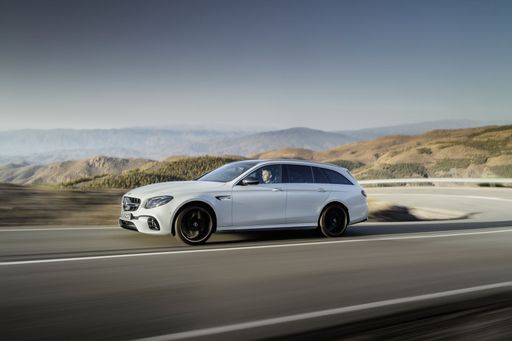
Mercedes E-Class Estate

  • markedly more power
  • clearly more efficient
  • noticeably quicker 0–100 km/h
  • slightly more trunk space
details

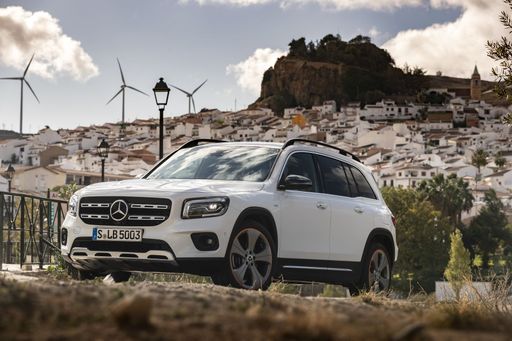
Mercedes GLB

3.6 (4 Reviews)
rate
  • markedly cheaper
  • clearly more electric range
  • very slightly lighter
details

All details on performance, efficiency, range and trunk space can be found in the technical comparison below – including user reviews for both models.

By Achim Sedelmaier

E-Class Estate

Head-to-Head: Mercedes GLB vs. Mercedes E-Klass T-Modell

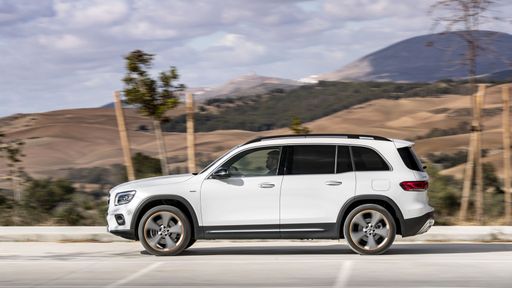
When it comes to luxury vehicles, Mercedes-Benz stands as a hallmark of sophistication and innovation. In this comparison, we will explore the dynamic and versatile Mercedes GLB, an SUV that's perfect for family adventures, and the elegantly poised Mercedes E-Klass T-Modell, a wagon that exemplifies class and utility. Both vehicles come with their own impressive technical specifications and cutting-edge features. Let’s dive deeper into what each model offers.
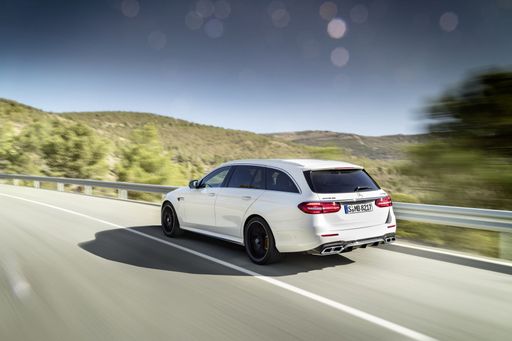
GLB

Powertrain and Performance

The Mercedes GLB offers a variety of engine types, including Petrol MHEV and Diesel, outfitted with a dual-clutch automatic transmission. Its power output ranges from 116 HP to 320 HP, with fuel efficiency between 5.6 and 9 L/100 km. It's available in both front-wheel and all-wheel-drive configurations, making it versatile for varied driving conditions. The GLB reaches speeds up to 250 km/h, with acceleration from 0-100 km/h in as fast as 5.5 seconds, depending on the engine selection.

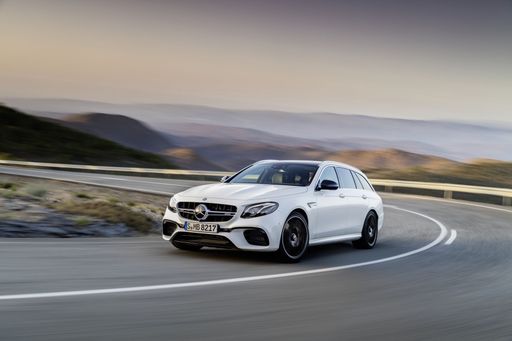
Conversely, the Mercedes E-Klass T-Modell offers Diesel MHEV, Plugin Hybrid, and Petrol MHEV engine options. The E-Klass features automatic transmission, and its power ranges from 186 HP to an impressive 585 HP. It also includes all-wheel and rear-wheel drive options. The fuel consumption varies greatly depending on the engine, between a meager 0.5 L/100 km for the plugin hybrid to a conventional 7.9 L/100 km for petrol variants. It's capable of reaching similar top speeds as the GLB, with a maximum of 250 km/h and accelerates from 0-100 km/h as swiftly as 4.1 seconds.

E-Class Estate

Innovative Features and Technology

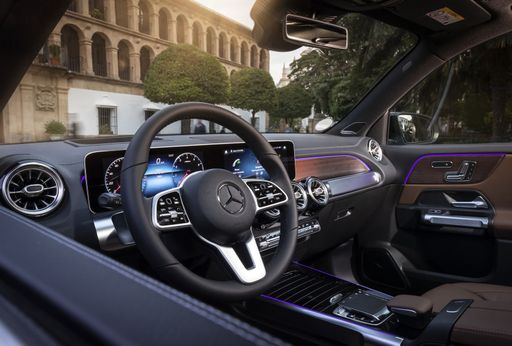
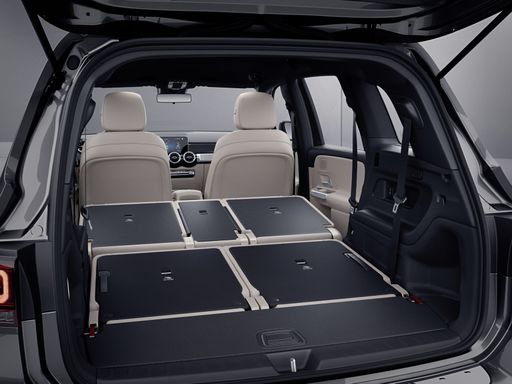
Both vehicles boast the latest in automotive technology. The GLB, with its advanced infotainment system and connectivity options, makes every drive engaging and comfortable. Its capacity for adventure is complemented by a spacious interior and ample trunk space of up to 570 liters, ideal for families on the go.

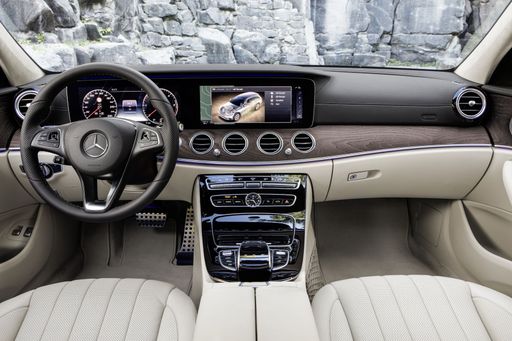
The E-Klass T-Modell stands out with its plugin hybrid variant offering an electric range of up to 110 km, emphasizing eco-friendly driving without sacrificing performance. Its interior is plush with modern amenities, ensuring both driver and passengers experience a sumptuous ride. The wagon also offers a larger trunk capacity of 615 liters, providing the ultimate in practicality for both everyday use and extended travels.

GLB

Design and Dimensions

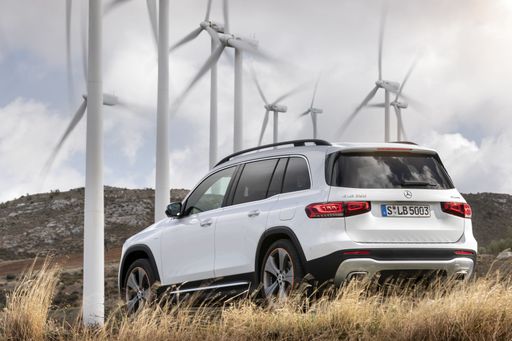
As an SUV, the Mercedes GLB is slightly shorter and taller, measuring up to 4650 mm in length and 1692 mm in height. This gives it a robust, upright presence suitable for both urban and rugged environments. Its athletic styling complements its versatile functionality.

The E-Klass T-Modell, characterized by its wagon body, is longer at approximately 4959 mm but lower in height at around 1470 mm. Its streamlined shape exudes elegance and class, making it an excellent choice for those seeking sophistication with space and comfort.

E-Class Estate

Conclusion: Choosing Your Mercedes

In conclusion, both the Mercedes GLB and the E-Klass T-Modell deliver exceptional performance, cutting-edge technology, and luxurious comfort. The choice between the two depends largely on your lifestyle and driving needs. If you seek a versatile vehicle capable of handling varied road conditions and family adventures, the GLB is your ideal match. However, if you prefer a more refined ride with eco-friendly options and sophisticated styling, the E-Klass T-Modell stands ready to impress. Either way, both models reaffirm Mercedes-Benz’s commitment to excellence and innovation.

Here’s where it gets real: The technical differences in detail

E-Class Estate

Costs and Efficiency:

Price and efficiency are often the first things buyers look at. Here it becomes clear which model has the long-term edge – whether at the pump, the plug, or in purchase price.

Mercedes GLB is markedly cheaper – starting at 43,200 £ , while the Mercedes E-Class Estate costs 52,600 £ . That’s a price difference of around 9,435 £.

Fuel consumption also shows a difference: the Mercedes E-Class Estate uses 1.7 L/100km and is clearly more efficient than the Mercedes GLB with 5.7 L/100km. The difference is about 4 L/100km.

As for electric range, the Mercedes GLB offers clearly more range – reaching up to 631 km, about 522 km more than the Mercedes E-Class Estate.

GLB

Engine and Performance:

Under the bonnet, it becomes clear which model is tuned for sportiness and which one takes the lead when you hit the accelerator.

When it comes to engine power, the Mercedes E-Class Estate offers markedly more power – delivering 585 HP compared to 354 HP. That’s roughly 231 HP more horsepower.

When accelerating from 0 to 100 km/h, the Mercedes E-Class Estate is noticeably quicker – completing the sprint in 4.1 s, while the Mercedes GLB takes 5.5 s. That’s about 1.4 s quicker.

There’s also a difference in torque: the Mercedes E-Class Estate delivers noticeably more torque with 750 Nm compared to 515 Nm. That’s about 235 Nm more.

E-Class Estate

Space and Everyday Use:

Beyond pure performance, interior space and usability matter most in daily life. This is where you see which car is more practical and versatile.

Both vehicles offer seating for 5 people.

In terms of curb weight, Mercedes GLB is very slightly lighter – 1,840 kg compared to 1,900 kg. The difference is around 60 kg.

Looking at boot space, the Mercedes E-Class Estate offers slightly more boot space – 615 L compared to 540 L. That’s a difference of about 75 L.

When it comes to payload, the Mercedes E-Class Estate carries noticeably more – 645 kg compared to 505 kg. That’s a difference of about 140 kg.

Who wins the race in the data check?

The Mercedes E-Class Estate holds a decisive overall lead in the objective data comparison.
This result only shows which model scores more points on paper – not which of the two cars feels right for you.

from £52,600
E-Class Estate

Mercedes E-Class Estate

  • Engine Type Petrol MHEV, Plugin Hybrid, Diesel MHEV
  • Transmission Automatic
  • Drive Type All-Wheel Drive, Rear-Wheel Drive
  • Power HP 186 - 585 HP
  • Consumption L/100km 1.7 - 7.9 L/100km
  • Electric Range 97 - 109 km
Mercedes E-Class Estate
Mercedes GLB

Costs and Consumption

View detailed analysis

Engine and Performance

View detailed analysis

Dimensions and Body

View detailed analysis

Mercedes E-Class Estate

The E‑Class Estate blends executive elegance with genuine everyday practicality, wrapping luxury materials and a serene ride in a wagon silhouette that never looks apologetic. It’s the perfect choice for buyers who need grown-up luggage space without sacrificing comfort, refinement or a touch of driving enjoyment.

details

Mercedes GLB

The Mercedes GLB is a compact luxury SUV that blends smart packaging with a polished, composed driving experience. Its flexible interior and premium feel make it a sensible pick for buyers who want Mercedes comfort and practicality in a smaller footprint.

details
Mercedes E-Class Estate
Mercedes GLB

Costs and Consumption

Price
52,600 - 121,800 £
Price
43,200 - 62,400 £
Consumption L/100km
1.7 - 7.9 L/100km
Consumption L/100km
5.7 - 6.1 L/100km
Consumption kWh/100km
-
Consumption kWh/100km
15.4 - 15.9 kWh/100km
Electric Range
97 - 109 km
Electric Range
431 - 631 km
Battery Capacity
-
Battery Capacity
-
co2
44 - 181 g/km
co2
0 - 138 g/km
Fuel tank capacity
-
Fuel tank capacity
-

Dimensions and Body

Body Type
Estate
Body Type
SUV
Seats
5
Seats
5
Doors
-
Doors
-
Curb weight
1,900 - 2,435 kg
Curb weight
1,840 - 2,280 kg
Trunk capacity
460 - 615 L
Trunk capacity
540 L
Length
-
Length
-
Width
1,880 mm
Width
1,861 mm
Height
-
Height
-
Max trunk capacity
-
Max trunk capacity
-
Payload
540 - 645 kg
Payload
485 - 505 kg

Engine and Performance

Engine Type
Petrol MHEV, Plugin Hybrid, Diesel MHEV
Engine Type
Electric, Full Hybrid
Transmission
Automatic
Transmission
Automatic
Transmission Detail
Automatic Gearbox
Transmission Detail
Reduction Gearbox
Drive Type
All-Wheel Drive, Rear-Wheel Drive
Drive Type
Rear-Wheel Drive, All-Wheel Drive
Power HP
186 - 585 HP
Power HP
156 - 354 HP
Acceleration 0-100km/h
4.1 - 8.8 s
Acceleration 0-100km/h
5.5 - 9.7 s
Max Speed
-
Max Speed
-
Torque
320 - 750 Nm
Torque
280 - 515 Nm
Number of Cylinders
4 - 6
Number of Cylinders
4
Power kW
137 - 430 kW
Power kW
115 - 260 kW
Engine capacity
1,993 - 2,999 cm3
Engine capacity
1,499 cm3

General

Model Year
2,024 - 2,025
Model Year
2026
CO2 Efficiency Class
G, E, F, B, D
CO2 Efficiency Class
A, D, E
Brand
Mercedes-Benz
Brand
Mercedes-Benz
DriveDuel uses data analysis and artificial intelligence to evaluate vehicle data and create content. Content is regularly reviewed and improved. The displayed prices are estimates based on German list prices, adjusted to the respective country’s VAT. Country-specific registration taxes are not included. This information is not legally binding.