VS

Mercedes EQB vs Kia EV9 comparison

Compare performance (292 HP vs 508 HP), boot space and price (45,900 £ vs 54,200 £ ) at a glance. Find out which car is the better choice for you – Mercedes EQB or Kia EV9?

Mercedes EQB vs Kia EV9: Key differences

Mercedes EQB

4.3 (3 Reviews)
rate
  • a bit cheaper
  • visibly more efficient
  • a bit lighter
  • clearly more trunk space
details

Kia EV9

5 (1 Reviews)
rate
  • considerably more power
  • marginally more electric range
  • noticeably quicker 0–100 km/h
details

All details on performance, efficiency, range and trunk space can be found in the technical comparison below – including user reviews for both models.

By Achim Sedelmaier

EQB

Introduction: The Electrifying Showdown

The surge in electric vehicle (EV) popularity has sparked fierce competition in the automotive market, particularly in the SUV segment. Today, we pit two titans against each other: the Kia EV9 and the Mercedes EQB. While both vehicles boast impressive technological innovations and sustainability credentials, they cater to slightly different audiences. Let’s dive into a detailed comparison of these electric powerhouses!
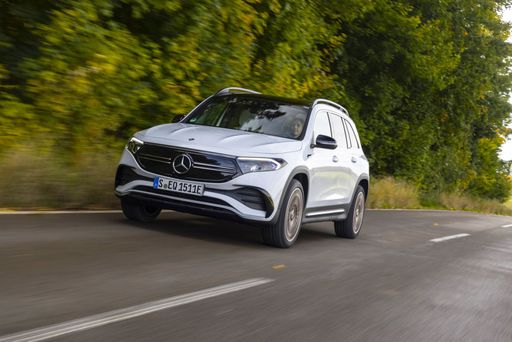
EV9

Technical Specifications Overview

Beneath the sleek exteriors of the Kia EV9 and Mercedes EQB lies a treasure trove of technical specifications that define their performance and capabilities. The Kia EV9 showcases two prominent variants with choices in battery capacity and power output, tapping into both rear-wheel and all-wheel drive systems. Conversely, the EQB features a more conventional layout with front-wheel and all-wheel drive options, delivering competitive power figures.

EQB

Power and Performance

The Kia EV9 rises to the challenge with impressive power output ranging from 204 HP in its base model to a staggering 385 HP in the top-tier variant. With torque figures peaking at 700 Nm, the EV9 offers rapid acceleration capabilities, clocking 0-100 km/h in as little as 5.3 seconds. On the other hand, the Mercedes EQB, while slightly less powerful, offers performance that suits daily commuting, with outputs from 190 HP to 292 HP and a brisk acceleration of 0-100 km/h in 6.2 seconds.

Both vehicles feature automatic transmissions paired with reduction gearboxes for optimized performance. However, the Kia EV9's maximum speed reaches 200 km/h, while the EQB is capped at a lower 160 km/h, reflecting the Kia's sportier aspirations.

EV9

Range and Efficiency

Range anxiety is a common concern among EV buyers, but both the Kia EV9 and Mercedes EQB excel in this area. The EV9 offers an impressive electric range of up to 563 km with its larger battery capacity of 99.8 kWh, whereas the EQB delivers a more modest range of up to 533 km with its maximum battery option of 70.5 kWh.

In terms of consumption, the EQB takes the lead in efficiency with figures as low as 15.2 kWh/100 km. The Kia EV9, while slightly less efficient with 20.2 kWh/100 km in its base version, still maintains a competitive edge in the market.

EQB

Design and Dimensions

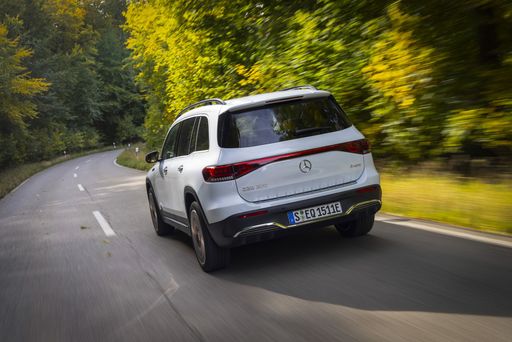
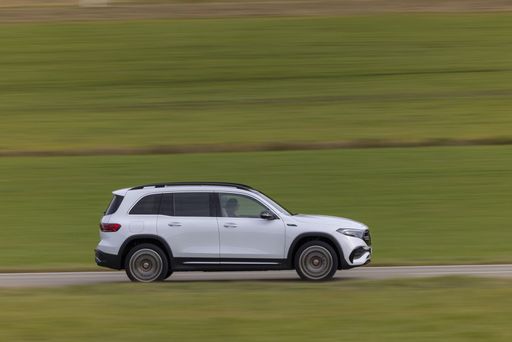
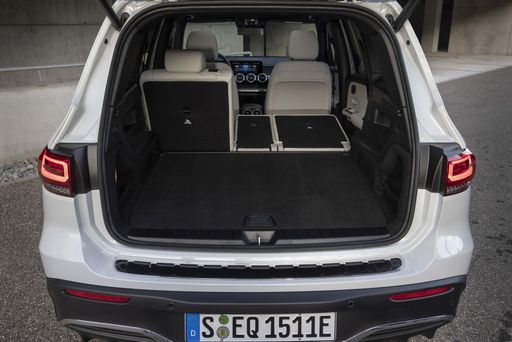
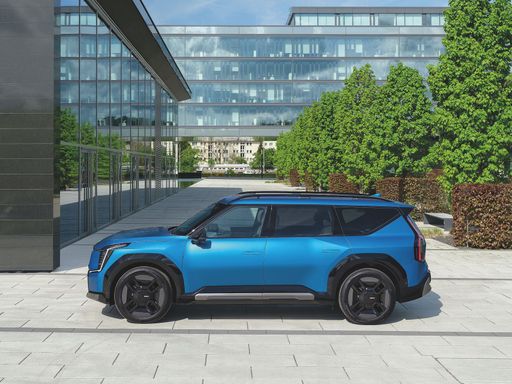
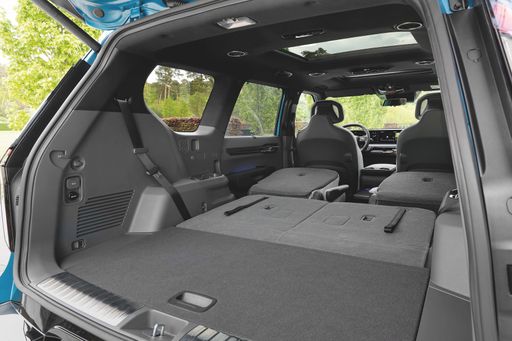
From a design perspective, both SUVs exude sophistication and modernity, appealing to buyers seeking style and functionality. The Kia EV9 measures 5010 mm in length, 1980 mm in width, and 1755 mm in height, making it a spacious option for families. In comparison, the Mercedes EQB is more compact, measuring at 4684 mm in length, 1834 mm in width, and 1654 mm in height. Despite its smaller stature, the EQB impresses with a trunk capacity of 495 liters, overshadowing the EV9’s 333 liters.

EV9

Interior and Technology

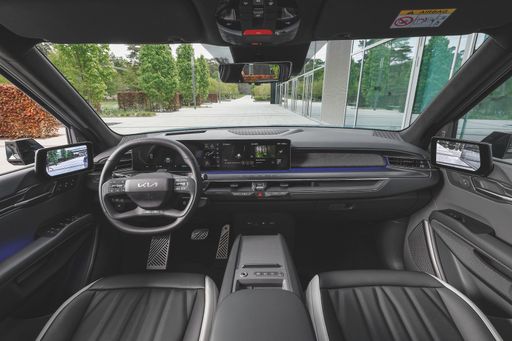
Inside, both vehicles promise a blend of comfort and cutting-edge technology. The Kia EV9 can accommodate up to seven passengers, making it an excellent choice for larger families, while the EQB offers seating for five. Each model integrates advanced infotainment systems and driver assistance technologies, meeting the demands of the modern driver.

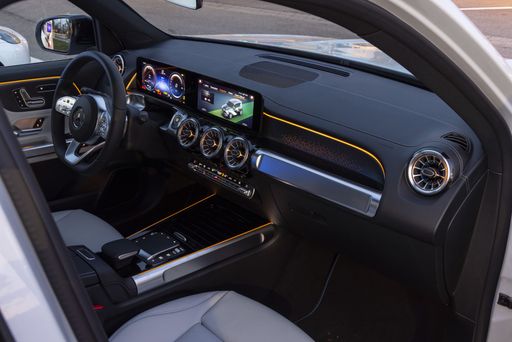
The Mercedes EQB dazzles with a refined interior ambiance, showcasing premium materials and state-of-the-art features synonymous with the Mercedes brand. Meanwhile, the Kia EV9 excels with its smart layout and emphasis on user-friendly interfaces, particularly appealing to tech-savvy families.

EQB

Conclusion: Which One to Choose?

Choosing between the Kia EV9 and Mercedes EQB ultimately boils down to individual preferences and needs. The Kia EV9 is an exhilarating option for those desiring power, space, and range, while the Mercedes EQB, with its superior efficiency and luxurious feel, caters well to those prioritizing comfort and brand prestige. Whatever your choice, both vehicles are formidable players in the ever-evolving electric SUV market, paving the way towards a sustainable and electrifying future.

Here’s where it gets real: The technical differences in detail

EQB

Costs and Efficiency:

Looking at overall running costs, both models reveal some interesting differences in everyday economy.

Mercedes EQB is a bit cheaper – starting at 45,900 £ , while the Kia EV9 costs 54,200 £ . That’s a price difference of around 8,293 £.

In terms of energy consumption, the Mercedes EQB is visibly more efficient: consuming 15.2 kWh/100km compared to 19.5 kWh/100km for the Kia EV9. That’s a difference of about 4.3 kWh/100km.

As for electric range, the Kia EV9 offers marginally more range – reaching up to 563 km, about 28 km more than the Mercedes EQB.

EV9

Engine and Performance:

Power, torque and acceleration are the classic benchmarks for car enthusiasts – and here, some clear differences start to show.

When it comes to engine power, the Kia EV9 offers considerably more power – delivering 508 HP compared to 292 HP. That’s roughly 216 HP more horsepower.

When accelerating from 0 to 100 km/h, the Kia EV9 is noticeably quicker – completing the sprint in 4.6 s, while the Mercedes EQB takes 6.2 s. That’s about 1.6 s quicker.

There’s also a difference in torque: the Kia EV9 delivers visibly more torque with 740 Nm compared to 520 Nm. That’s about 220 Nm more.

EQB

Space and Everyday Use:

Whether family car or daily driver – which one offers more room, flexibility and comfort?

Seats: Kia EV9 offers more seats – 7 vs 5.

In terms of curb weight, Mercedes EQB is a bit lighter – 2,105 kg compared to 2,392 kg. The difference is around 287 kg.

Looking at boot space, the Mercedes EQB offers clearly more boot space – 495 L compared to 333 L. That’s a difference of about 162 L.

When it comes to payload, the Kia EV9 carries clearly more – 615 kg compared to 435 kg. That’s a difference of about 180 kg.

Who wins the race in the data check?

The Kia EV9 is decisively ahead in the objective data comparison.
This result only shows which model scores more points on paper – not which of the two cars feels right for you.

from £54,200
EV9

Kia EV9

  • Engine Type : Electric
  • Transmission : Automatic
  • Drive Type : Rear-Wheel Drive, All-Wheel Drive
  • Power HP : 204 - 508 HP
  • Consumption kWh/100km : 19.5 - 22.8 kWh/100km
  • Electric Range : 443 - 563 km
Mercedes EQB
Kia EV9

Costs and Consumption

View detailed analysis

Engine and Performance

View detailed analysis

Dimensions and Body

View detailed analysis

Mercedes EQB

The Mercedes EQB is an electric compact SUV that dresses Mercedes' premium feel in practical clothing, with flexible seating and a serene, composed ride that turns everyday errands into a small luxury. It won't thrill the enthusiast, but for buyers who want a smart, spacious and well-made EV with tasteful tech and real-world usability, the EQB is a sensible, slightly buttoned-up choice that impresses without shouting.

details

Kia EV9

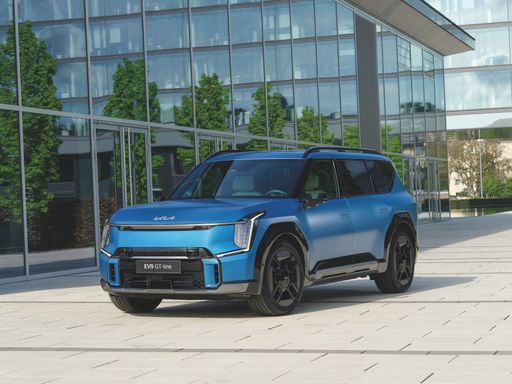
The Kia EV9 is a bold, boxy electric SUV that looks like it could swallow your luggage and the in‑laws, with an interior that feels more lounge than cockpit and a presence that makes smaller rivals suddenly feel shy. On the road it delivers calm long‑distance composure with enough shove to keep overtakes effortless, and its tech and practicality make it an easy, sensible choice for buyers who want electric without compromise.

details
Mercedes EQB
Kia EV9

Costs and Consumption

Price
45,900 - 58,900 £
Price
54,200 - 78,000 £
Consumption L/100km
-
Consumption L/100km
-
Consumption kWh/100km
15.2 - 17.2 kWh/100km
Consumption kWh/100km
19.5 - 22.8 kWh/100km
Electric Range
468 - 535 km
Electric Range
443 - 563 km
Battery Capacity
70.5 kWh
Battery Capacity
-
co2
0 g/km
co2
0 g/km
Fuel tank capacity
-
Fuel tank capacity
-

Dimensions and Body

Body Type
SUV
Body Type
SUV
Seats
5
Seats
6 - 7
Doors
5
Doors
-
Curb weight
2,105 - 2,170 kg
Curb weight
2,392 - 2,664 kg
Trunk capacity
495 L
Trunk capacity
333 L
Length
4,684 mm
Length
-
Width
1,834 mm
Width
1,980 mm
Height
1,654 - 1,689 mm
Height
-
Max trunk capacity
1,710 L
Max trunk capacity
-
Payload
435 kg
Payload
542 - 615 kg

Engine and Performance

Engine Type
Electric
Engine Type
Electric
Transmission
Automatic
Transmission
Automatic
Transmission Detail
Reduction Gearbox
Transmission Detail
Reduction Gearbox
Drive Type
Front-Wheel Drive, All-Wheel Drive
Drive Type
Rear-Wheel Drive, All-Wheel Drive
Power HP
190 - 292 HP
Power HP
204 - 508 HP
Acceleration 0-100km/h
6.2 - 8.9 s
Acceleration 0-100km/h
4.6 - 9.4 s
Max Speed
160 km/h
Max Speed
-
Torque
385 - 520 Nm
Torque
350 - 740 Nm
Number of Cylinders
-
Number of Cylinders
-
Power kW
140 - 215 kW
Power kW
150 - 374 kW
Engine capacity
-
Engine capacity
-

General

Model Year
2,024 - 2,025
Model Year
2025
CO2 Efficiency Class
A
CO2 Efficiency Class
A
Brand
Mercedes-Benz
Brand
Kia
DriveDuel uses data analysis and artificial intelligence to evaluate vehicle data and create content. Content is regularly reviewed and improved. The displayed prices are estimates based on German list prices, adjusted to the respective country’s VAT. Country-specific registration taxes are not included. This information is not legally binding.