
 Deutschland
 France
 Nederland
 Great Britain
 Sverige
 Danmark
 Suomi
Suomi Italia
 Polska
 Česko
Česko España
VS
Mercedes EQV vs Toyota Hilux comparison
Compare performance (204 HP vs 204 HP), boot space and price (50,700 £ vs 45,800 £ ) at a glance. Find out which car is the better choice for you – Mercedes EQV or Toyota Hilux?
Mercedes EQV vs Toyota Hilux: Key differences
All details on performance, efficiency, range and trunk space can be found in the technical comparison below – including user reviews for both models.
EQV
Costs and Efficiency:
When it comes to price and running costs, the biggest differences usually appear. This is often where you see which car fits your budget better in the long run.
Toyota Hilux is slightly cheaper – starting at 45,800 £ , while the Mercedes EQV costs 50,700 £ . That’s a price difference of around 4,898 £.
In terms of energy consumption, the Toyota Hilux is moderately more efficient: consuming 24.3 kWh/100km compared to 27.1 kWh/100km for the Mercedes EQV. That’s a difference of about 2.8 kWh/100km.
As for electric range, the Mercedes EQV offers clearly more range – reaching up to 364 km, about 107 km more than the Toyota Hilux.
Hilux
Engine and Performance:
Under the bonnet, it becomes clear which model is tuned for sportiness and which one takes the lead when you hit the accelerator.
Both models deliver identical power – 204 HP each.
When accelerating from 0 to 100 km/h, the Toyota Hilux is only slightly quicker – completing the sprint in 9.9 s, while the Mercedes EQV takes 10.3 s. That’s about 0.4 s quicker.
There’s also a difference in torque: the Toyota Hilux delivers markedly more torque with 500 Nm compared to 365 Nm. That’s about 135 Nm more.
EQV
Space and Everyday Use:
Beyond pure performance, interior space and usability matter most in daily life. This is where you see which car is more practical and versatile.
Seats: Mercedes EQV offers more seats – 6 vs 5.
In terms of curb weight, Toyota Hilux is a bit lighter – 2,250 kg compared to 2,666 kg. The difference is around 416 kg.
When it comes to payload, the Toyota Hilux carries somewhat more – 960 kg compared to 834 kg. That’s a difference of about 126 kg.
Who wins the race in the data check?
The Toyota Hilux comes out modestly ahead in the objective data comparison.
This result only shows which model scores more points on paper – not which of the two cars feels right for you.
from £45,800
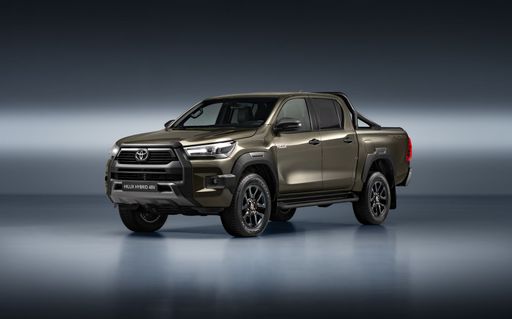
Toyota Hilux
Mercedes EQV
Toyota Hilux
Costs and Consumption
View detailed analysis
View detailed analysis
Engine and Performance
View detailed analysis
View detailed analysis
Dimensions and Body
View detailed analysis
View detailed analysis
Mercedes EQV
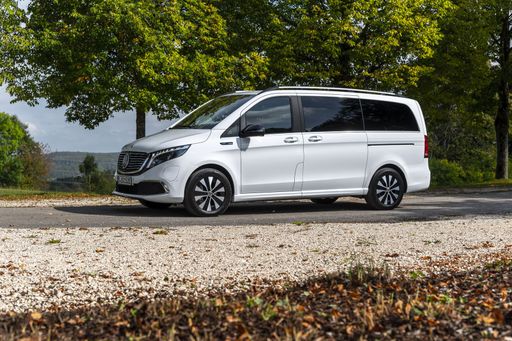
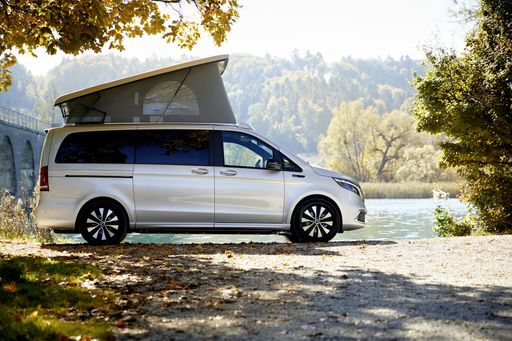
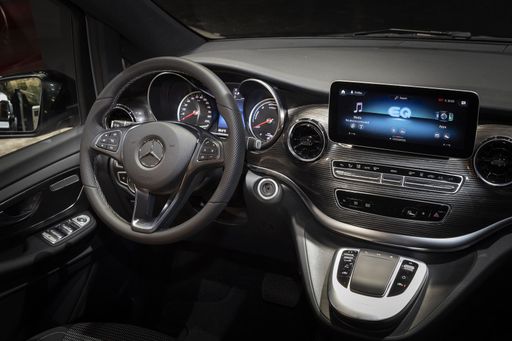
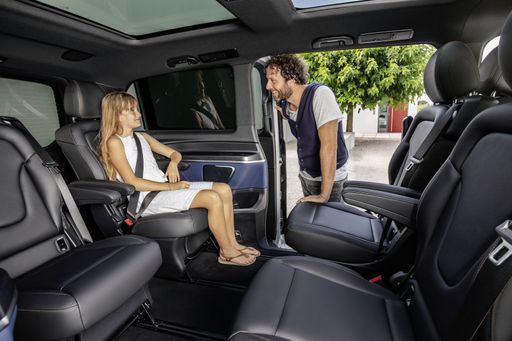
The Mercedes EQV is a serene electric people‑mover that wraps practical interior space in true Mercedes luxury, turning long trips into a first‑class commute. It’s perfect for families and executives who want silent, comfortable transport with a premium feel, and it manages to be both sensible and a little bit smug in the best possible way.
details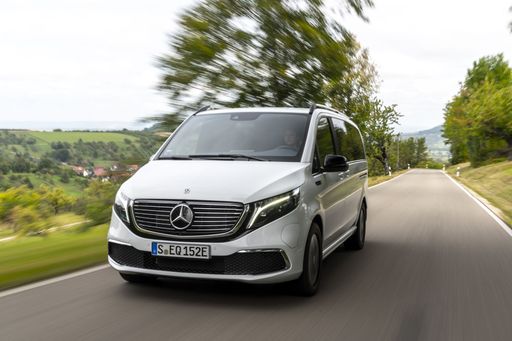
Toyota Hilux
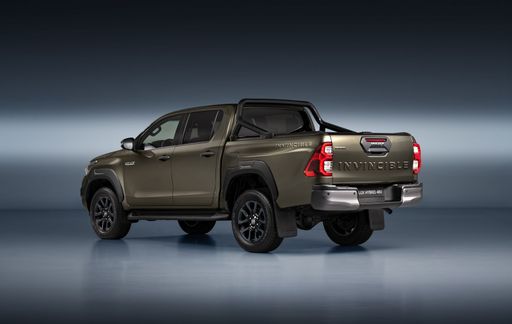
The Toyota Hilux is a no-nonsense pick-up that blends worksite toughness with proper off-road ability, built to shrug off punishment and keep going long after fancier rivals give up. It won’t win any beauty contests, but buyers who want a practical, rugged truck that simply gets the job done will appreciate its honest, hard-working character.
details
Mercedes EQV
Toyota Hilux
Costs and Consumption |
|
|---|---|
|
Price
50,700 - 54,400 £
|
Price
45,800 - 65,500 £
|
|
Consumption L/100km
-
|
Consumption L/100km
9.8 - 10 L/100km
|
|
Consumption kWh/100km
27.1 - 27.5 kWh/100km
|
Consumption kWh/100km
24.3 kWh/100km
|
|
Electric Range
244 - 364 km
|
Electric Range
257 km
|
|
Battery Capacity
60 - 90 kWh
|
Battery Capacity
-
|
|
co2
0 g/km
|
co2
0 - 264 g/km
|
|
Fuel tank capacity
-
|
Fuel tank capacity
-
|
Dimensions and Body |
|
|---|---|
|
Body Type
Bus
|
Body Type
Pickup
|
|
Seats
6
|
Seats
5
|
|
Doors
5
|
Doors
-
|
|
Curb weight
2,666 - 2,863 kg
|
Curb weight
2,250 - 2,420 kg
|
|
Trunk capacity
1,030 - 1,410 L
|
Trunk capacity
-
|
|
Length
5,140 - 5,370 mm
|
Length
-
|
|
Width
1,928 mm
|
Width
1,855 - 1,885 mm
|
|
Height
1,920 - 1,923 mm
|
Height
-
|
|
Max trunk capacity
4,630 - 5,010 L
|
Max trunk capacity
-
|
|
Payload
637 - 834 kg
|
Payload
715 - 960 kg
|
Engine and Performance |
|
|---|---|
|
Engine Type
Electric
|
Engine Type
Diesel MHEV, Electric
|
|
Transmission
Automatic
|
Transmission
Automatic
|
|
Transmission Detail
Reduction Gearbox
|
Transmission Detail
Automatic Gearbox, Reduction Gearbox
|
|
Drive Type
Front-Wheel Drive
|
Drive Type
All-Wheel Drive
|
|
Power HP
204 HP
|
Power HP
196 - 204 HP
|
|
Acceleration 0-100km/h
10.3 - 12.1 s
|
Acceleration 0-100km/h
9.9 s
|
|
Max Speed
140 km/h
|
Max Speed
-
|
|
Torque
365 Nm
|
Torque
474 - 500 Nm
|
|
Number of Cylinders
-
|
Number of Cylinders
4
|
|
Power kW
150 kW
|
Power kW
144 - 150 kW
|
|
Engine capacity
-
|
Engine capacity
2,755 cm3
|
General |
|
|---|---|
|
Model Year
2024
|
Model Year
2,024 - 2,026
|
|
CO2 Efficiency Class
A
|
CO2 Efficiency Class
G, A
|
|
Brand
Mercedes-Benz
|
Brand
Toyota
|
DriveDuel uses data analysis and artificial intelligence to evaluate vehicle data and create content. Content is regularly reviewed and improved.
The displayed prices are estimates based on German list prices, adjusted to the respective country’s VAT. Country-specific registration taxes are not included. This information is not legally binding.