
 Deutschland
 France
 Nederland
 Great Britain
 Sverige
 Danmark
 Suomi
Suomi Italia
 Polska
 Česko
Česko España
VS
Mercedes G-Class vs Suzuki Jimny comparison
Compare performance (605 HP vs 102 HP), boot space and price (106,600 £ vs 25,300 £ ) at a glance. Find out which car is the better choice for you – Mercedes G-Class or Suzuki Jimny?
Mercedes G-Class vs Suzuki Jimny: Key differences
All details on performance, efficiency, range and trunk space can be found in the technical comparison below – including user reviews for both models.
G-Class
Costs and Efficiency:
When it comes to price and running costs, the biggest differences usually appear. This is often where you see which car fits your budget better in the long run.
Suzuki Jimny is substantially cheaper – starting at 25,300 £ , while the Mercedes G-Class costs 106,600 £ . That’s a price difference of around 81,313 £.
Fuel consumption also shows a difference: the Suzuki Jimny uses 7.7 L/100km and is somewhat more efficient than the Mercedes G-Class with 8.7 L/100km. The difference is about 1 L/100km.
Jimny
Engine and Performance:
Power, torque and acceleration are the classic benchmarks for car enthusiasts – and here, some clear differences start to show.
When it comes to engine power, the Mercedes G-Class offers considerably more power – delivering 605 HP compared to 102 HP. That’s roughly 503 HP more horsepower.
When accelerating from 0 to 100 km/h, the Mercedes G-Class is considerably quicker – completing the sprint in 4.4 s, while the Suzuki Jimny takes 12.8 s. That’s about 8.4 s quicker.
There’s also a difference in torque: the Mercedes G-Class delivers significantly more torque with 1,164 Nm compared to 130 Nm. That’s about 1,034 Nm more.
G-Class
Space and Everyday Use:
Cabin size, boot volume and payload all play a role in everyday practicality. Here, comfort and flexibility make the difference.
Seats: Mercedes G-Class offers more seats – 5 vs 2.
In terms of curb weight, Suzuki Jimny is substantially lighter – 1,165 kg compared to 2,485 kg. The difference is around 1,320 kg.
When it comes to payload, the Mercedes G-Class carries clearly more – 715 kg compared to 270 kg. That’s a difference of about 445 kg.
Who wins the race in the data check?
The Mercedes G-Class is far ahead overall in the objective data comparison.
This result only shows which model scores more points on paper – not which of the two cars feels right for you.
from £106,600
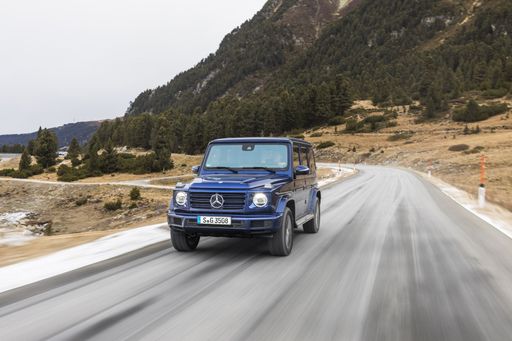
Mercedes G-Class
Mercedes G-Class
Suzuki Jimny
Costs and Consumption
View detailed analysis
View detailed analysis
Engine and Performance
View detailed analysis
View detailed analysis
Dimensions and Body
View detailed analysis
View detailed analysis
Mercedes G-Class
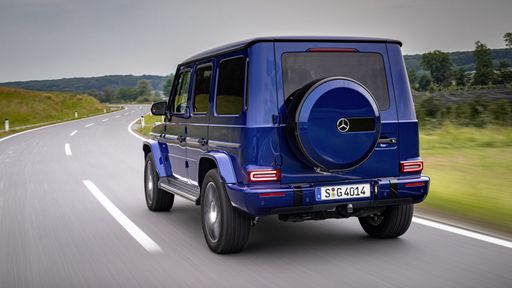
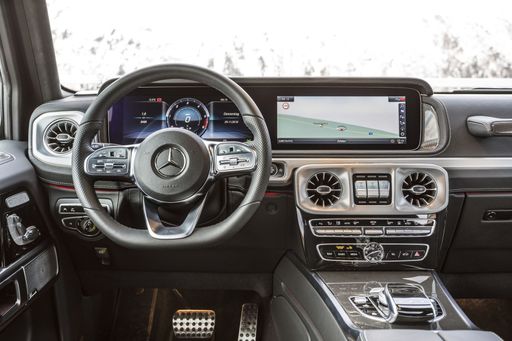
The G-Class, often called the G‑Wagen, is a blocky icon that blends unapologetic off-road prowess with a plush, modern cabin, announcing your arrival before you even step out. It’s equally at home crawling over rocks or cruising city streets, and owning one feels like adopting a very expensive, very capable personality.
details
Suzuki Jimny
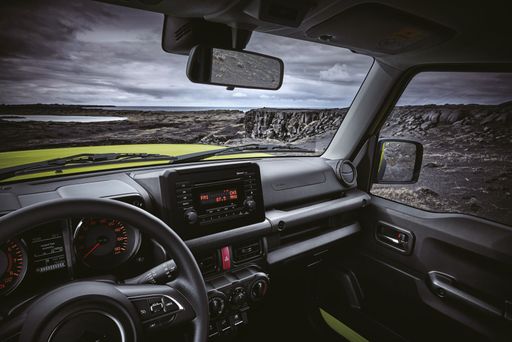
Brimming with raucous charm and unabashed off-road spirit, the Suzuki Jimny makes light work of rough tracks while remaining surprisingly at home in city streets. It's a cheeky, no-nonsense companion for buyers who prefer character over conformity — think go-anywhere attitude in a pocket-sized package.
details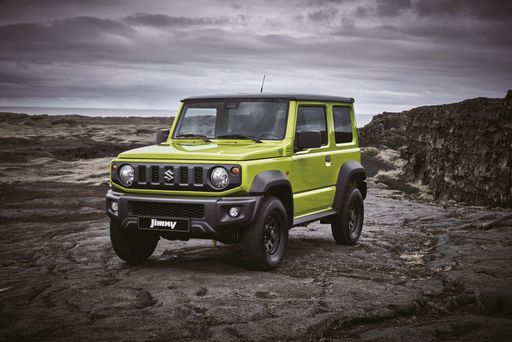
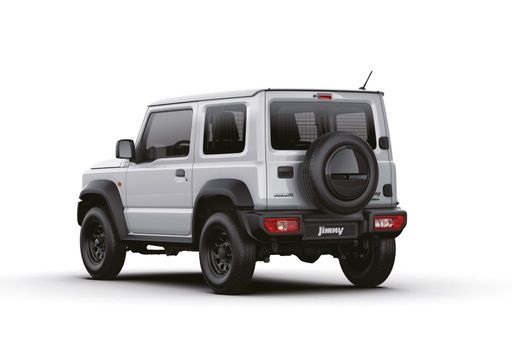

Mercedes G-Class
Suzuki Jimny
Costs and Consumption |
|
|---|---|
|
Price
106,600 - 171,000 £
|
Price
25,300 - 27,700 £
|
|
Consumption L/100km
8.7 - 14.7 L/100km
|
Consumption L/100km
7.7 L/100km
|
|
Consumption kWh/100km
28 kWh/100km
|
Consumption kWh/100km
-
|
|
Electric Range
479 km
|
Electric Range
-
|
|
Battery Capacity
-
|
Battery Capacity
-
|
|
co2
0 - 336 g/km
|
co2
173 g/km
|
|
Fuel tank capacity
-
|
Fuel tank capacity
40 L
|
Dimensions and Body |
|
|---|---|
|
Body Type
Off-Roader
|
Body Type
Off-Roader
|
|
Seats
5
|
Seats
2
|
|
Doors
-
|
Doors
3
|
|
Curb weight
2,485 - 3,085 kg
|
Curb weight
1,165 kg
|
|
Trunk capacity
640 L
|
Trunk capacity
-
|
|
Length
-
|
Length
3,645 mm
|
|
Width
1,931 - 1,984 mm
|
Width
1,645 mm
|
|
Height
-
|
Height
1,705 mm
|
|
Max trunk capacity
-
|
Max trunk capacity
863 L
|
|
Payload
115 - 715 kg
|
Payload
270 kg
|
Engine and Performance |
|
|---|---|
|
Engine Type
Petrol MHEV, Diesel MHEV, Electric
|
Engine Type
Petrol
|
|
Transmission
Automatic
|
Transmission
Manuel
|
|
Transmission Detail
Automatic Gearbox, Reduction Gearbox
|
Transmission Detail
Manual Gearbox
|
|
Drive Type
All-Wheel Drive
|
Drive Type
All-Wheel Drive
|
|
Power HP
387 - 605 HP
|
Power HP
102 HP
|
|
Acceleration 0-100km/h
4.4 - 5.8 s
|
Acceleration 0-100km/h
12.8 s
|
|
Max Speed
-
|
Max Speed
145 km/h
|
|
Torque
760 - 1,164 Nm
|
Torque
130 Nm
|
|
Number of Cylinders
6 - 8
|
Number of Cylinders
4
|
|
Power kW
285 - 445 kW
|
Power kW
75 kW
|
|
Engine capacity
2,989 - 3,982 cm3
|
Engine capacity
1,462 cm3
|
General |
|
|---|---|
|
Model Year
2,025 - 2,026
|
Model Year
2,021 - 2,024
|
|
CO2 Efficiency Class
G, A
|
CO2 Efficiency Class
F
|
|
Brand
Mercedes-Benz
|
Brand
Suzuki
|
DriveDuel uses data analysis and artificial intelligence to evaluate vehicle data and create content. Content is regularly reviewed and improved.
The displayed prices are estimates based on German list prices, adjusted to the respective country’s VAT. Country-specific registration taxes are not included. This information is not legally binding.