VS

Mercedes GLA vs BMW X2 comparison

Compare performance (421 HP vs 300 HP), boot space and price (38,800 £ vs 41,200 £ ) at a glance. Find out which car is the better choice for you – Mercedes GLA or BMW X2?

Mercedes GLA vs BMW X2: Key differences

Mercedes GLA

4.6 (3 Reviews)
rate
  • only slightly cheaper
  • noticeably more power
  • substantially more efficient
  • noticeably quicker 0–100 km/h
  • marginally lighter

BMW X2

4.6 (1 Reviews)
rate
  • visibly more trunk space

All details on performance, efficiency, range and trunk space can be found in the technical comparison below – including user reviews for both models.

GLA

As two German automotive giants, BMW and Mercedes-Benz continue to compete fiercely in the compact SUV segment, the BMW X2 and the Mercedes GLA stand out as top contenders. Both vehicles showcase innovative design, advanced technology, and a range of powertrains. Let’s dive deeper into the comparison of these two luxury SUVs.
X2

Design and Aesthetics

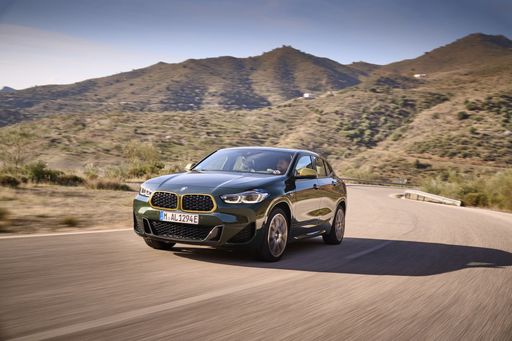
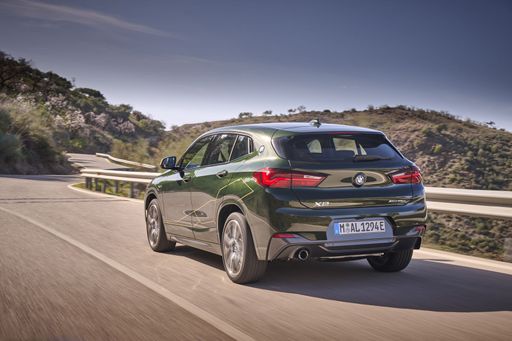
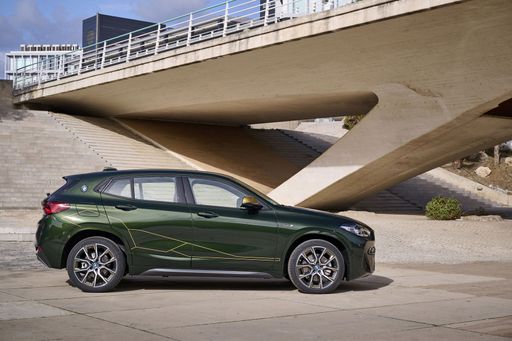
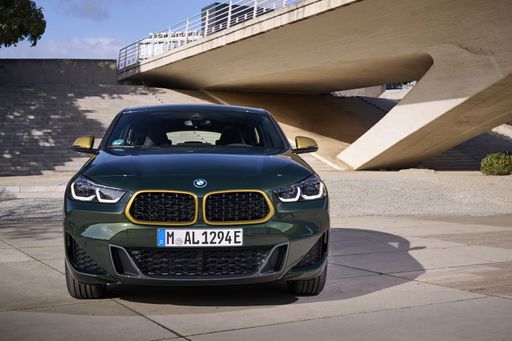
The BMW X2 exhibits a sporty and aggressive design with its sloping roofline and muscular stance, while still offering the practicality expected from an SUV. With dimensions of 4554 mm in length, 1845 mm in width, and a height of 1590 mm, it maintains a bold presence on the road.

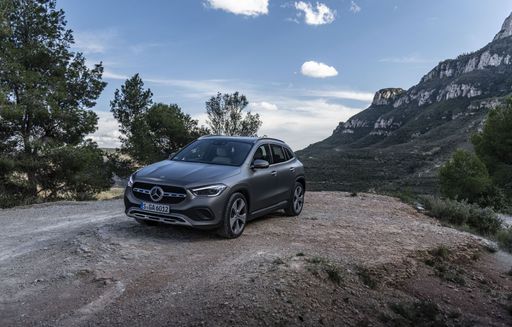
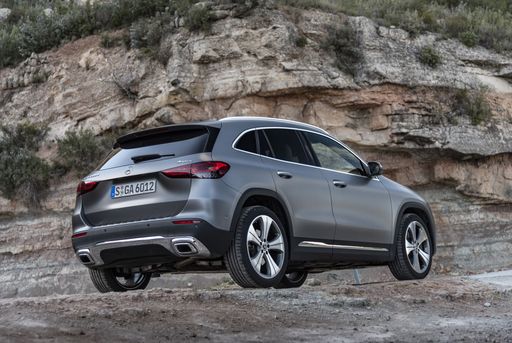
On the other hand, the Mercedes GLA presents a more elegant and refined look, characterized by its sleek lines and slightly more compact dimensions at 4412-4443 mm in length and a width of 1834-1849 mm. Its height of 1616 mm lends a touch of sophistication, enhancing its visual appeal.

GLA

Performance and Powertrains

The BMW X2 offers a wide array of engine options, including diesel, petrol, and MHEV variants, with power outputs ranging from 150 HP to a potent 300 HP. The models also come with 4-cylinder and 3-cylinder configurations, showcasing an impressive torque output of up to 400 Nm. With a maximum speed reaching 250 km/h, the X2 achieves 0-100 km/h in as quick as 5.4 seconds.

Conversely, the Mercedes GLA features an equally diverse lineup, providing both diesel and petrol engines, including plugin hybrid options. Power outputs extend from 150 HP to an impressive 421 HP in the high-end models. Furthermore, the GLA boasts torque levels reaching up to 500 Nm, allowing it to accelerate from 0-100 km/h in as little as 4.3 seconds. Its top speed rivals that of the X2, offering variations up to 270 km/h.

X2

Fuel Efficiency and Environmental Impact

When examining fuel efficiency, the BMW X2 offers commendable figures, ranging from 4.6 L/100km to 5.8 L/100km, depending on the engine variant. These figures reflect a strong commitment to balancing performance with efficiency, also benefiting from a CO2 emission range of 120 g/km to 180 g/km across its lineup.

The Mercedes GLA, while slightly less efficient in its base forms, offers exceptional fuel economy through its hybrid variants, with some models achieving as low as 1.1 L/100km. The CO2 emissions range varies more significantly due to the extensive choice of engines, from 23 g/km in hybrids to over 200 g/km for more powerful variants. This versatility provides environmentally-conscious buyers with ample choices.

GLA

Interior and Technology

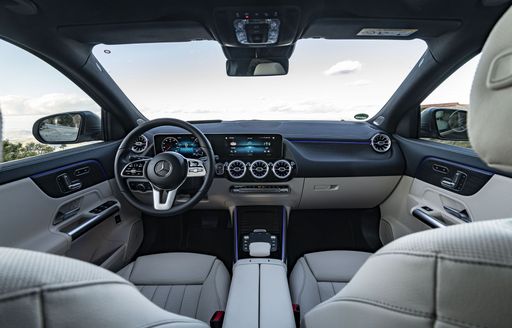
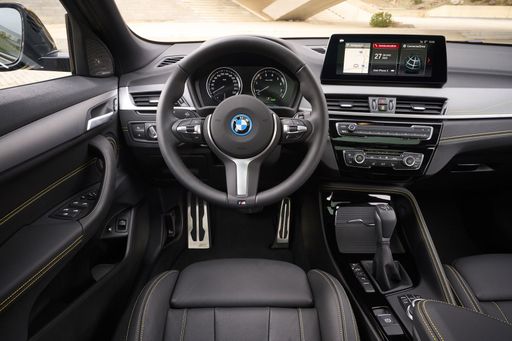
Inside, the BMW X2 offers a driver-focused cabin with high-quality materials and cutting-edge technology. The spacious interior can comfortably seat five passengers and features a modern infotainment system complete with a high-definition display and responsive controls, ensuring connectivity on the go.

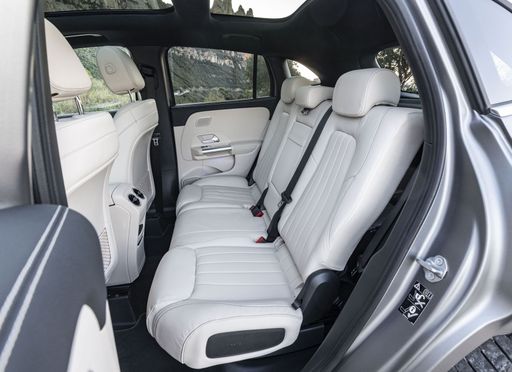
The GLA, known for its luxurious interiors, matches or even exceeds in comfort and technology. With an equally spacious five-seat setup, it features the latest MBUX infotainment system, which boasts voice recognition and an extensive range of connectivity services. This focus on technology adds to the overall premium experience Mercedes aims to deliver.

X2

Conclusion: Which One to Choose?

Ultimately, the choice between the BMW X2 and the Mercedes GLA comes down to personal preference and priority. If you value sportier performance and a dynamic driving experience, the X2 could be your best bet. However, if you prefer luxury, advanced technology, and a diverse range of engines including hybrids, the GLA may be more appealing.

Both vehicles embody the high standards of German engineering, with distinct identities and features that cater to varying tastes. For those in the market for a compact luxury SUV, either choice promises a remarkable driving experience paired with innovation and quality.

Here’s where it gets real: The technical differences in detail

GLA

Costs and Efficiency:

Looking at overall running costs, both models reveal some interesting differences in everyday economy.

Mercedes GLA is only slightly cheaper – starting at 38,800 £ , while the BMW X2 costs 41,200 £ . That’s a price difference of around 2,392 £.

Fuel consumption also shows a difference: the Mercedes GLA uses 2.9 L/100km and is substantially more efficient than the BMW X2 with 4.5 L/100km. The difference is about 1.6 L/100km.

X2

Engine and Performance:

Power, torque and acceleration are the classic benchmarks for car enthusiasts – and here, some clear differences start to show.

When it comes to engine power, the Mercedes GLA offers noticeably more power – delivering 421 HP compared to 300 HP. That’s roughly 121 HP more horsepower.

When accelerating from 0 to 100 km/h, the Mercedes GLA is noticeably quicker – completing the sprint in 4.3 s, while the BMW X2 takes 5.4 s. That’s about 1.1 s quicker.

Looking at top speed, the BMW X2 is marginally faster – reaching 213 km/h, while the Mercedes GLA tops out at 210 km/h. The difference is around 3 km/h.

There’s also a difference in torque: the Mercedes GLA delivers slightly more torque with 500 Nm compared to 400 Nm. That’s about 100 Nm more.

GLA

Space and Everyday Use:

Cabin size, boot volume and payload all play a role in everyday practicality. Here, comfort and flexibility make the difference.

Both vehicles offer seating for 5 people.

In terms of curb weight, Mercedes GLA is marginally lighter – 1,570 kg compared to 1,645 kg. The difference is around 75 kg.

Looking at boot space, the BMW X2 offers visibly more boot space – 560 L compared to 435 L. That’s a difference of about 125 L.

For maximum load capacity, the BMW X2 offers marginally more capacity – up to 1,470 L, about 85 L more than the Mercedes GLA.

When it comes to payload, the BMW X2 carries only slightly more – 510 kg compared to 500 kg. That’s a difference of about 10 kg.

Who wins the race in the data check?

The Mercedes GLA stands well ahead of its rival in the objective data comparison.
This result only shows which model scores more points on paper – not which of the two cars feels right for you.

from £38,800
GLA

Mercedes GLA

  • Engine Type : Plugin Hybrid, Petrol MHEV, Diesel, Petrol
  • Transmission : Automatic
  • Drive Type : Front-Wheel Drive, All-Wheel Drive
  • Power HP : 116 - 421 HP
  • Consumption L/100km : 2.9 - 9.5 L/100km
  • Electric Range : 74 km
Mercedes GLA
BMW X2

Costs and Consumption

View detailed analysis

Engine and Performance

View detailed analysis

Dimensions and Body

View detailed analysis

Mercedes GLA

The Mercedes GLA blends Mercedes style with compact crossover practicality, looking sharper than its size suggests while still feeling purposeful around town. Inside it serves up premium materials and tech-forward ergonomics, and the composed ride makes it an appealing pick for buyers who want luxury wrapped in a city-friendly package with a wink of adventurous spirit.

details

BMW X2

The BMW X2 feels like a sporty coupe dressed as an SUV, with sharp styling and a cheeky, youthful attitude that stands out in traffic. Inside it's driver-focused and compact but smartly packaged, perfect for city life and buyers who want BMW flair without the usual SUV bulk.

details
Mercedes GLA
BMW X2

Costs and Consumption

Price
38,800 - 75,300 £
Price
41,200 - 59,600 £
Consumption L/100km
2.9 - 9.5 L/100km
Consumption L/100km
4.5 - 7.7 L/100km
Consumption kWh/100km
-
Consumption kWh/100km
-
Electric Range
74 km
Electric Range
-
Battery Capacity
12.9 kWh
Battery Capacity
-
co2
66 - 216 g/km
co2
118 - 174 g/km
Fuel tank capacity
35 L
Fuel tank capacity
45 L

Dimensions and Body

Body Type
SUV
Body Type
SUV
Seats
5
Seats
5
Doors
5
Doors
5
Curb weight
1,570 - 1,810 kg
Curb weight
1,645 - 1,780 kg
Trunk capacity
385 - 435 L
Trunk capacity
515 - 560 L
Length
4,412 mm
Length
4,554 mm
Width
1,834 - 1,849 mm
Width
1,845 mm
Height
1,616 mm
Height
1,590 mm
Max trunk capacity
1,385 L
Max trunk capacity
1,400 - 1,470 L
Payload
480 - 500 kg
Payload
495 - 510 kg

Engine and Performance

Engine Type
Plugin Hybrid, Petrol MHEV, Diesel, Petrol
Engine Type
Diesel MHEV, Petrol MHEV, Diesel, Petrol
Transmission
Automatic
Transmission
Automatic
Transmission Detail
Dual-Clutch Automatic
Transmission Detail
Dual-Clutch Automatic
Drive Type
Front-Wheel Drive, All-Wheel Drive
Drive Type
Front-Wheel Drive, All-Wheel Drive
Power HP
116 - 421 HP
Power HP
150 - 300 HP
Acceleration 0-100km/h
4.3 - 11 s
Acceleration 0-100km/h
5.4 - 8.9 s
Max Speed
210 km/h
Max Speed
207 - 213 km/h
Torque
230 - 500 Nm
Torque
280 - 400 Nm
Number of Cylinders
4
Number of Cylinders
3 - 4
Power kW
85 - 310 kW
Power kW
110 - 221 kW
Engine capacity
1,332 - 1,991 cm3
Engine capacity
1,499 - 1,998 cm3

General

Model Year
2,024 - 2,025
Model Year
2,024
CO2 Efficiency Class
B, E, F, G
CO2 Efficiency Class
D, F
Brand
Mercedes-Benz
Brand
BMW
DriveDuel uses data analysis and artificial intelligence to evaluate vehicle data and create content. Content is regularly reviewed and improved. The displayed prices are estimates based on German list prices, adjusted to the respective country’s VAT. Country-specific registration taxes are not included. This information is not legally binding.