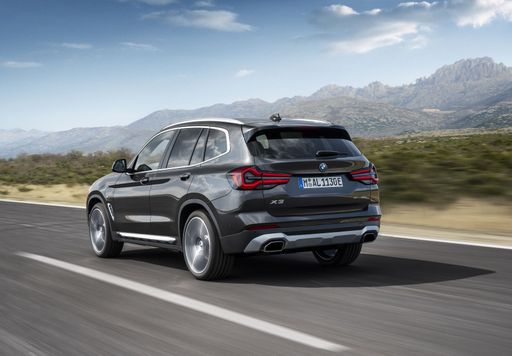
VS

BMW X2 vs BMW X3 comparison

Compare performance (300 HP vs 398 HP), boot space and price (41,700 £ vs 51,700 £ ) at a glance. Find out which car is the better choice for you – BMW X2 or BMW X3?

BMW X2 vs BMW X3: Key differences

BMW X2

4.6 (1 Reviews)
rate
  • visibly cheaper
  • a bit lighter
details

BMW X3

4.6 (1 Reviews)
rate
  • noticeably more power
  • considerably more efficient
  • moderately quicker 0–100 km/h
  • marginally more trunk space
details

All details on performance, efficiency, range and trunk space can be found in the technical comparison below – including user reviews for both models.

By Achim Sedelmaier

X2

Quick take: BMW X2 and BMW X3 in one glance

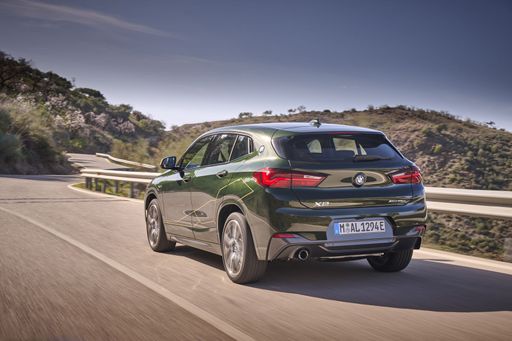
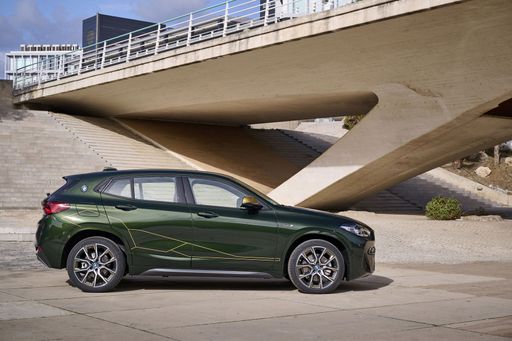
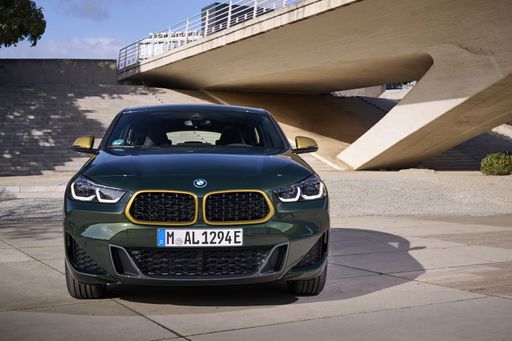
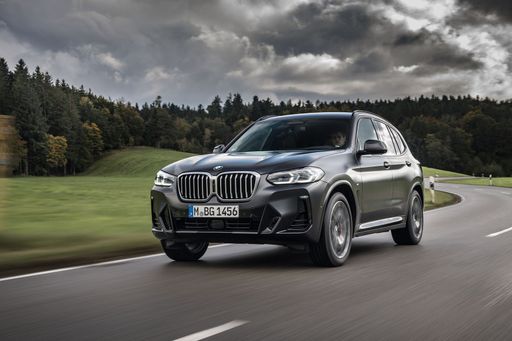
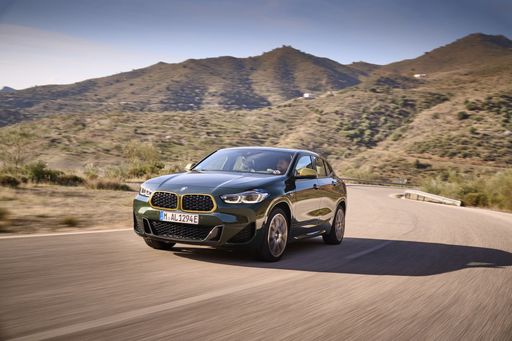
The BMW X2 and BMW X3 sit close together in BMW’s lineup but appeal to different priorities from the start: one trades conventional utility for style, the other trades flash for space and composure. In our BMW X2 VS BMW X3 comparison the X2 reads like a fashion statement on wheels while the X3 behaves like a practical premium tool for everyday duties. That difference is visible in how they ride, how much room they offer and how each cabin feels after an hour behind the wheel. For many buyers the decision won’t be about quality alone but about which compromises—sporty silhouette versus usable space—they’re willing to accept.
X3

Character and driving feel

The BMW X2 drives with a compact, eager personality: sharp turn‑in, taut body control and a coupe‑ish posture that rewards enthusiastic inputs without becoming nervous. The BMW X3 is more composedly athletic, with a planted feel at speed and a steering balance that favours confidence over theatrics. If you want playful responses and a car that looks sporty at first glance, the X2 gives that emotional hit; if you want predictable, high‑speed stability and the option of stronger engines, the X3 is the more assured partner. Both are driver‑focused in different ways—the X2 is an extrovert, the X3 a more composed all‑rounder.

X2

Comfort and long‑distance behaviour

On long trips the BMW X3 shows its strengths: quieter cabin, smoother absorption of highway irregularities and seats tuned for day‑long comfort, so fatigue is less of an issue. The BMW X2 can be very comfortable in steady cruising, but suspension choices and larger wheels make it firmer over short, sharp bumps—so motorway serenity can be offset by city roughness. Noise insulation in the X3 tends to be superior, which matters on long drives where tyre and wind noise add up. Choose the X2 if you prize a connected, engaging sensation; pick the X3 if you prioritise sealed‑up calm on miles of motorway.

X3

Practicality, cabin feel and usability

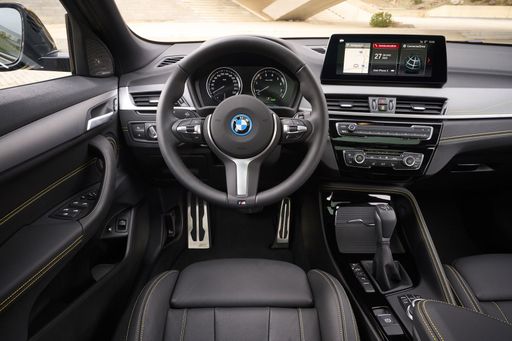
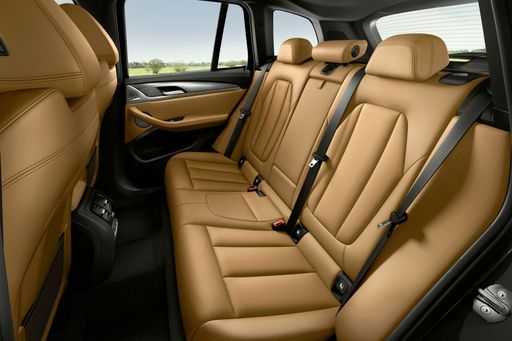
Practical life exposes the fundamental trade‑offs: the BMW X2 surprises for a coupe‑style car with a generous boot and clever split‑seat flexibility, but its sloping roof reduces rear headroom and rear visibility. The BMW X3 offers noticeably more usable rear space and a squarer, more practical load area that makes regular family duties and weekend kit easier to manage. Interiors differ too—the X2 often feels fresher and more design‑forward up front, whereas the X3 feels roomier but shows more hard plastics in mid‑range trims. Both have moved toward touch‑centric controls, but the X2’s layout amplifies that trend in a way some drivers find less intuitive during everyday use.

X2

City friendliness and day‑to‑day usability

In town the BMW X2’s smaller footprint and sharper steering make it easier to place and park in tight spaces, yet its narrow rear glass and thick pillars make blind‑spot awareness more of a chore when reversing. The BMW X3 is broader and less nimble in confined streets, and its larger turning circle can be frustrating in older city centres, but parking cameras and assistance features compensate for the bulk. Ride quality in slow traffic favours the X3, which soaks up potholes with less fuss; the X2’s suspension and tyre choices can feel choppier and louder on poor urban surfaces. If most of your miles are urban, the X3’s comfort and assistance tech reduce stress, while the X2 keeps the mood lively if you value style over ultimate practicality.

X3

Who should buy which—and what to check next

If you’re a style‑conscious single or couple who wants a compact, distinctive SUV with engaging handling and a modern cabin, the BMW X2 is the clearer emotional pick and often comes in at a lower entry price. If your priority is rear‑seat space, long‑distance quiet, towing or a wider choice of efficient powertrains for heavier use, the BMW X3 is the more sensible, versatile option. Both cars have trade‑offs in visibility and touch‑first controls, so a test‑drive that includes the exact wheel size and suspension spec you’d buy is essential. Scroll down to the technical comparison for the precise figures and options that turn these everyday differences into concrete ownership costs and performance expectations.

Here’s where it gets real: The technical differences in detail

X2

Costs and Efficiency:

When it comes to price and running costs, the biggest differences usually appear. This is often where you see which car fits your budget better in the long run.

BMW X2 is visibly cheaper – starting at 41,700 £ , while the BMW X3 costs 51,700 £ . That’s a price difference of around 10,028 £.

Fuel consumption also shows a difference: the BMW X3 uses 2.8 L/100km and is considerably more efficient than the BMW X2 with 4.5 L/100km. The difference is about 1.7 L/100km.

X3

Engine and Performance:

Under the bonnet, it becomes clear which model is tuned for sportiness and which one takes the lead when you hit the accelerator.

When it comes to engine power, the BMW X3 offers noticeably more power – delivering 398 HP compared to 300 HP. That’s roughly 98 HP more horsepower.

When accelerating from 0 to 100 km/h, the BMW X3 is moderately quicker – completing the sprint in 4.6 s, while the BMW X2 takes 5.4 s. That’s about 0.8 s quicker.

There’s also a difference in torque: the BMW X3 delivers significantly more torque with 670 Nm compared to 400 Nm. That’s about 270 Nm more.

X2

Space and Everyday Use:

Cabin size, boot volume and payload all play a role in everyday practicality. Here, comfort and flexibility make the difference.

Both vehicles offer seating for 5 people.

In terms of curb weight, BMW X2 is a bit lighter – 1,645 kg compared to 1,930 kg. The difference is around 285 kg.

Looking at boot space, the BMW X3 offers marginally more boot space – 570 L compared to 560 L. That’s a difference of about 10 L.

When it comes to payload, the BMW X3 carries somewhat more – 570 kg compared to 510 kg. That’s a difference of about 60 kg.

Who wins the race in the data check?

The BMW X3 is decisively ahead in the objective data comparison.
This result only shows which model scores more points on paper – not which of the two cars feels right for you.

from £51,700
X3

BMW X3

  • Engine Type Petrol MHEV, Diesel MHEV, Plugin Hybrid
  • Transmission Automatic
  • Drive Type All-Wheel Drive
  • Power HP 197 - 398 HP
  • Consumption L/100km 2.8 - 7.7 L/100km
  • Electric Range 88 km
BMW X2
BMW X3

Costs and Consumption

View detailed analysis

Engine and Performance

View detailed analysis

Dimensions and Body

View detailed analysis

BMW X2

The BMW X2 feels like a sporty coupe dressed as an SUV, with sharp styling and a cheeky, youthful attitude that stands out in traffic. Inside it's driver-focused and compact but smartly packaged, perfect for city life and buyers who want BMW flair without the usual SUV bulk.

details

BMW X3

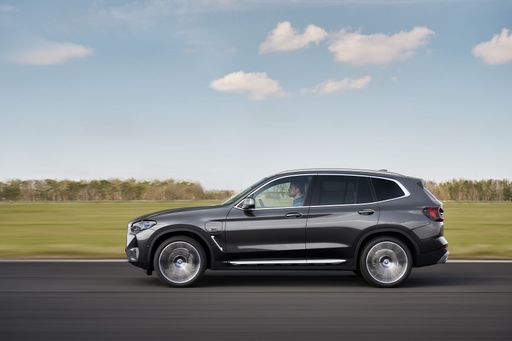
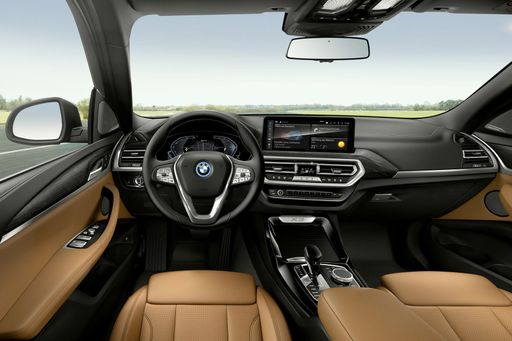
The BMW X3 blends sporty handling with premium comfort, making it a strong choice for drivers who want an engaging everyday SUV. Its well-appointed interior and confident road manners give it broad appeal for families and commuters who value style and versatility.

details
BMW X2
BMW X3

Costs and Consumption

Price
41,700 - 59,600 £
Price
51,700 - 73,000 £
Consumption L/100km
4.5 - 7.7 L/100km
Consumption L/100km
2.8 - 7.7 L/100km
Consumption kWh/100km
-
Consumption kWh/100km
-
Electric Range
-
Electric Range
88 km
Battery Capacity
-
Battery Capacity
-
co2
118 - 174 g/km
co2
64 - 175 g/km
Fuel tank capacity
-
Fuel tank capacity
-

Dimensions and Body

Body Type
SUV
Body Type
SUV
Seats
5
Seats
5
Doors
-
Doors
-
Curb weight
1,645 - 1,780 kg
Curb weight
1,930 - 2,140 kg
Trunk capacity
515 - 560 L
Trunk capacity
460 - 570 L
Length
-
Length
-
Width
1,845 mm
Width
1,920 mm
Height
-
Height
-
Max trunk capacity
-
Max trunk capacity
-
Payload
495 - 510 kg
Payload
570 kg

Engine and Performance

Engine Type
Diesel MHEV, Petrol MHEV, Diesel, Petrol
Engine Type
Petrol MHEV, Diesel MHEV, Plugin Hybrid
Transmission
Automatic
Transmission
Automatic
Transmission Detail
Dual-Clutch Automatic
Transmission Detail
Automatic Gearbox
Drive Type
Front-Wheel Drive, All-Wheel Drive
Drive Type
All-Wheel Drive
Power HP
150 - 300 HP
Power HP
197 - 398 HP
Acceleration 0-100km/h
5.4 - 8.9 s
Acceleration 0-100km/h
4.6 - 7.8 s
Max Speed
-
Max Speed
-
Torque
280 - 400 Nm
Torque
330 - 670 Nm
Number of Cylinders
3 - 4
Number of Cylinders
4 - 6
Power kW
110 - 221 kW
Power kW
145 - 293 kW
Engine capacity
1,499 - 1,998 cm3
Engine capacity
1,995 - 2,998 cm3

General

Model Year
2024
Model Year
2,024 - 2,025
CO2 Efficiency Class
D, F
CO2 Efficiency Class
F, E, B
Brand
BMW
Brand
BMW
DriveDuel uses data analysis and artificial intelligence to evaluate vehicle data and create content. Content is regularly reviewed and improved. The displayed prices are estimates based on German list prices, adjusted to the respective country’s VAT. Country-specific registration taxes are not included. This information is not legally binding.