VS

Mercedes GLB vs Audi Q3 comparison

Compare performance (354 HP vs 272 HP), boot space and price (50,600 £ vs 38,200 £ ) at a glance. Find out which car is the better choice for you – Mercedes GLB or Audi Q3?

Mercedes GLB vs Audi Q3: Key differences

Mercedes GLB

3.2 (3 Reviews)
rate
  • markedly more power
  • substantially more electric range
  • barely quicker 0–100 km/h
  • marginally more trunk space

Audi Q3

5 (1 Reviews)
rate
  • clearly cheaper
  • markedly lighter

All details on performance, efficiency, range and trunk space can be found in the technical comparison below – including user reviews for both models.

GLB

Unveiling the Contenders: Audi Q3 vs. Mercedes GLB

In an age where cutting-edge technology meets luxury, the SUV segment remains fiercely competitive. Today, we dive into a thorough comparison between two titans from Germany: the Audi Q3 and the Mercedes GLB. As both have been updated for the 2024 model year, the battle for supremacy is fiercer than ever. Let’s explore the specifications, performance, and innovations that define these two rivals.
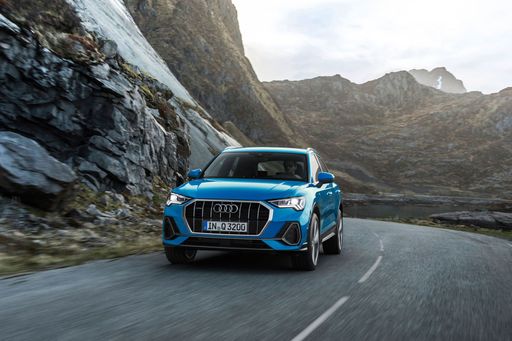
Q3

Design and Dimensions

The 2024 Audi Q3 and Mercedes GLB both emphasize a robust SUV design, tailored for a sophisticated audience who appreciates both form and function.

Starting with the Audi Q3, it boasts a length ranging from 4484 to 4500 mm, a width of 1843 to 1849 mm, and a height spanning 1567 to 1585 mm. The sleek dimensions contribute to a more compact appearance, yet it’s spacious enough to accommodate all necessary travel essentials with a trunk capacity of 530 liters.

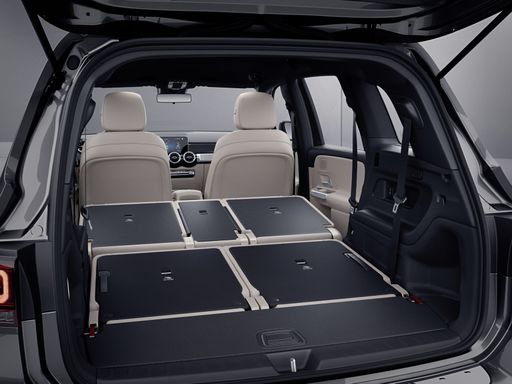
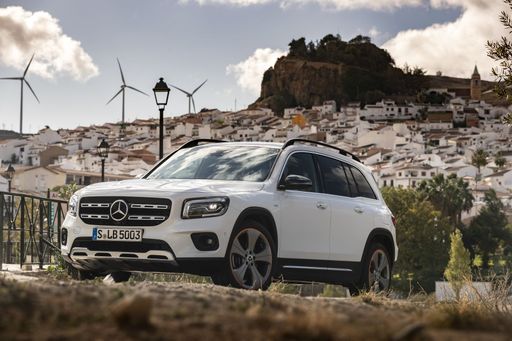
Conversely, the Mercedes GLB takes on a slightly larger stance with a length of 4634 to 4650 mm, width from 1834 to 1850 mm, and a height ranging between 1665 and 1692 mm. This positions the GLB as the roomier sibling in terms of trunk space, offering up to 570 liters.

GLB

Engine Specifications and Performance

Under the hood, the Audi Q3 offers a variety of petrol and diesel engines. The power range extends from 150 HP up to a robust 245 HP. The torque numbers are equally impressive, with figures from 250 to 400 Nm, ensuring a dynamic driving experience. Depending on the engine variant, the Q3's fuel consumption varies between 5.5 to 8.5 L/100km.

The Mercedes GLB counters with its own powerhouses, including petrol MHEV and diesel options. Its engines produce from 116 HP to a powerful 320 HP. Torque figures range from 230 to 400 Nm. Despite being larger, it maintains a reasonable fuel consumption, varying from 5.6 to 9 L/100km.

Q3

Transmission and Drive

Both the Q3 and GLB are equipped with advanced transmission systems. The Audi Q3 offers a choice between a manual gearbox and a dual-clutch automatic, catering to driving purists and tech-savvy motorists alike. Additionally, the Q3 is versatile in that it offers both front-wheel drive and all-wheel drive configurations.

The GLB, on the other hand, is equipped exclusively with a dual-clutch automatic transmission. Similarly, it provides flexibility in drive types, with options for front-wheel drive and all-wheel drive, appealing to a broader range of driving conditions.

GLB

Innovations and Efficiency

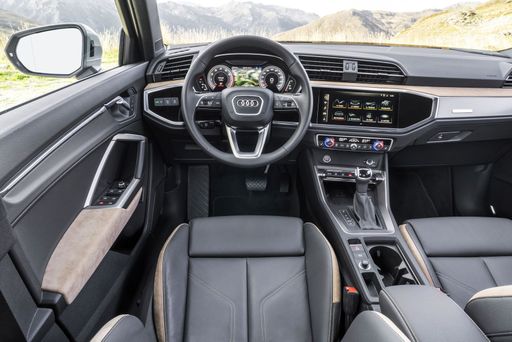
Both brands are synonymous with technological advancement. Audi’s Q3 integrates a suite of driver-assist features and a streamlined digital cockpit, enhancing the driving and safety experience. The Q3 also offers varying CO2 output efficiency, falling into class E, F, and G.

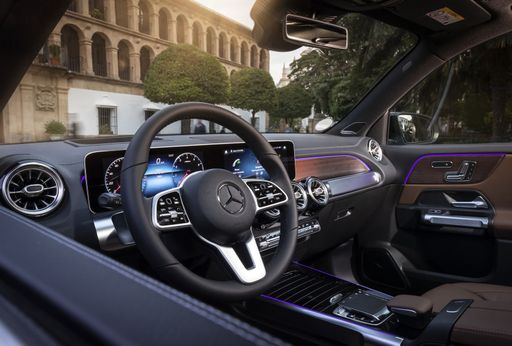
The Mercedes GLB matches up with its own array of safety and convenience features, including its MBUX (Mercedes-Benz User Experience) infotainment system, providing intuitive controls and a seamless interactive experience. Its CO2 efficiency also ranges within classes F, E, and G.

Q3

Conclusion: Choosing Your Champion

The Audi Q3 and Mercedes GLB each offer a distinct driving experience and cater to differing tastes. The Q3's appeal lies in its compact yet potent nature, offering robust engine performance and a stylishly compact design. The GLB, with its generous dimensions and innovative tech suite, caters to those who prioritize space and passenger comfort.

Ultimately, the choice between these contenders will depend on individual preferences, whether you favor the artistic precision of Audi's engineering or the spacious luxury offered by Mercedes-Benz. Either way, the luxury compact SUV realm has never been more exciting.

Here’s where it gets real: The technical differences in detail

GLB

Costs and Efficiency:

Looking at overall running costs, both models reveal some interesting differences in everyday economy.

Audi Q3 is clearly cheaper – starting at 38,200 £ , while the Mercedes GLB costs 50,600 £ . That’s a price difference of around 12,384 £.

As for electric range, the Mercedes GLB offers substantially more range – reaching up to 631 km, about 512 km more than the Audi Q3.

Q3

Engine and Performance:

Under the bonnet, it becomes clear which model is tuned for sportiness and which one takes the lead when you hit the accelerator.

When it comes to engine power, the Mercedes GLB offers markedly more power – delivering 354 HP compared to 272 HP. That’s roughly 82 HP more horsepower.

When accelerating from 0 to 100 km/h, the Mercedes GLB is barely quicker – completing the sprint in 5.5 s, while the Audi Q3 takes 5.7 s. That’s about 0.2 s quicker.

There’s also a difference in torque: the Mercedes GLB delivers visibly more torque with 515 Nm compared to 400 Nm. That’s about 115 Nm more.

GLB

Space and Everyday Use:

Cabin size, boot volume and payload all play a role in everyday practicality. Here, comfort and flexibility make the difference.

Both vehicles offer seating for 5 people.

In terms of curb weight, Audi Q3 is markedly lighter – 1,635 kg compared to 2,200 kg. The difference is around 565 kg.

Looking at boot space, the Mercedes GLB offers marginally more boot space – 540 L compared to 488 L. That’s a difference of about 52 L.

When it comes to payload, the Audi Q3 carries only slightly more – 535 kg compared to 500 kg. That’s a difference of about 35 kg.

Who wins the race in the data check?

The Mercedes GLB is clearly superior overall in the objective data comparison.
This result only shows which model scores more points on paper – not which of the two cars feels right for you.

from £50,600
GLB

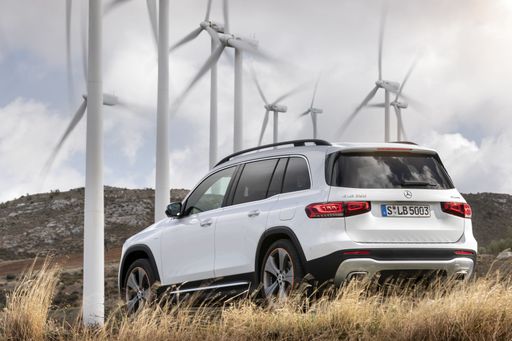
Mercedes GLB

  • Engine Type : Electric
  • Transmission : Automatic
  • Drive Type : Rear-Wheel Drive, All-Wheel Drive
  • Power HP : 272 - 354 HP
  • Consumption kWh/100km : 15.8 - 15.9 kWh/100km
  • Electric Range : 614 - 631 km
Mercedes GLB
Audi Q3

Costs and Consumption

View detailed analysis

Engine and Performance

View detailed analysis

Dimensions and Body

View detailed analysis

Mercedes GLB

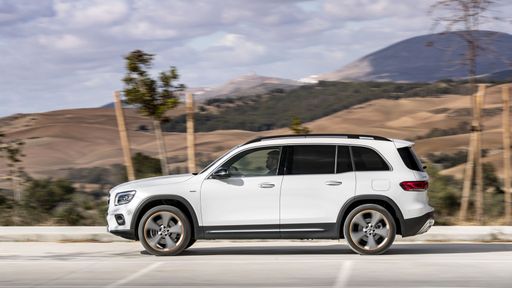
The Mercedes GLB is a practical compact SUV that mixes boxy, family-friendly space with premium German polish, making it an appealing choice for buyers who want usefulness without pretension. It drives with a confident, composed feel and somehow manages to look both rugged and refined — the grown-up SUV that still likes to have fun.

details

Audi Q3

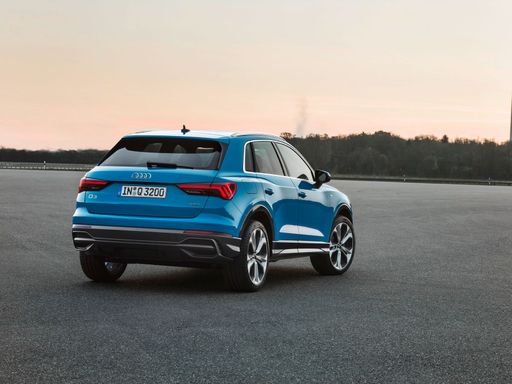
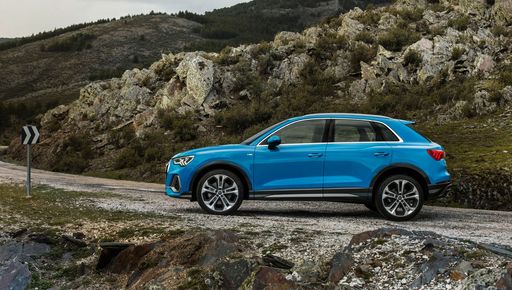
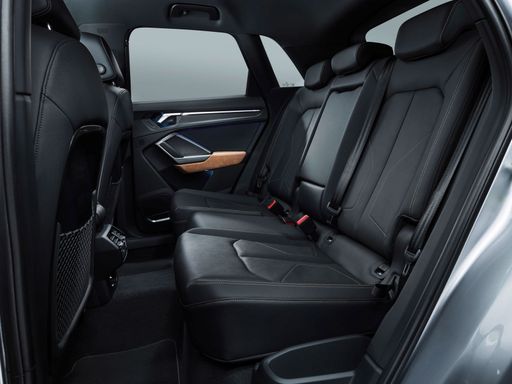
The Audi Q3 feels like a grown-up compact SUV with premium polish and city-friendly agility, the sort of car that makes weekend escapes and daily commutes equally satisfying. Inside, you get quality materials and smart packaging that keep things practical without skimping on style, so it’s an easy pick for buyers who want luxury without the drama.

details
Mercedes GLB
Audi Q3

Costs and Consumption

Price
50,600 - 62,400 £
Price
38,200 - 52,900 £
Consumption L/100km
-
Consumption L/100km
1.7 - 8.6 L/100km
Consumption kWh/100km
15.8 - 15.9 kWh/100km
Consumption kWh/100km
-
Electric Range
614 - 631 km
Electric Range
118 - 119 km
Battery Capacity
-
Battery Capacity
-
co2
0 g/km
co2
39 - 195 g/km
Fuel tank capacity
-
Fuel tank capacity
-

Dimensions and Body

Body Type
SUV
Body Type
SUV
Seats
5
Seats
5
Doors
-
Doors
-
Curb weight
2,200 - 2,280 kg
Curb weight
1,635 - 1,900 kg
Trunk capacity
540 L
Trunk capacity
375 - 488 L
Length
-
Length
-
Width
1,861 mm
Width
1,859 mm
Height
-
Height
-
Max trunk capacity
-
Max trunk capacity
-
Payload
500 kg
Payload
505 - 535 kg

Engine and Performance

Engine Type
Electric
Engine Type
Petrol MHEV, Petrol, Plugin Hybrid, Diesel
Transmission
Automatic
Transmission
Automatic
Transmission Detail
Reduction Gearbox
Transmission Detail
Dual-Clutch Automatic
Drive Type
Rear-Wheel Drive, All-Wheel Drive
Drive Type
Front-Wheel Drive, All-Wheel Drive
Power HP
272 - 354 HP
Power HP
150 - 272 HP
Acceleration 0-100km/h
5.5 - 7.4 s
Acceleration 0-100km/h
5.7 - 9.2 s
Max Speed
-
Max Speed
-
Torque
335 - 515 Nm
Torque
250 - 400 Nm
Number of Cylinders
-
Number of Cylinders
4
Power kW
200 - 260 kW
Power kW
110 - 200 kW
Engine capacity
-
Engine capacity
1,498 - 1,984 cm3

General

Model Year
2,026
Model Year
2,025
CO2 Efficiency Class
A
CO2 Efficiency Class
E, G, B
Brand
Mercedes-Benz
Brand
Audi
DriveDuel uses data analysis and artificial intelligence to evaluate vehicle data and create content. Content is regularly reviewed and improved. The displayed prices are estimates based on German list prices, adjusted to the respective country’s VAT. Country-specific registration taxes are not included. This information is not legally binding.