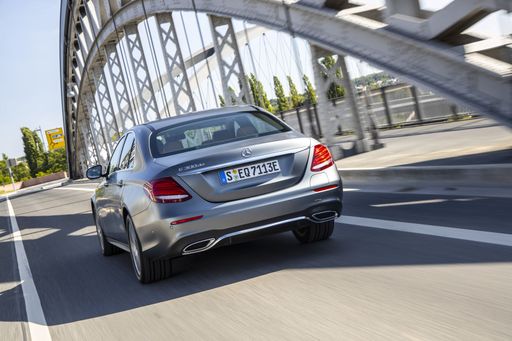
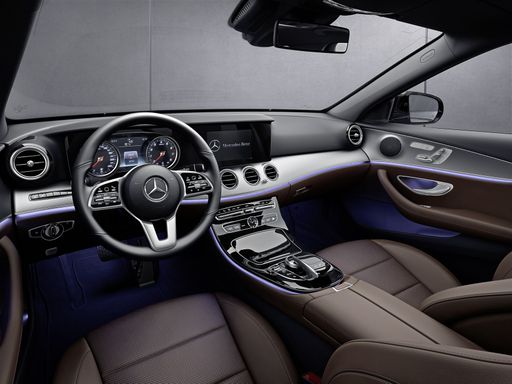
VS

Mercedes GLB vs Mercedes E Class comparison

Compare performance (354 HP vs 585 HP), boot space and price (50,600 £ vs 50,500 £ ) at a glance. Find out which car is the better choice for you – Mercedes GLB or Mercedes E Class?

Mercedes GLB vs Mercedes E Class: Key differences

Mercedes GLB

3.2 (3 Reviews)
rate
  • substantially more electric range

Mercedes E Class

4.4 (1 Reviews)
rate
  • barely cheaper
  • visibly more power
  • markedly quicker 0–100 km/h
  • visibly lighter

All details on performance, efficiency, range and trunk space can be found in the technical comparison below – including user reviews for both models.

GLB

Introduction

When it comes to luxury vehicles, Mercedes-Benz consistently stands at the forefront, offering a range of options that blend innovation, performance, and comfort. Two standout models in their lineup are the Mercedes GLB, a compact SUV, and the E-Klasse, a renowned sedan. Each caters to different customer needs and preferences. In this article, we delve into a comparison of these two models, focusing on their technical aspects and innovations for the model year 2024.
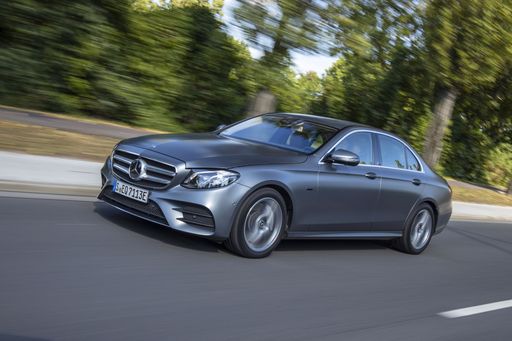
E Class

Design and Dimensions

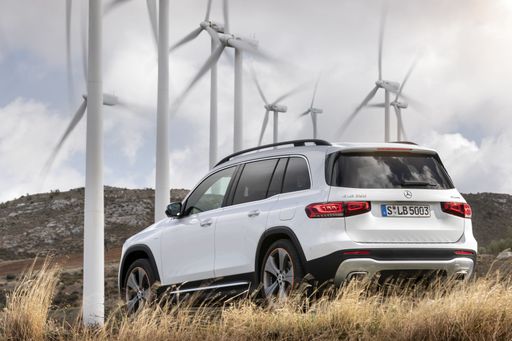
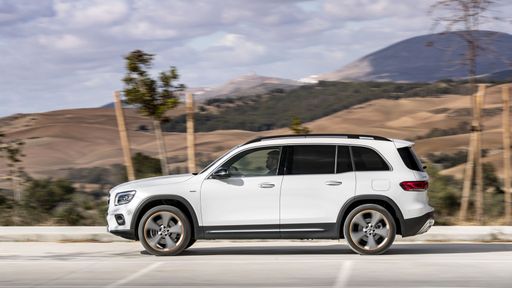
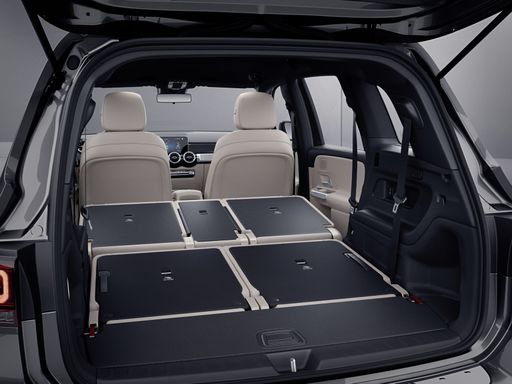
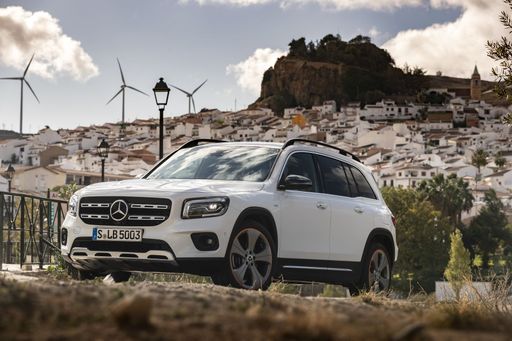
The Mercedes GLB boasts a modern SUV design, characterized by its robust stance and spacious interior. It measures 4634 mm in length and has a width of 1834 mm, allowing for a roomy cabin and cargo area. It provides a trunk capacity of 565 liters, making it ideal for families or adventures.

In contrast, the E-Klasse is a luxurious sedan with sleek lines and a more traditional aesthetic. It measures 4959 mm in length and 1880 mm in width, offering a sophisticated look that appeals to a more executive clientele. The trunk capacity is around 540 liters, slightly less than the GLB but ample for everyday use.

GLB

Powertrains and Performance

Under the hood, the GLB offers a range of engines, including petrol MHEV and diesel options with power outputs varying between 116 HP to 320 HP. The GLB supports both front-wheel and all-wheel drive configurations, catering to diverse driving needs. With a top speed that reaches up to 250 km/h, the GLB ensures an enjoyable driving experience. It can accelerate from 0 to 100 km/h in as little as 5.5 seconds, depending on the engine choice.

On the other hand, the E-Klasse takes performance a notch higher with engine options that include potent plug-in hybrid variants and petrol MHEVs. Delivering a staggering 585 HP in its high-performance versions, the E-Klasse can sprint from 0 to 100 km/h in just 4 seconds. The model also emphasizes efficiency, with some variants offering a remarkable electric range of up to 114 km and CO2 emissions as low as 11 g/km.

E Class

Fuel Efficiency and Environmental Impact

When it comes to fuel efficiency, the GLB provides respectable consumption figures, ranging from 5.6 to 7.7 L/100km, depending on the engine type. Its CO2 efficiency class varies but aims to minimize environmental impact effectively.

The E-Klasse shines in this category with plug-in hybrid versions achieving under 1 L/100km, significantly lowering fuel consumption and fostering a greener driving philosophy. With various models achieving CO2 emissions as low as 12 g/km, the E-Klasse emerges as a leader in sustainable luxury driving.

GLB

Technology and Innovations

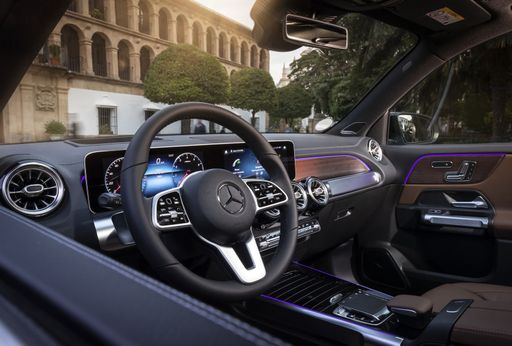
Both models come equipped with advanced technological features. The GLB incorporates the latest MBUX infotainment system, featuring voice recognition, a high-definition touchscreen, and seamless connectivity options. It also includes safety features like Active Brake Assist and Blind Spot Assist, ensuring a secure driving experience.

The E-Klasse, not to be outdone, offers a more advanced version of the MBUX system, complete with a dual-display setup, augmented reality navigation, and enhanced driver-assistance technologies. Options such as the Active Distance Assist and a comprehensive suite of safety features make it a standout in the luxury sedan segment.

E Class

Conclusion

In conclusion, the choice between the Mercedes GLB and E-Klasse fundamentally hinges on individual lifestyle and preferences. The GLB presents itself as a versatile family-oriented SUV with ample space and practicality. In contrast, the E-Klasse delivers a more performance-oriented experience, steeped in luxury and cutting-edge technology. Both models exemplify Mercedes-Benz's commitment to excellence, ensuring that regardless of choice, you are met with innovation, comfort, and style.

Here’s where it gets real: The technical differences in detail

GLB

Costs and Efficiency:

Price and efficiency are often the first things buyers look at. Here it becomes clear which model has the long-term edge – whether at the pump, the plug, or in purchase price.

Mercedes E Class is barely cheaper – starting at 50,500 £ , while the Mercedes GLB costs 50,600 £ . That’s a price difference of around 122 £.

As for electric range, the Mercedes GLB offers substantially more range – reaching up to 631 km, about 515 km more than the Mercedes E Class.

E Class

Engine and Performance:

Power, torque and acceleration are the classic benchmarks for car enthusiasts – and here, some clear differences start to show.

When it comes to engine power, the Mercedes E Class offers visibly more power – delivering 585 HP compared to 354 HP. That’s roughly 231 HP more horsepower.

When accelerating from 0 to 100 km/h, the Mercedes E Class is markedly quicker – completing the sprint in 4 s, while the Mercedes GLB takes 5.5 s. That’s about 1.5 s quicker.

There’s also a difference in torque: the Mercedes E Class delivers clearly more torque with 750 Nm compared to 515 Nm. That’s about 235 Nm more.

GLB

Space and Everyday Use:

Whether family car or daily driver – which one offers more room, flexibility and comfort?

Both vehicles offer seating for 5 people.

In terms of curb weight, Mercedes E Class is visibly lighter – 1,810 kg compared to 2,200 kg. The difference is around 390 kg.

Boot capacity is identical – both offer 540 L of storage.

When it comes to payload, the Mercedes E Class carries markedly more – 640 kg compared to 500 kg. That’s a difference of about 140 kg.

Who wins the race in the data check?

The Mercedes E Class is barely ahead in the objective data comparison.
This result only shows which model scores more points on paper – not which of the two cars feels right for you.

from £50,500
E Class

Mercedes E Class

  • Engine Type : Petrol MHEV, Plugin Hybrid, Diesel MHEV
  • Transmission : Automatic
  • Drive Type : Rear-Wheel Drive, All-Wheel Drive
  • Power HP : 186 - 585 HP
  • Consumption L/100km : 1.5 - 7.5 L/100km
  • Electric Range : 101 - 116 km
Mercedes GLB
Mercedes E Class

Costs and Consumption

View detailed analysis

Engine and Performance

View detailed analysis

Dimensions and Body

View detailed analysis

Mercedes GLB

The Mercedes GLB is a practical compact SUV that mixes boxy, family-friendly space with premium German polish, making it an appealing choice for buyers who want usefulness without pretension. It drives with a confident, composed feel and somehow manages to look both rugged and refined — the grown-up SUV that still likes to have fun.

details

Mercedes E Class

The Mercedes E‑Class is the executive saloon that balances calm refinement with a hint of sporting intent, wrapping luxury in tasteful understatement. It pampers occupants with a composed ride and intuitive tech while quietly reminding you that it’s still very much a Mercedes — authoritative, polished, and unwilling to shout for attention.

details
Mercedes GLB
Mercedes E Class

Costs and Consumption

Price
50,600 - 62,400 £
Price
50,500 - 119,700 £
Consumption L/100km
-
Consumption L/100km
1.5 - 7.5 L/100km
Consumption kWh/100km
15.8 - 15.9 kWh/100km
Consumption kWh/100km
-
Electric Range
614 - 631 km
Electric Range
101 - 116 km
Battery Capacity
-
Battery Capacity
-
co2
0 g/km
co2
39 - 172 g/km
Fuel tank capacity
-
Fuel tank capacity
-

Dimensions and Body

Body Type
SUV
Body Type
Sedan
Seats
5
Seats
5
Doors
-
Doors
-
Curb weight
2,200 - 2,280 kg
Curb weight
1,810 - 2,390 kg
Trunk capacity
540 L
Trunk capacity
370 - 540 L
Length
-
Length
-
Width
1,861 mm
Width
1,880 mm
Height
-
Height
-
Max trunk capacity
-
Max trunk capacity
-
Payload
500 kg
Payload
530 - 640 kg

Engine and Performance

Engine Type
Electric
Engine Type
Petrol MHEV, Plugin Hybrid, Diesel MHEV
Transmission
Automatic
Transmission
Automatic
Transmission Detail
Reduction Gearbox
Transmission Detail
Automatic Gearbox
Drive Type
Rear-Wheel Drive, All-Wheel Drive
Drive Type
Rear-Wheel Drive, All-Wheel Drive
Power HP
272 - 354 HP
Power HP
186 - 585 HP
Acceleration 0-100km/h
5.5 - 7.4 s
Acceleration 0-100km/h
4 - 8.5 s
Max Speed
-
Max Speed
-
Torque
335 - 515 Nm
Torque
320 - 750 Nm
Number of Cylinders
-
Number of Cylinders
4 - 6
Power kW
200 - 260 kW
Power kW
137 - 430 kW
Engine capacity
-
Engine capacity
1,993 - 2,999 cm3

General

Model Year
2,026
Model Year
2,024 - 2,025
CO2 Efficiency Class
A
CO2 Efficiency Class
E, F, B, D
Brand
Mercedes-Benz
Brand
Mercedes-Benz
DriveDuel uses data analysis and artificial intelligence to evaluate vehicle data and create content. Content is regularly reviewed and improved. The displayed prices are estimates based on German list prices, adjusted to the respective country’s VAT. Country-specific registration taxes are not included. This information is not legally binding.