VS

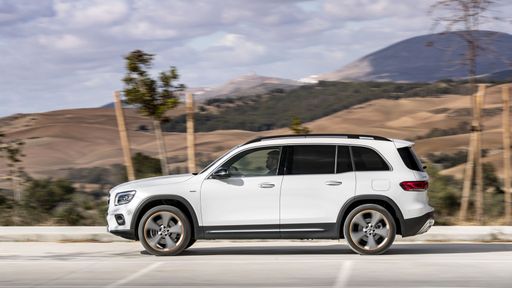
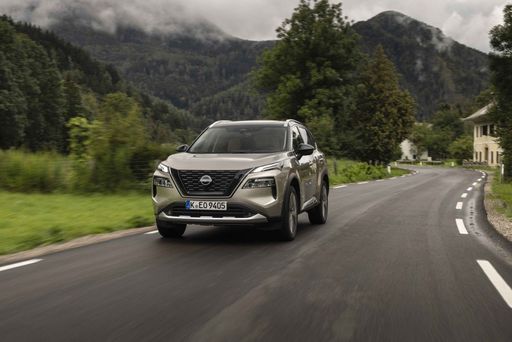
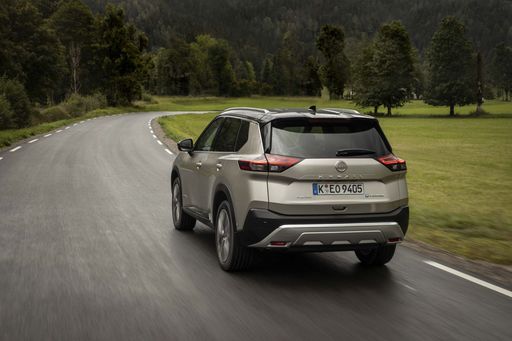
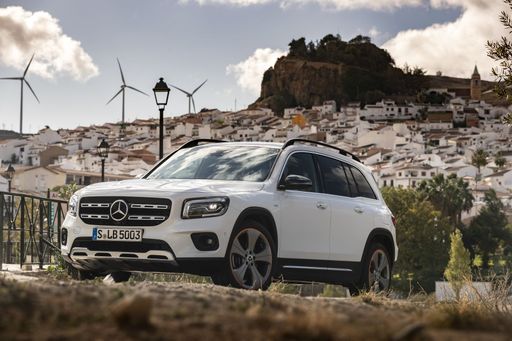
Mercedes GLB vs Nissan X-Trail comparison

Compare performance (354 HP vs 213 HP), boot space and price (50,600 £ vs 34,200 £ ) at a glance. Find out which car is the better choice for you – Mercedes GLB or Nissan X-Trail?

Mercedes GLB vs Nissan X-Trail: Key differences

Mercedes GLB

3.2 (3 Reviews)
rate
  • clearly more power
  • noticeably quicker 0–100 km/h

Nissan X-Trail

4.6 (5 Reviews)
rate
  • clearly cheaper
  • markedly lighter
  • barely more trunk space

All details on performance, efficiency, range and trunk space can be found in the technical comparison below – including user reviews for both models.

GLB

The SUV Showdown: Mercedes GLB vs. Nissan X-Trail

In the ever-evolving world of SUVs, the 2024 Mercedes GLB and Nissan X-Trail stand out as versatile contenders. Both offer impressive engineering, innovation, and practicality. Let’s dig deeper into their technical prowess and distinct features to find out which might suit your lifestyle better.
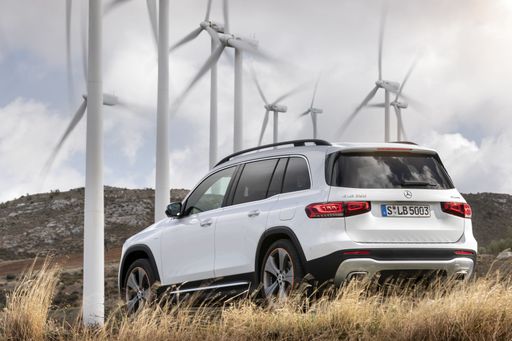
X-Trail

Engine and Performance

The Mercedes GLB brings a range of powertrains including Petrol MHEV and Diesel engines, with power outputs ranging from 150 to 320 HP. Of particular note is the top-tier variant that accelerates from 0 to 100 km/h in just 5.5 seconds, achieving a maximum speed of up to 250 km/h. Its dual-clutch automatic transmission offers smooth and rapid gear changes, enhancing driving dynamics whether you're on the highway or navigating city streets.

In comparison, the Nissan X-Trail offers a selection of Petrol MHEV and Full Hybrid engines with power outputs between 163 and 213 HP. The X-Trail is slightly faster in some variants, with its best acceleration time clocking in at 7 seconds for 0 to 100 km/h, and a respectable top speed of 200 km/h. Its CVT and reduction gearbox ensure a seamless driving experience, especially beneficial for those who prioritize efficiency in urban settings.

GLB

Efficiency and Economy

Fuel efficiency is another battleground where these SUVs compete. The Mercedes GLB’s consumption ranges from 5.6 to 9 L/100km, showing a decent balance between power and economy. It also features a CO2 efficiency class ranging from E to G, making it an option with varied environmental considerations.

The Nissan X-Trail, however, shines with its full hybrid engine options, offering a slightly better consumption range of 5.7 to 6.9 L/100km and CO2 emissions ranging from 131 to 161 g/km, placing it in CO2 efficiency classes D to F.

X-Trail

Space and Comfort

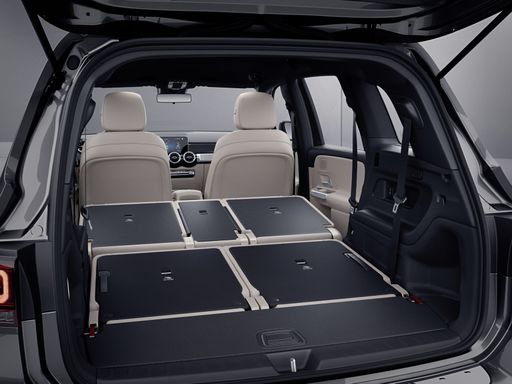
Both vehicles cater to family needs but offer distinct features. The GLB fits five passengers and provides a trunk capacity of up to 570 liters, making it a suitable choice for those who prioritize cargo space in a relatively compact SUV form factor.

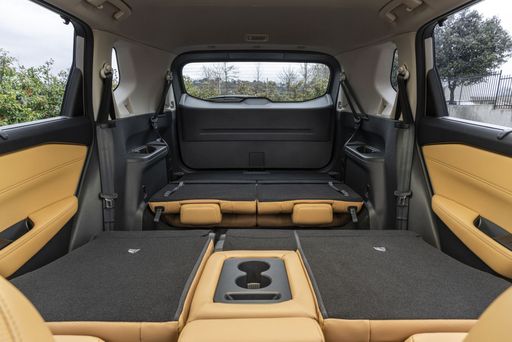
The X-Trail, meanwhile, enhances flexibility with both five and seven-seat configurations. Its trunk capacity reaches 585 liters in the five-seat setup, but this decreases when the third-row seats are in use. Its larger dimensions contribute to its spaciousness, measuring 4680 mm in length and 1720 mm in height.

GLB

Technology and Innovations

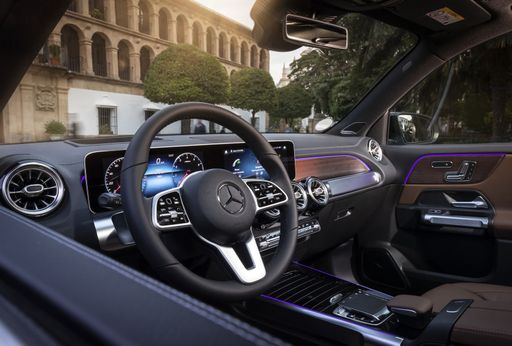
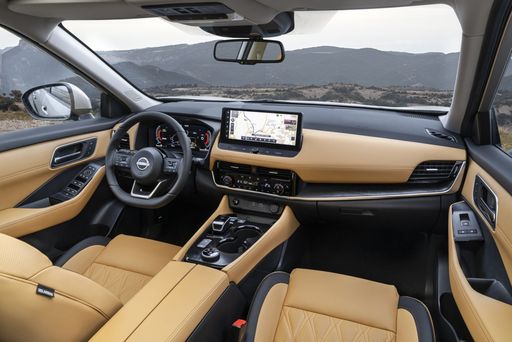
Mercedes equips the GLB with cutting-edge tech, including advanced infotainment options, connectivity features, and driver assistance systems that underscore its premium status. The luxurious feel inside is complemented by the brand's commitment to high-quality materials and finishes.

Nissan's X-Trail is no slouch either, incorporating the latest in safety and infotainment technology. Its hybrid models benefit from intelligent power management systems that optimize both performance and efficiency, appealing to tech-savvy drivers with a focus on sustainability.

X-Trail

Final Considerations

Choosing between the Mercedes GLB and the Nissan X-Trail ultimately depends on personal preferences and priorities. The GLB offers a more luxurious experience with a performance edge, especially in its higher-powered variants. The X-Trail, on the other hand, caters to those seeking flexibility, practicality, and a more eco-friendly driving experience without compromising on modern comforts and technology.

Each SUV brings something unique to the table, enhancing the ever-expanding tapestry of automotive options available to discerning drivers in 2024.

Here’s where it gets real: The technical differences in detail

GLB

Costs and Efficiency:

When it comes to price and running costs, the biggest differences usually appear. This is often where you see which car fits your budget better in the long run.

Nissan X-Trail is clearly cheaper – starting at 34,200 £ , while the Mercedes GLB costs 50,600 £ . That’s a price difference of around 16,455 £.

X-Trail

Engine and Performance:

Power, torque and acceleration are the classic benchmarks for car enthusiasts – and here, some clear differences start to show.

When it comes to engine power, the Mercedes GLB offers clearly more power – delivering 354 HP compared to 213 HP. That’s roughly 141 HP more horsepower.

When accelerating from 0 to 100 km/h, the Mercedes GLB is noticeably quicker – completing the sprint in 5.5 s, while the Nissan X-Trail takes 7 s. That’s about 1.5 s quicker.

There’s also a difference in torque: the Nissan X-Trail delivers very slightly more torque with 525 Nm compared to 515 Nm. That’s about 10 Nm more.

GLB

Space and Everyday Use:

Beyond pure performance, interior space and usability matter most in daily life. This is where you see which car is more practical and versatile.

Seats: Nissan X-Trail offers more seats – 7 vs 5.

In terms of curb weight, Nissan X-Trail is markedly lighter – 1,668 kg compared to 2,200 kg. The difference is around 532 kg.

Looking at boot space, the Nissan X-Trail offers barely more boot space – 585 L compared to 540 L. That’s a difference of about 45 L.

When it comes to payload, the Nissan X-Trail carries moderately more – 574 kg compared to 500 kg. That’s a difference of about 74 kg.

Who wins the race in the data check?

The Mercedes GLB holds a decisive overall lead in the objective data comparison.
This result only shows which model scores more points on paper – not which of the two cars feels right for you.

from £50,600
GLB

Mercedes GLB

  • Engine Type : Electric
  • Transmission : Automatic
  • Drive Type : Rear-Wheel Drive, All-Wheel Drive
  • Power HP : 272 - 354 HP
  • Consumption kWh/100km : 15.8 - 15.9 kWh/100km
  • Electric Range : 614 - 631 km
Mercedes GLB
Nissan X-Trail

Costs and Consumption

View detailed analysis

Engine and Performance

View detailed analysis

Dimensions and Body

View detailed analysis

Mercedes GLB

The Mercedes GLB is a practical compact SUV that mixes boxy, family-friendly space with premium German polish, making it an appealing choice for buyers who want usefulness without pretension. It drives with a confident, composed feel and somehow manages to look both rugged and refined — the grown-up SUV that still likes to have fun.

details

Nissan X-Trail

The Nissan X-Trail is a roomy, no-nonsense family SUV that mixes sensible practicality with a quietly modern look, making it an easy choice for busy lives and weekend escapes. It drives with calm confidence, delivers a comfortable ride and sensible tech, and won’t demand drama while doing the everyday heavy lifting.

details
Mercedes GLB
Nissan X-Trail

Costs and Consumption

Price
50,600 - 62,400 £
Price
34,200 - 50,500 £
Consumption L/100km
-
Consumption L/100km
5.7 - 6.9 L/100km
Consumption kWh/100km
15.8 - 15.9 kWh/100km
Consumption kWh/100km
-
Electric Range
614 - 631 km
Electric Range
-
Battery Capacity
-
Battery Capacity
-
co2
0 g/km
co2
131 - 161 g/km
Fuel tank capacity
-
Fuel tank capacity
-

Dimensions and Body

Body Type
SUV
Body Type
SUV
Seats
5
Seats
5 - 7
Doors
-
Doors
-
Curb weight
2,200 - 2,280 kg
Curb weight
1,668 - 1,961 kg
Trunk capacity
540 L
Trunk capacity
177 - 585 L
Length
-
Length
-
Width
1,861 mm
Width
1,840 mm
Height
-
Height
-
Max trunk capacity
-
Max trunk capacity
-
Payload
500 kg
Payload
432 - 574 kg

Engine and Performance

Engine Type
Electric
Engine Type
Petrol MHEV, Full Hybrid
Transmission
Automatic
Transmission
Automatic
Transmission Detail
Reduction Gearbox
Transmission Detail
CVT, Reduction Gearbox
Drive Type
Rear-Wheel Drive, All-Wheel Drive
Drive Type
Front-Wheel Drive, All-Wheel Drive
Power HP
272 - 354 HP
Power HP
163 - 213 HP
Acceleration 0-100km/h
5.5 - 7.4 s
Acceleration 0-100km/h
7 - 9.6 s
Max Speed
-
Max Speed
-
Torque
335 - 515 Nm
Torque
300 - 525 Nm
Number of Cylinders
-
Number of Cylinders
3
Power kW
200 - 260 kW
Power kW
120 - 157 kW
Engine capacity
-
Engine capacity
1,497 cm3

General

Model Year
2,026
Model Year
2,025
CO2 Efficiency Class
A
CO2 Efficiency Class
F, D, E
Brand
Mercedes-Benz
Brand
Nissan
DriveDuel uses data analysis and artificial intelligence to evaluate vehicle data and create content. Content is regularly reviewed and improved. The displayed prices are estimates based on German list prices, adjusted to the respective country’s VAT. Country-specific registration taxes are not included. This information is not legally binding.