VS

Mercedes GLC vs Maserati Grecale comparison

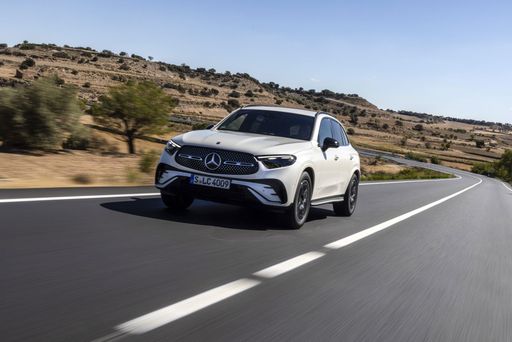
Compare performance (472 HP vs 530 HP), boot space and price (50,300 £ vs 71,600 £ ) at a glance. Find out which car is the better choice for you – Mercedes GLC or Maserati Grecale?

Mercedes GLC vs Maserati Grecale: Key differences

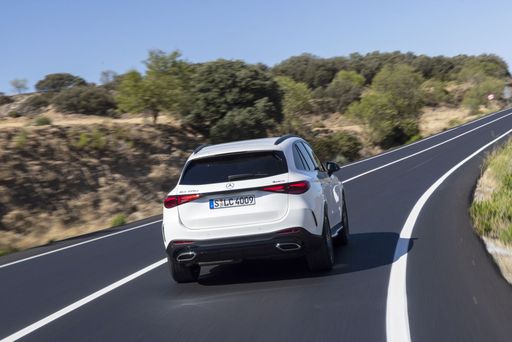
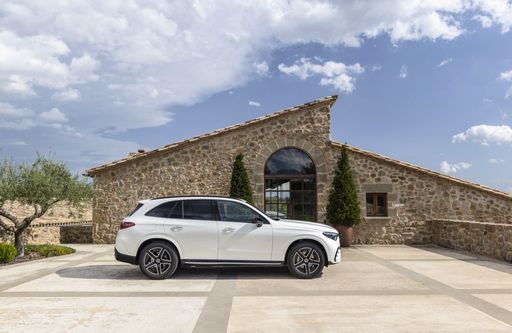
Mercedes GLC

4.4 (12 Reviews)
rate
  • considerably cheaper
  • clearly more efficient
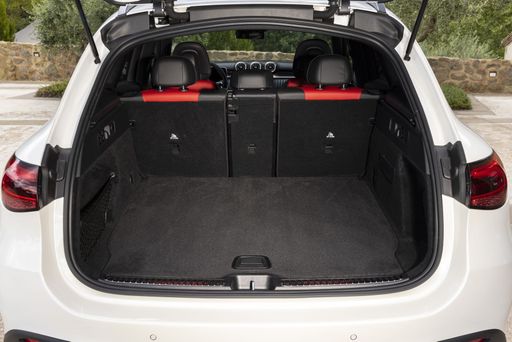
  • slightly more trunk space
details

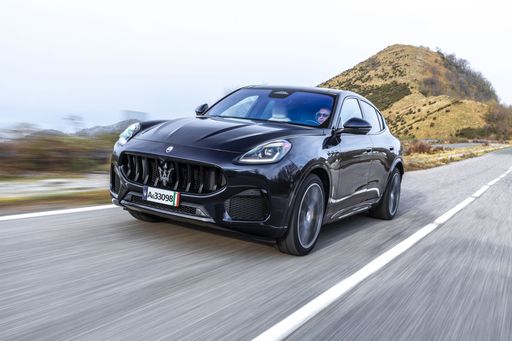
Maserati Grecale

5 (1 Reviews)
rate
  • somewhat more power
  • somewhat quicker 0–100 km/h
  • very slightly lighter
details

All details on performance, efficiency, range and trunk space can be found in the technical comparison below – including user reviews for both models.

By Achim Sedelmaier

GLC

Mercedes GLC vs. Maserati Grecale: A Head-to-Head Comparison

In the fiercely competitive luxury SUV market, the 2024 Mercedes GLC and the 2024 Maserati Grecale stand out as two formidable contenders. With each offering a mix of style, performance, and technological innovation, these vehicles cater to different tastes and requirements. Let's delve into the technical aspects and innovations that define these models.

Grecale

Performance and Engine Types

The Mercedes GLC is available in a variety of engine configurations, including Petrol Mild Hybrid Electric Vehicle (MHEV), Diesel MHEV, and Plug-in Hybrid options. With power offerings ranging from 186 HP to a remarkable 680 HP, the GLC provides versatility for any driving requirement. Its acceleration from 0 to 100 km/h can be as quick as 3.5 seconds, with a top speed of up to 275 km/h. Additionally, it features an automatic transmission, ensuring smooth gear transitions across the board.

On the other hand, the Maserati Grecale offers electric, Petrol MHEV, and petrol engine choices, showcasing a balance of traditional and modern powertrains. The Grecale's power ranges from 301 HP to 558 HP, able to accelerate from 0 to 100 km/h in just 3.8 seconds, and reach speeds up to 285 km/h. This vehicle also embraces an automatic transmission with the added benefit of a reduction gearbox for its electric version.


GLC

Fuel Efficiency and Environmental Impact

Fuel consumption is a critical consideration for any SUV buyer. The Mercedes GLC has a wide range of consumption figures, with the petrol options starting as low as 5.2 L/100km and reaching a mere 0.4 L/100km in hybrid electric mode. It also offers an impressive electric range of up to 130 km, which is ideal for short city commutes without emissions.

Conversely, the Maserati Grecale has a more straightforward consumption rate, averaging between 8.7 L/100km and 11.2 L/100km for non-electric variants. The fully electric Grecale model boasts an electric range of up to 501 km and a consumption of 23.9 kWh/100km, emphasizing its capability as a sustainable travel solution.

Grecale

Interior Comfort and Cargo Space

Inside, both vehicles maintain luxurious standards with seating for five passengers. The Mercedes GLC features a trunk capacity of up to 620 liters, granting ample space for travel luggage or large loads. The Grecale, while slightly less spacious in the trunk with 535 liters, compensates with its refined Italian design, ensuring a plush and stylish ride.

GLC

Technology and Innovations

The 2024 Mercedes GLC incorporates state-of-the-art technology, particularly in safety and infotainment systems. Its innovations include intuitive driver-assist features, a digital cockpit, and smart connectivity that keeps drivers engaged and informed on the road.

Maserati, known for its blend of performance and luxury, has equipped the Grecale with advanced technical features, including a high-performance sound system, state-of-the-art navigation, and customizable driving dynamics through Maserati's Intelligent Drive. These features provide a customizable and luxurious driving experience fit for any journey.

Grecale

Conclusion

In summary, the 2024 Mercedes GLC and Maserati Grecale each offer distinct experiences for luxury SUV enthusiasts. The GLC appeals to those who value efficiency and a broad range of powertrain options, while the Grecale caters to buyers seeking high-performance thrills and Italian elegance. Both are emblematic of their brands' dedication to quality, innovation, and a premium driving experience. The choice ultimately depends on personal preference and priorities, with both models making compelling arguments for their place in your garage.

Here’s where it gets real: The technical differences in detail

GLC

Costs and Efficiency:

Looking at overall running costs, both models reveal some interesting differences in everyday economy.

Mercedes GLC is considerably cheaper – starting at 50,300 £ , while the Maserati Grecale costs 71,600 £ . That’s a price difference of around 21,254 £.

Fuel consumption also shows a difference: the Mercedes GLC uses 1.6 L/100km and is clearly more efficient than the Maserati Grecale with 8.8 L/100km. The difference is about 7.2 L/100km.

Grecale

Engine and Performance:

Power, torque and acceleration are the classic benchmarks for car enthusiasts – and here, some clear differences start to show.

When it comes to engine power, the Maserati Grecale offers somewhat more power – delivering 530 HP compared to 472 HP. That’s roughly 58 HP more horsepower.

When accelerating from 0 to 100 km/h, the Maserati Grecale is somewhat quicker – completing the sprint in 3.8 s, while the Mercedes GLC takes 4.2 s. That’s about 0.4 s quicker.

There’s also a difference in torque: the Mercedes GLC delivers slightly more torque with 750 Nm compared to 620 Nm. That’s about 130 Nm more.

GLC

Space and Everyday Use:

Cabin size, boot volume and payload all play a role in everyday practicality. Here, comfort and flexibility make the difference.

Both vehicles offer seating for 5 people.

In terms of curb weight, Maserati Grecale is very slightly lighter – 1,870 kg compared to 1,985 kg. The difference is around 115 kg.

Looking at boot space, the Mercedes GLC offers slightly more boot space – 620 L compared to 535 L. That’s a difference of about 85 L.

When it comes to payload, the Maserati Grecale carries moderately more – 690 kg compared to 575 kg. That’s a difference of about 115 kg.

Who wins the race in the data check?

The Mercedes GLC holds a decisive overall lead in the objective data comparison.
This result only shows which model scores more points on paper – not which of the two cars feels right for you.

from £50,300
GLC

Mercedes GLC

  • Engine Type : Diesel MHEV, Plugin Hybrid, Petrol MHEV
  • Transmission : Automatic
  • Drive Type : All-Wheel Drive
  • Power HP : 186 - 472 HP
  • Consumption L/100km : 1.6 - 9.4 L/100km
  • Electric Range : 122 - 128 km
Mercedes GLC
Maserati Grecale

Costs and Consumption

View detailed analysis

Engine and Performance

View detailed analysis

Dimensions and Body

View detailed analysis

Mercedes GLC

The Mercedes GLC blends quiet refinement with premium materials to create a comfortable, modern cabin that feels more upscale than its size might suggest. It delivers composed handling and confident on-road manners while offering practical versatility and a strong suite of driver assistance and infotainment features.

details

Maserati Grecale

The Maserati Grecale blends Italian flair with everyday usability, delivering a lively driving character wrapped in a surprisingly polished cabin. It's a compelling choice for buyers who want exotic looks and engaging driving without the fuss of a supercar, and it even manages to feel at home on the school run as well as on a spirited backroad.

details
Mercedes GLC
Maserati Grecale

Costs and Consumption

Price
50,300 - 82,100 £
Price
71,600 - 107,400 £
Consumption L/100km
1.6 - 9.4 L/100km
Consumption L/100km
8.8 - 11.2 L/100km
Consumption kWh/100km
-
Consumption kWh/100km
-
Electric Range
122 - 128 km
Electric Range
-
Battery Capacity
-
Battery Capacity
-
co2
41 - 214 g/km
co2
199 - 254 g/km
Fuel tank capacity
-
Fuel tank capacity
-

Dimensions and Body

Body Type
SUV
Body Type
SUV
Seats
5
Seats
5
Doors
-
Doors
-
Curb weight
1,985 - 2,400 kg
Curb weight
1,870 - 2,027 kg
Trunk capacity
390 - 620 L
Trunk capacity
535 L
Length
-
Length
-
Width
1,890 - 1,920 mm
Width
1,948 - 1,979 mm
Height
-
Height
-
Max trunk capacity
-
Max trunk capacity
-
Payload
475 - 575 kg
Payload
643 - 690 kg

Engine and Performance

Engine Type
Diesel MHEV, Plugin Hybrid, Petrol MHEV
Engine Type
Petrol MHEV, Petrol
Transmission
Automatic
Transmission
Automatic
Transmission Detail
Automatic Gearbox
Transmission Detail
Automatic Gearbox
Drive Type
All-Wheel Drive
Drive Type
All-Wheel Drive
Power HP
186 - 472 HP
Power HP
301 - 530 HP
Acceleration 0-100km/h
4.2 - 9 s
Acceleration 0-100km/h
3.8 - 5.6 s
Max Speed
-
Max Speed
-
Torque
380 - 750 Nm
Torque
450 - 620 Nm
Number of Cylinders
4 - 6
Number of Cylinders
4 - 6
Power kW
137 - 347 kW
Power kW
221 - 390 kW
Engine capacity
1,993 - 2,999 cm3
Engine capacity
1,995 - 3,000 cm3

General

Model Year
2,025 - 2,026
Model Year
2026
CO2 Efficiency Class
D, B, E, F, G
CO2 Efficiency Class
G
Brand
Mercedes-Benz
Brand
Maserati
DriveDuel uses data analysis and artificial intelligence to evaluate vehicle data and create content. Content is regularly reviewed and improved. The displayed prices are estimates based on German list prices, adjusted to the respective country’s VAT. Country-specific registration taxes are not included. This information is not legally binding.