VS

Mercedes GLC vs Mercedes GLB comparison

Compare performance (680 HP vs 354 HP), boot space and price (50,300 £ vs 50,600 £ ) at a glance. Find out which car is the better choice for you – Mercedes GLC or Mercedes GLB?

Mercedes GLC vs Mercedes GLB: Key differences

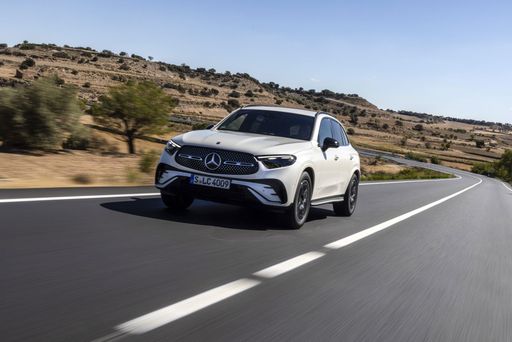
Mercedes GLC

4.4 (11 Reviews)
rate
  • barely cheaper
  • considerably more power
  • barely more efficient
  • slightly more electric range
  • substantially quicker 0–100 km/h
  • somewhat lighter
  • slightly more trunk space

Mercedes GLB

3.2 (3 Reviews)
rate

All details on performance, efficiency, range and trunk space can be found in the technical comparison below – including user reviews for both models.

GLC

Diving into the Details: Mercedes GLB vs. Mercedes GLC

The SUV segment is booming, and the Mercedes-Benz lineup is at the forefront of this surge with its GLB and GLC models. Both vehicles are designed to deliver a perfect blend of luxury, performance, and practicality. But how do they compare? In this article, we’ll dissect the technical aspects and innovations that set the GLB and GLC apart while highlighting their strengths and weaknesses.

GLB

Design and Dimensions

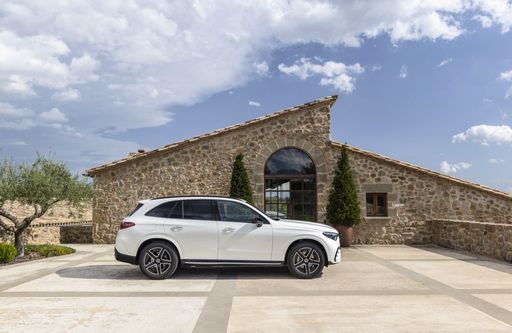
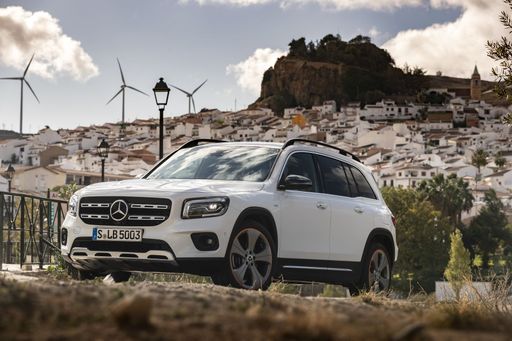
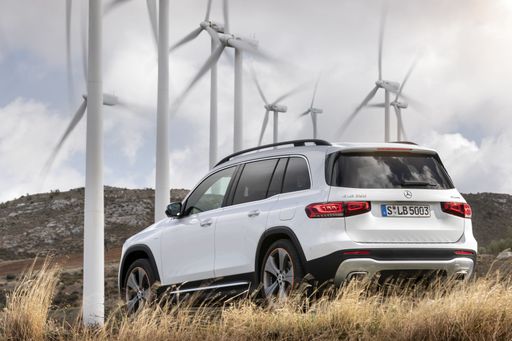
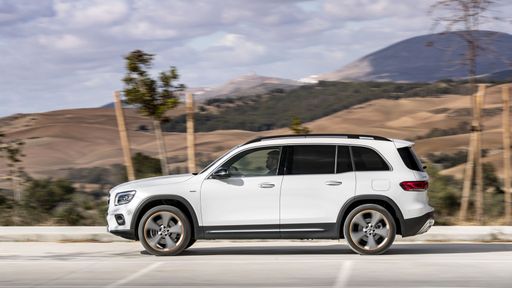
At first glance, both vehicles boast the unmistakable Mercedes aesthetic, yet each has its unique flair. The GLB measures 4634 mm in length and 1834 mm in width, making it a compact SUV that prioritizes usability in urban settings. The slightly larger GLC is longer, measuring between 4716 mm to 4792 mm, and is broader at 1890 mm, offering a more substantial presence on the road.

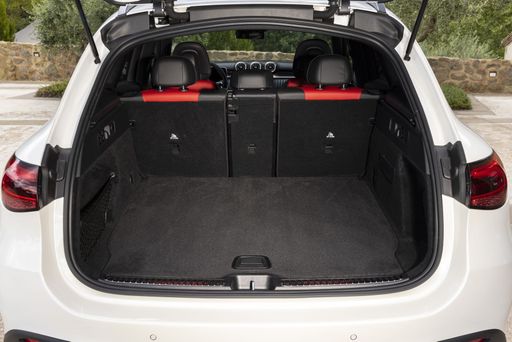
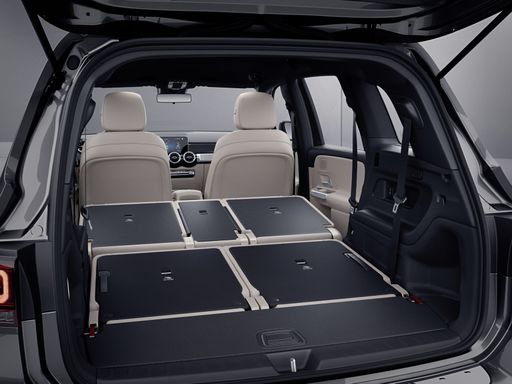
In terms of height, the GLB stands at 1692 mm, giving it a robust silhouette, while the GLC is slightly shorter, with heights ranging from 1603 mm to 1647 mm. This difference results in varying interior volumes, with the GLB’s trunk capacity at 565-570 liters, while the GLC maximizes cargo space with options between 390 to 620 liters depending on the variant.

GLC

Engine Performance and Efficiency

Under the hood, both the GLB and GLC offer a selection of powerful engines, but their configurations cater to different driving preferences. The GLB features a range of petrol and diesel options with outputs from 116 HP to an impressive 320 HP. Its fuel consumption varies from 5.6 L/100 km to 9 L/100 km, a competitive range for family-oriented SUVs.

On the other hand, the GLC introduces additional innovation with its selection of petrol MHEV, diesel MHEV, and plugin hybrid variants, showcasing an output range from223 HP for the entry-level to a formidable 680 HP in the high-performance AMG version. Fuel consumption improves as well, with the plugin hybrid variants achieving as low as 0.4 L/100 km—perfect for eco-conscious drivers.

GLB

Acceleration and Top Speed

When it comes to performance, the GLC takes the crown with faster acceleration times across its range. For instance, the GLB with the highest performance configuration reaches 0-100 km/h in just 5.5 seconds, while the GLC AMG variant can achieve this in an exhilarating 3.5 seconds. Top speeds also reflect this performance gap, with the GLB maxing out at 250 km/h, while the GLC can reach up to 275 km/h.

GLC

Transmission and Drive Type

Both SUVs come equipped with an automatic transmission system. The GLB features a dual-clutch setup, allowing seamless gear changes, which is especially beneficial during city driving. In contrast, the GLC utilizes an equally sophisticated automatic gearbox, and all variants are equipped with all-wheel drive as standard, enhancing traction and overall driving dynamics.

GLB

Interior and Technological Innovations

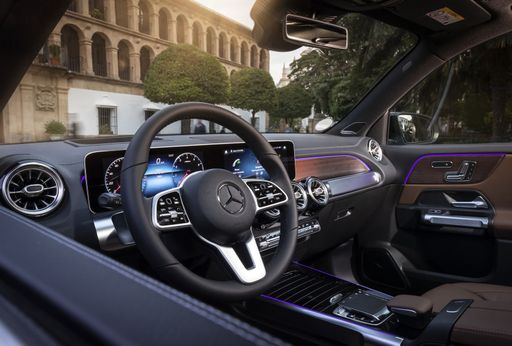
Mercedes-Benz is synonymous with luxury, and both the GLB and GLC deliver on that promise. Inside, the GLB offers comfortable seating for five, focusing on practicality with its spacious layout. Meanwhile, the GLC elevates the experience with cutting-edge technology, including a larger infotainment screen, advanced driver assistance systems, and premium materials that augment the cabin's luxury feel.

The GLC also benefits from the latest MBUX (Mercedes-Benz User Experience) system, featuring voice activation and augmented reality navigation, which enhances the driving experience significantly compared to the GLB’s older infotainment system.

GLC

Conclusion: Choosing the Right SUV for You

In conclusion, the decision between the Mercedes GLB and GLC comes down to personal preference and intended use. The GLB shines with its practical dimensions, fuel efficiency, and family-oriented design. On the other hand, the GLC offers superior performance, innovative technology, and a more luxurious driving experience.

Ultimately, both models reflect Mercedes-Benz’s commitment to engineering excellence and luxury, making either choice a promising acquisition for SUV enthusiasts.

Here’s where it gets real: The technical differences in detail

GLC

Costs and Efficiency:

Price and efficiency are often the first things buyers look at. Here it becomes clear which model has the long-term edge – whether at the pump, the plug, or in purchase price.

Mercedes GLC is barely cheaper – starting at 50,300 £ , while the Mercedes GLB costs 50,600 £ . That’s a price difference of around 285 £.

In terms of energy consumption, the Mercedes GLC is barely more efficient: consuming 14.9 kWh/100km compared to 15.8 kWh/100km for the Mercedes GLB. That’s a difference of about 0.9 kWh/100km.

As for electric range, the Mercedes GLC offers slightly more range – reaching up to 714 km, about 83 km more than the Mercedes GLB.

GLB

Engine and Performance:

Under the bonnet, it becomes clear which model is tuned for sportiness and which one takes the lead when you hit the accelerator.

When it comes to engine power, the Mercedes GLC offers considerably more power – delivering 680 HP compared to 354 HP. That’s roughly 326 HP more horsepower.

When accelerating from 0 to 100 km/h, the Mercedes GLC is substantially quicker – completing the sprint in 3.5 s, while the Mercedes GLB takes 5.5 s. That’s about 2 s quicker.

There’s also a difference in torque: the Mercedes GLC delivers substantially more torque with 1,020 Nm compared to 515 Nm. That’s about 505 Nm more.

GLC

Space and Everyday Use:

Whether family car or daily driver – which one offers more room, flexibility and comfort?

Both vehicles offer seating for 5 people.

In terms of curb weight, Mercedes GLC is somewhat lighter – 1,910 kg compared to 2,200 kg. The difference is around 290 kg.

Looking at boot space, the Mercedes GLC offers slightly more boot space – 620 L compared to 540 L. That’s a difference of about 80 L.

When it comes to payload, the Mercedes GLC carries moderately more – 600 kg compared to 500 kg. That’s a difference of about 100 kg.

Who wins the race in the data check?

The Mercedes GLC is decisively ahead in the objective data comparison.
This result only shows which model scores more points on paper – not which of the two cars feels right for you.

from £50,300
GLC

Mercedes GLC

  • Engine Type : Petrol MHEV, Plugin Hybrid, Diesel MHEV, Electric
  • Transmission : Automatic
  • Drive Type : All-Wheel Drive
  • Power HP : 186 - 680 HP
  • Consumption L/100km : 1.6 - 9.7 L/100km
  • Consumption kWh/100km : 14.9 - 16.6 kWh/100km
  • Electric Range : 12 - 714 km
Mercedes GLC
Mercedes GLB

Costs and Consumption

View detailed analysis

Engine and Performance

View detailed analysis

Dimensions and Body

View detailed analysis

Mercedes GLC

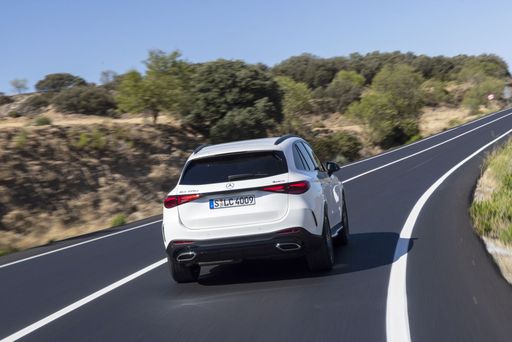
The Mercedes GLC blends plush cabin comfort and composed road manners into an SUV that feels more grown-up than it looks. It won’t shout for attention, but will quietly please buyers who want refinement, usable space and a touch of luxury without the drama.

details

Mercedes GLB

The Mercedes GLB is a practical compact SUV that mixes boxy, family-friendly space with premium German polish, making it an appealing choice for buyers who want usefulness without pretension. It drives with a confident, composed feel and somehow manages to look both rugged and refined — the grown-up SUV that still likes to have fun.

details
Mercedes GLC
Mercedes GLB

Costs and Consumption

Price
50,300 - 126,600 £
Price
50,600 - 62,400 £
Consumption L/100km
1.6 - 9.7 L/100km
Consumption L/100km
-
Consumption kWh/100km
14.9 - 16.6 kWh/100km
Consumption kWh/100km
15.8 - 15.9 kWh/100km
Electric Range
12 - 714 km
Electric Range
614 - 631 km
Battery Capacity
94 kWh
Battery Capacity
-
co2
0 - 221 g/km
co2
0 g/km
Fuel tank capacity
62 - 65 L
Fuel tank capacity
-

Dimensions and Body

Body Type
SUV
Body Type
SUV
Seats
5
Seats
5
Doors
5
Doors
-
Curb weight
1,910 - 2,535 kg
Curb weight
2,200 - 2,280 kg
Trunk capacity
390 - 620 L
Trunk capacity
540 L
Length
4,716 - 4,845 mm
Length
-
Width
1,890 - 1,913 mm
Width
1,861 mm
Height
1,603 - 1,644 mm
Height
-
Max trunk capacity
1,490 - 1,740 L
Max trunk capacity
-
Payload
475 - 600 kg
Payload
500 kg

Engine and Performance

Engine Type
Petrol MHEV, Plugin Hybrid, Diesel MHEV, Electric
Engine Type
Electric
Transmission
Automatic
Transmission
Automatic
Transmission Detail
Automatic Gearbox, Reduction Gearbox
Transmission Detail
Reduction Gearbox
Drive Type
All-Wheel Drive
Drive Type
Rear-Wheel Drive, All-Wheel Drive
Power HP
186 - 680 HP
Power HP
272 - 354 HP
Acceleration 0-100km/h
3.5 - 9 s
Acceleration 0-100km/h
5.5 - 7.4 s
Max Speed
210 - 275 km/h
Max Speed
-
Torque
320 - 1,020 Nm
Torque
335 - 515 Nm
Number of Cylinders
4 - 6
Number of Cylinders
-
Power kW
137 - 500 kW
Power kW
200 - 260 kW
Engine capacity
1,991 - 2,989 cm3
Engine capacity
-

General

Model Year
2,025 - 2,026
Model Year
2,026
CO2 Efficiency Class
F, G, D, B, E, A
CO2 Efficiency Class
A
Brand
Mercedes-Benz
Brand
Mercedes-Benz
DriveDuel uses data analysis and artificial intelligence to evaluate vehicle data and create content. Content is regularly reviewed and improved. The displayed prices are estimates based on German list prices, adjusted to the respective country’s VAT. Country-specific registration taxes are not included. This information is not legally binding.