VS

Mercedes GLE vs Audi Q7 comparison

Compare performance (634 HP vs 507 HP), boot space and price (136,500 £ vs 70,600 £ ) at a glance. Find out which car is the better choice for you – Mercedes GLE or Audi Q7?

Mercedes GLE vs Audi Q7: Key differences

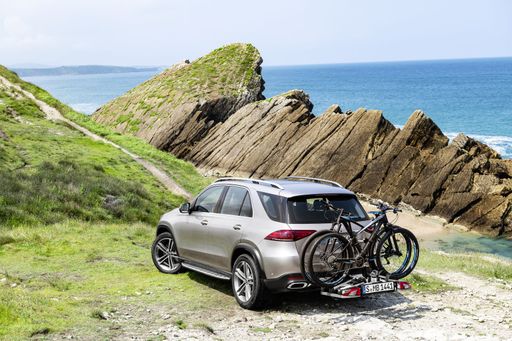
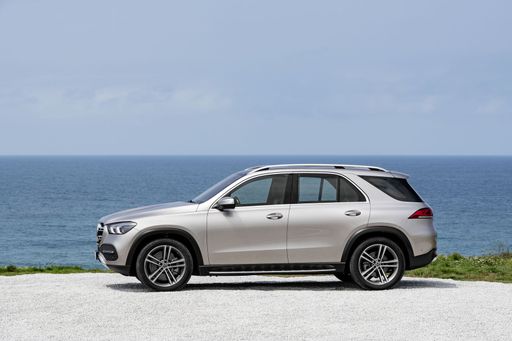
Mercedes GLE

4.1 (1 Reviews)
rate
  • clearly more power
  • a bit more electric range
  • marginally quicker 0–100 km/h
details

Audi Q7

4 (1 Reviews)
rate
  • substantially cheaper
  • somewhat lighter
  • visibly more trunk space
details

All details on performance, efficiency, range and trunk space can be found in the technical comparison below – including user reviews for both models.

By Achim Sedelmaier

GLE

Unleashing Power: Audi Q7 vs. Mercedes GLE

The luxury SUV market is rich with options that blend performance, style, and innovation. Among these contenders, the Audi Q7 and Mercedes GLE stand out, each with distinct features that cater to the discerning driver. With the 2024 models of both these vehicles now available, let's delve into a detailed comparison of their technical specifications and innovations.
Q7

Under the Hood: Engine Options and Performance

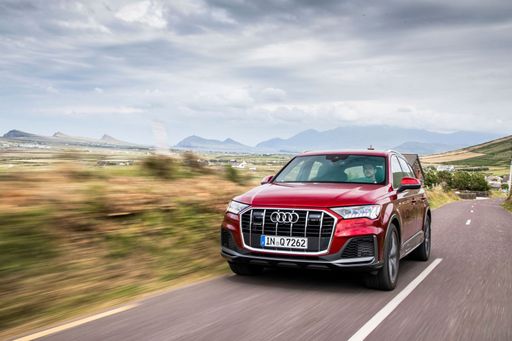
The Audi Q7 offers a range of engine types, including Diesel MHEV, Petrol MHEV, and Plug-in Hybrid variants. This variety spans power outputs from 231 up to 507 HP, ensuring there's a model for every preference. Accelerating from 0 to 100 km/h ranges from a brisk 7.1 seconds in the diesel to an exhilarating 4.1 seconds with the most powerful variant.

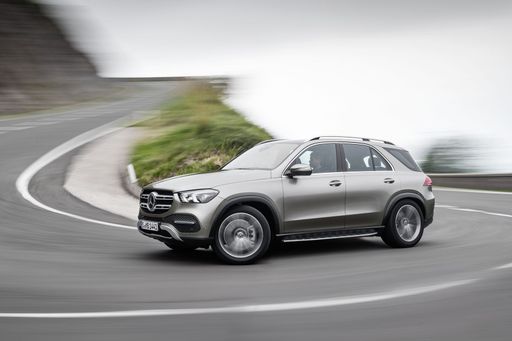
On the other hand, the Mercedes GLE also provides an impressive array of engines, incorporating Diesel MHEV, Petrol MHEV, and Plug-in Hybrid options with power ranging from 289 to a staggering 634 HP. The quickest variant rockets from 0 to 100 km/h in just 3.9 seconds, underscoring the GLE's focus on performance.

GLE

Ecological Footprint: Efficiency and Emissions

Audi Q7's CO2 emissions vary from 28 to 272 g/km, depending on the choice of powertrain, while fuel consumption ranges between 1.2 to 12 L/100 km. Plug-in hybrid models boast an electric range of up to 84 km, courtesy of a 22 kWh battery.

In comparison, the Mercedes GLE's CO2 emissions are between 14 and 276 g/km. The plug-in hybrid versions can travel up to an impressive 114 km purely on electric power, supported by a robust 27 kWh battery. Fuel consumption is also efficient in this segment, with figures as low as 0.5 L/100 km achievable.

Q7

Room to Roam: Dimensions and Capacity

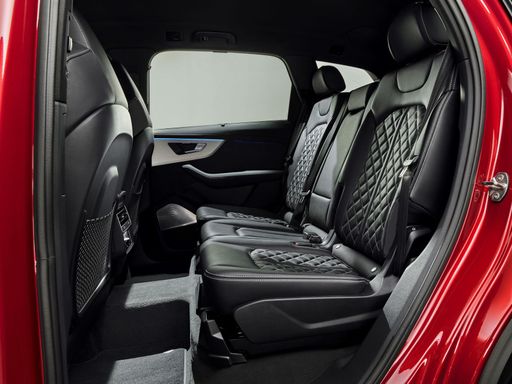
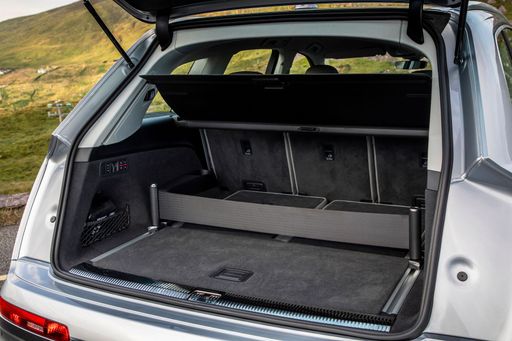
The Audi Q7 impresses with its spacious cabin, offering seating for up to seven passengers. With a length of 5072 mm, width of 1970 mm, and height variants around 1734 mm, the Q7 provides generous interior space and a trunk capacity extending from 563 to 887 liters, catering well to family and adventure needs.

Mercedes GLE, while seating five, focusses on refinement and functionality with its 4941 mm length, 1947 mm width, and most versions standing at 1797 mm tall. Trunk sizes range from 490 to 655 liters, showcasing a balanced approach to luxury and utility.

GLE

Innovation and Comfort: A Tech-Savvy Approach

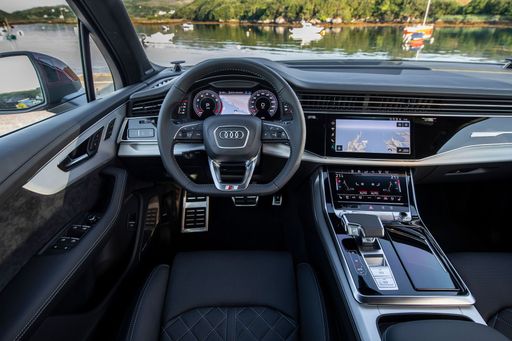
Audi's technological prowess in the Q7 is evident with features like virtual cockpit, infotainment advancements, and a host of driver-assist systems. It also offers adaptive climate control settings, enhancing comfort on long journeys.

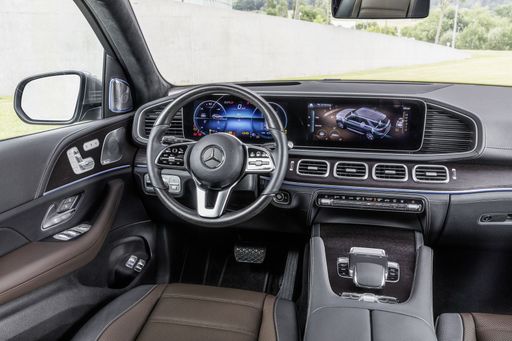
The Mercedes GLE is no slouch in tech either, featuring the latest MBUX system that learns driver preferences and adapts responses for a personalized experience. Safety and assistance systems are abundant, making it not just a drive, but an experience.

Q7

Conclusion: Choice of Titans

Both the Audi Q7 and Mercedes GLE excel in their class with distinctive characteristics. If dynamic power delivery and a wider range of seating configurations are paramount, the Audi Q7 is compelling. However, for those prioritizing cutting-edge tech with extensive electric range and luxury features, the Mercedes GLE takes the lead.

The competition between these two giants of the road reminds us that in the world of luxury SUVs, the choice comes down to personal preferences. Each offers a driving experience that’s unique and gratifying, promising a fulfilling ownership whichever way you steer.

Here’s where it gets real: The technical differences in detail

GLE

Costs and Efficiency:

Price and efficiency are key factors when choosing a car – and this is often where the real differences emerge.

Audi Q7 is substantially cheaper – starting at 70,600 £ , while the Mercedes GLE costs 136,500 £ . That’s a price difference of around 65,858 £.

Both cars consume an average of 3.8 L/100km – no difference here.

As for electric range, the Mercedes GLE offers a bit more range – reaching up to 92 km, about 10 km more than the Audi Q7.

Q7

Engine and Performance:

Power, torque and acceleration say a lot about how a car feels on the road. This is where you see which model delivers more driving dynamics.

When it comes to engine power, the Mercedes GLE offers clearly more power – delivering 634 HP compared to 507 HP. That’s roughly 127 HP more horsepower.

When accelerating from 0 to 100 km/h, the Mercedes GLE is marginally quicker – completing the sprint in 3.9 s, while the Audi Q7 takes 4.1 s. That’s about 0.2 s quicker.

There’s also a difference in torque: the Mercedes GLE delivers barely more torque with 850 Nm compared to 770 Nm. That’s about 80 Nm more.

GLE

Space and Everyday Use:

Beyond pure performance, interior space and usability matter most in daily life. This is where you see which car is more practical and versatile.

Seats: Audi Q7 offers more seats – 7 vs 5.

In terms of curb weight, Audi Q7 is somewhat lighter – 2,055 kg compared to 2,375 kg. The difference is around 320 kg.

Looking at boot space, the Audi Q7 offers visibly more boot space – 887 L compared to 655 L. That’s a difference of about 232 L.

When it comes to payload, the Audi Q7 carries noticeably more – 885 kg compared to 675 kg. That’s a difference of about 210 kg.

Who wins the race in the data check?

The Audi Q7 is clearly superior overall in the objective data comparison.
This result only shows which model scores more points on paper – not which of the two cars feels right for you.

from £70,600
Q7

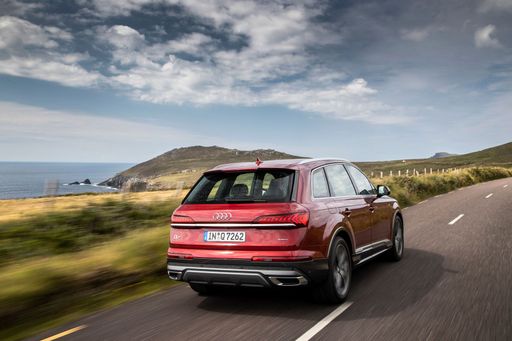
Audi Q7

  • Engine Type : Petrol MHEV, Diesel MHEV, Petrol, Plugin Hybrid
  • Transmission : Automatic
  • Drive Type : All-Wheel Drive
  • Power HP : 231 - 507 HP
  • Consumption L/100km : 3.8 - 11.9 L/100km
  • Electric Range : 81 - 82 km
Mercedes GLE
Audi Q7

Costs and Consumption

View detailed analysis

Engine and Performance

View detailed analysis

Dimensions and Body

View detailed analysis

Mercedes GLE

The Mercedes GLE blends luxurious comfort with a confident road presence, wrapping tech and refinement in an SUV shape that still knows how to behave on a twisty back road. Inside it's plush and quiet, with clever storage and driver aids that make long trips effortless — plus the badge gives it that easy-to-respect curb appeal.

details

Audi Q7

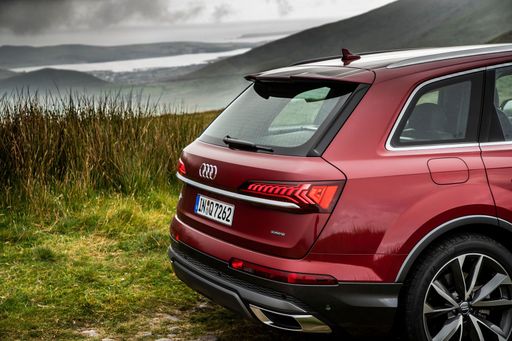
The Audi Q7 cuts an imposing figure on the road, balancing restrained luxury with a spacious, tech-rich cabin that makes long journeys feel effortless. It rides with confident composure and polished manners, so if you want a premium family SUV that feels grown-up and worth the badge, the Q7 is a persuasive choice — even the in-laws will be impressed.

details
Mercedes GLE
Audi Q7

Costs and Consumption

Price
136,500 - 175,800 £
Price
70,600 - 100,600 £
Consumption L/100km
3.8 - 12.5 L/100km
Consumption L/100km
3.8 - 11.9 L/100km
Consumption kWh/100km
-
Consumption kWh/100km
-
Electric Range
89 - 92 km
Electric Range
81 - 82 km
Battery Capacity
-
Battery Capacity
-
co2
86 - 284 g/km
co2
86 - 271 g/km
Fuel tank capacity
-
Fuel tank capacity
-

Dimensions and Body

Body Type
SUV
Body Type
SUV
Seats
5
Seats
5 - 7
Doors
-
Doors
-
Curb weight
2,375 - 2,800 kg
Curb weight
2,055 - 2,460 kg
Trunk capacity
490 - 655 L
Trunk capacity
563 - 887 L
Length
-
Length
-
Width
1,947 mm
Width
1,970 mm
Height
-
Height
-
Max trunk capacity
-
Max trunk capacity
-
Payload
470 - 675 kg
Payload
640 - 885 kg

Engine and Performance

Engine Type
Petrol MHEV, Plugin Hybrid
Engine Type
Petrol MHEV, Diesel MHEV, Petrol, Plugin Hybrid
Transmission
Automatic
Transmission
Automatic
Transmission Detail
Automatic Gearbox
Transmission Detail
Automatic Gearbox
Drive Type
All-Wheel Drive
Drive Type
All-Wheel Drive
Power HP
457 - 634 HP
Power HP
231 - 507 HP
Acceleration 0-100km/h
3.9 - 5 s
Acceleration 0-100km/h
4.1 - 7.1 s
Max Speed
-
Max Speed
-
Torque
520 - 850 Nm
Torque
500 - 770 Nm
Number of Cylinders
6 - 8
Number of Cylinders
6 - 8
Power kW
336 - 466 kW
Power kW
170 - 373 kW
Engine capacity
2,999 - 3,982 cm3
Engine capacity
2,967 - 3,996 cm3

General

Model Year
2025
Model Year
2025
CO2 Efficiency Class
G, B
CO2 Efficiency Class
G, B
Brand
Mercedes-Benz
Brand
Audi
DriveDuel uses data analysis and artificial intelligence to evaluate vehicle data and create content. Content is regularly reviewed and improved. The displayed prices are estimates based on German list prices, adjusted to the respective country’s VAT. Country-specific registration taxes are not included. This information is not legally binding.