
 Deutschland
 France
 Nederland
 Great Britain
 Sverige
 Danmark
 Suomi
Suomi Italia
 Polska
 Česko
Česko España
VS
Mercedes Sprinter Transporter vs Mitsubishi Eclipse Cross comparison
Compare performance (204 HP vs 218 HP), boot space and price (26,900 £ vs 41,100 £ ) at a glance. Find out which car is the better choice for you – Mercedes Sprinter Transporter or Mitsubishi Eclipse Cross?
Mercedes Sprinter Transporter vs Mitsubishi Eclipse Cross: Key differences
All details on performance, efficiency, range and trunk space can be found in the technical comparison below – including user reviews for both models.
Sprinter Transporter
Costs and Efficiency:
When it comes to price and running costs, the biggest differences usually appear. This is often where you see which car fits your budget better in the long run.
Mercedes Sprinter Transporter is considerably cheaper – starting at 26,900 £ , while the Mitsubishi Eclipse Cross costs 41,100 £ . That’s a price difference of around 14,186 £.
In terms of energy consumption, the Mitsubishi Eclipse Cross is clearly more efficient: consuming 16.7 kWh/100km compared to 27.1 kWh/100km for the Mercedes Sprinter Transporter. That’s a difference of about 10.4 kWh/100km.
As for electric range, the Mitsubishi Eclipse Cross offers visibly more range – reaching up to 627 km, about 183 km more than the Mercedes Sprinter Transporter.
Eclipse Cross
Engine and Performance:
Under the bonnet, it becomes clear which model is tuned for sportiness and which one takes the lead when you hit the accelerator.
When it comes to engine power, the Mitsubishi Eclipse Cross offers barely more power – delivering 218 HP compared to 204 HP. That’s roughly 14 HP more horsepower.
There’s also a difference in torque: the Mercedes Sprinter Transporter delivers visibly more torque with 450 Nm compared to 300 Nm. That’s about 150 Nm more.
Space and Everyday Use:
Whether family car or daily driver – which one offers more room, flexibility and comfort?
Seats: Mitsubishi Eclipse Cross offers more seats – 5 vs 3.
In terms of curb weight, Mitsubishi Eclipse Cross is marginally lighter – 1,922 kg compared to 2,052 kg. The difference is around 130 kg.
When it comes to payload, the Mercedes Sprinter Transporter carries substantially more – 2,641 kg compared to 413 kg. That’s a difference of about 2,228 kg.
Who wins the race in the data check?
The Mercedes Sprinter Transporter is narrowly ahead in the objective data comparison.
This result only shows which model scores more points on paper – not which of the two cars feels right for you.
from £26,900

Mercedes Sprinter Transporter
Mercedes Sprinter Transporter
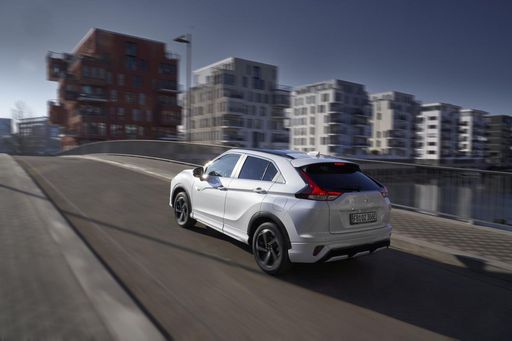
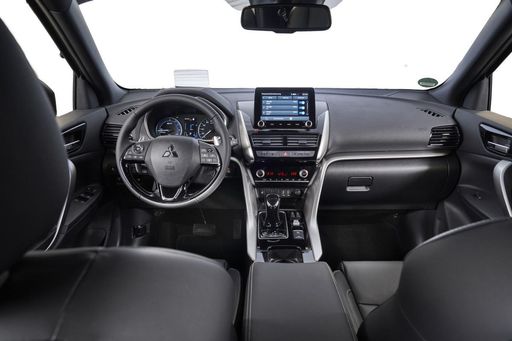
Mitsubishi Eclipse Cross
Costs and Consumption
View detailed analysis
View detailed analysis
Engine and Performance
View detailed analysis
View detailed analysis
Dimensions and Body
View detailed analysis
View detailed analysis
Mercedes Sprinter Transporter
The Mercedes Sprinter is the dependable workhorse that makes light of heavy loads, blending smart practicality with a surprisingly carlike cabin that keeps drivers sane on long runs. With a range of configurations and a reputation for durability, it’s the van buyers turn to when they need something tough, clever and oddly enjoyable to drive.
details
Mitsubishi Eclipse Cross
Mitsubishi Eclipse Cross combines coupe-like looks with crossover practicality, so you get style without the showroom attitude. It’s an affable daily driver that hides a few quirks behind a confident grin, making it an easy pick for buyers who want personality without fuss.
details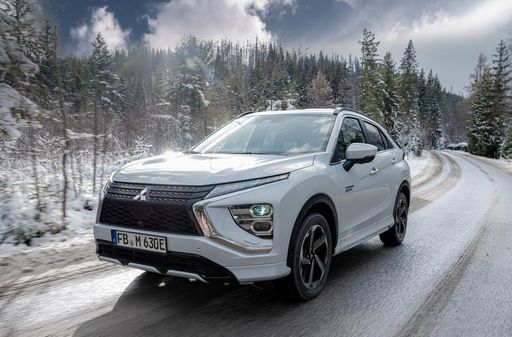
Mercedes Sprinter Transporter
Mitsubishi Eclipse Cross
Costs and Consumption |
|
|---|---|
|
Price
26,900 - 72,900 £
|
Price
41,100 - 48,200 £
|
|
Consumption L/100km
7.9 - 12.7 L/100km
|
Consumption L/100km
-
|
|
Consumption kWh/100km
27.1 - 31.5 kWh/100km
|
Consumption kWh/100km
16.7 - 17.1 kWh/100km
|
|
Electric Range
194 - 444 km
|
Electric Range
615 - 627 km
|
|
Battery Capacity
56 - 113 kWh
|
Battery Capacity
-
|
|
co2
0 - 333 g/km
|
co2
0 g/km
|
|
Fuel tank capacity
71 L
|
Fuel tank capacity
-
|
Dimensions and Body |
|
|---|---|
|
Body Type
Cargo Van
|
Body Type
SUV
|
|
Seats
3
|
Seats
5
|
|
Doors
4
|
Doors
-
|
|
Curb weight
2,052 - 3,166 kg
|
Curb weight
1,922 - 1,950 kg
|
|
Trunk capacity
-
|
Trunk capacity
545 L
|
|
Length
5,932 - 7,367 mm
|
Length
-
|
|
Width
1,993 mm
|
Width
1,908 mm
|
|
Height
2,331 - 2,663 mm
|
Height
-
|
|
Max trunk capacity
9,000 - 15,500 L
|
Max trunk capacity
-
|
|
Payload
577 - 2,641 kg
|
Payload
385 - 413 kg
|
Engine and Performance |
|
|---|---|
|
Engine Type
Electric, Diesel
|
Engine Type
Electric
|
|
Transmission
Automatic, Manuel
|
Transmission
Automatic
|
|
Transmission Detail
Reduction Gearbox, Manual Gearbox, Automatic Gearbox
|
Transmission Detail
Reduction Gearbox
|
|
Drive Type
Rear-Wheel Drive, All-Wheel Drive
|
Drive Type
Front-Wheel Drive
|
|
Power HP
114 - 204 HP
|
Power HP
218 HP
|
|
Acceleration 0-100km/h
-
|
Acceleration 0-100km/h
7.9 s
|
|
Max Speed
90 km/h
|
Max Speed
-
|
|
Torque
300 - 450 Nm
|
Torque
300 Nm
|
|
Number of Cylinders
4
|
Number of Cylinders
-
|
|
Power kW
84 - 150 kW
|
Power kW
160 kW
|
|
Engine capacity
1,950 cm3
|
Engine capacity
-
|
General |
|
|---|---|
|
Model Year
2,024 - 2,025
|
Model Year
2025
|
|
CO2 Efficiency Class
A, G
|
CO2 Efficiency Class
A
|
|
Brand
Mercedes-Benz
|
Brand
Mitsubishi
|
DriveDuel uses data analysis and artificial intelligence to evaluate vehicle data and create content. Content is regularly reviewed and improved.
The displayed prices are estimates based on German list prices, adjusted to the respective country’s VAT. Country-specific registration taxes are not included. This information is not legally binding.