VS

Mercedes V Class vs Hyundai Staria comparison

Compare performance (237 HP vs 225 HP), boot space and price (48,200 £ vs 42,400 £ ) at a glance. Find out which car is the better choice for you – Mercedes V Class or Hyundai Staria?

Mercedes V Class vs Hyundai Staria: Key differences

Mercedes V Class

  • only slightly more power
  • barely more efficient
  • noticeably quicker 0–100 km/h
  • very slightly lighter
details

Hyundai Staria

  • moderately cheaper
details

By Achim Sedelmaier

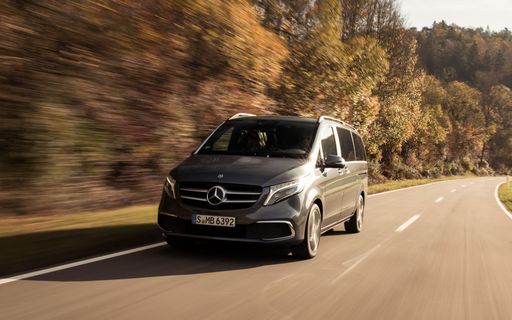
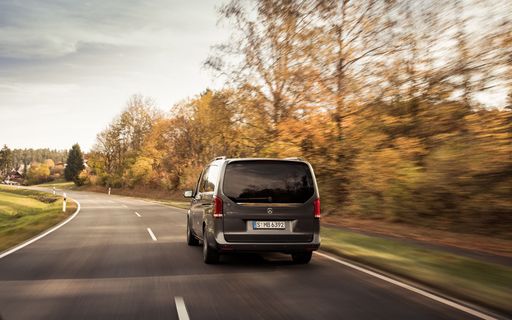
V Class

Hyundai Staria vs. Mercedes V-Klasse: The Ultimate Van Showdown

In an ever-evolving automotive landscape, the battle of family vans remains fierce. Today, we compare two strong contenders in the segment: the Hyundai Staria and the Mercedes V-Klasse. Each vehicle comes with its unique set of features, engine options, and technical innovations, appealing to different expectations and needs. Let's dive deeper into their specifications, technical aspects, and innovations.
Staria

Design and Space

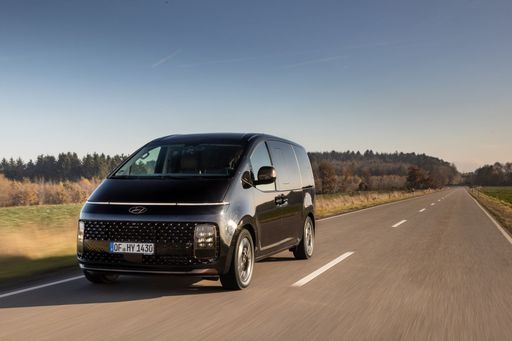
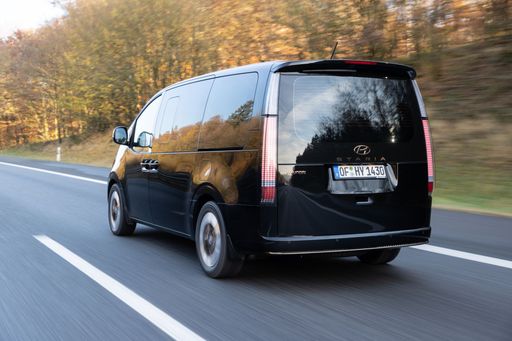
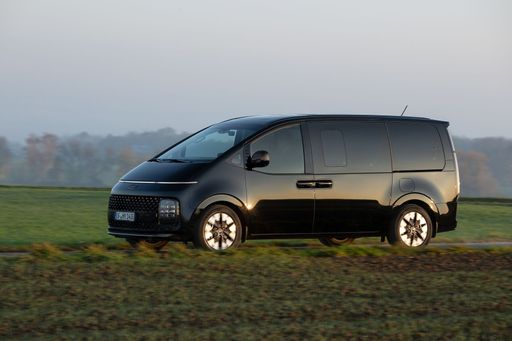
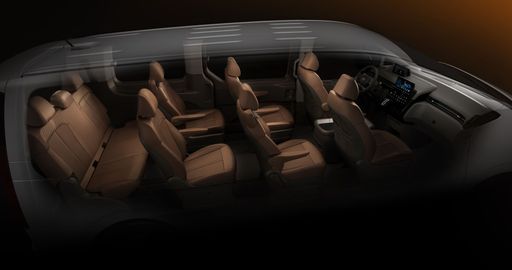
The Hyundai Staria makes a bold statement on the road with its futuristic design characterized by smooth lines and a sleek profile. The elongated form provides generous interior space, accommodating up to 9 passengers with a luxurious cabin feel. With a length of 5253 mm, width of 1997 mm, and height of 1990 mm, the Staria’s spaciousness is hard to overlook.

On the other hand, the Mercedes V-Klasse, known for its iconic styling and elegance, offers a selection of configurations. It ranges from 4895 mm to 5370 mm in length, 1928 mm in width, and varying heights, allowing for a customizable experience depending on the variant. Overall, while both vans prioritize space, the Staria leans toward a modern aesthetic, while the V-Klasse emphasizes luxury and craftsmanship.

V Class

Performance and Engine Options

Under the hood, the Hyundai Staria offers a potent diesel engine with 177 HP and a torque of 430 Nm. It is available in both all-wheel drive and front-wheel drive configurations, accommodating various driving conditions. The Staria’s fuel consumption averages around 8.5 to 8.9 L/100 km, making it fairly efficient for its size. With a 0-100 km/h acceleration time of 13.5 seconds, it's not the quickest in its class but is competent for everyday use.

In contrast, the Mercedes V-Klasse offers a broader range of engine options, catering to varying preferences. It features diesel engines ranging up to 237 HP, each providing higher torque levels (up to 500 Nm), meaning it can deliver superior performance when needed. Acceleration can drop as low as 7.4 seconds for top variants, and fuel consumption varies from 7.1 to 10.2 L/100 km depending on the engine choice. The V-Klasse is available in both rear-wheel and all-wheel drive setups, satisfying demands for both sportiness and practicality.

Staria

Interior Features and Technology

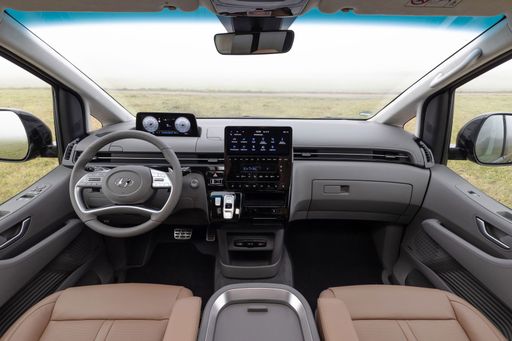
Moving into the interiors, the Hyundai Staria boasts a modern cabin layered with high-tech features. It includes a digital cockpit and an intuitive infotainment system that supports multiple connectivity options, catering to the digital age. The wide-open design adds to a sense of space, reinforcing its status as a family van.

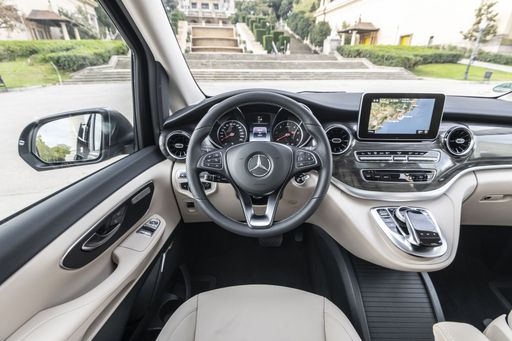
Meanwhile, the Mercedes V-Klasse is renowned for its lavish interiors that exude premium quality. The incorporation of high-grade materials, an advanced MBUX infotainment system, and a suite of driver assistance features elevate the driving experience. The inner space can be configured to enhance comfort, making it suitable for business and leisure alike.

V Class

Safety Features

When it comes to safety, both vehicles are robust contenders. The Hyundai Staria is rich in advanced safety features, including multiple airbags, stability control, and driver assistance systems that enhance its capabilities on the road.

The V-Klasse reaches an impressive benchmark in safety technology, with a comprehensive suite that includes adaptive cruise control, lane-keeping assist, and collision prevention systems, providing a sense of security for both drivers and passengers.

Staria

Conclusion: Which Van Wins?

Choosing between the Hyundai Staria and the Mercedes V-Klasse ultimately boils down to consumer preference. If modern design, generous space, and affordability are your priorities, the Staria is a compelling option. However, for those who lean towards luxurious details, superior performance, and advanced technologies, the V-Klasse stands tall as a prestigious alternative.

As the automotive landscape continues to evolve, both the Hyundai Staria and Mercedes V-Klasse showcase innovative features and engineering excellence, reflecting the diverse needs of families and businesses on the go.

Here’s where it gets real: The technical differences in detail

V Class

Costs and Efficiency:

Price and efficiency are often the first things buyers look at. Here it becomes clear which model has the long-term edge – whether at the pump, the plug, or in purchase price.

Hyundai Staria is moderately cheaper – starting at 42,400 £ , while the Mercedes V Class costs 48,200 £ . That’s a price difference of around 5,736 £.

Fuel consumption also shows a difference: the Mercedes V Class uses 7.1 L/100km and is barely more efficient than the Hyundai Staria with 7.6 L/100km. The difference is about 0.5 L/100km.

Staria

Engine and Performance:

Power, torque and acceleration say a lot about how a car feels on the road. This is where you see which model delivers more driving dynamics.

When it comes to engine power, the Mercedes V Class offers only slightly more power – delivering 237 HP compared to 225 HP. That’s roughly 12 HP more horsepower.

When accelerating from 0 to 100 km/h, the Mercedes V Class is noticeably quicker – completing the sprint in 7.4 s, while the Hyundai Staria takes 10.2 s. That’s about 2.8 s quicker.

There’s also a difference in torque: the Mercedes V Class delivers clearly more torque with 500 Nm compared to 367 Nm. That’s about 133 Nm more.

V Class

Space and Everyday Use:

Beyond pure performance, interior space and usability matter most in daily life. This is where you see which car is more practical and versatile.

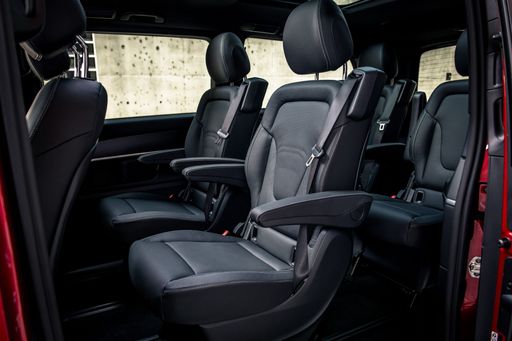
Seats: Hyundai Staria offers more seats – 9 vs 6.

In terms of curb weight, Mercedes V Class is very slightly lighter – 2,192 kg compared to 2,275 kg. The difference is around 83 kg.

When it comes to payload, the Mercedes V Class carries slightly more – 908 kg compared to 775 kg. That’s a difference of about 133 kg.

Who wins the race in the data check?

The Mercedes V Class stands well ahead of its rival in the objective data comparison.
This result only shows which model scores more points on paper – not which of the two cars feels right for you.

from £48,200
V Class

Mercedes V Class

  • Engine Type : Diesel, Petrol
  • Transmission : Automatic
  • Drive Type : Rear-Wheel Drive, All-Wheel Drive
  • Power HP : 163 - 237 HP
  • Consumption L/100km : 7.1 - 10.2 L/100km
Mercedes V Class
Hyundai Staria

Costs and Consumption

View detailed analysis

Engine and Performance

View detailed analysis

Dimensions and Body

View detailed analysis

Mercedes V Class

The V‑Class is the grown-up people mover that blends executive-level comfort with van practicality, ideal for those who want to ferry family and gear without sacrificing luxury. Inside it's plush and flexible, with clever touches that turn long hauls into a comfortable commute and still manage to look serious on the school run.

details

Hyundai Staria

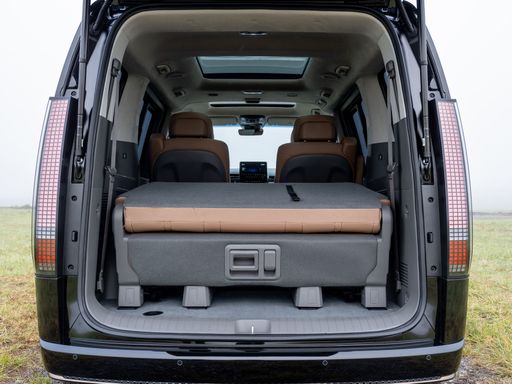
Hyundai Staria looks like a friendly spaceship, its sweeping glass and soft edges turning a people‑mover into a design statement that actually gets noticed. Inside it's airy and practical — perfect for families or anyone who likes travelling in comfort and style, with enough flexibility to swallow luggage and weekend plans without drama.

details
Mercedes V Class
Hyundai Staria

Costs and Consumption

Price
48,200 - 83,300 £
Price
42,400 - 50,500 £
Consumption L/100km
7.1 - 10.2 L/100km
Consumption L/100km
7.6 L/100km
Consumption kWh/100km
-
Consumption kWh/100km
-
Electric Range
-
Electric Range
-
Battery Capacity
-
Battery Capacity
-
co2
187 - 232 g/km
co2
172 g/km
Fuel tank capacity
-
Fuel tank capacity
-

Dimensions and Body

Body Type
Bus
Body Type
Bus
Seats
6
Seats
7 - 9
Doors
-
Doors
-
Curb weight
2,192 - 2,464 kg
Curb weight
2,275 - 2,345 kg
Trunk capacity
-
Trunk capacity
117 - 831 L
Length
-
Length
-
Width
1,928 mm
Width
1,997 mm
Height
-
Height
-
Max trunk capacity
-
Max trunk capacity
-
Payload
636 - 908 kg
Payload
605 - 775 kg

Engine and Performance

Engine Type
Diesel, Petrol
Engine Type
Full Hybrid
Transmission
Automatic
Transmission
Automatic
Transmission Detail
Automatic Gearbox
Transmission Detail
Automatic Gearbox
Drive Type
Rear-Wheel Drive, All-Wheel Drive
Drive Type
Front-Wheel Drive
Power HP
163 - 237 HP
Power HP
225 HP
Acceleration 0-100km/h
7.4 - 10.7 s
Acceleration 0-100km/h
10.2 s
Max Speed
-
Max Speed
-
Torque
370 - 500 Nm
Torque
367 Nm
Number of Cylinders
4
Number of Cylinders
4
Power kW
120 - 174 kW
Power kW
165 kW
Engine capacity
1,950 - 1,999 cm3
Engine capacity
1,598 cm3

General

Model Year
2025
Model Year
2024
CO2 Efficiency Class
G
CO2 Efficiency Class
F
Brand
Mercedes-Benz
Brand
Hyundai
DriveDuel uses data analysis and artificial intelligence to evaluate vehicle data and create content. Content is regularly reviewed and improved. The displayed prices are estimates based on German list prices, adjusted to the respective country’s VAT. Country-specific registration taxes are not included. This information is not legally binding.