VS

Mercedes V Class vs Mercedes GLS comparison

Compare performance (237 HP vs 634 HP), boot space and price (48,200 £ vs 96,100 £ ) at a glance. Find out which car is the better choice for you – Mercedes V Class or Mercedes GLS?

Mercedes V Class vs Mercedes GLS: Key differences

Mercedes V Class

  • clearly cheaper
  • only slightly more efficient
  • moderately lighter

Mercedes GLS

  • significantly more power
  • clearly quicker 0–100 km/h
V Class

The Luxury Divide: Mercedes V-Klasse vs. Mercedes GLS

When it comes to luxurious travel, Mercedes-Benz continues to set the standard with their array of premium vehicles. Among their offerings, the Mercedes V-Klasse and the Mercedes GLS stand out as two distinct choices for those interested in high-end transportation with differing needs and preferences. This article delves deep into the technical specifications and innovative features that define these two luxury automobiles, aiding discerning buyers in making an informed choice.
GLS

Design and Body Type

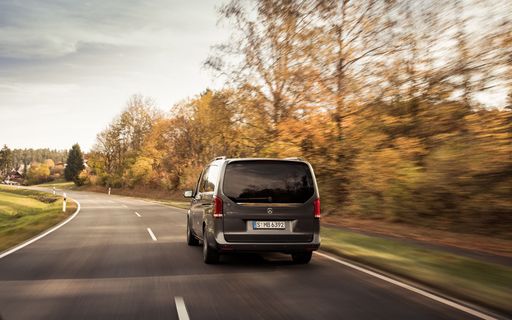
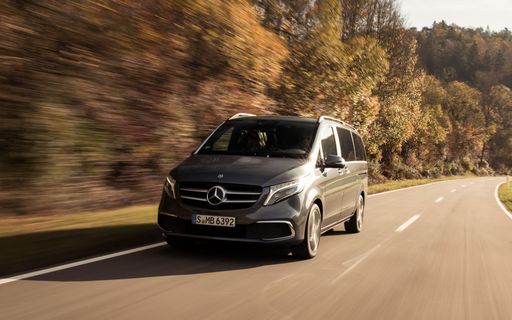
The Mercedes V-Klasse is classified as a luxury bus, making it an ideal choice for those who prioritize interior space and versatility. The vehicle boasts a significant length ranging from 4895 mm to 5370 mm, and an accommodating height of around 1908 mm, providing ample space for passengers to travel comfortably. With a sleek width of 1928 mm, the V-Klasse subtly exudes presence and elegance.

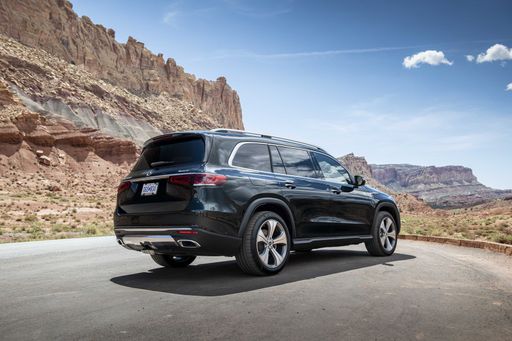
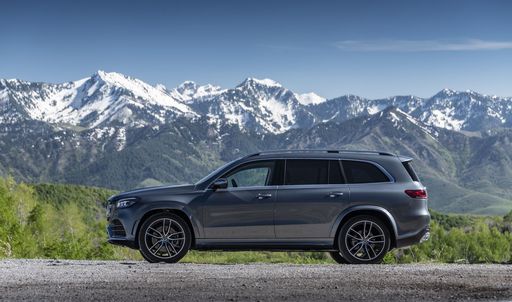
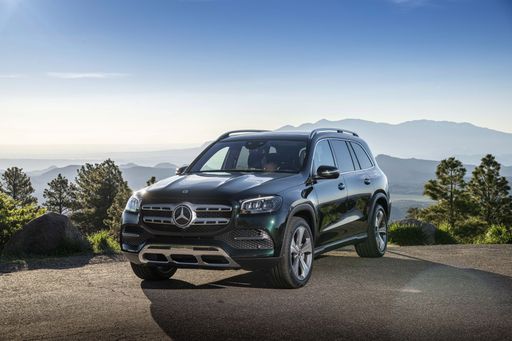
On the other side, the Mercedes GLS is an SUV, exuding a robust and commanding posture. With a slightly shorter length that varies between 5208 mm to 5233 mm, and a width of 1956 mm, the GLS maintains a compact and sporty exterior. The vehicle's height, ranging from 1782 mm to 1838 mm, complements its SUV status by offering an adequately high driving position while retaining enhanced aerodynamics.

V Class

Performance and Engine Specifications

The Mercedes V-Klasse sports diesel and petrol engine types with power ranging from 163 HP to 237 HP. These engines ensure a smooth, composed drive, paired with an automatic gearbox. The rear-wheel drive and all-wheel drive options offer versatility for different terrains and driving preferences. The V-Klasse also features an acceleration rate from 0-100 km/h as quick as 7.4 seconds, emphasizing its powerful presence on the road.

Contrastingly, the GLS is packed with even more muscle. Equipped with diesel and petrol mild hybrid engines (MHEV), it offers a remarkable power range between 333 HP and a mighty 634 HP. The all-wheel drive ensures superior traction and stability across varying conditions, while its automatic transmission guarantees seamless shifts. The GLS boasts an impressive acceleration ability, with the quickest sprint from 0-100 km/h in just 4.2 seconds, exhibiting unparalleled prowess.

GLS

Fuel Efficiency and Environmental Impact

In terms of fuel consumption, the Mercedes V-Klasse is relatively efficient, offering a range from 7.1 to 10.2 L/100 km. This efficiency aligns with its focus as a family or business van, ensuring long, comfortable journeys without frequent refueling interruptions. The CO2 efficiency class, marked as 'G', signifies its environmental considerations within its performance range.

The Mercedes GLS, with its range of 7.9 to 13.7 L/100 km consumption, utilizes mild hybrid technology to offer performance while managing fuel economy reasonably for an SUV of its stature. Its CO2 emissions hover between 207 g/km and 310 g/km, reflecting technological measures taken to balance power with environmental responsibility.

V Class

Interior Space and Cargo Capacity

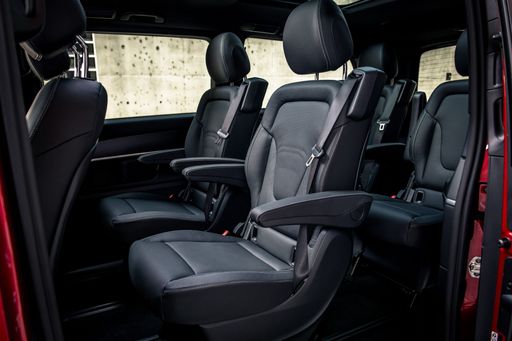
Functionality is a hallmark of the Mercedes V-Klasse with its seating capacity for six and an impressive trunk space that can reach up to 1410 liters. It’s a practical choice for families or businesses needing to transport goods or equipment regularly.

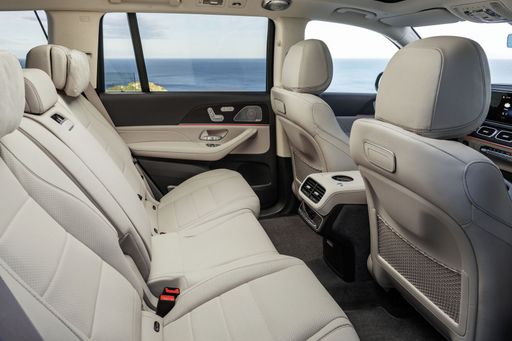
Meanwhile, the GLS maximizes luxury with space for up to seven passengers, catering to larger groups comfortably. While its trunk capacity is limited to 355 liters, the GLS emphasizes passenger comfort over cargo space, ideal for those occasions where passenger commute is paramount over cargo transport.

GLS

Innovative Features

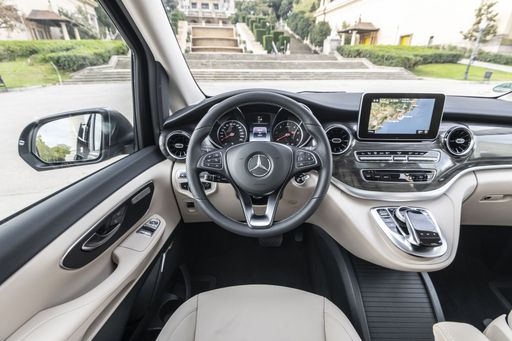
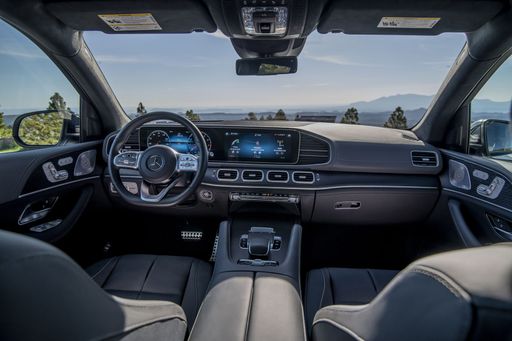
Both models benefit from Mercedes-Benz's commitment to innovation, incorporating high-tech features such as advanced infotainment systems, intuitive driver assistance technologies, and luxurious interior finishes that exemplify the brand's reputation for quality and sophistication.

While the V-Klasse and GLS serve different purposes — one focusing on versatility and space, the other on performance and prestige — each embodies the luxurious essence of Mercedes-Benz, delivering unparalleled driving experiences that cater to distinct lifestyles and preferences.

In conclusion, the decision between the Mercedes V-Klasse and the Mercedes GLS ultimately depends on one's lifestyle priorities: whether it’s the cavernous, adaptable interior of the V-Klasse or the powerful dynamics and luxury of the GLS SUV.

Here’s where it gets real: The technical differences in detail

V Class

Costs and Efficiency:

When it comes to price and running costs, the biggest differences usually appear. This is often where you see which car fits your budget better in the long run.

Mercedes V Class is clearly cheaper – starting at 48,200 £ , while the Mercedes GLS costs 96,100 £ . That’s a price difference of around 47,956 £.

Fuel consumption also shows a difference: the Mercedes V Class uses 7.1 L/100km and is only slightly more efficient than the Mercedes GLS with 7.8 L/100km. The difference is about 0.7 L/100km.

GLS

Engine and Performance:

Power, torque and acceleration are the classic benchmarks for car enthusiasts – and here, some clear differences start to show.

When it comes to engine power, the Mercedes GLS offers significantly more power – delivering 634 HP compared to 237 HP. That’s roughly 397 HP more horsepower.

When accelerating from 0 to 100 km/h, the Mercedes GLS is clearly quicker – completing the sprint in 4.2 s, while the Mercedes V Class takes 7.4 s. That’s about 3.2 s quicker.

There’s also a difference in torque: the Mercedes GLS delivers considerably more torque with 850 Nm compared to 500 Nm. That’s about 350 Nm more.

V Class

Space and Everyday Use:

Beyond pure performance, interior space and usability matter most in daily life. This is where you see which car is more practical and versatile.

Seats: Mercedes GLS offers more seats – 7 vs 6.

In terms of curb weight, Mercedes V Class is moderately lighter – 2,192 kg compared to 2,550 kg. The difference is around 358 kg.

When it comes to payload, the Mercedes V Class carries markedly more – 908 kg compared to 695 kg. That’s a difference of about 213 kg.

Who wins the race in the data check?

The Mercedes GLS is decisively ahead in the objective data comparison.
This result only shows which model scores more points on paper – not which of the two cars feels right for you.

from £96,100
GLS

Mercedes GLS

  • Engine Type : Petrol MHEV, Diesel MHEV
  • Transmission : Automatic
  • Drive Type : All-Wheel Drive
  • Power HP : 333 - 634 HP
  • Consumption L/100km : 7.8 - 13.7 L/100km
Mercedes V Class
Mercedes GLS

Costs and Consumption

View detailed analysis

Engine and Performance

View detailed analysis

Dimensions and Body

View detailed analysis

Mercedes V Class

The V‑Class is the grown-up people mover that blends executive-level comfort with van practicality, ideal for those who want to ferry family and gear without sacrificing luxury. Inside it's plush and flexible, with clever touches that turn long hauls into a comfortable commute and still manage to look serious on the school run.

details

Mercedes GLS

The GLS — usually just called the GLS — is Mercedes' flagship SUV, wrapping limousine-like comfort and commanding road presence into a smart, family-ready package. It pampers occupants with a hushed cabin, premium materials and intuitive tech, while still managing to feel confident and a little indulgent on the daily commute.

details
Mercedes V Class
Mercedes GLS

Costs and Consumption

Price
48,200 - 83,300 £
Price
96,100 - 208,500 £
Consumption L/100km
7.1 - 10.2 L/100km
Consumption L/100km
7.8 - 13.7 L/100km
Consumption kWh/100km
-
Consumption kWh/100km
-
Electric Range
-
Electric Range
-
Battery Capacity
-
Battery Capacity
-
co2
187 - 232 g/km
co2
204 - 310 g/km
Fuel tank capacity
-
Fuel tank capacity
90 L

Dimensions and Body

Body Type
Bus
Body Type
SUV
Seats
6
Seats
7
Doors
-
Doors
5
Curb weight
2,192 - 2,464 kg
Curb weight
2,550 - 2,825 kg
Trunk capacity
-
Trunk capacity
355 L
Length
-
Length
5,208 - 5,233 mm
Width
1,928 mm
Width
1,956 mm
Height
-
Height
1,782 - 1,838 mm
Max trunk capacity
-
Max trunk capacity
2,400 L
Payload
636 - 908 kg
Payload
445 - 695 kg

Engine and Performance

Engine Type
Diesel, Petrol
Engine Type
Petrol MHEV, Diesel MHEV
Transmission
Automatic
Transmission
Automatic
Transmission Detail
Automatic Gearbox
Transmission Detail
Automatic Gearbox
Drive Type
Rear-Wheel Drive, All-Wheel Drive
Drive Type
All-Wheel Drive
Power HP
163 - 237 HP
Power HP
333 - 634 HP
Acceleration 0-100km/h
7.4 - 10.7 s
Acceleration 0-100km/h
4.2 - 6.7 s
Max Speed
-
Max Speed
238 - 280 km/h
Torque
370 - 500 Nm
Torque
500 - 850 Nm
Number of Cylinders
4
Number of Cylinders
6 - 8
Power kW
120 - 174 kW
Power kW
245 - 466 kW
Engine capacity
1,950 - 1,999 cm3
Engine capacity
2,989 - 3,982 cm3

General

Model Year
2,025
Model Year
2,024 - 2,025
CO2 Efficiency Class
G
CO2 Efficiency Class
G
Brand
Mercedes-Benz
Brand
Mercedes-Benz
DriveDuel uses data analysis and artificial intelligence to evaluate vehicle data and create content. Content is regularly reviewed and improved. The displayed prices are estimates based on German list prices, adjusted to the respective country’s VAT. Country-specific registration taxes are not included. This information is not legally binding.