VS

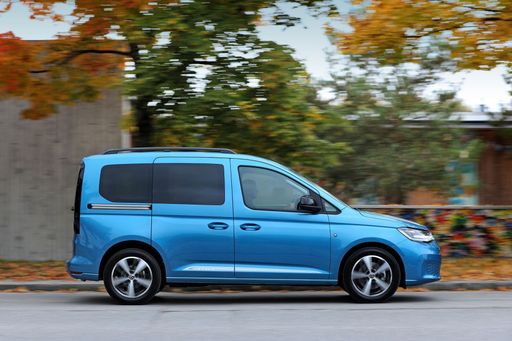
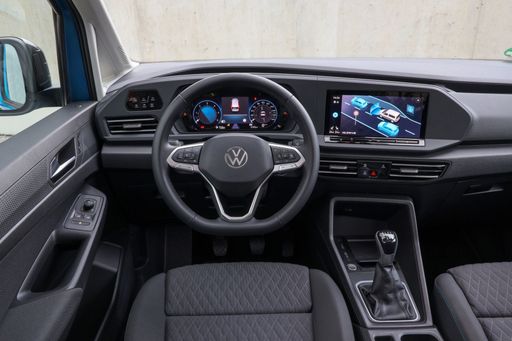
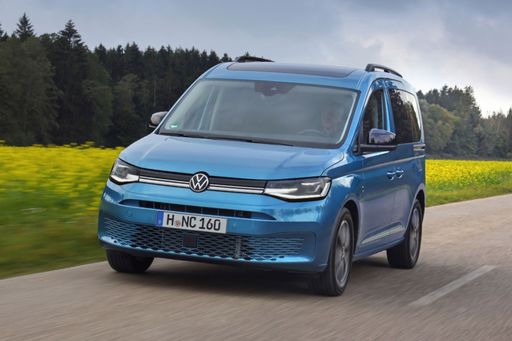
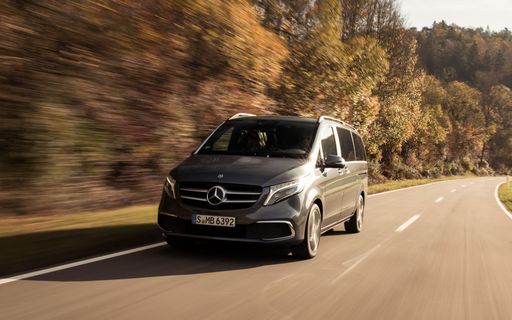
Mercedes V Class vs VW Caddy Compact Van comparison

Compare performance (237 HP vs 150 HP), boot space and price (48,200 £ vs 25,800 £ ) at a glance. Find out which car is the better choice for you – Mercedes V Class or VW Caddy Compact Van?

Mercedes V Class vs VW Caddy Compact Van: Key differences

Mercedes V Class

  • visibly more power
details

VW Caddy Compact Van

  • clearly cheaper
  • considerably more efficient
  • considerably lighter
details

By Achim Sedelmaier

V Class

A Clash of Giants: Mercedes V-Klasse vs. VW Caddy Kompaktvan

When it comes to versatile vehicles, the Mercedes V-Klasse and VW Caddy Kompaktvan stand out as two of the best options in the automotive market. Each offers a unique blend of functionality, comfort, and performance, catering to both commercial and personal needs. Let’s delve into how these two contenders compare on various technical aspects and innovations.
Caddy Compact Van

Design and Dimensions

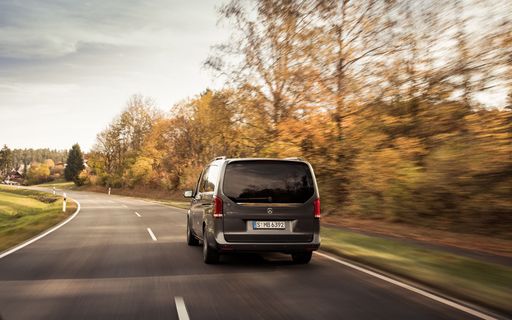
The Mercedes V-Klasse, designed as a bus, boasts a substantial length of up to 5,370 mm, a width of 1,928 mm, and a height ranging from 1,901 to 1,908 mm. Its spacious dimensions ensure a comfortable ride, accommodating up to six passengers with room to spare for luggage.

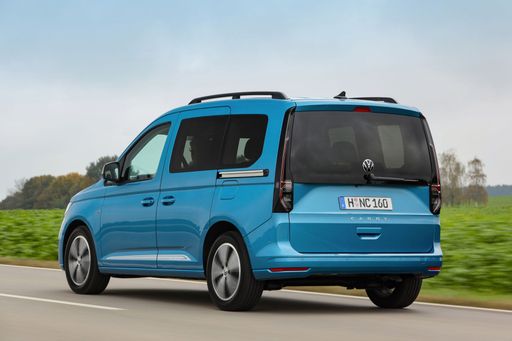
Conversely, the VW Caddy Kompaktvan is more compact, measuring 4,500 mm in length, with a width of 1,855 mm and a height of 1,819 to 1,823 mm. Though primarily designed as a cargo van, the Caddy’s layout can be adapted for various purposes, making it an excellent option for both personal and commercial use.

V Class

Engine Performance

Under the hood, the Mercedes V-Klasse offers multiple engine options, including diesel and petrol variants. The power output ranges from 163 to 237 HP, complemented by a choice of rear-wheel drive or all-wheel drive. The V-Klasse’s engines demonstrate an impressive torque of up to 500 Nm, ensuring robust acceleration and highway stability.

In comparison, the VW Caddy Kompaktvan provides petrol, diesel, and even a plugin hybrid option, with power outputs from 102 to 150 HP. It is equipped with front-wheel drive or all-wheel drive configurations. The torque levels reach up to 320 Nm, making it capable of handling heavy loads while maintaining efficiency.

Caddy Compact Van

Efficiency and Environmental Impact

Fuel consumption for the V-Klasse varies, with figures ranging from 7.1 to 10.2 L/100 km, depending on the engine chosen. The vehicle emits CO2 levels starting at 185 g/km, positioning it in the G efficiency class.

On the other hand, the VW Caddy Kompaktvan excels in efficiency, offering fuel consumption as low as 5.3 L/100 km for its plugin hybrid variant. The Caddy emits CO2 levels between 139-154 g/km, earning it a favorable B and E efficiency rating, making it more environmentally friendly compared to its rival.

V Class

Technological Innovations

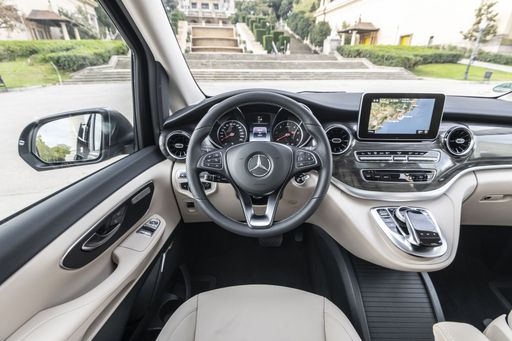
Mercedes has infused the V-Klasse with cutting-edge technology, including an automatic gearbox that enhances driving comfort. Safety features such as adaptive cruise control and lane-keeping assistance ensure the vehicle is up to date with modern driving standards.

The VW Caddy Kompaktvan also showcases innovative technology including a dual-clutch automatic transmission for smoother shifts, as well as advanced driver assistance systems. Its plugin hybrid technology enables electric-only drives, offering a practical solution for urban commuting while minimizing fuel usage.

Caddy Compact Van

Interior Comfort and Cargo Space

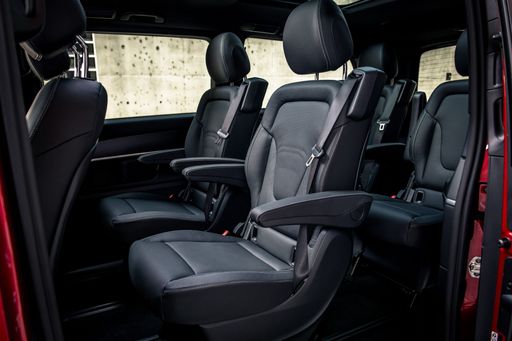
Inside, the V-Klasse epitomizes luxury, with high-quality materials and ample space for passengers. The trunk capacity varies from 610 to 1,410 liters, providing flexibility for both personal and commercial use.

The Caddy Kompaktvan, while designed for cargo, doesn’t compromise on comfort. It can accommodate two passengers with a generous cargo space of up to 3,000 liters. This adaptability makes it a practical choice for businesses and families alike.

V Class

Conclusion

The choice between the Mercedes V-Klasse and VW Caddy Kompaktvan ultimately boils down to the intended use and personal preferences. The V-Klasse is perfect for those seeking luxurious travel with a strong emphasis on passenger comfort, while the Caddy Kompaktvan remains the go-to vehicle for efficient cargo transport without sacrificing the essentials of modern technology.

Both vehicles embody innovation and functionality, making them leaders in their respective segments. Whether you prioritize style or practicality, Mercedes and VW have crafted two impressive models that cater to diverse automotive needs.

Here’s where it gets real: The technical differences in detail

V Class

Costs and Efficiency:

Looking at overall running costs, both models reveal some interesting differences in everyday economy.

VW Caddy Compact Van is clearly cheaper – starting at 25,800 £ , while the Mercedes V Class costs 48,200 £ . That’s a price difference of around 22,343 £.

Fuel consumption also shows a difference: the VW Caddy Compact Van uses 0.5 L/100km and is considerably more efficient than the Mercedes V Class with 7.1 L/100km. The difference is about 6.6 L/100km.

Caddy Compact Van

Engine and Performance:

Power, torque and acceleration say a lot about how a car feels on the road. This is where you see which model delivers more driving dynamics.

When it comes to engine power, the Mercedes V Class offers visibly more power – delivering 237 HP compared to 150 HP. That’s roughly 87 HP more horsepower.

There’s also a difference in torque: the Mercedes V Class delivers markedly more torque with 500 Nm compared to 320 Nm. That’s about 180 Nm more.

V Class

Space and Everyday Use:

Whether family car or daily driver – which one offers more room, flexibility and comfort?

Seats: Mercedes V Class offers more seats – 6 vs 2.

In terms of curb weight, VW Caddy Compact Van is considerably lighter – 1,442 kg compared to 2,192 kg. The difference is around 750 kg.

When it comes to payload, the Mercedes V Class carries slightly more – 908 kg compared to 759 kg. That’s a difference of about 149 kg.

Who wins the race in the data check?

The VW Caddy Compact Van holds a decisive overall lead in the objective data comparison.
This result only shows which model scores more points on paper – not which of the two cars feels right for you.

from £25,800
Caddy Compact Van

VW Caddy Compact Van

  • Engine Type : Petrol, Diesel, Plugin Hybrid
  • Transmission : Manuel, Automatic
  • Drive Type : Front-Wheel Drive, All-Wheel Drive
  • Power HP : 102 - 150 HP
  • Consumption L/100km : 0.5 - 6.8 L/100km
  • Electric Range : 117 - 120 km
Mercedes V Class
VW Caddy Compact Van

Costs and Consumption

View detailed analysis

Engine and Performance

View detailed analysis

Dimensions and Body

View detailed analysis

Mercedes V Class

The V‑Class is the grown-up people mover that blends executive-level comfort with van practicality, ideal for those who want to ferry family and gear without sacrificing luxury. Inside it's plush and flexible, with clever touches that turn long hauls into a comfortable commute and still manage to look serious on the school run.

details

VW Caddy Compact Van

The VW Caddy is a clever compact van that turns urban chores into something almost enjoyable, thanks to smart packaging and a cabin that refuses to feel like punishment. For buyers who want useful practicality without drama, the Caddy is a tidy, dependable choice that quietly gets the job done while remaining surprisingly pleasant to drive.

details
Mercedes V Class
VW Caddy Compact Van

Costs and Consumption

Price
48,200 - 83,300 £
Price
25,800 - 42,300 £
Consumption L/100km
7.1 - 10.2 L/100km
Consumption L/100km
0.5 - 6.8 L/100km
Consumption kWh/100km
-
Consumption kWh/100km
-
Electric Range
-
Electric Range
117 - 120 km
Battery Capacity
-
Battery Capacity
19.7 kWh
co2
187 - 232 g/km
co2
11 - 154 g/km
Fuel tank capacity
-
Fuel tank capacity
50 L

Dimensions and Body

Body Type
Bus
Body Type
Cargo Van
Seats
6
Seats
2
Doors
-
Doors
4 - 5
Curb weight
2,192 - 2,464 kg
Curb weight
1,442 - 1,818 kg
Trunk capacity
-
Trunk capacity
-
Length
-
Length
4,500 - 4,853 mm
Width
1,928 mm
Width
1,855 mm
Height
-
Height
1,819 - 1,823 mm
Max trunk capacity
-
Max trunk capacity
3,100 - 3,700 L
Payload
636 - 908 kg
Payload
628 - 759 kg

Engine and Performance

Engine Type
Diesel, Petrol
Engine Type
Petrol, Diesel, Plugin Hybrid
Transmission
Automatic
Transmission
Manuel, Automatic
Transmission Detail
Automatic Gearbox
Transmission Detail
Manual Gearbox, Dual-Clutch Automatic
Drive Type
Rear-Wheel Drive, All-Wheel Drive
Drive Type
Front-Wheel Drive, All-Wheel Drive
Power HP
163 - 237 HP
Power HP
102 - 150 HP
Acceleration 0-100km/h
7.4 - 10.7 s
Acceleration 0-100km/h
-
Max Speed
-
Max Speed
175 - 186 km/h
Torque
370 - 500 Nm
Torque
220 - 320 Nm
Number of Cylinders
4
Number of Cylinders
4
Power kW
120 - 174 kW
Power kW
75 - 110 kW
Engine capacity
1,950 - 1,999 cm3
Engine capacity
1,498 - 1,968 cm3

General

Model Year
2025
Model Year
2024
CO2 Efficiency Class
G
CO2 Efficiency Class
E, B
Brand
Mercedes-Benz
Brand
VW
DriveDuel uses data analysis and artificial intelligence to evaluate vehicle data and create content. Content is regularly reviewed and improved. The displayed prices are estimates based on German list prices, adjusted to the respective country’s VAT. Country-specific registration taxes are not included. This information is not legally binding.