
VS

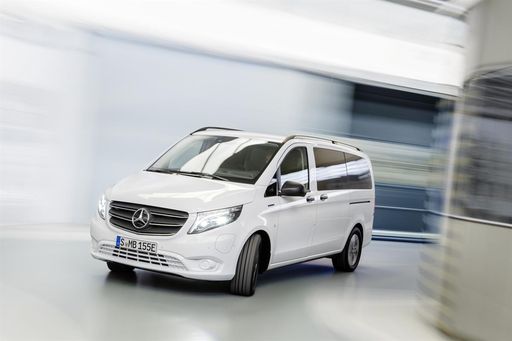
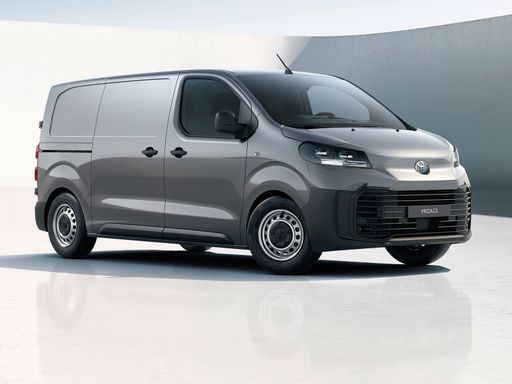
Mercedes Vito Transporter vs Toyota Proace Transporter comparison

Compare performance (237 HP vs 150 HP), boot space and price (28,800 £ vs 31,600 £ ) at a glance. Find out which car is the better choice for you – Mercedes Vito Transporter or Toyota Proace Transporter?

Mercedes Vito Transporter vs Toyota Proace Transporter: Key differences

Mercedes Vito Transporter

  • barely cheaper
  • noticeably more power
  • a bit more efficient
  • clearly more electric range
details

Toyota Proace Transporter

  • marginally more efficient
  • slightly lighter
details

By Achim Sedelmaier

Vito Transporter

Mercedes Vito Transporter vs Toyota Proace Transporter: A Comparative Analysis

In the highly competitive world of cargo vans, the Mercedes Vito Transporter and the Toyota Proace Transporter both stand out with their distinctive qualities. With the 2024 models on the market, it's time to delve deep into a comparison that caters to both business needs and technological advancements.
Proace Transporter

Engine Performance and Variety

The Mercedes Vito Transporter offers a wide range of engine options, including both diesel and electric variants with power outputs ranging from 102 HP to a hefty 237 HP. This is complemented by a diverse range of drive types: Rear-Wheel Drive, Front-Wheel Drive, and All-Wheel Drive, allowing for customizable driving experiences.

On the other hand, the Toyota Proace Transporter provides a selection of diesel and electric engines, with power options between 120 HP and 144 HP. Its consistent Front-Wheel Drive simplifies the driving dynamics, which is beneficial for those who prefer uniform handling experiences.

Fuel Efficiency and Electric Range

When it comes to fuel economy, the Mercedes Vito posts consumption rates between 6.8 and 7.9 L/100km for diesel and 20.7 to 21.1 kWh/100km for electric variants. The electric range of the Vito extends up to 313 km, backed by a 60 kWh battery capacity.

The Proace stands out with slightly more conservative consumption rates, ranging from 6.6 to 7.6 L/100km for diesel. However, it claims a longer electric range, reaching up to 349 km, albeit with a slightly higher consumption rate of 23.8 to 23.9 kWh/100km.

Payload and Capacity

Payload capacity is a critical factor in the cargo van market. The Mercedes Vito boasts a payload range from 849 kg to 1000 kg, suiting varying loads and business needs. In comparison, the Toyota Proace is a muscular contender with capacities from 955 kg up to a robust 1496 kg, making it ideal for those who routinely haul heavier goods.

Vehicle Dimensions and Weight

Both vans exhibit distinctive size profiles. The Mercedes Vito ranges in length from 4895 mm to 5370 mm, a width of 1928 mm, and a height variance between 1910 mm and 1945 mm. Curb weight spans from 1800 kg to 2347 kg, depending on configurations.

Meanwhile, the Toyota Proace extends in length from 4980 mm to 5330 mm, a width of 1920 mm, and a height ranging between 1895 mm to 1935 mm. Its weight varies from 1604 kg to 2100 kg, showing a lighter overall profile for urban maneuverability.

Innovations and Technical Aspects

The Mercedes Vito boasts advanced customization with its variety of drive types and transmission choices—including Manual, Automatic, and Reduction Gearbox options. These features mark it as a versatile player in reaching a wide sector of commercial purposes.

With regards to innovations, the Toyota Proace captivates with its payload capacity and efficient electric range, presenting an option that bridges the gap between eco-efficiency and heavy-duty capability. Advanced transmission options also enhance its driving quality.

Conclusion: Choosing the Right Van for Your Needs

Both the Mercedes Vito and Toyota Proace present exceptional qualities that cater to specific business requirements. While the Vito impresses with performance versatility and extensive configuration options, the Proace delivers robust payload capacity and impressive electric range efficiency. The ultimate choice hinges on your unique demands, whether they prioritize power, versatility, or payload capacity.

Here’s where it gets real: The technical differences in detail

Vito Transporter

Costs and Efficiency:

Price and efficiency are key factors when choosing a car – and this is often where the real differences emerge.

Mercedes Vito Transporter is barely cheaper – starting at 28,800 £ , while the Toyota Proace Transporter costs 31,600 £ . That’s a price difference of around 2,853 £.

Fuel consumption also shows a difference: the Toyota Proace Transporter uses 6.4 L/100km and is marginally more efficient than the Mercedes Vito Transporter with 6.8 L/100km. The difference is about 0.4 L/100km.

In terms of energy consumption, the Mercedes Vito Transporter is a bit more efficient: consuming 21.2 kWh/100km compared to 23.8 kWh/100km for the Toyota Proace Transporter. That’s a difference of about 2.6 kWh/100km.

As for electric range, the Mercedes Vito Transporter offers clearly more range – reaching up to 474 km, about 125 km more than the Toyota Proace Transporter.

Proace Transporter

Engine and Performance:

Power, torque and acceleration say a lot about how a car feels on the road. This is where you see which model delivers more driving dynamics.

When it comes to engine power, the Mercedes Vito Transporter offers noticeably more power – delivering 237 HP compared to 150 HP. That’s roughly 87 HP more horsepower.

There’s also a difference in torque: the Mercedes Vito Transporter delivers markedly more torque with 500 Nm compared to 370 Nm. That’s about 130 Nm more.

Space and Everyday Use:

Cabin size, boot volume and payload all play a role in everyday practicality. Here, comfort and flexibility make the difference.

Seats: Toyota Proace Transporter offers more seats – 6 vs 5.

In terms of curb weight, Toyota Proace Transporter is slightly lighter – 1,656 kg compared to 1,916 kg. The difference is around 260 kg.

When it comes to payload, the Toyota Proace Transporter carries noticeably more – 1,323 kg compared to 884 kg. That’s a difference of about 439 kg.

Who wins the race in the data check?

The Mercedes Vito Transporter is far ahead overall in the objective data comparison.
This result only shows which model scores more points on paper – not which of the two cars feels right for you.

from £28,800
Vito Transporter

Mercedes Vito Transporter

  • Engine Type Diesel, Electric, Petrol
  • Transmission Manuel, Automatic
  • Drive Type Rear-Wheel Drive, Front-Wheel Drive, All-Wheel Drive
  • Power HP 102 - 237 HP
  • Consumption L/100km 6.8 - 9.7 L/100km
  • Consumption kWh/100km 21.2 - 26.5 kWh/100km
  • Electric Range 304 - 474 km
Mercedes Vito Transporter
Toyota Proace Transporter

Costs and Consumption

View detailed analysis

Engine and Performance

View detailed analysis

Dimensions and Body

View detailed analysis

Mercedes Vito Transporter

The Mercedes Vito Transporter is a supremely practical workhorse that blends Mercedes refinement with van-like utility, making long days on the road feel surprisingly civilized. With a cleverly thought-out interior and a drive that won’t wear you out, the Vito is the ideal choice for businesses that want capability without sacrificing comfort — and yes, it still looks sharper than most vans at a client meeting.

details

Toyota Proace Transporter

The Toyota Proace Transporter is a no-nonsense work van that pairs Toyota’s dependable reputation with smart practicality, so you can load, drive and finish the job without unnecessary drama. It won’t win design awards, but with a comfortable cab, sensible feature set and a focus on getting things done, it quietly keeps fleets and small businesses smiling.

details
Mercedes Vito Transporter
Toyota Proace Transporter

Costs and Consumption

Price
28,800 - 51,600 £
Price
31,600 - 51,000 £
Consumption L/100km
6.8 - 9.7 L/100km
Consumption L/100km
6.4 - 6.7 L/100km
Consumption kWh/100km
21.2 - 26.5 kWh/100km
Consumption kWh/100km
23.8 - 23.9 kWh/100km
Electric Range
304 - 474 km
Electric Range
349 km
Battery Capacity
60 - 90 kWh
Battery Capacity
-
co2
0 - 222 g/km
co2
0 - 177 g/km
Fuel tank capacity
57 - 70 L
Fuel tank capacity
-

Dimensions and Body

Body Type
Cargo Van
Body Type
Cargo Van
Seats
2 - 5
Seats
3 - 6
Doors
4
Doors
-
Curb weight
1,916 - 2,518 kg
Curb weight
1,656 - 2,100 kg
Trunk capacity
-
Trunk capacity
-
Length
4,895 - 5,390 mm
Length
-
Width
1,928 mm
Width
1,920 mm
Height
1,910 - 1,945 mm
Height
-
Max trunk capacity
3,100 - 6,600 L
Max trunk capacity
-
Payload
547 - 884 kg
Payload
955 - 1,323 kg

Engine and Performance

Engine Type
Diesel, Electric, Petrol
Engine Type
Diesel, Electric
Transmission
Manuel, Automatic
Transmission
Manuel, Automatic
Transmission Detail
Manual Gearbox, Reduction Gearbox, Automatic Gearbox
Transmission Detail
Manual Gearbox, Reduction Gearbox, Automatic Gearbox
Drive Type
Rear-Wheel Drive, Front-Wheel Drive, All-Wheel Drive
Drive Type
Front-Wheel Drive
Power HP
102 - 237 HP
Power HP
120 - 150 HP
Acceleration 0-100km/h
-
Acceleration 0-100km/h
12.1 - 13.3 s
Max Speed
120 - 140 km/h
Max Speed
-
Torque
270 - 500 Nm
Torque
260 - 370 Nm
Number of Cylinders
4
Number of Cylinders
4
Power kW
75 - 174 kW
Power kW
88 - 110 kW
Engine capacity
1,950 - 1,999 cm3
Engine capacity
1,499 - 2,184 cm3

General

Model Year
2,024 - 2,025
Model Year
2025
CO2 Efficiency Class
G, A
CO2 Efficiency Class
F, A, G
Brand
Mercedes-Benz
Brand
Toyota
DriveDuel uses data analysis and artificial intelligence to evaluate vehicle data and create content. Content is regularly reviewed and improved. The displayed prices are estimates based on German list prices, adjusted to the respective country’s VAT. Country-specific registration taxes are not included. This information is not legally binding.








