
VS

Micro Microlino vs Fiat Topolino comparison

Compare performance (17 HP vs 8 HP), boot space and price (15,400 £ vs 8,500 £ ) at a glance. Find out which car is the better choice for you – Micro Microlino or Fiat Topolino?

Micro Microlino vs Fiat Topolino: Key differences

Micro Microlino

3.1 (1 Reviews)
rate
  • considerably more power
  • substantially more electric range
  • significantly more trunk space
details

Fiat Topolino

4.3 (2 Reviews)
rate
  • clearly cheaper
  • only slightly lighter
details

By Achim Sedelmaier

Microlino

Fiat Topolino VS Micro Microlino — quick take

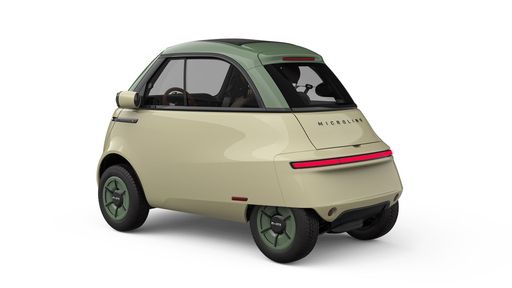
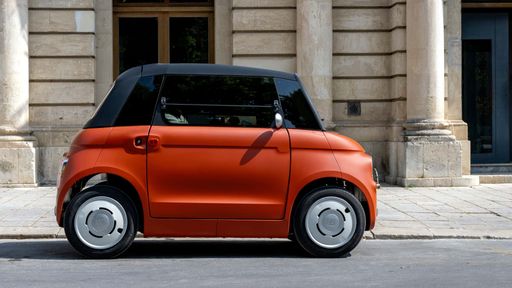
The Fiat Topolino and the Micro Microlino occupy the same tiny‑car spotlight but play very different roles in a city life script. The Fiat Topolino feels like a weatherproof scooter replacement: absurdly compact, delightfully simple to use and unmistakably aimed at the shortest urban hops. The Micro Microlino leans into retro charisma with more usable luggage space and a drivetrain that gives it genuine utility beyond a single city block. Choosing between them comes down to whether you prioritise sheer parking agility and price or you want a small car that carries more and travels a bit further.
Topolino

Character and driving feel

The Fiat Topolino is all about nimble manoeuvres and a breezy, light‑hearted drive—it turns on a dime and rewards someone who spends most of their time at low city speeds. The Micro Microlino trades some of that extreme compactness for a firmer, more car‑like presence; it feels heavier and more substantial, and it can keep up on faster urban arteries where the Topolino’s strict low‑speed profile would become limiting. Steering in the Topolino is ultra‑direct and forgiving at town pace, while the Microlino’s direct but unassisted steering gives a go‑kart impression that still demands a steadier hand at higher speeds. In short, Topolino is playful and tiny, Microlino is playful with more practical backbone.

Comfort and cabin quality

Sit in the Fiat Topolino and you immediately notice the minimalism: firm seats, thin padding and an interior that prioritises lightness over luxury, so short hops are fine but anything longer becomes fatiguing. The Micro Microlino offers a more considered cabin feel with firmer build cues and a larger, shaped boot that makes the space feel more purposeful rather than purely quaint. Both feel louder and less refined than a small hatchback—engine whine, road and wind noise are part of the experience—but the Microlino’s monocoque structure tends to mask rattles better and gives a stronger impression of solidity. If perceived quality matters, the Microlino edges ahead; if you want immediate, bare‑bones simplicity, the Topolino delivers.

Practicality and everyday usability

For pure town practicality the Fiat Topolino’s tiny footprint and household‑plug charging make life very easy: you’ll find parking, squeeze into bike spots and rarely worry about where to plug in. The Micro Microlino, however, flips the script with a proper rear boot and a front‑entry theatrics that actually translate to everyday usefulness—groceries, weekend bags and even a small suitcase fit far more comfortably. The Topolino forces you to rethink cargo (the passenger footwell carries most loads), while the Microlino behaves more like an honest runabout for errands. Price and running‑cost differences matter here: Topolino wins on entry cost and simplicity, Microlino wins on haulability and versatility.

City manners versus longer trips

In inner‑city traffic the Fiat Topolino is unbeatable: tiny turning circle, light curb weight and excellent visibility make it stress‑free in the tightest cores. The Micro Microlino remains very city‑friendly but is the better choice when your route occasionally includes faster roads—the Microlino can cope with higher speeds while remaining usable for short interurban stints, though it becomes noisy and unsettled at the limit. Neither is ideal for long motorway runs: the Topolino’s limited top speed rules them out practically, and the Microlino’s wind and road noise plus limited reserves make long journeys tiring. So think short‑trip regularity for the Topolino, mixed‑use urban commutes for the Microlino.

Who should buy which car — clear buyer fit

If you’re a city dweller who wants the cheapest, easiest‑to‑park, scooter‑like alternative or you need an AM‑licence option for short hops, the Fiat Topolino is tailored for that life and budget. If you’re drawn to retro style, need a usable boot, want to travel slightly farther without a full car and don’t mind paying more, the Micro Microlino will suit you better. Both are lifestyle choices more than rational all‑rounders: Topolino trades versatility for absolute compactness and economics, Microlino trades some compactness for everyday utility and emotional appeal. The technical comparison that follows will unpack the performance, range and equipment consequences behind those trade‑offs to help you decide which fit makes more sense for your routine.

Here’s where it gets real: The technical differences in detail

Microlino

Costs and Efficiency:

Price and efficiency are often the first things buyers look at. Here it becomes clear which model has the long-term edge – whether at the pump, the plug, or in purchase price.

Fiat Topolino is clearly cheaper – starting at 8,500 £ , while the Micro Microlino costs 15,400 £ . That’s a price difference of around 6,943 £.

As for electric range, the Micro Microlino offers substantially more range – reaching up to 228 km, about 153 km more than the Fiat Topolino.

Topolino

Engine and Performance:

Under the bonnet, it becomes clear which model is tuned for sportiness and which one takes the lead when you hit the accelerator.

When it comes to engine power, the Micro Microlino offers considerably more power – delivering 17 HP compared to 8 HP. That’s roughly 9 HP more horsepower.

There’s also a difference in torque: the Micro Microlino delivers considerably more torque with 89 Nm compared to 44 Nm. That’s about 45 Nm more.

Space and Everyday Use:

Whether family car or daily driver – which one offers more room, flexibility and comfort?

Both vehicles offer seating for 2 people.

In terms of curb weight, Fiat Topolino is only slightly lighter – 562 kg compared to 596 kg. The difference is around 34 kg.

Looking at boot space, the Micro Microlino offers significantly more boot space – 230 L compared to 63 L. That’s a difference of about 167 L.

When it comes to payload, the Micro Microlino carries moderately more – 154 kg compared to 138 kg. That’s a difference of about 16 kg.

Who wins the race in the data check?

The Micro Microlino holds a decisive overall lead in the objective data comparison.
This result only shows which model scores more points on paper – not which of the two cars feels right for you.

from £15,400
Microlino

Micro Microlino

  • Engine Type Electric
  • Transmission Automatic
  • Drive Type Rear-Wheel Drive
  • Power HP 8 - 17 HP
  • Electric Range 93 - 228 km
Micro Microlino
Fiat Topolino

Costs and Consumption

View detailed analysis

Engine and Performance

View detailed analysis

Dimensions and Body

View detailed analysis

Micro Microlino

The Micro Microlino is a delightful retro-styled city runabout that feels like a modern reinterpretation of a classic bubble car, perfect for threading through tight streets and turning heads at every junction. It’s unabashedly charming and ideal for urban life, but buyers should embrace the playful simplicity over family-hauler practicality.

details

Fiat Topolino

The Fiat Topolino is a pint-sized charmer that turns every commute into a smile-inducing event, marrying vintage Italian flair with a delightfully simple driving experience. For city buyers who prize personality over pace, it offers quirky practicality, effortless parking and an irresistible retro look that feels like a Vespa with four wheels.

details
Micro Microlino
Fiat Topolino

Costs and Consumption

Price
15,400 - 22,300 £
Price
8,500 - 8,600 £
Consumption L/100km
-
Consumption L/100km
-
Consumption kWh/100km
-
Consumption kWh/100km
-
Electric Range
93 - 228 km
Electric Range
75 km
Battery Capacity
-
Battery Capacity
-
co2
0 g/km
co2
0 g/km
Fuel tank capacity
-
Fuel tank capacity
-

Dimensions and Body

Body Type
Hatchback, Convertible
Body Type
Hatchback
Seats
2
Seats
2
Doors
-
Doors
-
Curb weight
596 - 630 kg
Curb weight
562 kg
Trunk capacity
230 L
Trunk capacity
63 L
Length
-
Length
-
Width
1,473 mm
Width
1,400 mm
Height
-
Height
-
Max trunk capacity
-
Max trunk capacity
-
Payload
120 - 154 kg
Payload
138 kg

Engine and Performance

Engine Type
Electric
Engine Type
Electric
Transmission
Automatic
Transmission
Automatic
Transmission Detail
Reduction Gearbox
Transmission Detail
Reduction Gearbox
Drive Type
Rear-Wheel Drive
Drive Type
Front-Wheel Drive
Power HP
8 - 17 HP
Power HP
8 HP
Acceleration 0-100km/h
-
Acceleration 0-100km/h
-
Max Speed
-
Max Speed
-
Torque
89 Nm
Torque
44 Nm
Number of Cylinders
-
Number of Cylinders
-
Power kW
6 - 12 kW
Power kW
6 kW
Engine capacity
-
Engine capacity
-

General

Model Year
2,024 - 2,025
Model Year
2026
CO2 Efficiency Class
A
CO2 Efficiency Class
A
Brand
Micro
Brand
Fiat
DriveDuel uses data analysis and artificial intelligence to evaluate vehicle data and create content. Content is regularly reviewed and improved. The displayed prices are estimates based on German list prices, adjusted to the respective country’s VAT. Country-specific registration taxes are not included. This information is not legally binding.








