
 Deutschland
 France
 Nederland
 Great Britain
 Sverige
 Norge
Norge Danmark
 Suomi
Suomi Italia
 Polska
 España
VS
Mitsubishi Space Star vs Rolls-Royce Phantom - Differences and prices compared
Compare performance (71 HP vs 571 HP), boot space and price (11600 £ vs 372900 £) at a glance. Find out which car is the better choice for you – Mitsubishi Space Star or Rolls-Royce Phantom?
Space Star
Costs and Efficiency:
Price and efficiency are key factors when choosing a car – and this is often where the real differences emerge.
Mitsubishi Space Star has a decisively advantage in terms of price – it starts at 11600 £, while the Rolls-Royce Phantom costs 372900 £. That’s a price difference of around 361209 £.
Fuel consumption also shows a difference: Mitsubishi Space Star manages with 4.90 L and is therefore convincingly more efficient than the Rolls-Royce Phantom with 15 L. The difference is about 10.10 L per 100 km.
Space Star
Engine and Performance:
Under the bonnet, it becomes clear which model is tuned for sportiness and which one takes the lead when you hit the accelerator.
When it comes to engine power, the Rolls-Royce Phantom has a decisively edge – offering 571 HP compared to 71 HP. That’s roughly 500 HP more horsepower.
In acceleration from 0 to 100 km/h, the Rolls-Royce Phantom is convincingly quicker – completing the sprint in 5.30 s, while the Mitsubishi Space Star takes 14.10 s. That’s about 8.80 s faster.
In terms of top speed, the Rolls-Royce Phantom performs clearly perceptible better – reaching 250 km/h, while the Mitsubishi Space Star tops out at 167 km/h. The difference is around 83 km/h.
There’s also a difference in torque: Rolls-Royce Phantom pulls decisively stronger with 900 Nm compared to 102 Nm. That’s about 798 Nm difference.
Space Star
Space and Everyday Use:
Cabin size, boot volume and payload all play a role in everyday practicality. Here, comfort and flexibility make the difference.
Both vehicles offer seating for 5 people.
In curb weight, Mitsubishi Space Star is decisively lighter – 940 kg compared to 2560 kg. The difference is around 1620 kg.
In terms of boot space, the Rolls-Royce Phantom offers decisively more room – 548 L compared to 235 L. That’s a difference of about 313 L.
When it comes to payload, Rolls-Royce Phantom hardly perceptible takes the win – 440 kg compared to 400 kg. That’s a difference of about 40 kg.
Who comes out on top?
Overall, the Mitsubishi Space Star shows itself to be is largely superior and secures the title of DriveDuel Champion.
It convinces with the more balanced overall package and proves to be the more versatile choice for everyday use.
from about £11,600
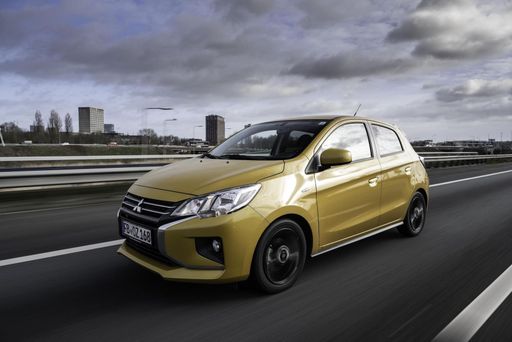
Mitsubishi Space Star
Mitsubishi Space Star
Rolls-Royce Phantom
Costs and Consumption
View detailed analysis
View detailed analysis
Engine and Performance
View detailed analysis
View detailed analysis
Dimensions and Body
View detailed analysis
View detailed analysis
Mitsubishi Space Star
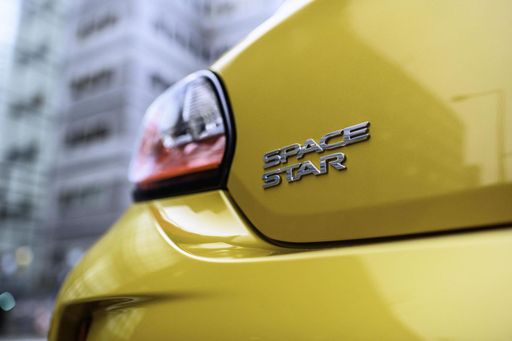
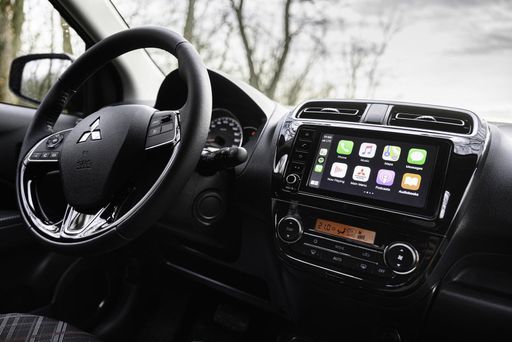
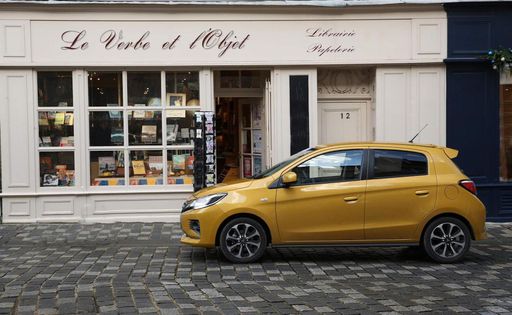
The Mitsubishi Space Star is a tidy, no-nonsense city car that squeezes surprising interior space into a compact, easy-to-park package. It's not a thrill-seeker's toy, but for buyers after low running costs, fuss-free reliability and sensible day-to-day practicality, it's a clever and cheerful choice that keeps your wallet and nerves happy.
details
Rolls-Royce Phantom
The Phantom stands as the epitome of luxury and craftsmanship, effortlessly merging opulence with unparalleled performance. With its iconic design and attention to detail, this flagship sedan commands respect on the road while cocooning its passengers in sumptuous comfort. Every journey in the Phantom is an experience, where timeless elegance meets cutting-edge technology.
details
Mitsubishi Space Star
Rolls-Royce Phantom
|
|
|
|
|
|
Costs and Consumption |
|
|---|---|
|
Price
11600 - 18700 £
|
Price
372900 - 447400 £
|
|
Consumption L/100km
4.9 - 5.5 L
|
Consumption L/100km
15 - 15.2 L
|
|
Consumption kWh/100km
-
|
Consumption kWh/100km
-
|
|
Electric Range
-
|
Electric Range
-
|
|
Battery Capacity
-
|
Battery Capacity
-
|
|
co2
112 - 125 g/km
|
co2
341 - 344 g/km
|
|
Fuel tank capacity
35 L
|
Fuel tank capacity
100 L
|
Dimensions and Body |
|
|---|---|
|
Body Type
Hatchback
|
Body Type
Sedan
|
|
Seats
5
|
Seats
5
|
|
Doors
5
|
Doors
4
|
|
Curb weight
940 - 1011 kg
|
Curb weight
2560 - 2610 kg
|
|
Trunk capacity
209 - 235 L
|
Trunk capacity
0 - 548 L
|
|
Length
3845 mm
|
Length
5762 - 5982 mm
|
|
Width
1665 mm
|
Width
2018 mm
|
|
Height
1505 mm
|
Height
1646 - 1656 mm
|
|
Max trunk capacity
881 - 912 L
|
Max trunk capacity
-
|
|
Payload
359 - 400 kg
|
Payload
390 - 440 kg
|
Engine and Performance |
|
|---|---|
|
Engine Type
Petrol
|
Engine Type
Petrol
|
|
Transmission
Manuel, Automatic
|
Transmission
Automatic
|
|
Transmission Detail
Manual Gearbox, CVT
|
Transmission Detail
Automatic Gearbox
|
|
Drive Type
Front-Wheel Drive
|
Drive Type
Rear-Wheel Drive
|
|
Power HP
71 HP
|
Power HP
571 HP
|
|
Acceleration 0-100km/h
14.1 - 15.8 s
|
Acceleration 0-100km/h
5.3 - 5.4 s
|
|
Max Speed
163 - 167 km/h
|
Max Speed
250 km/h
|
|
Torque
102 Nm
|
Torque
900 Nm
|
|
Number of Cylinders
3
|
Number of Cylinders
12
|
|
Power kW
52 kW
|
Power kW
420 kW
|
|
Engine capacity
1193 cm3
|
Engine capacity
6749 cm3
|
General |
|
|---|---|
|
Model Year
2020 - 2022
|
Model Year
2020
|
|
CO2 Efficiency Class
C, D
|
CO2 Efficiency Class
G
|
|
Brand
Mitsubishi
|
Brand
Rolls-Royce
|
What drivetrain options does the Mitsubishi Space Star have?
Available configurations include Front-Wheel Drive.
The prices and data displayed are estimates based on German list prices and may vary by country. This information is not legally binding.