
 Deutschland
 France
 Nederland
 Great Britain
 Sverige
 Norge
Norge Danmark
 Suomi
Suomi Italia
 Polska
 España
VS
Vauxhall Astra vs Land Rover Range Rover - Differences and prices compared
Compare performance (225 HP vs 615 HP), boot space and price (25200 £ vs 122700 £ ) at a glance. Find out which car is the better choice for you – Vauxhall Astra or Land Rover Range Rover?
Astra
Costs and Efficiency:
When it comes to price and running costs, the biggest differences usually appear. This is often where you see which car fits your budget better in the long run.
Vauxhall Astra has a significantly advantage in terms of price – it starts at 25200 £ , while the Land Rover Range Rover costs 122700 £ . That’s a price difference of around 97551 £.
Fuel consumption also shows a difference: Vauxhall Astra manages with 2.20 L and is therefore evident more efficient than the Land Rover Range Rover with 2.70 L. The difference is about 0.50 L per 100 km.
As for electric range, the Vauxhall Astra performs significantly better – achieving up to 419 km, about 302 km more than the Land Rover Range Rover.
Range Rover
Engine and Performance:
Power, torque and acceleration are the classic benchmarks for car enthusiasts – and here, some clear differences start to show.
When it comes to engine power, the Land Rover Range Rover has a decisively edge – offering 615 HP compared to 225 HP. That’s roughly 390 HP more horsepower.
In acceleration from 0 to 100 km/h, the Land Rover Range Rover is clearly quicker – completing the sprint in 4.50 s, while the Vauxhall Astra takes 7.50 s. That’s about 3 s faster.
In terms of top speed, the Land Rover Range Rover performs minimal better – reaching 261 km/h, while the Vauxhall Astra tops out at 235 km/h. The difference is around 26 km/h.
There’s also a difference in torque: Land Rover Range Rover pulls significantly stronger with 800 Nm compared to 360 Nm. That’s about 440 Nm difference.
Ad · Affiliate

As an Amazon Associate, we earn from qualifying purchases.
Astra
Space and Everyday Use:
Whether family car or daily driver – which one offers more room, flexibility and comfort?
Seats: Land Rover Range Rover offers distinct more seating capacity – 7 vs 5.
In curb weight, Vauxhall Astra is decisively lighter – 1341 kg compared to 2504 kg. The difference is around 1163 kg.
In terms of boot space, the Land Rover Range Rover offers significantly more room – 818 L compared to 422 L. That’s a difference of about 396 L.
In maximum load capacity, the Land Rover Range Rover performs noticeable better – up to 2176 L, which is about 837 L more than the Vauxhall Astra.
When it comes to payload, Land Rover Range Rover noticeable takes the win – 846 kg compared to 509 kg. That’s a difference of about 337 kg.
Who comes out on top?
Overall, the Vauxhall Astra shows itself to be wins the duel decisively and secures the title of DriveDuel Champion.
It convinces with the more balanced overall package and proves to be the more versatile choice for everyday use.
from about £25,200
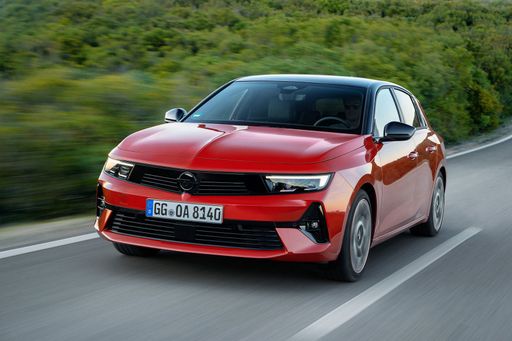
Vauxhall Astra
Vauxhall Astra
Land Rover Range Rover
Costs and Consumption
View detailed analysis
View detailed analysis
Engine and Performance
View detailed analysis
View detailed analysis
Dimensions and Body
View detailed analysis
View detailed analysis
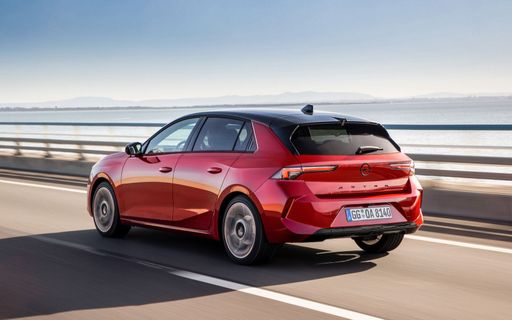
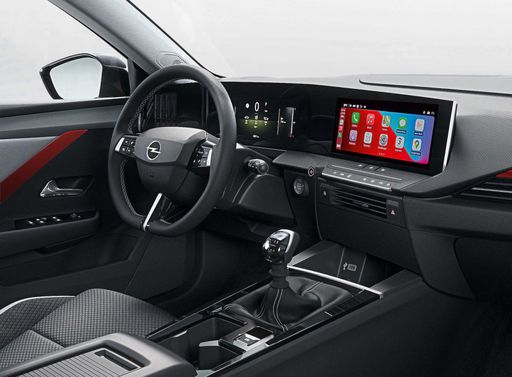
Vauxhall Astra
The Opel Astra strikes a neat balance between everyday practicality and engaging handling, so the daily grind suddenly feels a bit less dull. Inside it's intelligently packaged with modern kit and comfortable seating, making it a very sensible pick for buyers who want a dependable hatchback that doesn't take itself too seriously.
details
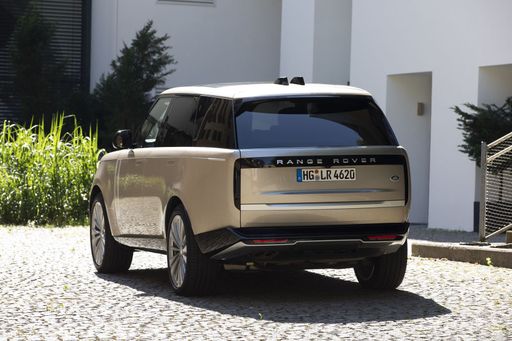
Land Rover Range Rover
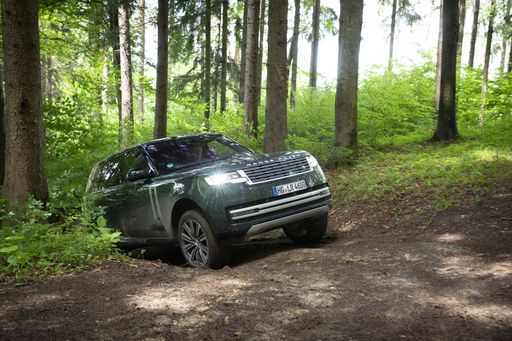
The Range Rover wraps unabashed luxury and genuine off-road capability into a silhouette that still manages to look effortlessly elegant whether parked outside a city hotel or splashing through a muddy trail. Inside, it’s a cocoon of soft leathers, refined materials and serene ride quality that makes long journeys feel like private-jet comfort — ideal for buyers who want a plush cruiser that can also go where lesser SUVs won’t.
details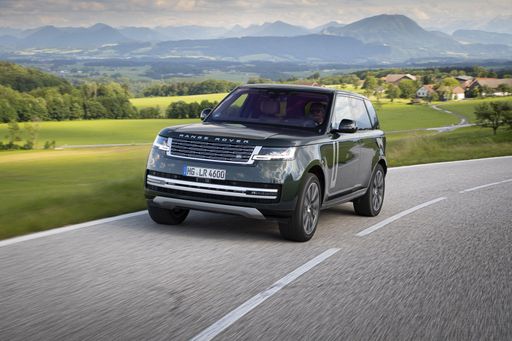

Vauxhall Astra
Land Rover Range Rover
Costs and Consumption |
|
|---|---|
|
Price
25200 - 40500 £
|
Price
122700 - 244700 £
|
|
Consumption L/100km
2.2 - 6 L
|
Consumption L/100km
2.7 - 11.7 L
|
|
Consumption kWh/100km
15.40 kWh
|
Consumption kWh/100km
-
|
|
Electric Range
82 - 419 km
|
Electric Range
116 - 117 km
|
|
Battery Capacity
51 kWh
|
Battery Capacity
31.80 kWh
|
|
co2
0 - 135 g/km
|
co2
62 - 265 g/km
|
|
Fuel tank capacity
42 - 52 L
|
Fuel tank capacity
71 - 90 L
|
Dimensions and Body |
|
|---|---|
|
Body Type
Hatchback
|
Body Type
Off-Roader
|
|
Seats
5
|
Seats
5 - 7
|
|
Doors
5
|
Doors
5
|
|
Curb weight
1341 - 1736 kg
|
Curb weight
2504 - 2810 kg
|
|
Trunk capacity
352 - 422 L
|
Trunk capacity
212 - 818 L
|
|
Length
4374 mm
|
Length
5052 - 5258 mm
|
|
Width
1860 mm
|
Width
2047 mm
|
|
Height
1432 - 1488 mm
|
Height
1870 mm
|
|
Max trunk capacity
1268 - 1339 L
|
Max trunk capacity
1841 - 2176 L
|
|
Payload
414 - 509 kg
|
Payload
589 - 846 kg
|
Engine and Performance |
|
|---|---|
|
Engine Type
Petrol, Diesel, Electric, Petrol MHEV, Plugin Hybrid
|
Engine Type
Plugin Hybrid, Petrol MHEV, Diesel MHEV
|
|
Transmission
Manuel, Automatic
|
Transmission
Automatic
|
|
Transmission Detail
Manual Gearbox, Automatic Gearbox, Reduction Gearbox, Dual-Clutch Automatic
|
Transmission Detail
Automatic Gearbox
|
|
Drive Type
Front-Wheel Drive
|
Drive Type
All-Wheel Drive
|
|
Power HP
130 - 225 HP
|
Power HP
300 - 615 HP
|
|
Acceleration 0-100km/h
7.5 - 10.6 s
|
Acceleration 0-100km/h
4.5 - 6.6 s
|
|
Max Speed
170 - 235 km/h
|
Max Speed
218 - 261 km/h
|
|
Torque
230 - 360 Nm
|
Torque
650 - 800 Nm
|
|
Number of Cylinders
3 - 4
|
Number of Cylinders
6 - 8
|
|
Power kW
96 - 165 kW
|
Power kW
221 - 452 kW
|
|
Engine capacity
1199 - 1598 cm3
|
Engine capacity
2997 - 4395 cm3
|
General |
|
|---|---|
|
Model Year
2023 - 2025
|
Model Year
2025
|
|
CO2 Efficiency Class
D, A, C, B
|
CO2 Efficiency Class
B, G
|
|
Brand
Vauxhall
|
Brand
Land Rover
|
What drive types are available for the Vauxhall Astra?
Available configurations include Front-Wheel Drive.
The prices shown are estimates based on German list prices, adjusted for local VAT. Local registration taxes (e.g. NoVA, BPM or CO2 malus) are not included. This information is not legally binding.