VS

Peugeot 3008 vs Mazda CX-5 comparison

Compare performance (325 HP vs 141 HP), boot space and price (35,100 £ vs 30,000 £ ) at a glance. Find out which car is the better choice for you – Peugeot 3008 or Mazda CX-5?

Peugeot 3008 vs Mazda CX-5: Key differences

Peugeot 3008

3.4 (4 Reviews)
rate
  • considerably more power
  • considerably more efficient
  • considerably quicker 0–100 km/h

Mazda CX-5

4.6 (7 Reviews)
rate
  • a bit cheaper
  • marginally lighter
  • somewhat more trunk space

All details on performance, efficiency, range and trunk space can be found in the technical comparison below – including user reviews for both models.

3008

Introduction: A Head-to-Head Showdown

The segment of compact SUVs is fiercely competitive, with automakers continually striving to blend style, practicality, and performance. In this issue, we pit the stylish Mazda CX-5 against the versatile Peugeot 3008, two models that have captured the attention of drivers looking for a balanced and modern SUV. Each vehicle offers unique technical features and innovations that appeal to different preferences. Let's dive into the details to find out which SUV reigns supreme.
CX-5

Design and Comfort

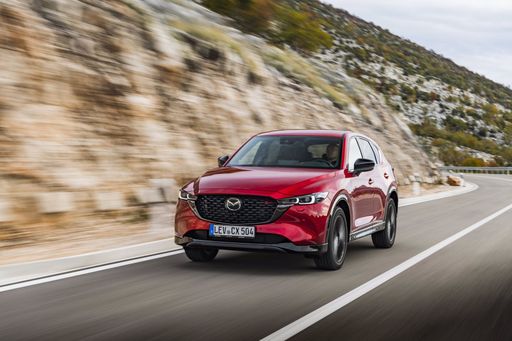
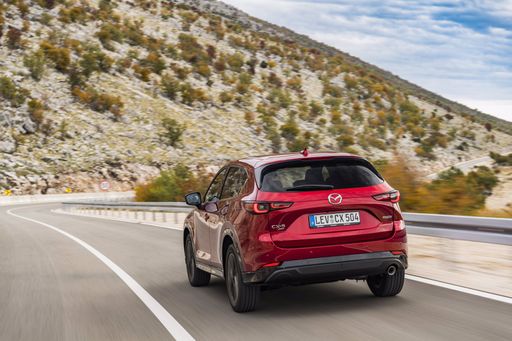
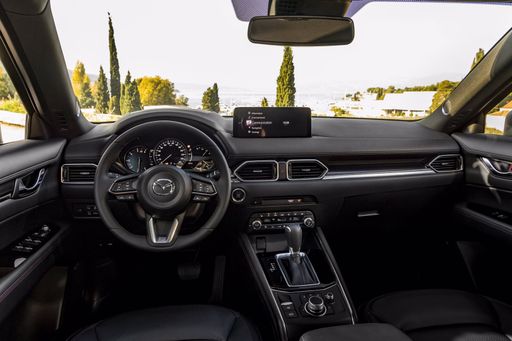
The Mazda CX-5 is characterized by its elegant KODO design philosophy, resulting in sleek curves and an athletic stance. Inside, a driver-centric cockpit is complemented by high-quality materials and ample space for five passengers, making it a welcoming environment for both short trips and longer journeys.

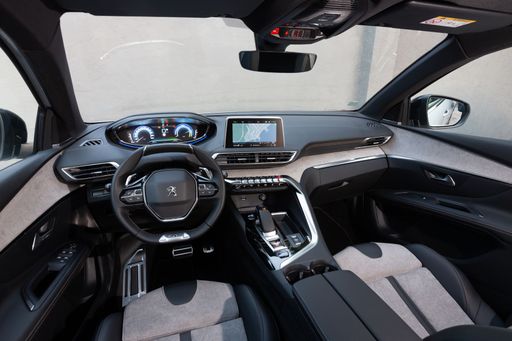
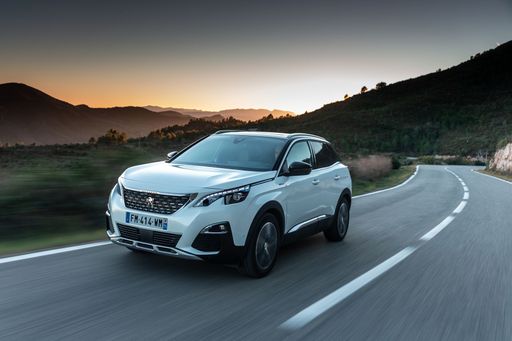
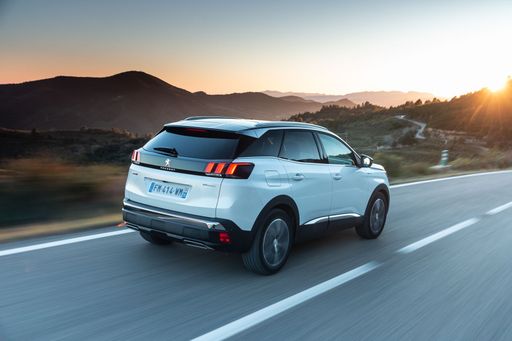
On the other hand, the Peugeot 3008 brings a more futuristic aesthetic to the table with its distinctive front fascia and bold proportions. The interior showcases Peugeot's i-Cockpit, which includes a compact steering wheel and a high-set instrument panel, providing a unique driving experience. Space is also generous, with 520 liters of trunk capacity, slightly edging out the CX-5's 522 liters.

3008

Powertrains and Performance

The Mazda CX-5 offers a robust selection of engine options, including petrol MHEV and diesel variants. With power outputs ranging from 165 HP up to a thrilling 194 HP, it balances fuel efficiency with performance. The models frequently boast a front-wheel-drive (FWD) or all-wheel-drive (AWD) configuration, allowing for enhanced traction and stability. The CX-5 achieves a 0-100 km/h time of as fast as 9.2 seconds, with a top speed of 208 km/h, depending on the specific variant chosen.

Conversely, the Peugeot 3008 steps into the arena with a variety of powertrains, including petrol MHEVs, plugin hybrids, and electric options. It offers impressive outputs of up to 231 HP while achieving a remarkable electric range of up to 698 km on the high-capacity models. The 3008 can sprint from 0-100 km/h in just 8.4 seconds, signifying a performance-oriented nature, especially with the hybrid versions. Its front-wheel-drive layout ensures a smooth and responsive driving experience.

CX-5

Fuel Efficiency and Emissions

Fuel efficiency is crucial in today’s climate, and the Mazda CX-5 holds its ground convincingly with combined consumption figures that vary from 5.6 to 7.6 L/100km. The CO2 emissions also range from 146 g/km for the most efficient diesel to higher figures for the more powerful petrol options, placing it in the E and F efficiency classes.

On the other hand, the Peugeot 3008 excels in this domain, particularly with its electric and hybrid variants. The standard petrol engine achieves commendable efficiency at 5.7 L/100km, while the emissions fall within improved standards, with some hybrid models boasting an astonishing 0 g/km. With CO2 efficiency classes ranging from A to D, the Peugeot reflects broader environmental consideration.

3008

Innovative Technologies

The Mazda CX-5 is equipped with a suite of safety and driver-assistance technologies, including adaptive cruise control, lane-keeping assist, and a head-up display for ease of driving. Mazda also offers an intuitive infotainment system that enhances the overall driving experience.

Peugeot counters with its impressive i-Cockpit that elevates the driving experience further. Features like a 12.3-inch digital head-up display and a large touchscreen interface allow for a seamless connection between driver and vehicle. Enhanced safety features and driver-assistance systems, including adaptive cruise control and automatic emergency braking, make the 3008 a worthy contender.

CX-5

Conclusion: Which SUV Takes the Crown?

Ultimately, both the Mazda CX-5 and Peugeot 3008 bring impressive offerings to the compact SUV segment. The CX-5 shines with its timeless design, potent engine options, and balanced performance. Meanwhile, the 3008 stands out for its innovative technology, eco-friendly options, and impressive cargo space.

Choosing between the two boils down to personal preferences: Are you looking for a sporty, commanding presence on the road with the Mazda CX-5, or does the high-tech, versatile Peugeot 3008 better suit your lifestyle? In this tightly contested comparison, there’s truly something for everyone in the ever-evolving world of SUVs.

Here’s where it gets real: The technical differences in detail

3008

Costs and Efficiency:

Price and efficiency are key factors when choosing a car – and this is often where the real differences emerge.

Mazda CX-5 is a bit cheaper – starting at 30,000 £ , while the Peugeot 3008 costs 35,100 £ . That’s a price difference of around 5,151 £.

Fuel consumption also shows a difference: the Peugeot 3008 uses 2.4 L/100km and is considerably more efficient than the Mazda CX-5 with 7 L/100km. The difference is about 4.6 L/100km.

CX-5

Engine and Performance:

Power, torque and acceleration say a lot about how a car feels on the road. This is where you see which model delivers more driving dynamics.

When it comes to engine power, the Peugeot 3008 offers considerably more power – delivering 325 HP compared to 141 HP. That’s roughly 184 HP more horsepower.

When accelerating from 0 to 100 km/h, the Peugeot 3008 is considerably quicker – completing the sprint in 6 s, while the Mazda CX-5 takes 10.5 s. That’s about 4.5 s quicker.

Looking at top speed, the Peugeot 3008 is barely faster – reaching 201 km/h, while the Mazda CX-5 tops out at 195 km/h. The difference is around 6 km/h.

There’s also a difference in torque: the Peugeot 3008 delivers considerably more torque with 511 Nm compared to 238 Nm. That’s about 273 Nm more.

3008

Space and Everyday Use:

Cabin size, boot volume and payload all play a role in everyday practicality. Here, comfort and flexibility make the difference.

Both vehicles offer seating for 5 people.

In terms of curb weight, Mazda CX-5 is marginally lighter – 1,629 kg compared to 1,648 kg. The difference is around 19 kg.

Looking at boot space, the Mazda CX-5 offers somewhat more boot space – 583 L compared to 520 L. That’s a difference of about 63 L.

For maximum load capacity, the Mazda CX-5 offers markedly more capacity – up to 2,019 L, about 539 L more than the Peugeot 3008.

When it comes to payload, the Mazda CX-5 carries noticeably more – 601 kg compared to 467 kg. That’s a difference of about 134 kg.

Who wins the race in the data check?

The Peugeot 3008 is clearly superior overall in the objective data comparison.
This result only shows which model scores more points on paper – not which of the two cars feels right for you.

from £35,100
3008

Peugeot 3008

  • Engine Type : Electric, Petrol MHEV, Plugin Hybrid
  • Transmission : Automatic
  • Drive Type : Front-Wheel Drive, All-Wheel Drive
  • Power HP : 145 - 325 HP
  • Consumption L/100km : 2.4 - 5.4 L/100km
  • Consumption kWh/100km : 16.9 - 17.6 kWh/100km
  • Electric Range : 81 - 698 km
Peugeot 3008
Mazda CX-5

Costs and Consumption

View detailed analysis

Engine and Performance

View detailed analysis

Dimensions and Body

View detailed analysis

Peugeot 3008

The Peugeot 3008 blends bold French styling with a surprisingly grown-up interior that makes even dull commutes feel a little bit special. Practical enough for family life yet lively to drive, it’s a clever all‑rounder that stands out from the crossover crowd without shouting for attention.

details

Mazda CX-5

The Mazda CX-5 blends elegant, athletic styling with a surprisingly engaging driving character, turning routine trips into small, satisfying adventures. Inside it feels thoughtfully built and comfortable, offering sensible practicality and a premium feel that punches above its price.

details
Peugeot 3008
Mazda CX-5

Costs and Consumption

Price
35,100 - 52,000 £
Price
30,000 - 39,500 £
Consumption L/100km
2.4 - 5.4 L/100km
Consumption L/100km
7 - 7.4 L/100km
Consumption kWh/100km
16.9 - 17.6 kWh/100km
Consumption kWh/100km
-
Electric Range
81 - 698 km
Electric Range
-
Battery Capacity
0.4 - 96.9 kWh
Battery Capacity
-
co2
0 - 121 g/km
co2
157 - 168 g/km
Fuel tank capacity
55 L
Fuel tank capacity
56 - 58 L

Dimensions and Body

Body Type
SUV
Body Type
SUV
Seats
5
Seats
5
Doors
5
Doors
5
Curb weight
1,648 - 2,266 kg
Curb weight
1,629 - 1,671 kg
Trunk capacity
470 - 520 L
Trunk capacity
466 - 583 L
Length
4,542 mm
Length
4,690 mm
Width
1,895 mm
Width
1,860 mm
Height
1,641 mm
Height
1,695 mm
Max trunk capacity
1,430 - 1,480 L
Max trunk capacity
2,019 L
Payload
432 - 467 kg
Payload
601 kg

Engine and Performance

Engine Type
Electric, Petrol MHEV, Plugin Hybrid
Engine Type
Petrol MHEV
Transmission
Automatic
Transmission
Automatic
Transmission Detail
Reduction Gearbox, Dual-Clutch Automatic
Transmission Detail
Automatic Gearbox
Drive Type
Front-Wheel Drive, All-Wheel Drive
Drive Type
Front-Wheel Drive, All-Wheel Drive
Power HP
145 - 325 HP
Power HP
141 HP
Acceleration 0-100km/h
6 - 10.2 s
Acceleration 0-100km/h
10.5 - 10.9 s
Max Speed
170 - 201 km/h
Max Speed
195 km/h
Torque
230 - 511 Nm
Torque
238 Nm
Number of Cylinders
3 - 4
Number of Cylinders
4
Power kW
107 - 239 kW
Power kW
104 kW
Engine capacity
1,199 - 1,598 cm3
Engine capacity
2,488 cm3

General

Model Year
2,024 - 2,026
Model Year
2,025
CO2 Efficiency Class
A, D, B
CO2 Efficiency Class
F
Brand
Peugeot
Brand
Mazda
DriveDuel uses data analysis and artificial intelligence to evaluate vehicle data and create content. Content is regularly reviewed and improved. The displayed prices are estimates based on German list prices, adjusted to the respective country’s VAT. Country-specific registration taxes are not included. This information is not legally binding.