
 Deutschland
 France
 Nederland
 Great Britain
 Sverige
 Danmark
 Suomi
Suomi Italia
 Polska
 Česko
Česko España
VS
Peugeot 508 SW vs NIO EL8 comparison
Compare performance (360 HP vs 653 HP), boot space and price (45,600 £ vs 71,100 £ ) at a glance. Find out which car is the better choice for you – Peugeot 508 SW or NIO EL8?
508 SW
Costs and Efficiency:
Price and efficiency are key factors when choosing a car – and this is often where the real differences emerge.
Peugeot 508 SW is substantially cheaper – starting at 45,600 £ , while the NIO EL8 costs 71,100 £ . That’s a price difference of around 25,457 £.
As for electric range, the NIO EL8 offers significantly more range – reaching up to 510 km, about 458 km more than the Peugeot 508 SW.
EL8
Engine and Performance:
Under the bonnet, it becomes clear which model is tuned for sportiness and which one takes the lead when you hit the accelerator.
When it comes to engine power, the NIO EL8 offers clearly more power – delivering 653 HP compared to 360 HP. That’s roughly 293 HP more horsepower.
When accelerating from 0 to 100 km/h, the NIO EL8 is markedly quicker – completing the sprint in 4.1 s, while the Peugeot 508 SW takes 5.2 s. That’s about 1.1 s quicker.
Looking at top speed, the Peugeot 508 SW is moderately faster – reaching 250 km/h, while the NIO EL8 tops out at 200 km/h. The difference is around 50 km/h.
There’s also a difference in torque: the NIO EL8 delivers markedly more torque with 850 Nm compared to 520 Nm. That’s about 330 Nm more.
508 SW
Space and Everyday Use:
Whether family car or daily driver – which one offers more room, flexibility and comfort?
Seats: NIO EL8 offers more seats – 6 vs 5.
In terms of curb weight, Peugeot 508 SW is considerably lighter – 1,846 kg compared to 2,613 kg. The difference is around 767 kg.
Looking at boot space, the Peugeot 508 SW offers substantially more boot space – 530 L compared to 265 L. That’s a difference of about 265 L.
For maximum load capacity, the Peugeot 508 SW offers substantially more capacity – up to 1,780 L, about 970 L more than the NIO EL8.
When it comes to payload, the NIO EL8 carries noticeably more – 577 kg compared to 454 kg. That’s a difference of about 123 kg.
Who wins the race in the data check?
The NIO EL8 is decisively ahead in the objective data comparison.
This result only shows which model scores more points on paper – not which of the two cars feels right for you.
from £71,100
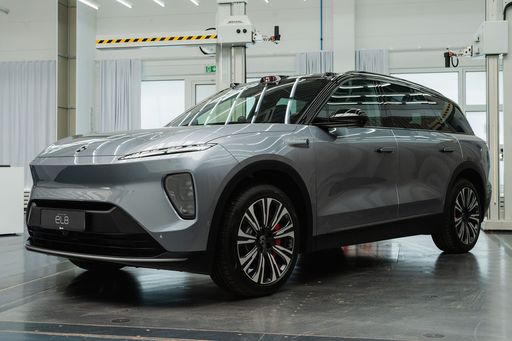
NIO EL8
Peugeot 508 SW
NIO EL8
Costs and Consumption
View detailed analysis
View detailed analysis
Engine and Performance
View detailed analysis
View detailed analysis
Dimensions and Body
View detailed analysis
View detailed analysis
Peugeot 508 SW
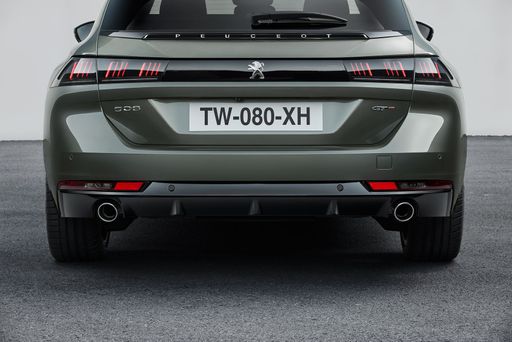
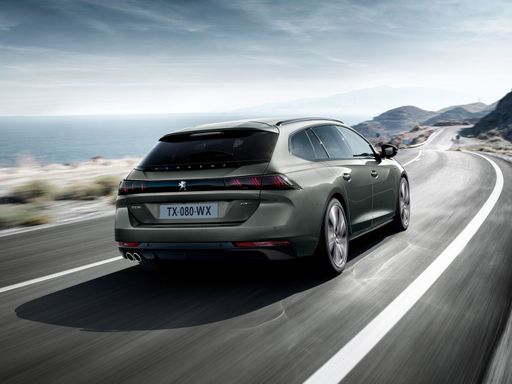
The Peugeot 508 SW dresses up as a sleek estate, blending Parisian flair with usable loadspace so you don't have to choose between style and weekend practicality. Inside it's a driver-focused cabin with quality materials and clever packaging that makes it a sensible, slightly mischievous choice for buyers who want an executive feel without the buttoned-up seriousness.
details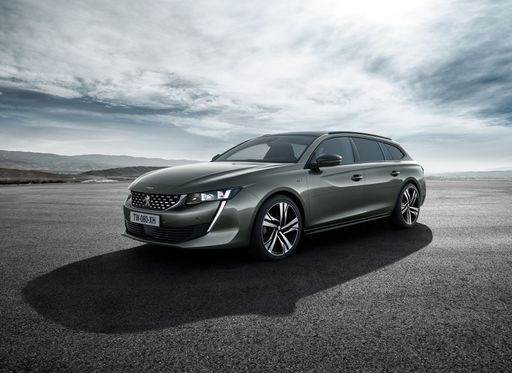
NIO EL8
The NIO EL8 feels like a tech-savvy living room on wheels, blending upscale comfort with playful design for buyers who want electric refinement without the clinical vibe. It’s roomy, packed with clever features and a relaxed driving character that turns everyday trips into something a little more fun.
details
Peugeot 508 SW
NIO EL8
Costs and Consumption |
|
|---|---|
|
Price
45,600 - 61,800 £
|
Price
71,100 - 90,800 £
|
|
Consumption L/100km
1.7 - 2 L/100km
|
Consumption L/100km
-
|
|
Consumption kWh/100km
-
|
Consumption kWh/100km
21.2 - 22 kWh/100km
|
|
Electric Range
46 - 52 km
|
Electric Range
390 - 510 km
|
|
Battery Capacity
-
|
Battery Capacity
73.5 - 90 kWh
|
|
co2
38 - 45 g/km
|
co2
0 g/km
|
|
Fuel tank capacity
43 L
|
Fuel tank capacity
-
|
Dimensions and Body |
|
|---|---|
|
Body Type
Estate
|
Body Type
SUV
|
|
Seats
5
|
Seats
6
|
|
Doors
5
|
Doors
5
|
|
Curb weight
1,846 - 1,967 kg
|
Curb weight
2,613 - 2,633 kg
|
|
Trunk capacity
530 L
|
Trunk capacity
265 L
|
|
Length
4,778 mm
|
Length
5,099 mm
|
|
Width
1,859 mm
|
Width
1,989 mm
|
|
Height
1,420 mm
|
Height
1,750 mm
|
|
Max trunk capacity
1,780 L
|
Max trunk capacity
810 L
|
|
Payload
373 - 454 kg
|
Payload
557 - 577 kg
|
Engine and Performance |
|
|---|---|
|
Engine Type
Plug-in Hybrid
|
Engine Type
Electric
|
|
Transmission
Automatic
|
Transmission
Automatic
|
|
Transmission Detail
Automatic Gearbox
|
Transmission Detail
Reduction Gearbox
|
|
Drive Type
Front-Wheel Drive, All-Wheel Drive
|
Drive Type
All-Wheel Drive
|
|
Power HP
180 - 360 HP
|
Power HP
653 HP
|
|
Acceleration 0-100km/h
5.2 - 8.3 s
|
Acceleration 0-100km/h
4.1 s
|
|
Max Speed
230 - 250 km/h
|
Max Speed
200 km/h
|
|
Torque
360 - 520 Nm
|
Torque
850 Nm
|
|
Number of Cylinders
4
|
Number of Cylinders
-
|
|
Power kW
133 - 265 kW
|
Power kW
480 kW
|
|
Engine capacity
1,598 cm3
|
Engine capacity
-
|
General |
|
|---|---|
|
Model Year
2024
|
Model Year
2024
|
|
CO2 Efficiency Class
B
|
CO2 Efficiency Class
A
|
|
Brand
Peugeot
|
Brand
NIO
|
DriveDuel uses data analysis and artificial intelligence to evaluate vehicle data and create content. Content is regularly reviewed and improved.
The displayed prices are estimates based on German list prices, adjusted to the respective country’s VAT. Country-specific registration taxes are not included. This information is not legally binding.