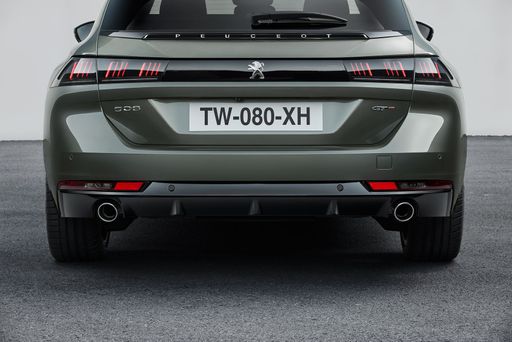
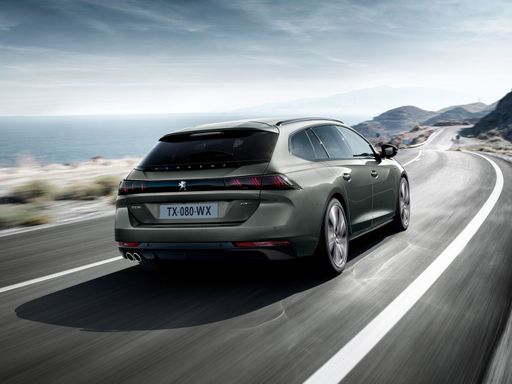
VS

Peugeot 308 SW vs Peugeot 508 SW comparison

Compare performance (195 HP vs 360 HP), boot space and price (30,100 £ vs 45,600 £ ) at a glance. Find out which car is the better choice for you – Peugeot 308 SW or Peugeot 508 SW?

Peugeot 308 SW vs Peugeot 508 SW: Key differences

Peugeot 308 SW

4.5 (2 Reviews)
rate
  • clearly cheaper
  • clearly more electric range
  • visibly lighter
  • marginally more trunk space

Peugeot 508 SW

4.7 (1 Reviews)
rate
  • significantly more power
  • visibly more efficient
  • substantially quicker 0–100 km/h

All details on performance, efficiency, range and trunk space can be found in the technical comparison below – including user reviews for both models.

308 SW

Estate face-off: compact clever vs executive poise

Peugeot 308 SW and Peugeot 508 SW go head-to-head in this estate comparison, laying out real-world differences for buyers weighing practicality against presence. In our Peugeot 308 SW VS Peugeot 508 SW overview we focus on how each estate works day-to-day—comfort, packaging, drivability and perceived quality rather than just headline figures. The Peugeot 308 SW arrives with a compact, agile brief while the Peugeot 508 SW pitches a broader, more refined persona aimed at long miles and greater road authority. If you’re searching for an estate that matches your daily rhythm, these are the two Peugeot choices you’ll want to compare closely.
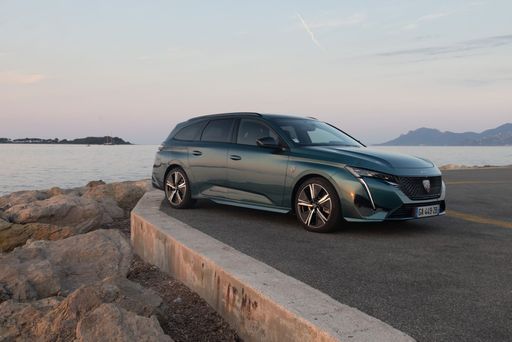
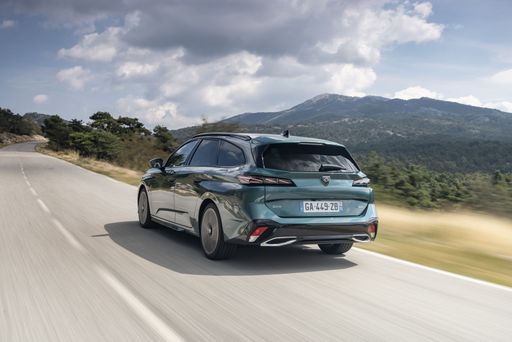
508 SW

Character clash: nimble urbanite vs composed grand tourer

The personality split is immediately obvious: the Peugeot 308 SW feels playful, light-footed and keen on city thermals, while the Peugeot 508 SW presents as composed, grown-up and quietly confident. The 308 SW’s charm comes from its agility and straightforward ergonomics, suited to quick decisions and tight parking. The 508 SW trades some of that immediacy for a more luxurious cabin mood and a planted feel that soothes motorway miles. Both have character—one wants to dance between bollards, the other prefers to stroll along boulevards.

308 SW

How they live: school runs, commutes and cross-country comfort

The Peugeot 308 SW excels at urban duties: easy manoeuvring, sensible packaging and a down-to-earth approach to everyday chores make it a low-fuss partner for city life. The Peugeot 508 SW shines on longer routes where its calmer ride, quieter cabin and sense of occasion reward hours behind the wheel. Families will appreciate both, but the 308 SW leans practical for daily errands while the 508 SW leans specialist for relaxed long-distance touring. Your mileage pattern—short hops or long hauls—will quickly shrink the field.

508 SW

Buy it because: the story you want to tell

Choosing the Peugeot 308 SW is a quietly sensible statement: you value clever use of space, lower fuss and an estate that gets the job done without drama. Opting for the Peugeot 508 SW signals a taste for presence, comfort and a cabin that feels a step closer to executive territory. The 308 SW sells practicality with personality; the 508 SW sells reassurance with a touch of prestige. Neither choice is apologetic—just different kinds of confidence for different tastes.

308 SW

Who the 308 SW suits best

The Peugeot 308 SW is ideal for the value-conscious commuter and the pragmatic small family who prioritise everyday usability over flash. If your life is a loop of urban chores, school runs and tight parking spots, the 308 SW’s nimbleness and clear layout make ownership easier and less fussy. It’s also the smarter pick when running costs and manoeuvrability matter more than presence on the drive. If you’re not chasing the more imposing stance of the 508 SW, the 308 SW gives you sensible estate capability in a friendlier package.

508 SW

Who the 508 SW suits (and when the 308 SW still wins)

The Peugeot 508 SW is aimed at buyers who prize long-distance comfort, a more premium cabin feel and a stronger road presence—the kind of driver who spends more time on the motorway than in tight city cores. It’s a good fit for people who want to reward everyday commuting with extra composure and visual poise. That said, the Peugeot 308 SW remains the sharper urban tool when parking, low-speed manoeuvres and budget-conscious ownership matter most. Read on to see how those character differences translate into concrete trade-offs so you can decide which compromises suit your life.

Here’s where it gets real: The technical differences in detail

308 SW

Costs and Efficiency:

Looking at overall running costs, both models reveal some interesting differences in everyday economy.

Peugeot 308 SW is clearly cheaper – starting at 30,100 £ , while the Peugeot 508 SW costs 45,600 £ . That’s a price difference of around 15,480 £.

Fuel consumption also shows a difference: the Peugeot 508 SW uses 1.7 L/100km and is visibly more efficient than the Peugeot 308 SW with 2.3 L/100km. The difference is about 0.6 L/100km.

As for electric range, the Peugeot 308 SW offers clearly more range – reaching up to 444 km, about 392 km more than the Peugeot 508 SW.

508 SW

Engine and Performance:

Under the bonnet, it becomes clear which model is tuned for sportiness and which one takes the lead when you hit the accelerator.

When it comes to engine power, the Peugeot 508 SW offers significantly more power – delivering 360 HP compared to 195 HP. That’s roughly 165 HP more horsepower.

When accelerating from 0 to 100 km/h, the Peugeot 508 SW is substantially quicker – completing the sprint in 5.2 s, while the Peugeot 308 SW takes 7.7 s. That’s about 2.5 s quicker.

Looking at top speed, the Peugeot 508 SW is marginally faster – reaching 250 km/h, while the Peugeot 308 SW tops out at 225 km/h. The difference is around 25 km/h.

There’s also a difference in torque: the Peugeot 508 SW delivers considerably more torque with 520 Nm compared to 300 Nm. That’s about 220 Nm more.

308 SW

Space and Everyday Use:

Whether family car or daily driver – which one offers more room, flexibility and comfort?

Both vehicles offer seating for 5 people.

In terms of curb weight, Peugeot 308 SW is visibly lighter – 1,484 kg compared to 1,846 kg. The difference is around 362 kg.

Looking at boot space, the Peugeot 308 SW offers marginally more boot space – 551 L compared to 530 L. That’s a difference of about 21 L.

For maximum load capacity, the Peugeot 508 SW offers moderately more capacity – up to 1,780 L, about 297 L more than the Peugeot 308 SW.

When it comes to payload, the Peugeot 308 SW carries moderately more – 508 kg compared to 454 kg. That’s a difference of about 54 kg.

Who wins the race in the data check?

The Peugeot 308 SW comes out clearly ahead in the objective data comparison.
This result only shows which model scores more points on paper – not which of the two cars feels right for you.

from £30,100
308 SW

Peugeot 308 SW

  • Engine Type : Petrol MHEV, Diesel, Plugin Hybrid, Electric
  • Transmission : Automatic
  • Drive Type : Front-Wheel Drive
  • Power HP : 131 - 195 HP
  • Consumption L/100km : 2.3 - 5.1 L/100km
  • Consumption kWh/100km : 15.2 - 15.7 kWh/100km
  • Electric Range : 78 - 444 km
Peugeot 308 SW
Peugeot 508 SW

Costs and Consumption

View detailed analysis

Engine and Performance

View detailed analysis

Dimensions and Body

View detailed analysis

Peugeot 308 SW

The Peugeot 308 SW blends French flair with estate practicality, dressing up daily chores in a surprisingly handsome package. Inside it's cleverly laid out and comfortable, and the composed, entertaining drive makes family duty feel a little less like a chore.

details

Peugeot 508 SW

The Peugeot 508 SW dresses up as a sleek estate, blending Parisian flair with usable loadspace so you don't have to choose between style and weekend practicality. Inside it's a driver-focused cabin with quality materials and clever packaging that makes it a sensible, slightly mischievous choice for buyers who want an executive feel without the buttoned-up seriousness.

details
Peugeot 308 SW
Peugeot 508 SW

Costs and Consumption

Price
30,100 - 43,800 £
Price
45,600 - 61,800 £
Consumption L/100km
2.3 - 5.1 L/100km
Consumption L/100km
1.7 - 2 L/100km
Consumption kWh/100km
15.2 - 15.7 kWh/100km
Consumption kWh/100km
-
Electric Range
78 - 444 km
Electric Range
46 - 52 km
Battery Capacity
0.4 kWh
Battery Capacity
-
co2
0 - 134 g/km
co2
38 - 45 g/km
Fuel tank capacity
42 - 52 L
Fuel tank capacity
43 L

Dimensions and Body

Body Type
Estate
Body Type
Estate
Seats
5
Seats
5
Doors
5
Doors
5
Curb weight
1,484 - 1,783 kg
Curb weight
1,846 - 1,967 kg
Trunk capacity
467 - 551 L
Trunk capacity
530 L
Length
4,636 mm
Length
4,778 mm
Width
1,852 mm
Width
1,859 mm
Height
1,438 mm
Height
1,420 mm
Max trunk capacity
1,402 - 1,483 L
Max trunk capacity
1,780 L
Payload
417 - 508 kg
Payload
373 - 454 kg

Engine and Performance

Engine Type
Petrol MHEV, Diesel, Plugin Hybrid, Electric
Engine Type
Plugin Hybrid
Transmission
Automatic
Transmission
Automatic
Transmission Detail
Dual-Clutch Automatic, Automatic Gearbox, Reduction Gearbox
Transmission Detail
Automatic Gearbox
Drive Type
Front-Wheel Drive
Drive Type
Front-Wheel Drive, All-Wheel Drive
Power HP
131 - 195 HP
Power HP
180 - 360 HP
Acceleration 0-100km/h
7.7 - 10.9 s
Acceleration 0-100km/h
5.2 - 8.3 s
Max Speed
170 - 225 km/h
Max Speed
230 - 250 km/h
Torque
230 - 300 Nm
Torque
360 - 520 Nm
Number of Cylinders
3 - 4
Number of Cylinders
4
Power kW
96 - 144 kW
Power kW
133 - 265 kW
Engine capacity
1,199 - 1,598 cm3
Engine capacity
1,598 cm3

General

Model Year
2,025 - 2,026
Model Year
2,024
CO2 Efficiency Class
C, D, B, A
CO2 Efficiency Class
B
Brand
Peugeot
Brand
Peugeot
DriveDuel uses data analysis and artificial intelligence to evaluate vehicle data and create content. Content is regularly reviewed and improved. The displayed prices are estimates based on German list prices, adjusted to the respective country’s VAT. Country-specific registration taxes are not included. This information is not legally binding.