VS

Polestar 2 vs VW ID.7 comparison

Compare performance (476 HP vs 340 HP), boot space and price (45,200 £ vs 46,400 £ ) at a glance. Find out which car is the better choice for you – Polestar 2 or VW ID.7?

Polestar 2 vs VW ID.7: Key differences

Polestar 2

5 (2 Reviews)
rate
  • only slightly cheaper
  • clearly more power
  • clearly quicker 0–100 km/h
  • barely lighter
details

VW ID.7

4.2 (7 Reviews)
rate
  • marginally more efficient
  • very slightly more electric range
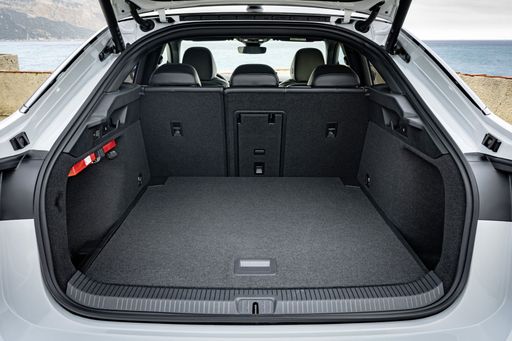
  • clearly more trunk space
details

All details on performance, efficiency, range and trunk space can be found in the technical comparison below – including user reviews for both models.

By Achim Sedelmaier

2

VW ID.7 VS Polestar 2 — quick take

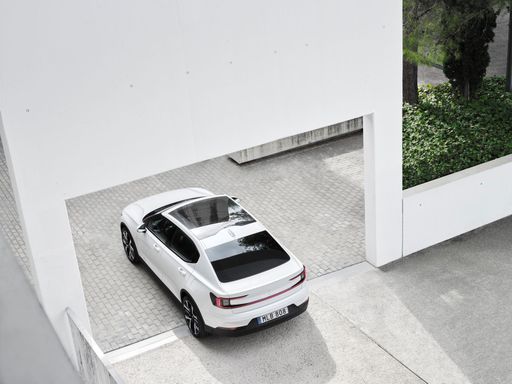
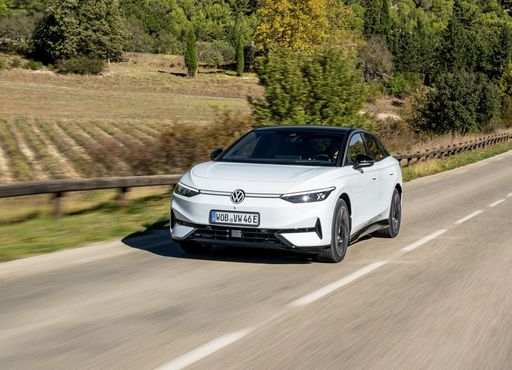
The VW ID.7 and Polestar 2 set up a classic contrast: the ID.7 is a composed, comfort-first electric fastback while the Polestar 2 is a taut, quality‑focused fastback with a sharper edge. If you search for calm highway miles, the ID.7 projects that business‑class serenity; if you prioritise immediate feel, tech polish and a premium cabin, the Polestar 2 leans more toward driver engagement and Scandinavian restraint. Both aim at long-distance commuters and design-conscious buyers, but they deliver those promises in very different ways. This page will sketch how those differences matter in day-to-day life rather than bury you in specs.
ID.7

Driving character and usability in traffic

The Polestar 2 drives with more immediacy: steering is crisper and the car reacts in a way that feels closer to a sporty hatchback, making it more rewarding on twisty roads or when you want a responsive commute. The VW ID.7 trades that sharpness for a neutral, planted demeanor that rewards calm inputs and high‑speed stability, so motorway stints feel less tiring. In city traffic the Polestar’s compact proportions and one‑pedal friendliness feel livelier, whereas the ID.7’s length and rear visibility require a little more care but benefit from excellent cameras and a surprisingly small turning circle for its size. Choose Polestar 2 if you want a car that communicates and responds; favour the ID.7 if you want a steady, low‑stress daily driver.

2

Comfort and long‑distance behaviour

On long runs the ID.7 clearly prioritises comfort: exceptional noise insulation, supple damping and available comfort seats make hours on the motorway feel effortless. The Polestar 2 is not uncomfortable, but its firmer setup and more audible wind/road inputs mean you notice surface imperfections sooner and may prefer softer suspension for repeated long trips. The ID.7’s relaxed character is paired with features aimed at fatigue reduction, while the Polestar 2 rewards drivers who prefer a more connected, athletic feel even if it trades a little serenity. If you routinely cover high annual miles or spend a lot of time on motorways, the ID.7’s composure is the friendlier choice; if you want spirited responses without sacrificing too much range, Polestar 2 is the sharper pick.

ID.7

Practicality, cabin space and everyday usability

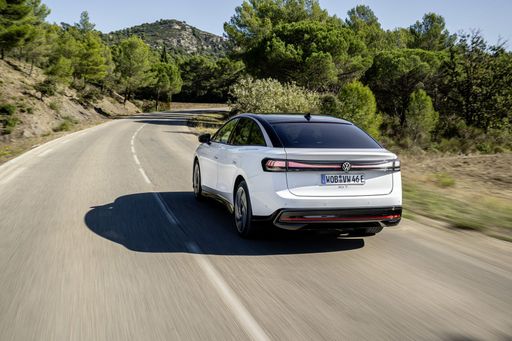
Practical differences are tangible: the ID.7 feels like a proper touring car with generous rear legroom and an expansive boot access that makes loading bulky items straightforward. The Polestar 2 cleverly uses a hatchback layout and a smart cargo floor, which helps in everyday loading, but its rear headroom and central tunnel are noticeably tighter for adult passengers. City users will appreciate the Polestar 2’s slightly more compact footprint and easier manoeuvrability, while families and luggage‑heavy users gain clear benefits from the ID.7’s volume and flexible storage. In short, pick the ID.7 for people and luggage first, the Polestar 2 for smarter day‑to‑day packaging when space is less of a priority.

2

Cabin feel, infotainment and perceived quality

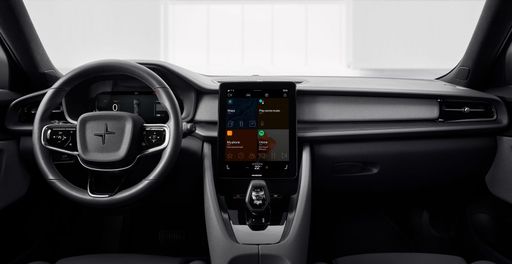
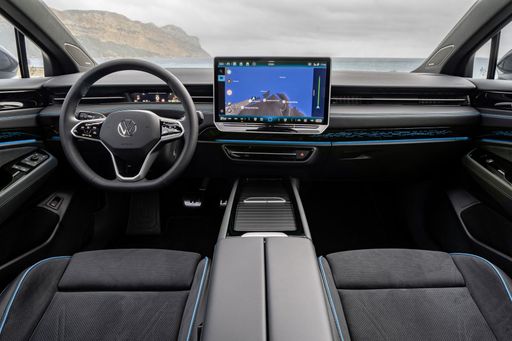
Inside, the Polestar 2 trades flash for a minimalist, high‑quality feel: materials and fit create a premium impression and the native Google infotainment is genuinely straightforward and helpful on the move. The VW ID.7 presents a more businesslike cockpit with useful tech like an AR‑HUD, but its touch‑first control philosophy and deeper menu layers can frustrate anyone who prefers tactile knobs and blind operation. Polestar’s cabin reads as curated and modern, while the ID.7 emphasizes calm ergonomics and practical touches—both feel well built, yet they project distinct personalities. If seamless infotainment and perceived luxury matter most, Polestar 2 pulls ahead; if hands‑on driving aids and a serene instrument environment are your priority, the ID.7 will please.

ID.7

Who each car actually fits — buyer guidance before the specs

If your life centers on motorway miles, rear‑seat comfort for passengers and carrying capacity, the VW ID.7 fits naturally as a long‑distance, family‑friendly cruiser that keeps stress low. If you prioritise a tighter driving experience, a tactile, premium cabin and a polished Google‑powered interface, the Polestar 2 will feel more aligned with those priorities. Budget and options matter: Polestar’s packaging can push prices up while the ID.7’s extras tend to emphasise comfort and assistance rather than sporty hardware. Read on to the technical comparison for the concrete trade‑offs in range, power and charging that translate these editorial differences into real numbers and daily consequences.

Here’s where it gets real: The technical differences in detail

2

Costs and Efficiency:

Price and efficiency are often the first things buyers look at. Here it becomes clear which model has the long-term edge – whether at the pump, the plug, or in purchase price.

Polestar 2 is only slightly cheaper – starting at 45,200 £ , while the VW ID.7 costs 46,400 £ . That’s a price difference of around 1,213 £.

In terms of energy consumption, the VW ID.7 is marginally more efficient: consuming 13.6 kWh/100km compared to 14.8 kWh/100km for the Polestar 2. That’s a difference of about 1.2 kWh/100km.

As for electric range, the VW ID.7 offers very slightly more range – reaching up to 708 km, about 49 km more than the Polestar 2.

ID.7

Engine and Performance:

Under the bonnet, it becomes clear which model is tuned for sportiness and which one takes the lead when you hit the accelerator.

When it comes to engine power, the Polestar 2 offers clearly more power – delivering 476 HP compared to 340 HP. That’s roughly 136 HP more horsepower.

When accelerating from 0 to 100 km/h, the Polestar 2 is clearly quicker – completing the sprint in 4.2 s, while the VW ID.7 takes 5.4 s. That’s about 1.2 s quicker.

Looking at top speed, the Polestar 2 is a bit faster – reaching 205 km/h, while the VW ID.7 tops out at 180 km/h. The difference is around 25 km/h.

There’s also a difference in torque: the Polestar 2 delivers only slightly more torque with 740 Nm compared to 679 Nm. That’s about 61 Nm more.

2

Space and Everyday Use:

Cabin size, boot volume and payload all play a role in everyday practicality. Here, comfort and flexibility make the difference.

Both vehicles offer seating for 5 people.

In terms of curb weight, Polestar 2 is barely lighter – 2,069 kg compared to 2,180 kg. The difference is around 111 kg.

Looking at boot space, the VW ID.7 offers clearly more boot space – 532 L compared to 405 L. That’s a difference of about 127 L.

For maximum load capacity, the VW ID.7 offers clearly more capacity – up to 1,586 L, about 491 L more than the Polestar 2.

When it comes to payload, the VW ID.7 carries very slightly more – 465 kg compared to 421 kg. That’s a difference of about 44 kg.

Who wins the race in the data check?

The Polestar 2 has the upper hand in the objective data comparison.
This result only shows which model scores more points on paper – not which of the two cars feels right for you.

from £45,200
2

Polestar 2

  • Engine Type Electric
  • Transmission Automatic
  • Drive Type All-Wheel Drive, Rear-Wheel Drive
  • Power HP 299 - 476 HP
  • Consumption kWh/100km 14.8 - 16.8 kWh/100km
  • Electric Range 568 - 659 km
Polestar 2
VW ID.7

Costs and Consumption

View detailed analysis

Engine and Performance

View detailed analysis

Dimensions and Body

View detailed analysis

Polestar 2

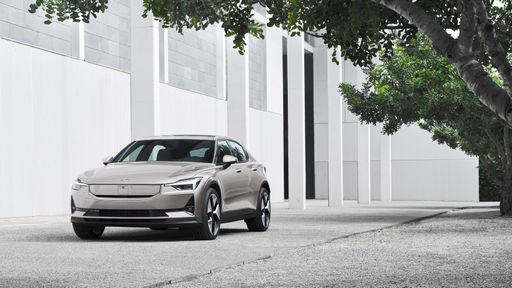
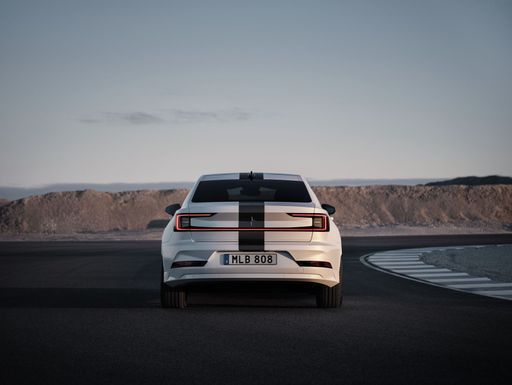
The Polestar 2 is a crisp, Scandinavian-styled electric liftback that pairs minimalist luxury with a focused, driver's attitude. It feels agile and composed whether you’re commuting or heading out for the weekend, with a tech-forward cabin and enough personality to make everyday driving a bit more fun.

details

VW ID.7

VW ID.7 arrives as Volkswagen's electric grand tourer, pairing a low-slung, aerodynamic silhouette with a calm, understated interior that prioritizes comfort and space. It’s a sensible choice for buyers who want a relaxed, high-tech cruiser that covers motorway miles with poise rather than bravado.

details
Polestar 2
VW ID.7

Costs and Consumption

Price
45,200 - 57,400 £
Price
46,400 - 54,200 £
Consumption L/100km
-
Consumption L/100km
-
Consumption kWh/100km
14.8 - 16.8 kWh/100km
Consumption kWh/100km
13.6 - 16.2 kWh/100km
Electric Range
568 - 659 km
Electric Range
594 - 708 km
Battery Capacity
78 kWh
Battery Capacity
77 - 86 kWh
co2
0 g/km
co2
0 g/km
Fuel tank capacity
-
Fuel tank capacity
-

Dimensions and Body

Body Type
Sedan
Body Type
Hatchback
Seats
5
Seats
5
Doors
5
Doors
5
Curb weight
2,069 - 2,188 kg
Curb weight
2,180 - 2,325 kg
Trunk capacity
405 L
Trunk capacity
532 L
Length
4,606 mm
Length
4,961 mm
Width
1,859 mm
Width
1,862 mm
Height
1,473 - 1,479 mm
Height
1,535 - 1,536 mm
Max trunk capacity
1,095 L
Max trunk capacity
1,586 L
Payload
412 - 421 kg
Payload
460 - 465 kg

Engine and Performance

Engine Type
Electric
Engine Type
Electric
Transmission
Automatic
Transmission
Automatic
Transmission Detail
Reduction Gearbox
Transmission Detail
Reduction Gearbox
Drive Type
All-Wheel Drive, Rear-Wheel Drive
Drive Type
Rear-Wheel Drive, All-Wheel Drive
Power HP
299 - 476 HP
Power HP
286 - 340 HP
Acceleration 0-100km/h
4.2 - 6.2 s
Acceleration 0-100km/h
5.4 - 6.6 s
Max Speed
205 km/h
Max Speed
180 km/h
Torque
490 - 740 Nm
Torque
545 - 679 Nm
Number of Cylinders
-
Number of Cylinders
-
Power kW
220 - 350 kW
Power kW
210 - 250 kW
Engine capacity
-
Engine capacity
-

General

Model Year
2024
Model Year
2,023 - 2,024
CO2 Efficiency Class
A
CO2 Efficiency Class
A
Brand
Polestar
Brand
VW
DriveDuel uses data analysis and artificial intelligence to evaluate vehicle data and create content. Content is regularly reviewed and improved. The displayed prices are estimates based on German list prices, adjusted to the respective country’s VAT. Country-specific registration taxes are not included. This information is not legally binding.