VS

VW ID.5 vs VW ID.7 comparison

Compare performance (340 HP vs 340 HP), boot space and price (36,800 £ vs 46,400 £ ) at a glance. Find out which car is the better choice for you – VW ID.5 or VW ID.7?

VW ID.5 vs VW ID.7: Key differences

VW ID.5

2.9 (2 Reviews)
rate
  • clearly cheaper
  • moderately lighter
  • marginally more trunk space

VW ID.7

4 (4 Reviews)
rate
  • a bit more efficient
  • noticeably more electric range

All details on performance, efficiency, range and trunk space can be found in the technical comparison below – including user reviews for both models.

ID.5

The Ultimate Showdown: VW ID.5 vs. VW ID.7

Volkswagen is at the forefront of the electric vehicle revolution, with its ID series capturing the hearts of EV enthusiasts worldwide. Among its lineup, the VW ID.5 and VW ID.7 stand out as impressive contenders, each offering unique features tailored to different consumer needs. Today, we delve into the technical aspects and innovations of these two models to help you decide which one might be the perfect fit for you.
ID.7

Body Type and Dimensions: SUV vs. Hatchback

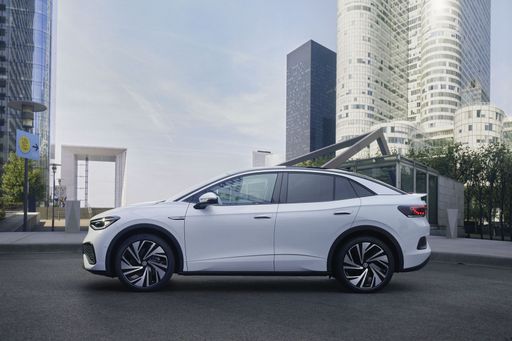
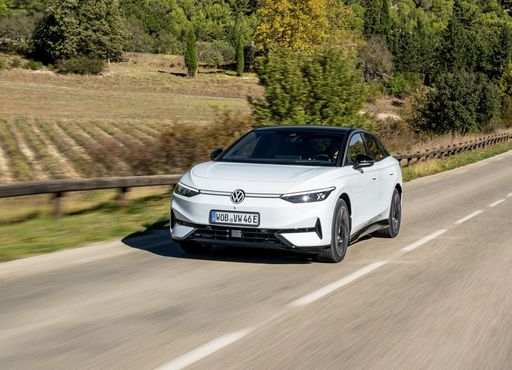
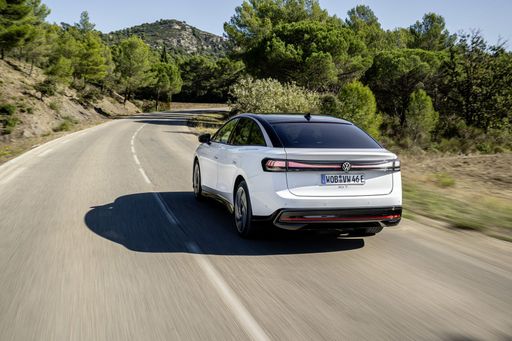
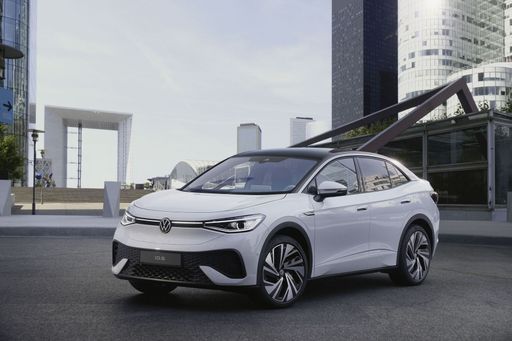
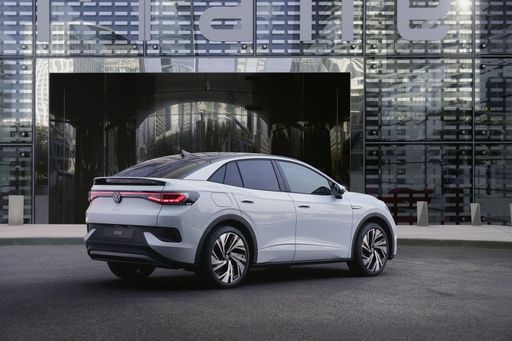
The VW ID.5 is designed as a sleek SUV, perfect for those who crave the additional space and elevated driving position. With a length of 4599 mm, a width of 1852 mm, and a height of up to 1618 mm, the ID.5 asserts a commanding road presence. Meanwhile, the VW ID.7 adopts a hatchback design, boasting dimensions of 4961 mm in length, 1862 mm in width, and 1536 mm in height, providing a more elongated profile suitable for those who appreciate a sporty aesthetic.

ID.5

Powertrain and Performance: Electric Excellence

Both models feature an electric engine and offer a choice between rear-wheel drive and all-wheel drive configurations. The ID.5 comes with power outputs ranging from 170 HP to 340 HP, while the ID.7 parallels with power options of 286 HP to 340 HP. Torque delivery is robust, with the ID.5 providing between 310 Nm and 679 Nm, and the ID.7 offering a similar range. Acceleration-wise, the ID.7 edges ahead slightly, with a 0-100 km/h time starting from 5.4 seconds compared to the ID.5's quickest at 5.4 seconds. Both models cap their speed at 180 km/h.

ID.7

Battery Capacity and Range: Going the Distance

When it comes to battery capacity, the ID.5 offers options of 52 kWh to 79 kWh, delivering an electric range between 365 km and 563 km. The ID.7, with its 77 kWh and 86 kWh batteries, extends further, offering a range from 595 km to an impressive 709 km. This makes the ID.7 more suitable for long-distance travelers looking for fewer stops between charges.

ID.5

Interior and Cargo Space: Comfort Meets Versatility

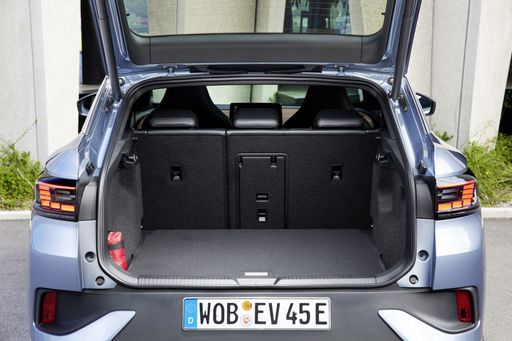
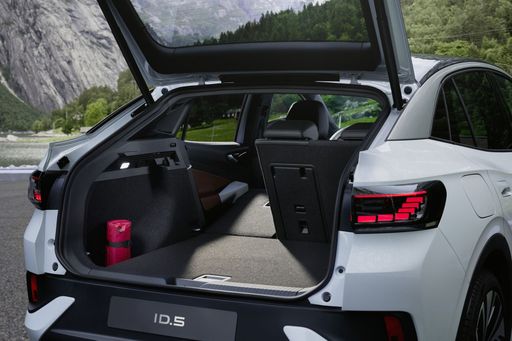
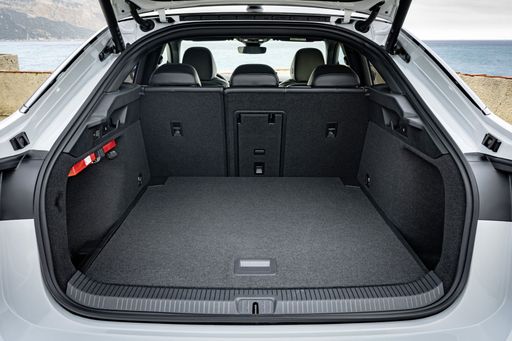
Interior-wise, both vehicles accommodate five passengers comfortably, but when it comes to luggage space, the ID.5 offers an edge with a trunk capacity of 549 L, slightly surpassing the ID.7's 532 L. Despite this, the ID.7's hatchback design allows for flexible storage arrangements, appealing to those who frequently carry varied loads.

ID.7

Advanced Technology: Innovations at Your Fingertips

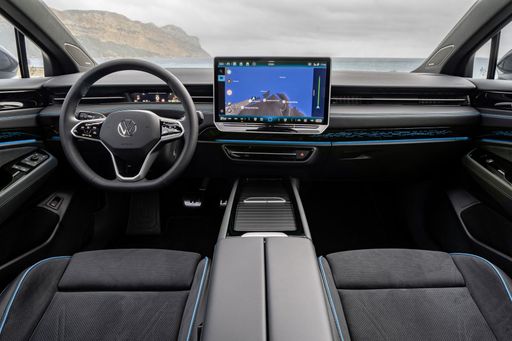
Volkswagen has equipped both models with the latest in automotive tech, including state-of-the-art infotainment systems, advanced driver-assistance features, and seamless connectivity options. The automatic transmission in both utilizes a reduction gearbox, optimizing energy efficiency and vehicle performance.

ID.5

Efficiency and Environmental Impact: Leading the Charge

Both models boast a CO2 efficiency class of A and zero CO2 emissions, underscoring Volkswagen's commitment to sustainable mobility. The ID.7 wins in energy efficiency with a lower consumption rate starting at 13.6 kWh/100km compared to the ID.5's base consumption of 15.6 kWh/100km.

ID.7

The Verdict: Choosing Your Ideal ID

In the end, the decision between the VW ID.5 and VW ID.7 boils down to personal preference and specific needs. The ID.5 appeals to those seeking an SUV's versatility and space, while the ID.7 calls to drivers desiring a longer range and a hatchback's sleek appeal. Both models promise performance, efficiency, and innovation, embodying the future-focused vision that VW consistently delivers.

Here’s where it gets real: The technical differences in detail

ID.5

Costs and Efficiency:

Looking at overall running costs, both models reveal some interesting differences in everyday economy.

VW ID.5 is clearly cheaper – starting at 36,800 £ , while the VW ID.7 costs 46,400 £ . That’s a price difference of around 9,544 £.

In terms of energy consumption, the VW ID.7 is a bit more efficient: consuming 13.6 kWh/100km compared to 15.7 kWh/100km for the VW ID.5. That’s a difference of about 2.1 kWh/100km.

As for electric range, the VW ID.7 offers noticeably more range – reaching up to 708 km, about 149 km more than the VW ID.5.

ID.7

Engine and Performance:

Power, torque and acceleration are the classic benchmarks for car enthusiasts – and here, some clear differences start to show.

Both models deliver identical power – 340 HP each.

Both models accelerate almost equally fast – 5.4 s from 0 to 100 km/h.

There’s no difference in top speed – both reach 180 km/h.

Both models offer the same torque – 679 Nm.

ID.5

Space and Everyday Use:

Beyond pure performance, interior space and usability matter most in daily life. This is where you see which car is more practical and versatile.

Both vehicles offer seating for 5 people.

In terms of curb weight, VW ID.5 is moderately lighter – 1,963 kg compared to 2,180 kg. The difference is around 217 kg.

Looking at boot space, the VW ID.5 offers marginally more boot space – 549 L compared to 532 L. That’s a difference of about 17 L.

For maximum load capacity, the VW ID.7 offers only slightly more capacity – up to 1,586 L, about 25 L more than the VW ID.5.

When it comes to payload, the VW ID.5 carries moderately more – 549 kg compared to 465 kg. That’s a difference of about 84 kg.

Who wins the race in the data check?

The VW ID.5 has only a minor advantage in the objective data comparison.
This result only shows which model scores more points on paper – not which of the two cars feels right for you.

from £36,800
ID.5

VW ID.5

  • Engine Type : Electric
  • Transmission : Automatic
  • Drive Type : Rear-Wheel Drive, All-Wheel Drive
  • Power HP : 170 - 340 HP
  • Consumption kWh/100km : 15.7 - 16.6 kWh/100km
  • Electric Range : 363 - 559 km
VW ID.5
VW ID.7

Costs and Consumption

View detailed analysis

Engine and Performance

View detailed analysis

Dimensions and Body

View detailed analysis

VW ID.5

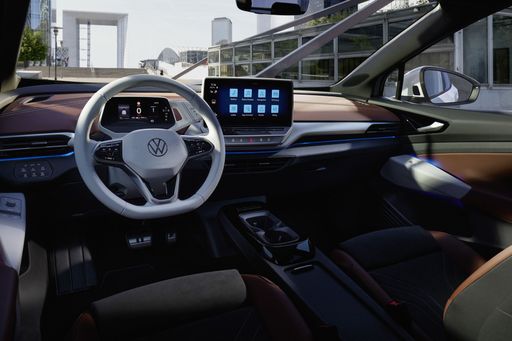
VW ID.5 dresses electric power in a sleek, coupe-like profile that turns sensible motoring into something a touch more stylish and smug. Inside it’s spacious and user-friendly, with calm, confidence-inspiring driving that suits buyers who want EV simplicity without the sci‑fi theatrics.

details

VW ID.7

VW ID.7 arrives as Volkswagen's electric grand tourer, pairing a low-slung, aerodynamic silhouette with a calm, understated interior that prioritizes comfort and space. It’s a sensible choice for buyers who want a relaxed, high-tech cruiser that covers motorway miles with poise rather than bravado.

details
VW ID.5
VW ID.7

Costs and Consumption

Price
36,800 - 48,400 £
Price
46,400 - 54,200 £
Consumption L/100km
-
Consumption L/100km
-
Consumption kWh/100km
15.7 - 16.6 kWh/100km
Consumption kWh/100km
13.6 - 16.2 kWh/100km
Electric Range
363 - 559 km
Electric Range
594 - 708 km
Battery Capacity
52 - 79 kWh
Battery Capacity
77 - 86 kWh
co2
0 g/km
co2
0 g/km
Fuel tank capacity
-
Fuel tank capacity
-

Dimensions and Body

Body Type
SUV
Body Type
Hatchback
Seats
5
Seats
5
Doors
5
Doors
5
Curb weight
1,963 - 2,233 kg
Curb weight
2,180 - 2,325 kg
Trunk capacity
549 L
Trunk capacity
532 L
Length
4,582 - 4,599 mm
Length
4,961 mm
Width
1,852 mm
Width
1,862 mm
Height
1,601 - 1,618 mm
Height
1,535 - 1,536 mm
Max trunk capacity
1,561 L
Max trunk capacity
1,586 L
Payload
517 - 549 kg
Payload
460 - 465 kg

Engine and Performance

Engine Type
Electric
Engine Type
Electric
Transmission
Automatic
Transmission
Automatic
Transmission Detail
Reduction Gearbox
Transmission Detail
Reduction Gearbox
Drive Type
Rear-Wheel Drive, All-Wheel Drive
Drive Type
Rear-Wheel Drive, All-Wheel Drive
Power HP
170 - 340 HP
Power HP
286 - 340 HP
Acceleration 0-100km/h
5.4 - 8.9 s
Acceleration 0-100km/h
5.4 - 6.6 s
Max Speed
160 - 180 km/h
Max Speed
180 km/h
Torque
310 - 679 Nm
Torque
545 - 679 Nm
Number of Cylinders
-
Number of Cylinders
-
Power kW
125 - 250 kW
Power kW
210 - 250 kW
Engine capacity
-
Engine capacity
-

General

Model Year
2,024 - 2,025
Model Year
2,023 - 2,024
CO2 Efficiency Class
A
CO2 Efficiency Class
A
Brand
VW
Brand
VW
DriveDuel uses data analysis and artificial intelligence to evaluate vehicle data and create content. Content is regularly reviewed and improved. The displayed prices are estimates based on German list prices, adjusted to the respective country’s VAT. Country-specific registration taxes are not included. This information is not legally binding.