VW ID.5 SUV, starting at 36800 £

4.7 (1 Reviews)
rate

The VW ID.5 SUV impresses with 340 HP 559 km and an attractive starting price of 36800 £ . Here are all the details at a glance.

from about £36,800
ID.5

VW ID.5

  • Engine Type : Electric
  • Transmission : Automatic
  • Drive Type : Rear-Wheel Drive, All-Wheel Drive
  • Power HP : 170 - 340 HP
  • Consumption kWh/100km : 15.7 - 16.6 kWh
  • Electric Range : 363 - 559 km

First Impression: a coupe-SUV that still wears business attire

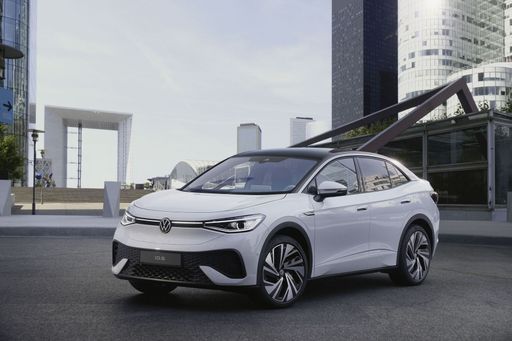
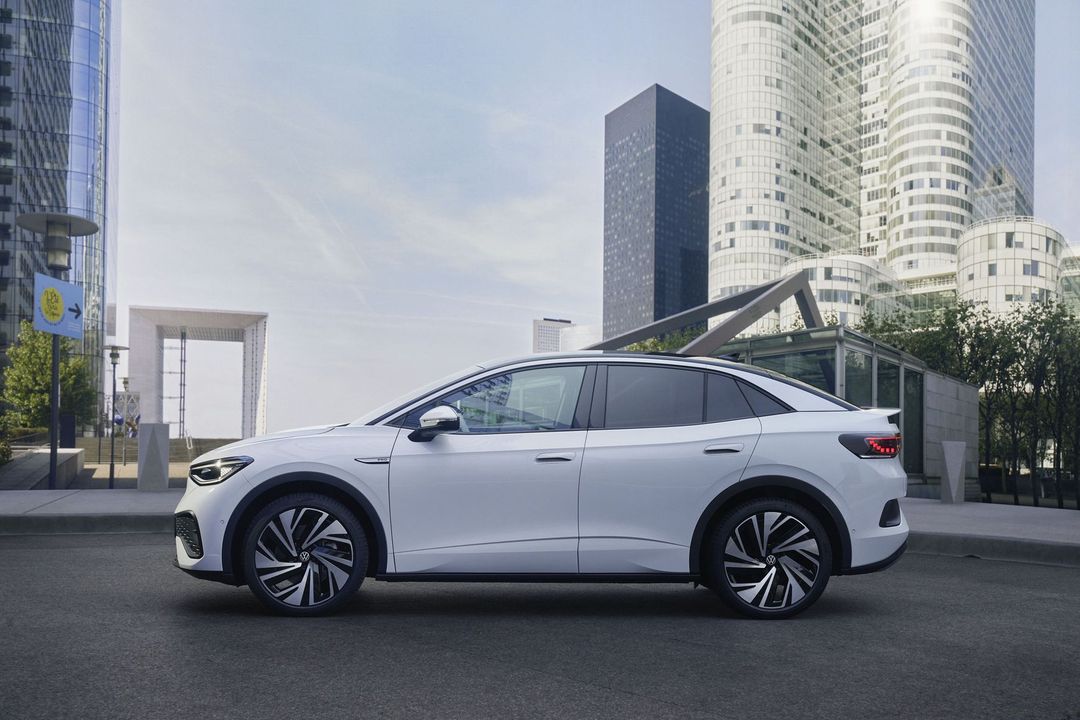
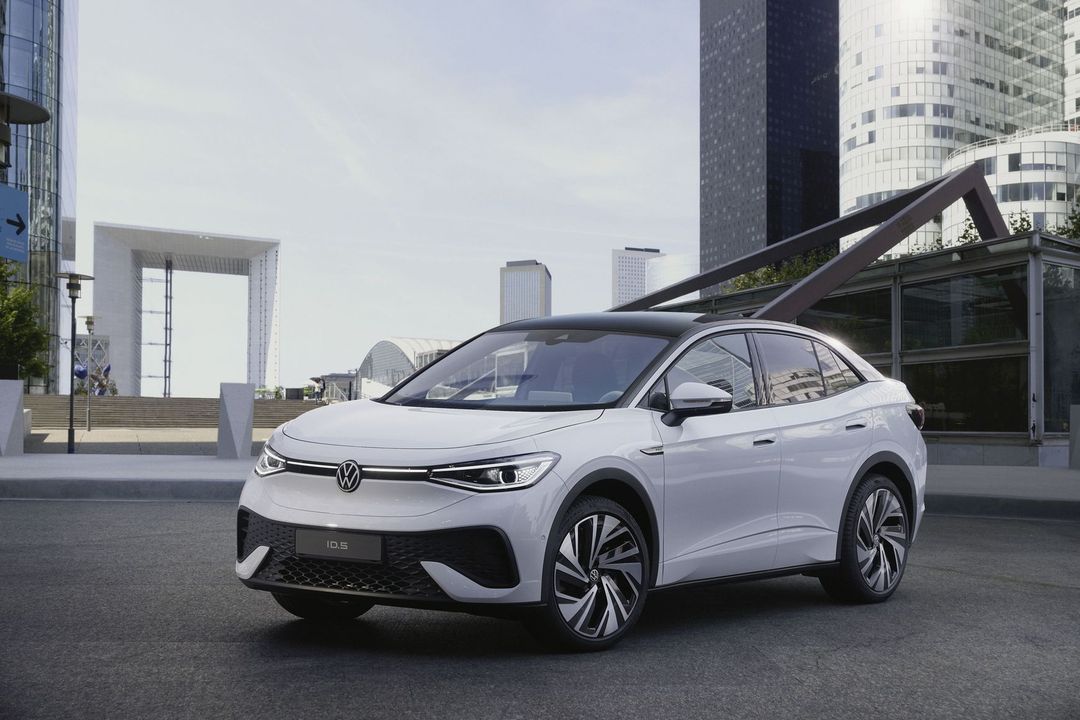
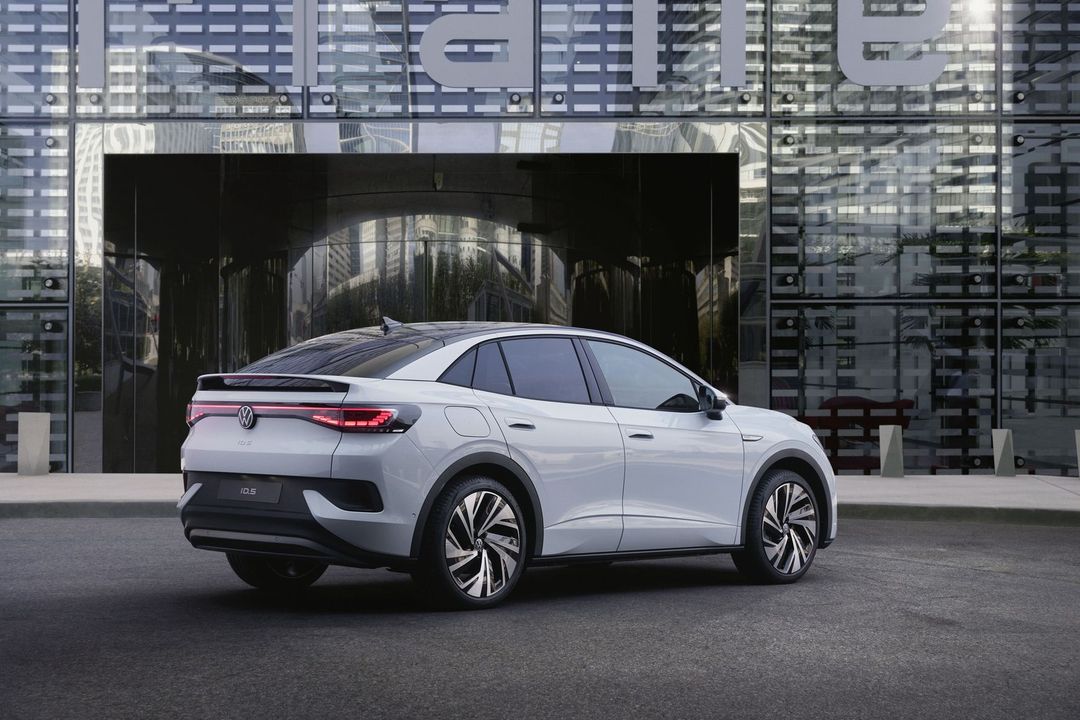
The VW ID.5 looks like an ID.4 that went to finishing school — a sloped roof and tighter rear give it a sporty silhouette without becoming a full coupe-crossover fad. At roughly 4.58–4.60 metres long and 1.85 metres wide it sits confidently on the road, while subtle GTX touches add aggression on performance models. Available across multiple trims — from a 170 hp rear‑wheel drive to a 340 hp GTX all‑wheel drive, with battery sizes of about 52–79 kWh and WLTP ranges roughly between 370 and 560 km — the styling signals comfort-first intentions with a dash of dynamism.
Cabin mood: minimalist with German pragmatism

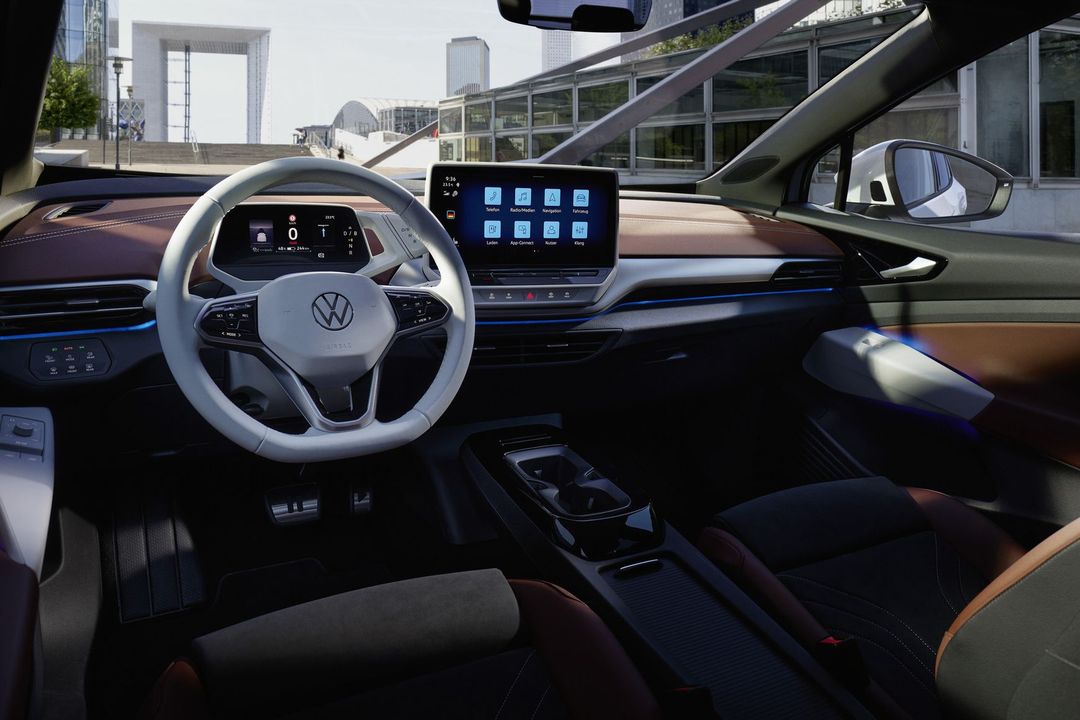
Interior design follows VW’s new, pared-back language: a wide dash, central touchscreen and few physical buttons, which creates a modern, airy feel but demands a bit of learning for everyday controls. Materials are generally good for the class with soft surfaces where it counts and harder plastics lower down; higher trims add nicer trims and supportive seats for longer trips. Small details like a modest centre console, optional ambient lighting and clear visibility up front keep the cabin pleasant for daily use without feeling overly luxurious.

Space that works — even with the sloping roof

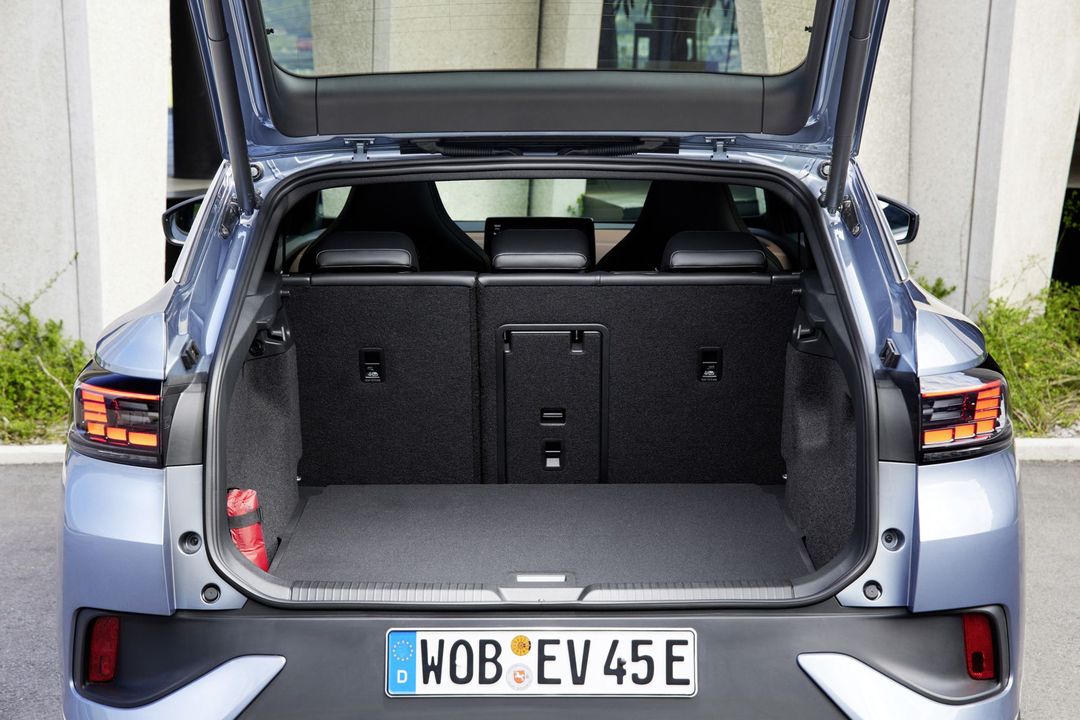
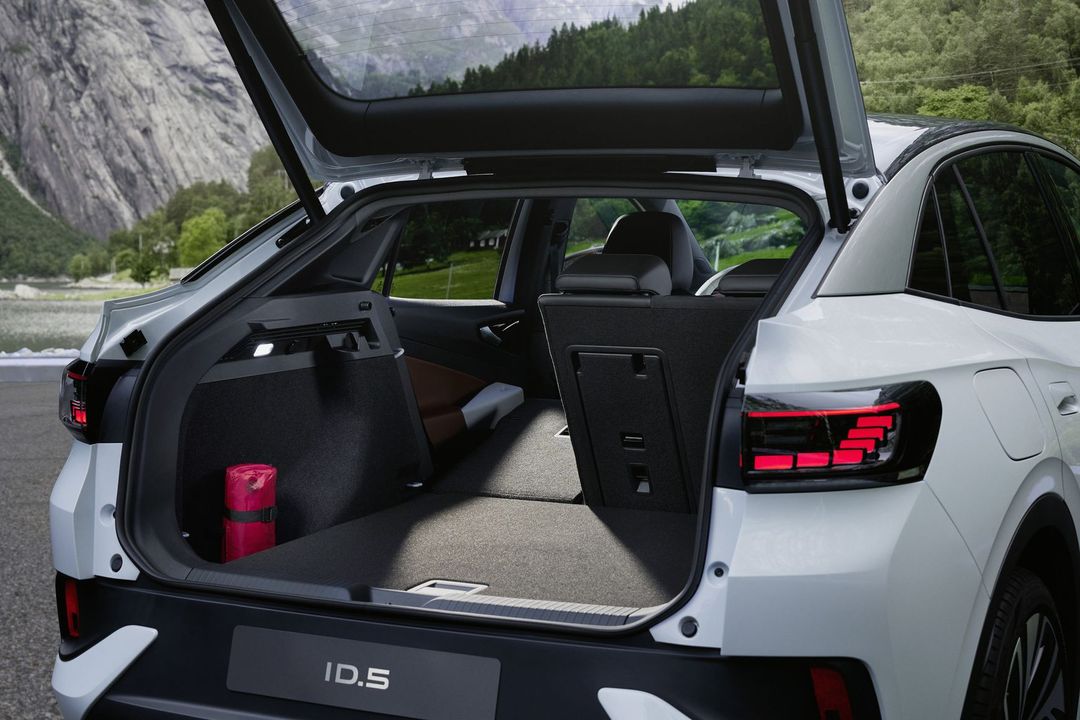
Despite the coupe-like roofline the ID.5 seats five and delivers useful everyday practicality, with a 549‑litre boot that expands to around 1,561 litres with the rear seats folded for weekend gear or flat-packed furniture. Rear headroom is tighter than in a boxier SUV but still acceptable for most adults on shorter journeys, while payloads of roughly 517–549 kg mean the car can cope with luggage and passengers without obvious strain. Small storage cubbies and a sensible driving position make it easy to live with as a family car rather than a pure weekend toy.

On the move: calm, composed, and sometimes surprising

Handling leans toward safe and composed rather than sharp; the RWD versions feel balanced and predictable while the GTX with 340 hp and AWD brings genuine pace and a 0–100 km/h time near 5.4 seconds for buyers who want sportier performance. Weights between about 1,963 and 2,233 kg are noticeable in fast direction changes, but the ride soaks up bumps competently and the steering gives enough feel for confident lane changes. Regenerative braking is tunable and allows relaxed one‑pedal driving in daily traffic, which suits the ID.5’s comfort-first character.

Efficiency and real-world range: what the numbers mean

Official consumption figures sit around the mid‑teens at roughly 15.7–16.6 kWh/100 km depending on variant, and WLTP ranges span roughly 363–559 km depending on battery size and motor configuration. In everyday use this usually translates to 300–450 km of realistic range depending on speed, load and weather — expect the higher figures in the most efficient rear‑wheel versions and the lower end for the GTX on sustained motorway runs. Charging speed and session habits will define usability on longer trips, but the battery options allow buyers to prioritise range or a lower purchase weight.

Assistance and tech: smart, sometimes fussy

Driver aids are comprehensive with adaptive cruise, lane keeping and parking assists that reflect Volkswagen’s advanced safety suite, though active systems still require attentive supervision and occasional corrections. The infotainment is large and modern, with voice control and connected features that deliver navigation and media competently, but touch‑centric controls can be fiddly compared with physical knobs when on the move. Software updates and smartphone integration keep the car feeling current, while the simplicity of the cabin layout helps reduce distraction for daily commuting.

Who should consider an ID.5?

The ID.5 suits buyers who want an electric SUV with a sleeker profile than a conventional crossover, practical space for family life and the option of a genuinely quick GTX if performance matters. It is a good match for long-distance commuters who value quiet cruising and a clean interior, while those needing maximum rear headroom or the cheapest entry-cost will be better served by boxier alternatives. For anyone after a composed, efficient EV with a touch of style, the ID.5 strikes a balanced, polished blend of comfort and capability.

Costs and Consumption

Price
36800 - 48400 £
Consumption L/100km
-
Consumption kWh/100km
15.7 - 16.6 kWh
Electric Range
363 - 559 km
Battery Capacity
52 - 79 kWh
co2
0 g/km
Fuel tank capacity
-

Dimensions and Body

Body Type
SUV
Seats
5
Doors
5
Curb weight
1963 - 2233 kg
Trunk capacity
549 L
Length
4582 - 4599 mm
Width
1852 mm
Height
1601 - 1618 mm
Max trunk capacity
1561 L
Payload
517 - 549 kg

Engine and Performance

Engine Type
Electric
Transmission
Automatic
Transmission Detail
Reduction Gearbox
Drive Type
Rear-Wheel Drive, All-Wheel Drive
Power HP
170 - 340 HP
Acceleration 0-100km/h
5.4 - 8.9 s
Max Speed
160 - 180 km/h
Torque
310 - 679 Nm
Number of Cylinders
-
Power kW
125 - 250 kW
Engine capacity
-

General

Model Year
2024 - 2025
CO2 Efficiency Class
A
Brand
VW
What drive types are available for the VW ID.5?

The VW ID.5 is available as Rear-Wheel Drive or All-Wheel Drive.

The prices shown are estimates based on German list prices, adjusted for local VAT. Local registration taxes (e.g. NoVA, BPM or CO2 malus) are not included. This information is not legally binding.