VS

VW ID.4 vs VW ID.5 comparison

Compare performance (299 HP vs 299 HP), boot space and price (34,800 £ vs 37,200 £ ) at a glance. Find out which car is the better choice for you – VW ID.4 or VW ID.5?

VW ID.4 vs VW ID.5: Key differences

VW ID.4

4.4 (9 Reviews)
rate
  • very slightly cheaper
details

VW ID.5

2.9 (2 Reviews)
rate
  • barely more electric range
  • marginally lighter
details

All details on performance, efficiency, range and trunk space can be found in the technical comparison below – including user reviews for both models.

By Achim Sedelmaier

ID.4

VW ID.4 vs ID.5: the real-world differences that matter

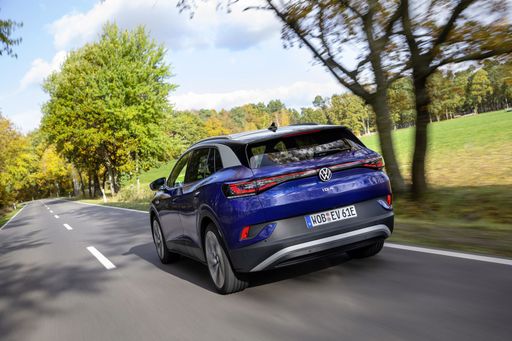
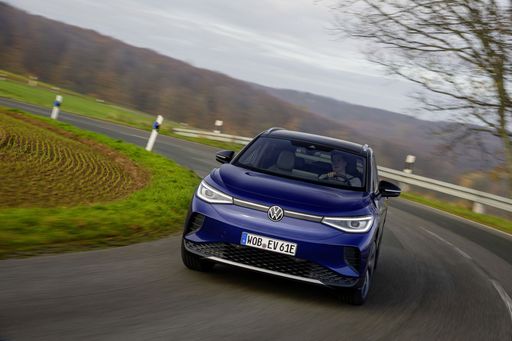
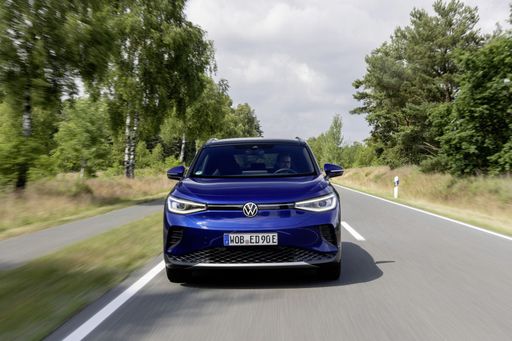
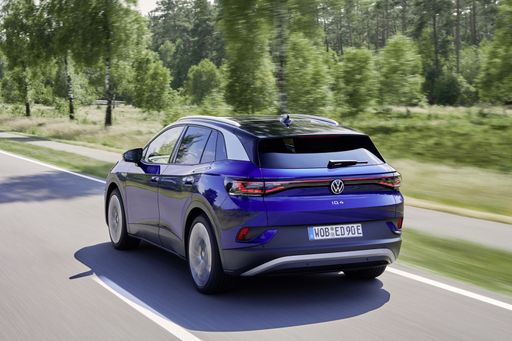
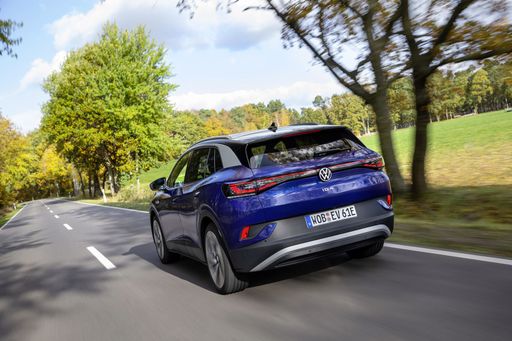
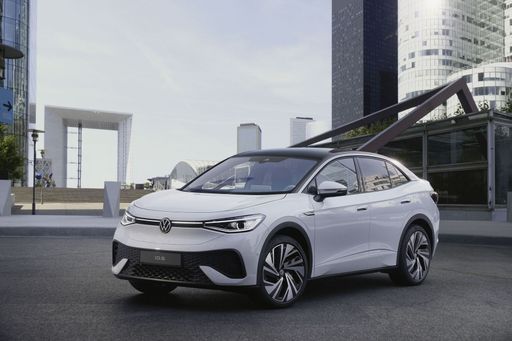
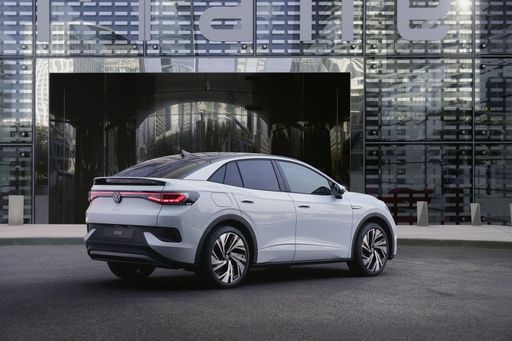
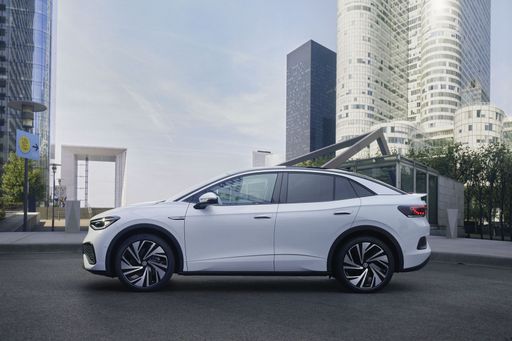
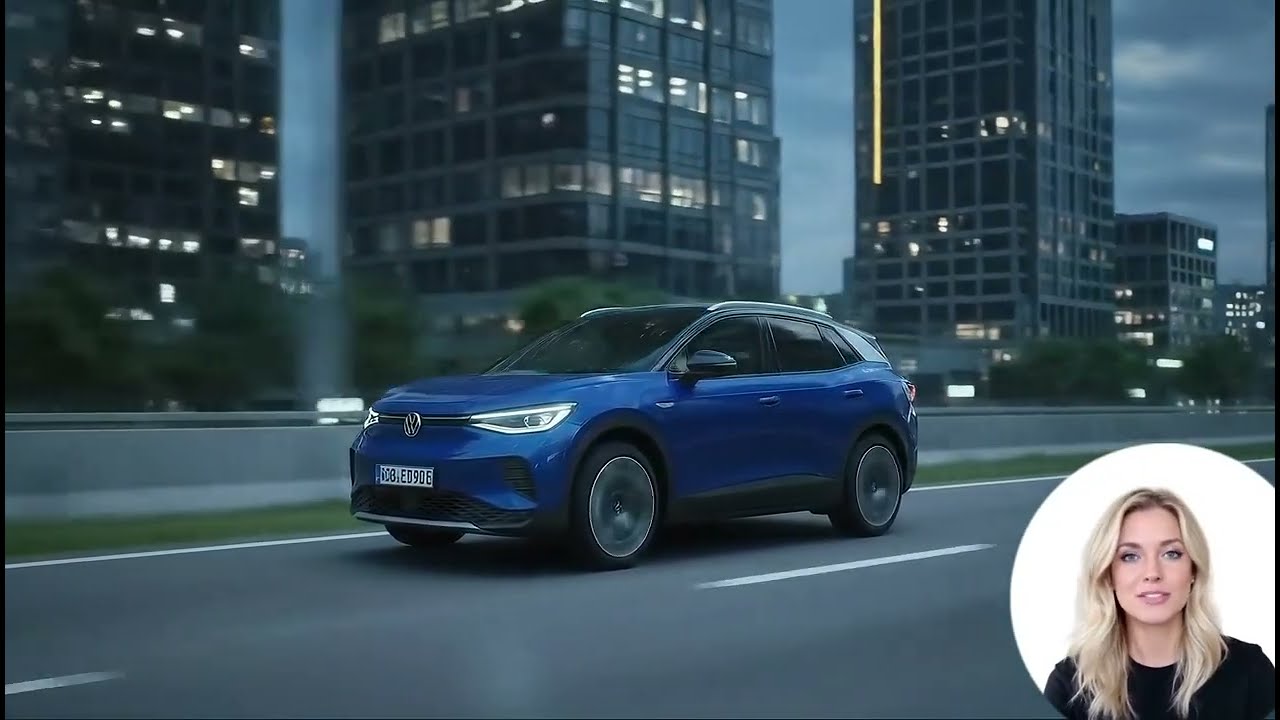
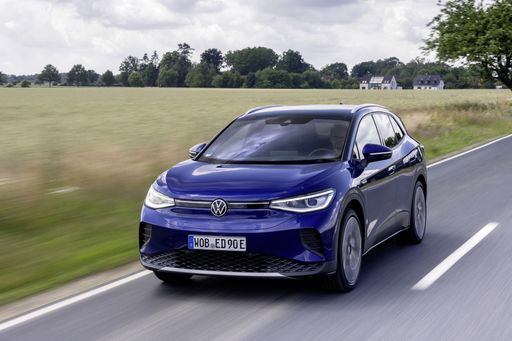
The VW ID.4 and VW ID.5 are closely related electric SUVs, but they feel different in daily life. In this VW ID.4 VS VW ID.5 matchup, the choice pivots on shape, visibility, and how you use the back seats and boot. Both cruise quietly and share the same calm, effortless thrust, yet their personalities split between utility and style. The ID.4 leans practical and value-focused, while the ID.5 trades some square-edged usefulness for a sleeker silhouette and a slightly richer vibe.
ID.5

Design character and cabin feel

The VW ID.4 looks and feels like a classic family SUV: upright, airy and easy-going. The VW ID.5, with its coupé roofline, sits lower and feels a touch more cocooned, which some will read as sportier and more premium even though materials are broadly the same. Day to day, the ID.4’s larger glasshouse gives a lighter, more open impression, whereas the ID.5’s tapered rear creates a more intimate cabin ambiance. If you’re drawn to clean lines and a sleeker stance, the ID.5 delivers that driveway appeal; if you prefer a straightforward, no‑nonsense look that emphasizes function, the ID.4 fits the brief.

ID.4

Space, back-seat comfort and boot usability

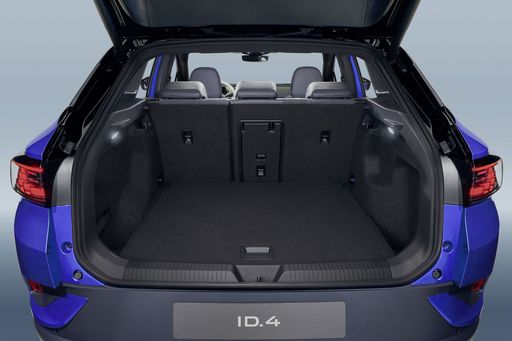
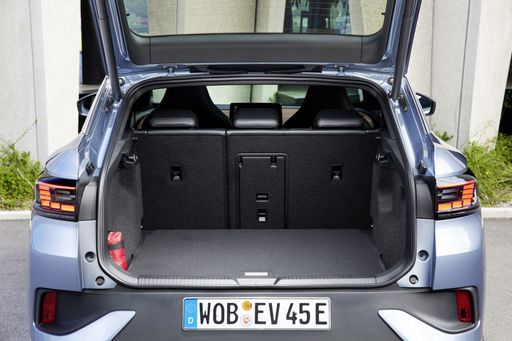
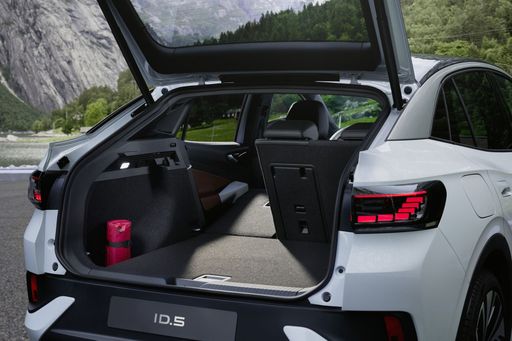
Both seat five adults, but the VW ID.4’s more upright roof makes the rear feel roomier, especially for taller passengers and when loading bulky child seats. The VW ID.5’s sloping tail preserves a big, neatly shaped load bay with a flat, two-level floor, yet tall or boxy items are simply easier to swallow in the ID.4’s squarer aperture. Getting in and out is also a fraction easier in the ID.4 thanks to its door cut and headroom, which families notice on the school run. If your weekends involve strollers, sports kit or flat-pack furniture, the ID.4’s packaging advantage is tangible; if you mostly carry suitcases and prefer a tidy, level cargo area, the ID.5 feels cleverly optimised.

ID.5

Ride comfort and long-distance behaviour

On motorways, both the VW ID.4 and VW ID.5 are impressively quiet and stable, with a relaxed gait that takes the sting out of long stints. The ID.5’s smoother roofline can bring a whisper of aerodynamic calm at speed, but the difference is subtle rather than transformative. Wheel choice matters more: the biggest rims add thump over sharp edges on either car, while adaptive damping, if fitted, smooths things out nicely. Charging speeds, route planning and real-world efficiency feel broadly alike, so choosing the ID.5 for mega-mile days is more about its serene vibe, while the ID.4 delivers the same low-stress cruising with a practical twist.

ID.4

City friendliness and visibility

In town, the VW ID.4’s squarer rear window and clearer sightlines make parking feel more natural, and having a rear wiper helps on wet days. The VW ID.5’s chunky C‑pillars and smaller rear screen demand more reliance on cameras and sensors, and the lack of a rear wiper can be a recurring gripe in winter. Both steer lightly and are easy to place, but the ID.4 feels that bit more straightforward in tight car parks. If your daily loop is dense streets and parallel bays, the ID.4’s visibility advantage is worth having; if your city driving is occasional and you prioritise style, the ID.5’s compromises may not bother you.

ID.5

Tech, controls, value and buyer fit

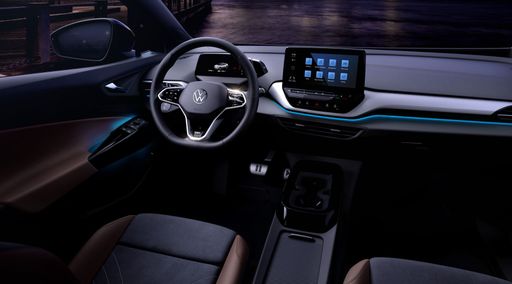
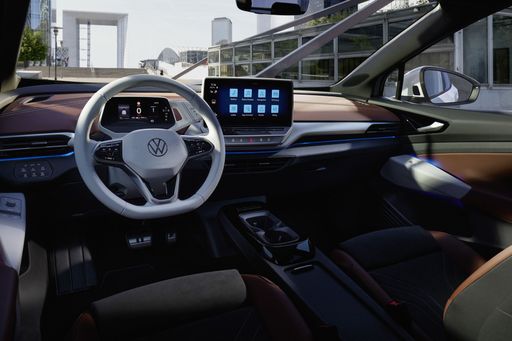
Software and screens have improved on both, yet the touch sliders and steering-wheel touchpads still divide opinion; neither VW ID.4 nor VW ID.5 is a button-lover’s dream. Value tilts toward the ID.4, which typically undercuts the ID.5 for similar performance and equipment, making it the sensible pick for budget-conscious families. The ID.5 asks more for its design-led shape and a touch of extra curb appeal, appealing to drivers who want the calm VW EV experience without the boxy look. In short, choose the ID.4 if everyday practicality, visibility and price carry the most weight, and pick the ID.5 if you want the sleeker cruiser feel and can live with its rearward compromises; the detailed specs below will help fine-tune that call.

Video - VW ID.4

Video Thumbnail

Here’s where it gets real: The technical differences in detail

ID.4

Costs and Efficiency:

Price and efficiency are often the first things buyers look at. Here it becomes clear which model has the long-term edge – whether at the pump, the plug, or in purchase price.

VW ID.4 is very slightly cheaper – starting at 34,800 £ , while the VW ID.5 costs 37,200 £ . That’s a price difference of around 2,383 £.

When it comes to electricity consumption, both models perform equally – each averaging 15.4 kWh/100km.

As for electric range, the VW ID.5 offers barely more range – reaching up to 571 km, about 1 km more than the VW ID.4.

ID.5

Engine and Performance:

Power, torque and acceleration say a lot about how a car feels on the road. This is where you see which model delivers more driving dynamics.

Both models deliver identical power – 299 HP each.

Both models accelerate almost equally fast – 6.1 s from 0 to 100 km/h.

Both models offer the same torque – 545 Nm.

ID.4

Space and Everyday Use:

Whether family car or daily driver – which one offers more room, flexibility and comfort?

Both vehicles offer seating for 5 people.

In terms of curb weight, VW ID.5 is marginally lighter – 2,051 kg compared to 2,065 kg. The difference is around 14 kg.

When it comes to payload, the VW ID.4 carries marginally more – 554 kg compared to 552 kg. That’s a difference of about 2 kg.

Who wins the race in the data check?

The VW ID.4 is barely ahead in the objective data comparison.
This result only shows which model scores more points on paper – not which of the two cars feels right for you.

from £34,800
ID.4

VW ID.4

  • Engine Type : Electric
  • Transmission : Automatic
  • Drive Type : Rear-Wheel Drive, All-Wheel Drive
  • Power HP : 190 - 299 HP
  • Consumption kWh/100km : 15.4 - 16.6 kWh/100km
  • Electric Range : 425 - 570 km
VW ID.4
VW ID.5

Costs and Consumption

View detailed analysis

Engine and Performance

View detailed analysis

Dimensions and Body

View detailed analysis

VW ID.4

The VW ID.4 is a practical, family-friendly electric SUV that balances everyday usability with a calm, composed driving character. It pairs a roomy, well-finished cabin and easy-to-use tech with predictable handling and convenient charging options, making it a sensible choice for buyers switching to electric.

details

VW ID.5

VW ID.5 dresses electric power in a sleek, coupe-like profile that turns sensible motoring into something a touch more stylish and smug. Inside it’s spacious and user-friendly, with calm, confidence-inspiring driving that suits buyers who want EV simplicity without the sci‑fi theatrics.

details
VW ID.4
VW ID.5

Costs and Consumption

Price
34,800 - 47,600 £
Price
37,200 - 49,300 £
Consumption L/100km
-
Consumption L/100km
-
Consumption kWh/100km
15.4 - 16.6 kWh/100km
Consumption kWh/100km
15.4 - 16.1 kWh/100km
Electric Range
425 - 570 km
Electric Range
436 - 571 km
Battery Capacity
-
Battery Capacity
-
co2
0 g/km
co2
0 g/km
Fuel tank capacity
-
Fuel tank capacity
-

Dimensions and Body

Body Type
SUV
Body Type
SUV
Seats
5
Seats
5
Doors
-
Doors
-
Curb weight
2,065 - 2,219 kg
Curb weight
2,051 - 2,204 kg
Trunk capacity
-
Trunk capacity
-
Length
-
Length
-
Width
1,852 mm
Width
1,852 mm
Height
-
Height
-
Max trunk capacity
-
Max trunk capacity
-
Payload
525 - 554 kg
Payload
529 - 552 kg

Engine and Performance

Engine Type
Electric
Engine Type
Electric
Transmission
Automatic
Transmission
Automatic
Transmission Detail
Reduction Gearbox
Transmission Detail
Reduction Gearbox
Drive Type
Rear-Wheel Drive, All-Wheel Drive
Drive Type
Rear-Wheel Drive, All-Wheel Drive
Power HP
190 - 299 HP
Power HP
190 - 299 HP
Acceleration 0-100km/h
6.1 - 8.5 s
Acceleration 0-100km/h
6.1 - 8.4 s
Max Speed
-
Max Speed
-
Torque
310 - 545 Nm
Torque
310 - 545 Nm
Number of Cylinders
-
Number of Cylinders
-
Power kW
140 - 220 kW
Power kW
140 - 220 kW
Engine capacity
-
Engine capacity
-

General

Model Year
2026
Model Year
2026
CO2 Efficiency Class
A
CO2 Efficiency Class
A
Brand
VW
Brand
VW
DriveDuel uses data analysis and artificial intelligence to evaluate vehicle data and create content. Content is regularly reviewed and improved. The displayed prices are estimates based on German list prices, adjusted to the respective country’s VAT. Country-specific registration taxes are not included. This information is not legally binding.