VS

Porsche Taycan vs BYD Seal comparison

Compare performance (1,034 HP vs 530 HP), boot space and price (87,900 £ vs 41,100 £ ) at a glance. Find out which car is the better choice for you – Porsche Taycan or BYD Seal?

Porsche Taycan vs BYD Seal: Key differences

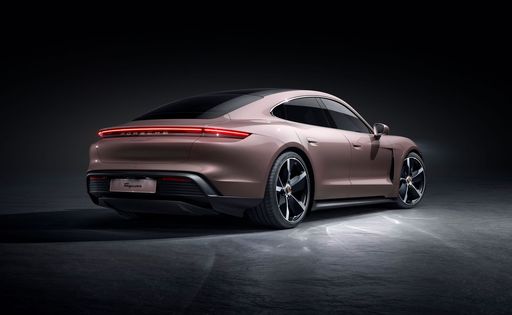
Porsche Taycan

  • considerably more power
  • slightly more electric range
  • considerably quicker 0–100 km/h
details

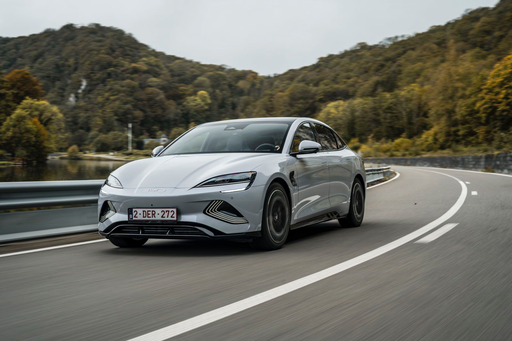
BYD Seal

4.9 (1 Reviews)
rate
  • significantly cheaper
  • barely more efficient
  • moderately lighter
details

All details on performance, efficiency, range and trunk space can be found in the technical comparison below – including user reviews for both models.

By Achim Sedelmaier

Taycan

BYD Seal VS Porsche Taycan — a concise matchup for buyers

BYD Seal VS Porsche Taycan pits a generously equipped, comfort‑focused Chinese electric limousine against a taut, premium German sports‑sedan in EV clothing. The BYD Seal leans into value: lots of kit as standard, a composed highway demeanor and strong straight‑line shove when you ask for it. The Porsche Taycan answers with razor‑sharp steering, far brisker charge sessions on the road and materials that read premium from first touch. Choosing between them is a trade‑off between outright refinement and sporting precision versus everyday equipment and a more relaxed character. This page frames those differences in real‑world terms so you know which one will suit your life before we dive into the numbers.
Seal

Driving character: precision versus relaxed authority

The Porsche Taycan feels like a compact sportscar wearing four doors — immediate turn‑in, clear feedback and a chassis that rewards precise inputs, while the BYD Seal prefers to smooth things over and deliver effortless forward motion. In traffic and tight B‑roads Taycan’s steering and brakes communicate confidence that invites pushing; the BYD Seal trades that for reassuring traction and an emphasis on stability. Regenerative behavior and throttle feel also differ: the Taycan’s technology is tuned to a sporty, brake‑led re‑entry, whereas the Seal’s systems prioritise serenity and less aggressive lift‑off braking. For drivers who want drama and a connected feel, the Taycan is the sharper instrument; for those who want calm, predictable acceleration and a less demanding drive, the Seal is the easier companion. Both are quick in their own ways, but they use that pace to serve different driving philosophies.

Taycan

Comfort and long‑distance behavior: quiet touring or cushioned cruising?

On long runs the Porsche Taycan is exceptionally composed — a very quiet cabin with supportive seats and suspension technology that keeps fatigue low even at high average speeds. The BYD Seal also aims at relaxed long‑distance cruising with comfy seats and an overall lounge‑like ambience, but it reveals its compromise at lower speeds where bigger joints and some coarse surfaces come through more. Noise suppression and the refinement of the Taycan tend to feel more premium, while the Seal’s strengths are generous standard comforts such as vented seats and abundant kit that make long days easier. If you plan regular high‑speed touring with minimal stops, the Taycan’s charging and NVH advantages make the miles evaporate; if you prioritise cushioned comfort and feature value for daily long commutes, the Seal will repay you in everyday ease. Both can do motorway miles well, but the experience is distinctly different in feel and polish.

Seal

Usability and practicality: passenger space, luggage and city life

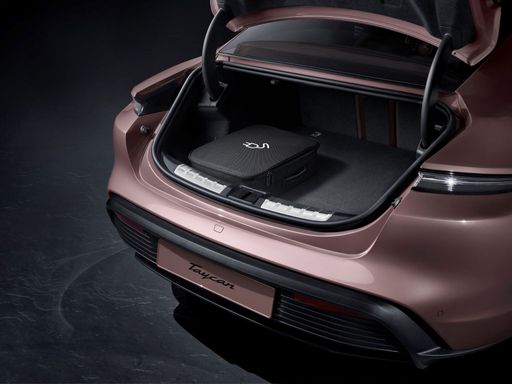
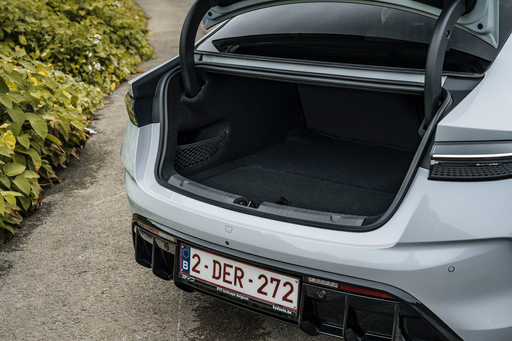
The BYD Seal is the more family‑friendly option on paper: five full seats, a flatter floor and a conventional sedan layout that makes rear passenger life easier for adults and kids alike. The Porsche Taycan’s cabin is tighter in the back and its coupe‑like roof and narrow boot opening mean awkward shapes and tall items are harder to load, although the Taycan’s frunk helps with small‑item flexibility. In the city the Seal’s narrower footprint and simpler ergonomics make daily errands and parking less intimidating, whereas the Taycan’s width and mirror swing demand more attention and optional tech for stress‑free maneuvering. Trip planning also differs: the Taycan’s much shorter and more even charging stops make long itineraries quicker in practice, while the Seal asks you to accept longer pauses or plan around slower DC sessions. Practical differences here are about how you live with the car every day rather than raw volumes alone.

Taycan

Cabin feel and perceived quality: premium polish versus value luxury

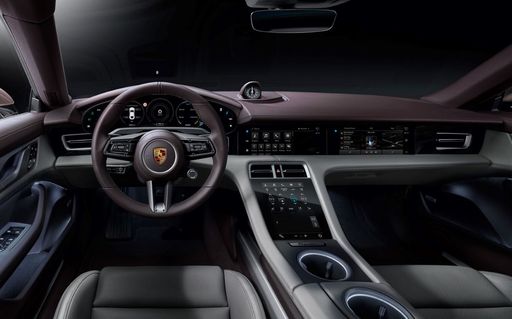
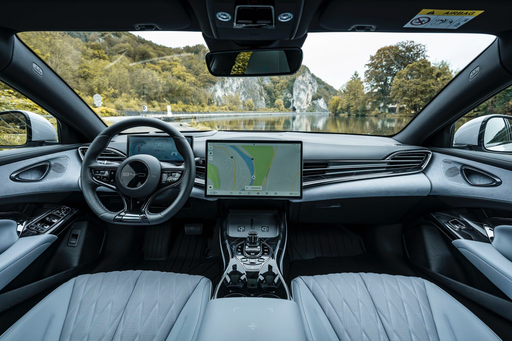
Porsche presents an interior that reads expensive in materials and assembly; tactile buttons where you expect them and a driver environment designed around quick, clear ergonomics. The BYD Seal punches above its price with impressive fit and finish and a long equipment list, but it still shows some budget compromises in touchpoints and a user interface that can feel fiddly. Infotainment and control logic are a sticking point for both: the Taycan is touch‑centric and needs familiarisation, while the Seal buries functions in menus and suffers from inconsistent warnings that can annoy in daily use. Perceived quality leans toward the Taycan for buyers who equate material cues with value, but the Seal offers a near‑premium cabin experience for a considerably different outlay — a very different kind of luxury. How much weight you place on badge, feel and software usability will determine which interior wins you over day after day.

Seal

Buyer fit: who should choose the BYD Seal and who the Porsche Taycan

Choose the BYD Seal if you want generous standard equipment, five‑seat practicality and a composed, comfort‑first limousine that keeps running costs down and tolerates frequent full charging without fuss. Opt for the Porsche Taycan if you prioritise steering precision, the shortest possible charging stops on long routes and an interior whose materials and tuning match a premium price. If your life is city‑centric with tight parking, the Seal’s easier footprint and lower price will suit more, while the Taycan aligns with buyers for whom sporty driving and rapid, predictable motorway progress justify the extra expense. Think of this matchup as a personality test: Seal for relaxed, well‑equipped everyday touring; Taycan for focused, performance‑minded long‑distance driving — and the technical comparison that follows will spell out the mechanical trade‑offs behind those real‑world differences.

Here’s where it gets real: The technical differences in detail

Taycan

Costs and Efficiency:

Looking at overall running costs, both models reveal some interesting differences in everyday economy.

BYD Seal is significantly cheaper – starting at 41,100 £ , while the Porsche Taycan costs 87,900 £ . That’s a price difference of around 46,808 £.

In terms of energy consumption, the BYD Seal is barely more efficient: consuming 15.4 kWh/100km compared to 16.7 kWh/100km for the Porsche Taycan. That’s a difference of about 1.3 kWh/100km.

As for electric range, the Porsche Taycan offers slightly more range – reaching up to 680 km, about 110 km more than the BYD Seal.

Seal

Engine and Performance:

Power, torque and acceleration say a lot about how a car feels on the road. This is where you see which model delivers more driving dynamics.

When it comes to engine power, the Porsche Taycan offers considerably more power – delivering 1,034 HP compared to 530 HP. That’s roughly 504 HP more horsepower.

When accelerating from 0 to 100 km/h, the Porsche Taycan is considerably quicker – completing the sprint in 2.2 s, while the BYD Seal takes 3.8 s. That’s about 1.6 s quicker.

There’s also a difference in torque: the Porsche Taycan delivers substantially more torque with 1,340 Nm compared to 670 Nm. That’s about 670 Nm more.

Taycan

Space and Everyday Use:

Cabin size, boot volume and payload all play a role in everyday practicality. Here, comfort and flexibility make the difference.

Seats: BYD Seal offers more seats – 5 vs 4.

In terms of curb weight, BYD Seal is moderately lighter – 1,907 kg compared to 2,165 kg. The difference is around 258 kg.

When it comes to payload, the Porsche Taycan carries clearly more – 635 kg compared to 473 kg. That’s a difference of about 162 kg.

Who wins the race in the data check?

The Porsche Taycan stands well ahead of its rival in the objective data comparison.
This result only shows which model scores more points on paper – not which of the two cars feels right for you.

from £87,900
Taycan

Porsche Taycan

  • Engine Type Electric
  • Transmission Automatic
  • Drive Type Rear-Wheel Drive, All-Wheel Drive
  • Power HP 408 - 1,034 HP
  • Consumption kWh/100km 16.7 - 20.7 kWh/100km
  • Electric Range 552 - 680 km
Porsche Taycan
BYD Seal

Costs and Consumption

View detailed analysis

Engine and Performance

View detailed analysis

Dimensions and Body

View detailed analysis

Porsche Taycan

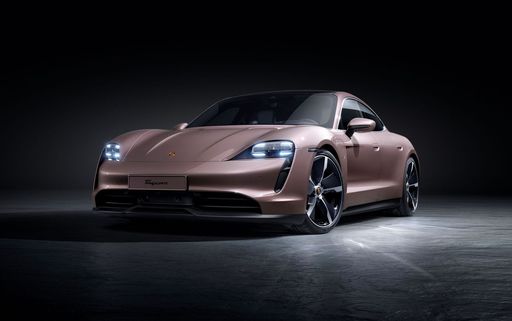
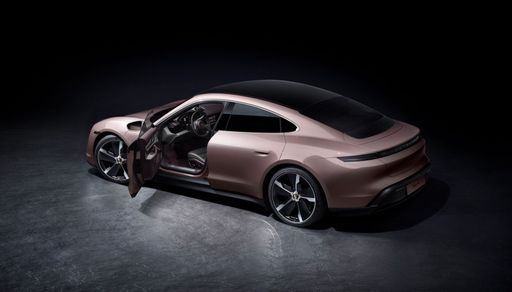
The Porsche Taycan blends Porsche's razor-sharp handling with electric immediacy, delivering an exhilarating, near-silent shove that still feels unmistakably sporty. Inside it's a high-tech cockpit wrapped in premium materials, making it as rewarding to live with day to day as it is thrilling to drive on a twisty road.

details

BYD Seal

The BYD Seal is a sleek, fastback-style electric sedan that blends sporty design with a comfortable, tech-forward cabin. It delivers an engaging driving feel, impressive real-world range and strong value, making it a compelling choice for buyers who want a modern EV sedan.

details
Porsche Taycan
BYD Seal

Costs and Consumption

Price
87,900 - 206,700 £
Price
41,100 - 46,300 £
Consumption L/100km
-
Consumption L/100km
-
Consumption kWh/100km
16.7 - 20.7 kWh/100km
Consumption kWh/100km
15.4 - 18.2 kWh/100km
Electric Range
552 - 680 km
Electric Range
460 - 570 km
Battery Capacity
-
Battery Capacity
-
co2
0 g/km
co2
0 g/km
Fuel tank capacity
-
Fuel tank capacity
-

Dimensions and Body

Body Type
Coupe
Body Type
Sedan
Seats
4
Seats
5
Doors
-
Doors
-
Curb weight
2,165 - 2,370 kg
Curb weight
1,907 - 2,185 kg
Trunk capacity
326 - 407 L
Trunk capacity
-
Length
-
Length
-
Width
1,966 - 1,998 mm
Width
1,875 mm
Height
-
Height
-
Max trunk capacity
-
Max trunk capacity
-
Payload
175 - 635 kg
Payload
446 - 473 kg

Engine and Performance

Engine Type
Electric
Engine Type
Electric
Transmission
Automatic
Transmission
Automatic
Transmission Detail
Reduction Gearbox
Transmission Detail
Reduction Gearbox
Drive Type
Rear-Wheel Drive, All-Wheel Drive
Drive Type
Rear-Wheel Drive, All-Wheel Drive
Power HP
408 - 1,034 HP
Power HP
231 - 530 HP
Acceleration 0-100km/h
2.2 - 4.8 s
Acceleration 0-100km/h
3.8 - 7.5 s
Max Speed
-
Max Speed
-
Torque
410 - 1,340 Nm
Torque
360 - 670 Nm
Number of Cylinders
-
Number of Cylinders
-
Power kW
300 - 760 kW
Power kW
170 - 390 kW
Engine capacity
-
Engine capacity
-

General

Model Year
2,024 - 2,025
Model Year
2026
CO2 Efficiency Class
A
CO2 Efficiency Class
A
Brand
Porsche
Brand
BYD
DriveDuel uses data analysis and artificial intelligence to evaluate vehicle data and create content. Content is regularly reviewed and improved. The displayed prices are estimates based on German list prices, adjusted to the respective country’s VAT. Country-specific registration taxes are not included. This information is not legally binding.