VS

Renault Kangoo vs Fiat Doblò Van comparison

Compare performance (130 HP vs 136 HP), boot space and price (25,700 £ vs 21,300 £ ) at a glance. Find out which car is the better choice for you – Renault Kangoo or Fiat Doblò Van?

Renault Kangoo vs Fiat Doblò Van: Key differences

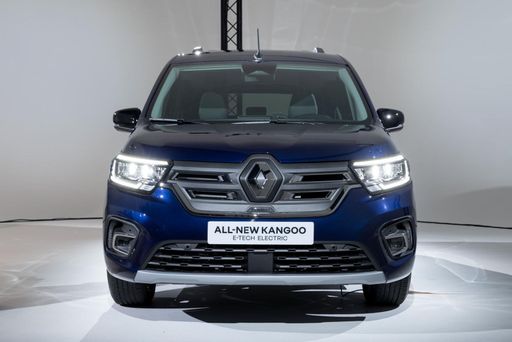
Renault Kangoo

5 (1 Reviews)
rate
details

Fiat Doblò Van

  • noticeably cheaper
  • very slightly more power
  • moderately lighter
details

By Achim Sedelmaier

Kangoo

Compact Versatility: Fiat Doblò Van vs. Renault Kangoo

In the world of compact vans, functionality and versatility reign supreme. Today, we're pitting two stalwarts of this category against each other: the Fiat Doblò Van and the Renault Kangoo. Both offer innovation and practicality, but which one edges out the other in our comparison? Let's dive into the technical details and explore what each has to offer.
Doblò Van

Engine Varieties and Power Output

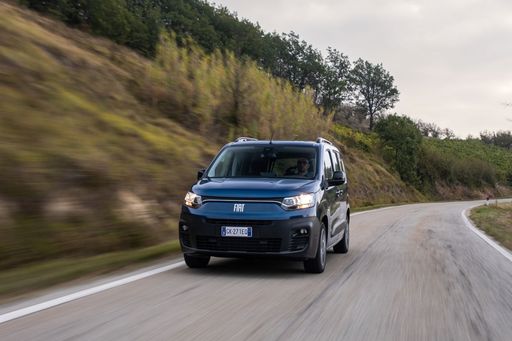
The Fiat Doblò Van boasts a diversified engine lineup, welcoming drivers with petrol, diesel, and electric options. This flexibility ensures that the Doblò can cater to various preferences and needs. With power outputs ranging from 110 to 136 HP across different models, the Doblò provides enough punch for city driving and highway cruising alike.

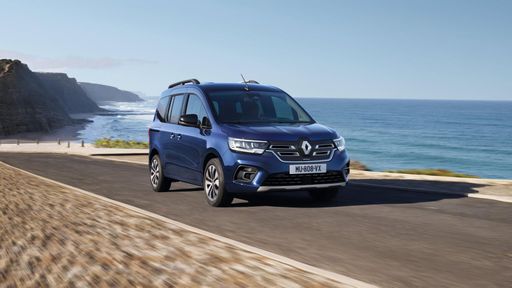
On the other hand, the Renault Kangoo keeps pace with an equally diverse engine selection, including diesel, petrol, and electric variations. With power ranging from 95 to 130 HP, the Kangoo balances economy and performance, making it an attractive option for those who prioritize efficiency.

Kangoo

Transmission and Drive Dynamics

Both the Doblò and the Kangoo feature a front-wheel-drive setup, providing predictable handling and a stable driving experience. The Doblò offers a choice between manual, automatic, and reduction gearboxes. Its transmission choices are a perfect fit for professionals who need a no-nonsense vehicle with reliable mechanics.

The Kangoo also offers manual and automatic gearboxes, complemented by the optional dual-clutch for those who desire smoother transitions and quicker gear shifts. This makes it particularly appealing to tech enthusiasts and those looking for a more refined drive.

Doblò Van

Efficiency and Range: Fuel and Electric

Efficiency is where these two vehicles show slight differences. The Fiat Doblò Van exhibits consumption in the range of 5.2 to 7.3 L/100 km for its conventional engines and 17.4 to 22 kWh/100 km for electric variants, with an electric range extending up to 354 km.

The Renault Kangoo, however, edges out slightly in terms of electric range, maxing out at 285 km. Conventional fuel consumption statistics for the Kangoo range from 5.2 to 7.1 L/100 km, suggesting that while both vehicles maintain economy, the Doblò offers a longer electric range for the eco-conscious driver.

Kangoo

Interior Space and Versatility

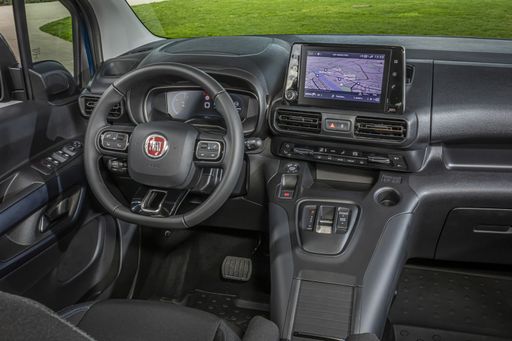
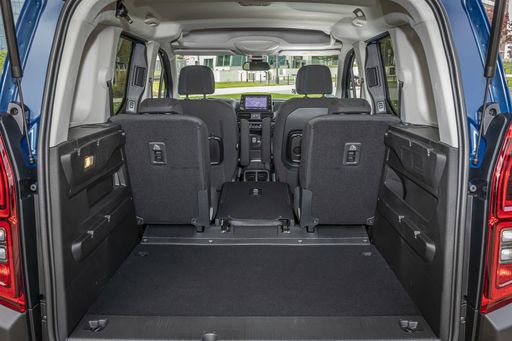
When we pivot towards interior space and versatility, the Doblò offers seating configurations for either two or five passengers, adapting well to cargo or passenger transport. With a maximum payload capacity topping out at 1,033 kg, the Doblò is a workhorse capable of handling significant loads.

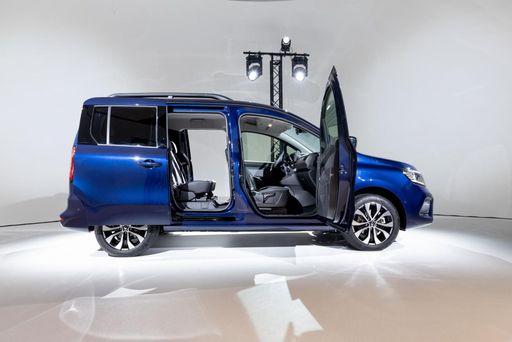
The Kangoo responds with seating for up to seven passengers, perfect for larger families or business needs. Its payload maximum is slightly lower at 609 kg, which might not match the Doblò for sheer load-carrying, but its interior flexibility is a key advantage.

Doblò Van

Design and Dimensions

The Fiat Doblò Van measures 4,403 to 4,753 mm in length, allowing for a compact yet spacious design ideal for urban landscapes. Its width stands at 1,848 mm, contributing to a balanced and manageable profile.

The Renault Kangoo is slightly longer, with lengths extending from 4,486 to 4,911 mm, emphasizing its roomier interior. The Kangoo's width varies between 1,860 and 1,919 mm, offering a broader stance that enhances stability on the road.

Kangoo

The Verdict: Fiat Doblò Van vs. Renault Kangoo

In conclusion, both the Fiat Doblò Van and Renault Kangoo bring their own unique talents to the table. The Doblò's variety in powertrains and higher payload make it a robust choice for those who need sheer power and range. On the flip side, the Kangoo’s higher seating capacity and efficient design provide an edge for those emphasizing versatility and comfort.

Ultimately, the choice between these two titans depends on specific needs and preferences. Whether you value raw carrying capacity or extensive configurability and space, both the Doblò and the Kangoo deliver robust performance and innovation in their class.

Here’s where it gets real: The technical differences in detail

Kangoo

Costs and Efficiency:

Price and efficiency are key factors when choosing a car – and this is often where the real differences emerge.

Fiat Doblò Van is noticeably cheaper – starting at 21,300 £ , while the Renault Kangoo costs 25,700 £ . That’s a price difference of around 4,396 £.

Both cars consume an average of 5.2 L/100km – no difference here.

Doblò Van

Engine and Performance:

Under the bonnet, it becomes clear which model is tuned for sportiness and which one takes the lead when you hit the accelerator.

When it comes to engine power, the Fiat Doblò Van offers very slightly more power – delivering 136 HP compared to 130 HP. That’s roughly 6 HP more horsepower.

There’s also a difference in torque: the Fiat Doblò Van delivers very slightly more torque with 300 Nm compared to 270 Nm. That’s about 30 Nm more.

Kangoo

Space and Everyday Use:

Cabin size, boot volume and payload all play a role in everyday practicality. Here, comfort and flexibility make the difference.

Seats: Renault Kangoo offers more seats – 7 vs 5.

In terms of curb weight, Fiat Doblò Van is moderately lighter – 1,329 kg compared to 1,489 kg. The difference is around 160 kg.

When it comes to payload, the Fiat Doblò Van carries noticeably more – 991 kg compared to 610 kg. That’s a difference of about 381 kg.

Who wins the race in the data check?

The Fiat Doblò Van is far ahead overall in the objective data comparison.
This result only shows which model scores more points on paper – not which of the two cars feels right for you.

from £21,300
Doblò Van

Fiat Doblò Van

  • Engine Type Petrol, Diesel, Electric
  • Transmission Manuel, Automatic
  • Drive Type Front-Wheel Drive
  • Power HP 102 - 136 HP
  • Consumption L/100km 5.2 - 6.3 L/100km
  • Consumption kWh/100km 17.4 kWh/100km
  • Electric Range 354 km
Renault Kangoo
Fiat Doblò Van

Costs and Consumption

View detailed analysis

Engine and Performance

View detailed analysis

Dimensions and Body

View detailed analysis

Renault Kangoo

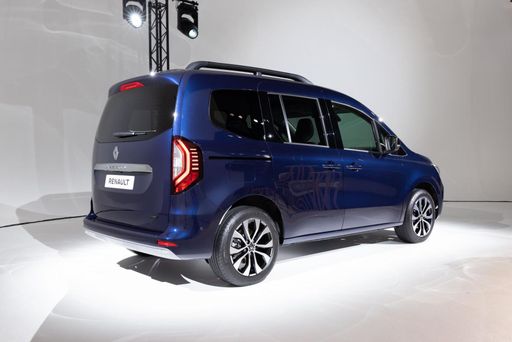
The Renault Kangoo is the pragmatic chameleon of small vans, marrying van-like practicality with carlike comfort and a cheerful, friendly face that suits both family runs and workday hauls. It's sensible, versatile and annoyingly useful — easy to live with, cheap to run and clever where it counts, so you get more space and fewer compromises than the price suggests.

details

Fiat Doblò Van

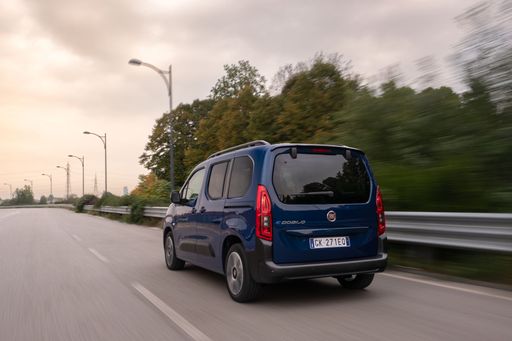
The Fiat Doblò is a no-nonsense workhorse that blends surprising cabin comfort with sensible practicality, turning long days on the road into something tolerable rather than torturous. Clever packaging and steady, uncomplicated manners make it a smart pick for small businesses and weekend warriors who want function without fuss.

details
Renault Kangoo
Fiat Doblò Van

Costs and Consumption

Price
25,700 - 32,100 £
Price
21,300 - 33,800 £
Consumption L/100km
5.2 - 7.4 L/100km
Consumption L/100km
5.2 - 6.3 L/100km
Consumption kWh/100km
-
Consumption kWh/100km
17.4 kWh/100km
Electric Range
-
Electric Range
354 km
Battery Capacity
-
Battery Capacity
-
co2
136 - 168 g/km
co2
0 - 143 g/km
Fuel tank capacity
-
Fuel tank capacity
-

Dimensions and Body

Body Type
High Roof Estate
Body Type
Cargo Van
Seats
5 - 7
Seats
2 - 5
Doors
-
Doors
-
Curb weight
1,489 - 1,830 kg
Curb weight
1,329 - 1,813 kg
Trunk capacity
500 - 775 L
Trunk capacity
-
Length
-
Length
-
Width
1,860 mm
Width
1,848 mm
Height
-
Height
-
Max trunk capacity
-
Max trunk capacity
-
Payload
459 - 610 kg
Payload
611 - 991 kg

Engine and Performance

Engine Type
Petrol, Diesel
Engine Type
Petrol, Diesel, Electric
Transmission
Manuel, Automatic
Transmission
Manuel, Automatic
Transmission Detail
Manual Gearbox, Dual-Clutch Automatic
Transmission Detail
Manual Gearbox, Automatic Gearbox, Reduction Gearbox
Drive Type
Front-Wheel Drive
Drive Type
Front-Wheel Drive
Power HP
95 - 130 HP
Power HP
102 - 136 HP
Acceleration 0-100km/h
11.6 - 16.7 s
Acceleration 0-100km/h
-
Max Speed
-
Max Speed
-
Torque
240 - 270 Nm
Torque
205 - 300 Nm
Number of Cylinders
4
Number of Cylinders
3 - 4
Power kW
70 - 96 kW
Power kW
75 - 100 kW
Engine capacity
1,332 - 1,461 cm3
Engine capacity
1,199 - 1,499 cm3

General

Model Year
2025
Model Year
2,024 - 2,025
CO2 Efficiency Class
F, E
CO2 Efficiency Class
E, A
Brand
Renault
Brand
Fiat
DriveDuel uses data analysis and artificial intelligence to evaluate vehicle data and create content. Content is regularly reviewed and improved. The displayed prices are estimates based on German list prices, adjusted to the respective country’s VAT. Country-specific registration taxes are not included. This information is not legally binding.