VS

Renault Kangoo vs Peugeot Partner comparison

Compare performance (130 HP vs 136 HP), boot space and price (25,700 £ vs 22,400 £ ) at a glance. Find out which car is the better choice for you – Renault Kangoo or Peugeot Partner?

Renault Kangoo vs Peugeot Partner: Key differences

Renault Kangoo

5 (1 Reviews)
rate

Peugeot Partner

  • slightly cheaper
  • only slightly more power
  • a bit more efficient
  • a bit more electric range
  • barely quicker 0–100 km/h
  • moderately lighter
  • substantially more trunk space
Kangoo

In the Battle of Utility: Peugeot Socio vs. Renault Kangoo

When it comes to utility vehicles, the choice between the Peugeot Socio and the Renault Kangoo is not as straightforward as one might assume. Both models, thriving in their respective niches, offer unique features that cater to the needs of business owners and families alike. As we delve into a comparison, it becomes clear why these vehicles are much more than mere workhorses.

Partner

Performance and Efficiency

The Peugeot Socio offers a range of power options spanning from electric to diesel and petrol engines, delivering between 102 and 136 horsepower. Notably, the electric variant provides an impressive range of up to 354 km on a single charge, with a consumption rate of 17.4 kWh/100km. For diesel and petrol engines, consumption ranges between 5.2 to 6.3 liters/100 km, finely balanced to offer both efficiency and performance.

In contrast, the Renault Kangoo, available in diesel, petrol, and electric configurations, outputs between 95 to 130 horsepower. The electric variants offer a slightly lesser range, with figures hovering between 278 and 285 km and consumption rates of up to 21.5 kWh/100 km. The internal combustion engines provide similar efficiency, with consumption rates between 5.2 to 7.1 liters/100 km.

Kangoo

Versatility and Capacity

Space and adaptability are crucial for vehicles in this segment, and here, both contenders rise to the challenge. The Peugeot Socio, with body dimensions measuring 4751 mm in length, 1848 mm in width, and 1812 mm in height, is compact yet spacious. With a maximum payload capacity stretching up to 991 kg and seating arrangements accommodating either two or five passengers, it offers great versatility for business and personal usage.

On the other hand, the Renault Kangoo, measuring 4911 mm in length, and slightly wider at 1919 mm, beams with space and practicality. The Kangoo can fit up to seven passengers, which could be a significant consideration for larger families or shuttle services. Though it has a lower payload capacity maxing out at 609 kg, its trunk capacity comfortably ranges up to 950 liters, perfect for cargo-heavy needs.

Partner

Technological Innovation and Comfort

For the tech-savvy driver, the Peugeot Socio doesn't disappoint. With a front-wheel-drive layout and a plethora of high-tech transmission options such as a reduction gearbox for the electric variant, and both manual and automatic gearboxes for other models, the Socio offers a driving experience that is both engaging and efficient.

Renault Kangoo opts for simplicity and efficiency in its design, employing a manual gearbox and a dual-clutch automatic transmission for enhanced performance in urban settings. It does not miss out on safety and comfort either, highlighting a comprehensive suite of driver assistance systems that contribute to a smooth driving experience.

Kangoo

Conclusion

Choosing between the Peugeot Socio and Renault Kangoo largely hinges on the specific requirements of the user. The Socio excels in electrification and payload capabilities, while the Kangoo shines with its larger space and passenger capacity. Both vehicles embody the ethos of versatility, reliability, and modern automotive innovation, thereby ensuring that regardless of the choice you make, you're investing in utility and excellence.

Here’s where it gets real: The technical differences in detail

Kangoo

Costs and Efficiency:

Looking at overall running costs, both models reveal some interesting differences in everyday economy.

Peugeot Partner is slightly cheaper – starting at 22,400 £ , while the Renault Kangoo costs 25,700 £ . That’s a price difference of around 3,325 £.

Both cars consume an average of 5.2 L/100km – no difference here.

In terms of energy consumption, the Peugeot Partner is a bit more efficient: consuming 17.4 kWh/100km compared to 20.2 kWh/100km for the Renault Kangoo. That’s a difference of about 2.8 kWh/100km.

As for electric range, the Peugeot Partner offers a bit more range – reaching up to 354 km, about 69 km more than the Renault Kangoo.

Partner

Engine and Performance:

Power, torque and acceleration are the classic benchmarks for car enthusiasts – and here, some clear differences start to show.

When it comes to engine power, the Peugeot Partner offers only slightly more power – delivering 136 HP compared to 130 HP. That’s roughly 6 HP more horsepower.

When accelerating from 0 to 100 km/h, the Peugeot Partner is barely quicker – completing the sprint in 11.2 s, while the Renault Kangoo takes 11.6 s. That’s about 0.4 s quicker.

Looking at top speed, the Peugeot Partner is visibly faster – reaching 183 km/h, while the Renault Kangoo tops out at 135 km/h. The difference is around 48 km/h.

There’s also a difference in torque: the Peugeot Partner delivers only slightly more torque with 300 Nm compared to 270 Nm. That’s about 30 Nm more.

Kangoo

Space and Everyday Use:

Cabin size, boot volume and payload all play a role in everyday practicality. Here, comfort and flexibility make the difference.

Seats: Renault Kangoo offers more seats – 7 vs 5.

In terms of curb weight, Peugeot Partner is moderately lighter – 1,329 kg compared to 1,489 kg. The difference is around 160 kg.

Looking at boot space, the Peugeot Partner offers substantially more boot space – 1,800 L compared to 950 L. That’s a difference of about 850 L.

For maximum load capacity, the Peugeot Partner offers visibly more capacity – up to 4,000 L, about 950 L more than the Renault Kangoo.

When it comes to payload, the Peugeot Partner carries visibly more – 991 kg compared to 610 kg. That’s a difference of about 381 kg.

Who wins the race in the data check?

The Peugeot Partner stands well ahead of its rival in the objective data comparison.
This result only shows which model scores more points on paper – not which of the two cars feels right for you.

from £22,400
Partner

Peugeot Partner

  • Engine Type : Electric, Diesel, Petrol
  • Transmission : Automatic, Manuel
  • Drive Type : Front-Wheel Drive
  • Power HP : 102 - 136 HP
  • Consumption L/100km : 5.2 - 6.3 L/100km
  • Consumption kWh/100km : 17.4 kWh/100km
  • Electric Range : 354 km
Renault Kangoo
Peugeot Partner

Costs and Consumption

View detailed analysis

Engine and Performance

View detailed analysis

Dimensions and Body

View detailed analysis

Renault Kangoo

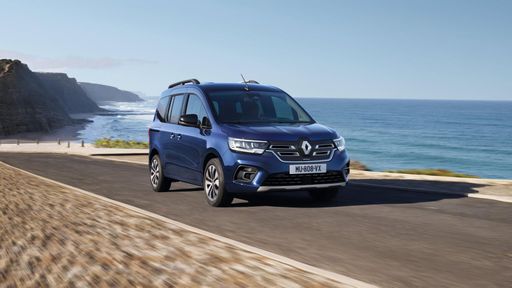
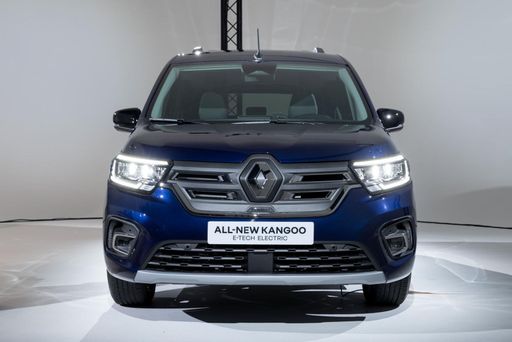
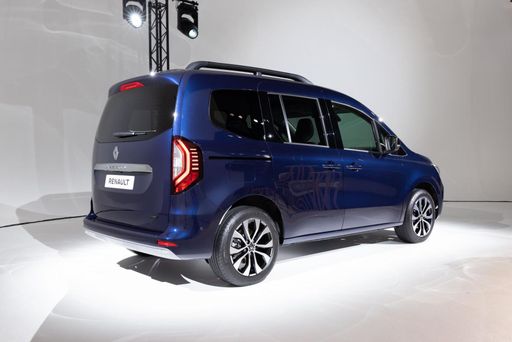
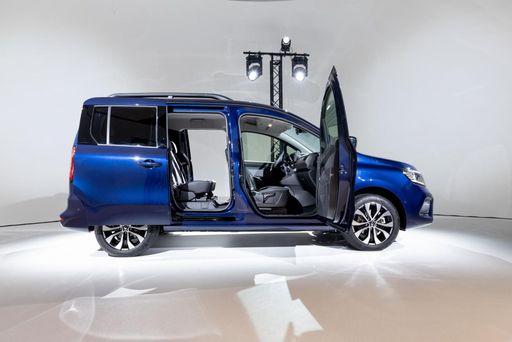
The Renault Kangoo is the pragmatic chameleon of small vans, marrying van-like practicality with carlike comfort and a cheerful, friendly face that suits both family runs and workday hauls. It's sensible, versatile and annoyingly useful — easy to live with, cheap to run and clever where it counts, so you get more space and fewer compromises than the price suggests.

details

Peugeot Partner

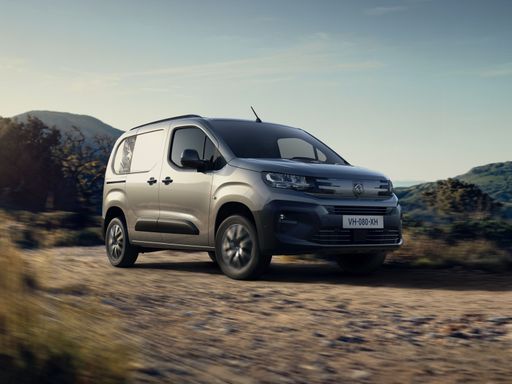
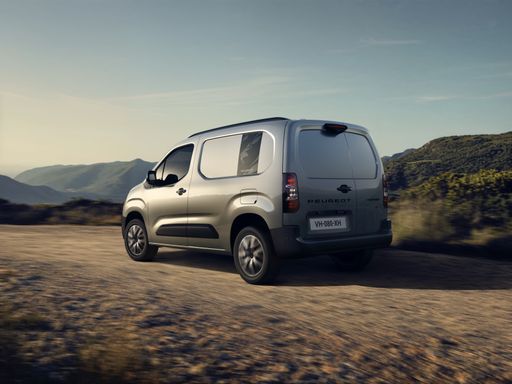
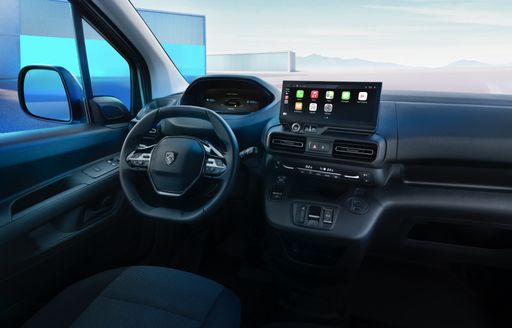
The Peugeot Partner is a no-nonsense workhorse that doubles as a surprisingly comfy family mover, combining clever storage solutions with an easy-to-live-in cabin. It won’t win any beauty contests, but for small businesses and active families it’s practical, economical and utterly reliable when the day gets busy.

details
Renault Kangoo
Peugeot Partner

Costs and Consumption

Price
25,700 - 36,200 £
Price
22,400 - 33,800 £
Consumption L/100km
5.2 - 7.4 L/100km
Consumption L/100km
5.2 - 6.3 L/100km
Consumption kWh/100km
20.2 - 21.5 kWh/100km
Consumption kWh/100km
17.4 kWh/100km
Electric Range
278 - 285 km
Electric Range
354 km
Battery Capacity
-
Battery Capacity
-
co2
0 - 168 g/km
co2
0 - 143 g/km
Fuel tank capacity
-
Fuel tank capacity
53 - 61 L

Dimensions and Body

Body Type
High Roof Estate
Body Type
Cargo Van
Seats
5 - 7
Seats
2 - 5
Doors
5
Doors
4 - 5
Curb weight
1,489 - 2,041 kg
Curb weight
1,329 - 1,813 kg
Trunk capacity
500 - 950 L
Trunk capacity
1,800 L
Length
4,486 - 4,911 mm
Length
4,403 - 4,753 mm
Width
1,860 - 1,919 mm
Width
1,848 mm
Height
1,838 - 1,869 mm
Height
1,796 - 1,812 mm
Max trunk capacity
2,500 - 3,050 L
Max trunk capacity
3,300 - 4,000 L
Payload
459 - 610 kg
Payload
611 - 991 kg

Engine and Performance

Engine Type
Electric, Petrol, Diesel
Engine Type
Electric, Diesel, Petrol
Transmission
Automatic, Manuel
Transmission
Automatic, Manuel
Transmission Detail
Reduction Gearbox, Manual Gearbox, Dual-Clutch Automatic
Transmission Detail
Reduction Gearbox, Manual Gearbox, Automatic Gearbox
Drive Type
Front-Wheel Drive
Drive Type
Front-Wheel Drive
Power HP
95 - 130 HP
Power HP
102 - 136 HP
Acceleration 0-100km/h
11.6 - 16.7 s
Acceleration 0-100km/h
11.2 s
Max Speed
130 - 135 km/h
Max Speed
135 - 183 km/h
Torque
240 - 270 Nm
Torque
205 - 300 Nm
Number of Cylinders
4
Number of Cylinders
3 - 4
Power kW
70 - 96 kW
Power kW
75 - 100 kW
Engine capacity
1,332 - 1,461 cm3
Engine capacity
1,199 - 1,499 cm3

General

Model Year
2,022 - 2,025
Model Year
2,024 - 2,025
CO2 Efficiency Class
A, F, E
CO2 Efficiency Class
A, E
Brand
Renault
Brand
Peugeot
DriveDuel uses data analysis and artificial intelligence to evaluate vehicle data and create content. Content is regularly reviewed and improved. The displayed prices are estimates based on German list prices, adjusted to the respective country’s VAT. Country-specific registration taxes are not included. This information is not legally binding.