
VS

Renault Master Bus vs Mercedes Sprinter Transporter comparison

Compare performance (180 HP vs 204 HP), boot space and price (36,600 £ vs 26,900 £ ) at a glance. Find out which car is the better choice for you – Renault Master Bus or Mercedes Sprinter Transporter?

Renault Master Bus vs Mercedes Sprinter Transporter: Key differences

Renault Master Bus

details

Mercedes Sprinter Transporter

  • noticeably cheaper
  • a bit more power
  • a bit more efficient
  • only slightly lighter
details

By Achim Sedelmaier

Master Bus

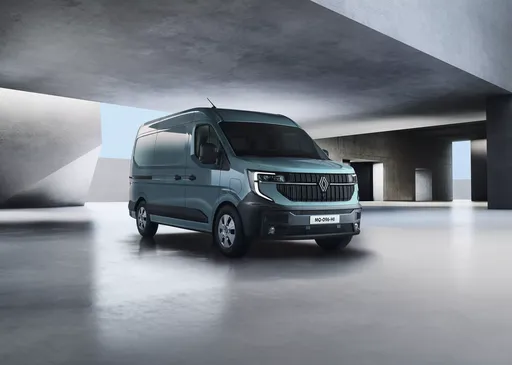
The Mercedes Sprinter Transporter and the Renault Master Bus are two popular options for those in need of versatile and efficient commercial vehicles. Both models boast an impressive array of technical specifications and innovations, making it essential to compare them in detail to help potential buyers make an informed decision. Below, we'll dive into the features, performance, and various attributes that differentiate these two heavyweights in the transporter segment.

Sprinter Transporter

Engine and Performance: Powering Your Journey

When it comes to engine options, the Mercedes Sprinter Transporter offers a variety of choices. It is available with both electric and diesel engines, with power outputs ranging from 114 HP to 204 HP. The torque output varies considerably as well, with figures between 300 Nm and 450 Nm depending on the specific configuration.

In contrast, the Renault Master Bus features a more straightforward diesel engine lineup, offering power outputs between 135 HP and 180 HP. Torque ratings peak at 400 Nm for the higher-end models. Both vehicles provide excellent towing and payload capacities, catering to a variety of business needs.

Fuel Efficiency: Saving Costs on the Road

Fuel consumption is crucial for commercial vehicles, and both the Mercedes Sprinter and Renault Master are designed to be efficient. The Sprinter showcases impressive consumption figures, with diesel variants averaging around 9.1 to 10.8 L/100km, depending on the engine. The electric versions stand out with a consumption rate of approximately 27.3 kWh/100km, along with an electric range that exceeds 450 km in optimal conditions.

The Renault Master Bus, on the other hand, shows competitive figures, with fuel consumption ranging from 8.7 to 10.7 L/100km. With a larger fuel tank capacity of 105 liters, it allows for longer journeys between refueling stops, catering well to long-distance transport needs.

Dimensions and Payload: Room for Everything

In terms of dimensions, the Mercedes Sprinter Transporter is notably longer, with lengths varying from 5,932 mm to 7,367 mm, while the Renault Master Bus measures between 5,075 mm and 5,575 mm. The Sprinter also boasts a higher payload capacity, ranging from 590 kg to 2,447 kg across different configurations compared to the Master Bus's maximum of 1,254 kg.

Regarding cargo space, the Mercedes Sprinter excels, particularly in converting the cargo area for various business functions thanks to its extensive range of lengths and heights. The Renault Master features an adequate interior space and seating capacity of either 6 or 9 passengers, ensuring flexibility for various transport needs.

Technological Innovations: Advancements on Wheels

Both models come equipped with cutting-edge technologies designed to enhance safety, comfort, and functionality. The Sprinter Transporter incorporates state-of-the-art safety features, including active brake assist, lane-keeping assist, and advanced infotainment systems, allowing for seamless connectivity and navigation.

Renault has also upped its game with the Master Bus, by integrating technological features such as a rearview camera, parking sensors, and modern infotainment systems. Though it may not match the technological breadth of the Sprinter, the Master still provides critical safety and convenience features valuable for its users.

Conclusion: Making the Right Choice

Choosing between the Mercedes Sprinter Transporter and the Renault Master Bus ultimately depends on your specific needs. If you value a more extensive range of powertrains, superior payload capacities, and innovative technology, the Sprinter might be your best bet. However, if you are looking for a straightforward and efficient bus solution with solid performance, the Renault Master offers commendable value.

Both vehicles excel in their domains, so it's prudent to assess your priorities and requirements before making a choice. Regardless of the model selected, both are assured to deliver reliability, efficiency, and performance on the road.

Here’s where it gets real: The technical differences in detail

Master Bus

Costs and Efficiency:

When it comes to price and running costs, the biggest differences usually appear. This is often where you see which car fits your budget better in the long run.

Mercedes Sprinter Transporter is noticeably cheaper – starting at 26,900 £ , while the Renault Master Bus costs 36,600 £ . That’s a price difference of around 9,639 £.

Fuel consumption also shows a difference: the Mercedes Sprinter Transporter uses 7.9 L/100km and is a bit more efficient than the Renault Master Bus with 8.7 L/100km. The difference is about 0.8 L/100km.

Sprinter Transporter

Engine and Performance:

Power, torque and acceleration are the classic benchmarks for car enthusiasts – and here, some clear differences start to show.

When it comes to engine power, the Mercedes Sprinter Transporter offers a bit more power – delivering 204 HP compared to 180 HP. That’s roughly 24 HP more horsepower.

Looking at top speed, the Renault Master Bus is significantly faster – reaching 165 km/h, while the Mercedes Sprinter Transporter tops out at 90 km/h. The difference is around 75 km/h.

There’s also a difference in torque: the Mercedes Sprinter Transporter delivers somewhat more torque with 450 Nm compared to 400 Nm. That’s about 50 Nm more.

Space and Everyday Use:

Beyond pure performance, interior space and usability matter most in daily life. This is where you see which car is more practical and versatile.

Seats: Renault Master Bus offers more seats – 9 vs 3.

In terms of curb weight, Mercedes Sprinter Transporter is only slightly lighter – 2,052 kg compared to 2,189 kg. The difference is around 137 kg.

For maximum load capacity, the Mercedes Sprinter Transporter offers considerably more capacity – up to 15,500 L, about 10,660 L more than the Renault Master Bus.

When it comes to payload, the Mercedes Sprinter Transporter carries clearly more – 2,641 kg compared to 1,254 kg. That’s a difference of about 1,387 kg.

Who wins the race in the data check?

The Mercedes Sprinter Transporter is clearly superior overall in the objective data comparison.
This result only shows which model scores more points on paper – not which of the two cars feels right for you.

from £26,900
Sprinter Transporter

Mercedes Sprinter Transporter

  • Engine Type : Electric, Diesel
  • Transmission : Automatic, Manuel
  • Drive Type : Rear-Wheel Drive, All-Wheel Drive
  • Power HP : 114 - 204 HP
  • Consumption L/100km : 7.9 - 12.7 L/100km
  • Consumption kWh/100km : 27.1 - 31.5 kWh/100km
  • Electric Range : 194 - 444 km
Renault Master Bus
Mercedes Sprinter Transporter

Costs and Consumption

View detailed analysis

Engine and Performance

View detailed analysis

Dimensions and Body

View detailed analysis

Renault Master Bus

The Renault Master Bus is a no-nonsense people carrier that trades flash for practicality, offering generous space for passengers and luggage with a sensible, robust feel. It’s a smart pick for buyers who want comfort and reliability over glamour — think dependable transport with a dash of French charm and a wry smile.

details

Mercedes Sprinter Transporter

The Mercedes Sprinter is the dependable workhorse that makes light of heavy loads, blending smart practicality with a surprisingly carlike cabin that keeps drivers sane on long runs. With a range of configurations and a reputation for durability, it’s the van buyers turn to when they need something tough, clever and oddly enjoyable to drive.

details
Renault Master Bus
Mercedes Sprinter Transporter

Costs and Consumption

Price
36,600 - 43,200 £
Price
26,900 - 72,900 £
Consumption L/100km
8.7 - 10.7 L/100km
Consumption L/100km
7.9 - 12.7 L/100km
Consumption kWh/100km
-
Consumption kWh/100km
27.1 - 31.5 kWh/100km
Electric Range
-
Electric Range
194 - 444 km
Battery Capacity
-
Battery Capacity
56 - 113 kWh
co2
227 - 280 g/km
co2
0 - 333 g/km
Fuel tank capacity
105 L
Fuel tank capacity
71 L

Dimensions and Body

Body Type
Bus
Body Type
Cargo Van
Seats
6 - 9
Seats
3
Doors
4
Doors
4
Curb weight
2,189 - 2,361 kg
Curb weight
2,052 - 3,166 kg
Trunk capacity
-
Trunk capacity
-
Length
5,075 - 5,575 mm
Length
5,932 - 7,367 mm
Width
2,070 mm
Width
1,993 mm
Height
2,290 - 2,486 mm
Height
2,331 - 2,663 mm
Max trunk capacity
2,840 - 4,840 L
Max trunk capacity
9,000 - 15,500 L
Payload
939 - 1,254 kg
Payload
577 - 2,641 kg

Engine and Performance

Engine Type
Diesel
Engine Type
Electric, Diesel
Transmission
Manuel, Automatic
Transmission
Automatic, Manuel
Transmission Detail
Manual Gearbox, Automated Manual
Transmission Detail
Reduction Gearbox, Manual Gearbox, Automatic Gearbox
Drive Type
Front-Wheel Drive
Drive Type
Rear-Wheel Drive, All-Wheel Drive
Power HP
135 - 180 HP
Power HP
114 - 204 HP
Acceleration 0-100km/h
-
Acceleration 0-100km/h
-
Max Speed
150 - 165 km/h
Max Speed
90 km/h
Torque
360 - 400 Nm
Torque
300 - 450 Nm
Number of Cylinders
4
Number of Cylinders
4
Power kW
99 - 132 kW
Power kW
84 - 150 kW
Engine capacity
2,299 cm3
Engine capacity
1,950 cm3

General

Model Year
2023
Model Year
2,024 - 2,025
CO2 Efficiency Class
G
CO2 Efficiency Class
A, G
Brand
Renault
Brand
Mercedes-Benz
DriveDuel uses data analysis and artificial intelligence to evaluate vehicle data and create content. Content is regularly reviewed and improved. The displayed prices are estimates based on German list prices, adjusted to the respective country’s VAT. Country-specific registration taxes are not included. This information is not legally binding.








