VS

SEAT Arona vs Nissan Juke comparison

Compare performance (150 HP vs 143 HP), boot space and price (20,700 £ vs 21,400 £ ) at a glance. Find out which car is the better choice for you – SEAT Arona or Nissan Juke?

SEAT Arona vs Nissan Juke: Key differences

SEAT Arona

4.9 (3 Reviews)
rate
  • barely cheaper
  • marginally more power
  • noticeably quicker 0–100 km/h
  • barely lighter
details

Nissan Juke

5 (1 Reviews)
rate
  • moderately more efficient
  • barely more trunk space
details

All details on performance, efficiency, range and trunk space can be found in the technical comparison below – including user reviews for both models.

By Achim Sedelmaier

Arona

Quick take: Nissan Juke VS SEAT Arona

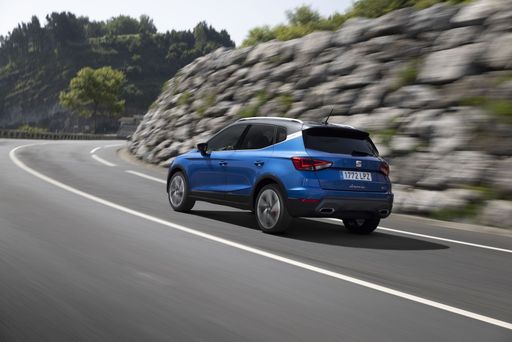
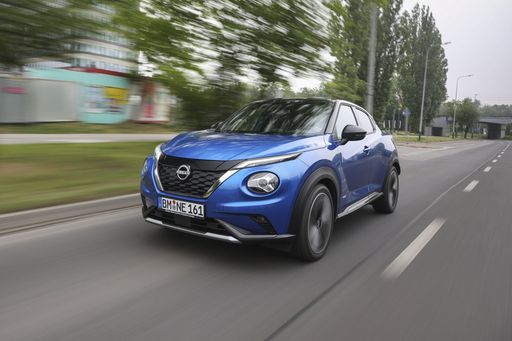
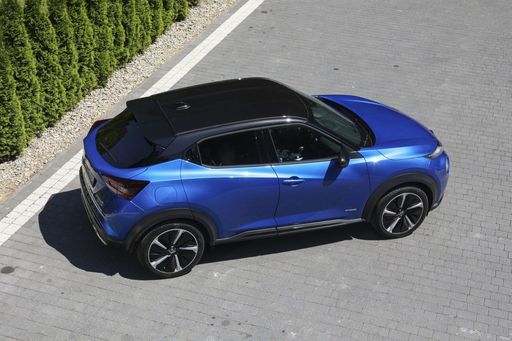
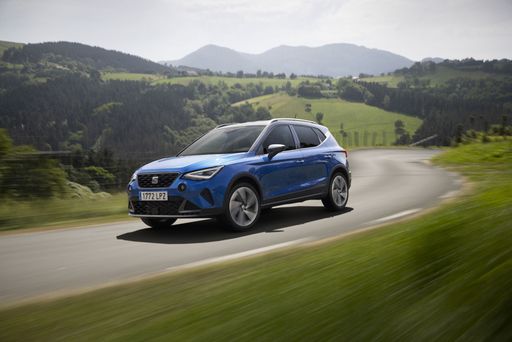
Nissan Juke VS SEAT Arona places a styling-forward, gadget-rich contender against a pragmatic, value-led rival. The Nissan Juke leans into personality — a driver-focused cockpit, bold looks and an urban-friendly hybrid option — while the SEAT Arona trades flash for a more conventional, every‑day usability and sharper straight-line pep. That contrast defines most buyer decisions: pick the Juke if you want a car that feels distinctive and modern inside, choose the Arona if you want a no-nonsense package that delivers bang for your buck. Both are compact B‑SUVs suited to city life, but they translate that brief into different strengths and compromises. This page teases those differences in real-world terms before you dive into measured specs.
Juke

Character and driving dynamics

The Nissan Juke feels characterful and a little theatrical on the road, with quick steering and a chassis that rewards lively city cornering; that personality shows most around town and on twisty roads. The SEAT Arona, by contrast, aims for assured predictability: its steering is direct, the engine feels livelier under acceleration and it communicates confidence in everyday driving. In traffic the Juke’s dual‑clutch and hybrid systems can occasionally feel abrupt, whereas the Arona’s gearbox usually settles into a smoother rhythm except under heavy kickdown. If you value playful handling and a cockpit that makes driving feel engaging, the Juke leans sportier; if you prefer immediate, predictable responses and brisk real-world performance, the Arona is better tuned to that need.

Arona

Comfort, cabin feel and perceived quality

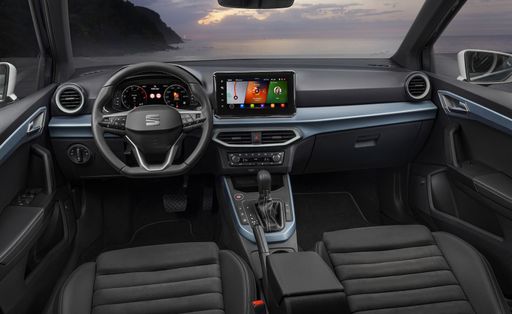
Step inside the Nissan Juke and the facelifted interior punches above its class with a large tilted screen and real buttons that give a premium, driver‑centric impression; the cabin feels modern but roads reveal audible wind and tyre noise earlier. The SEAT Arona’s cabin is more straightforward and pragmatic, with harder plastics but ergonomics that make daily tasks simpler and seats that deliver solid support over long stints. On rougher surfaces the Arona’s firmer ride can feel more clinical, while the Juke’s setup—even when tuned for sport—transmits more texture and occasional harshness, especially on larger wheels. Perceived quality favours the Juke’s refreshed design up front, but the Arona wins on calm, sensible packaging that won’t surprise you on a long motorway run.

Juke

Practicality and everyday usability

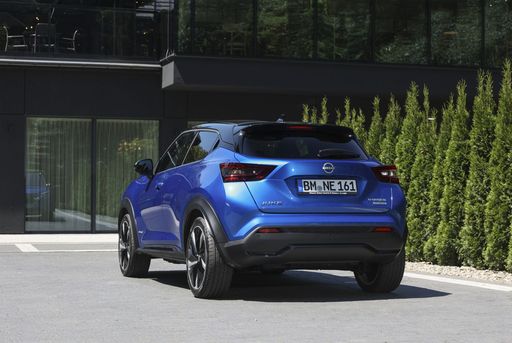
Practical differences are where compromises become obvious: the Nissan Juke prioritises style and a tidy footprint, but its rear seat and loading lip are less forgiving for frequent family duty or bulky cargo. The SEAT Arona presents a more straightforward load area and seating layout that make daily chores and grocery runs simpler, even if it isn’t class‑leading in volume. Both cars ask you to mind the high boot sill and to accept limited rear legroom for three adults, but the Arona’s predictable layout and slightly better payload feel more usable in real life. If regular weekend luggage or awkward loads are on your agenda the Arona’s pragmatic approach will frustrate less than the Juke’s fashion-first compromises.

Arona

City friendliness versus long‑distance behavior

In the city the Nissan Juke shines: compact turning, responsive hybrid recuperation and a cockpit you can live with daily make it excellent for short hops and tight parking. The SEAT Arona is equally easy to park and arguably more composed in steady urban driving, with tactile controls and an engine that gets on with the job without fuss. On motorways both cars expose their compromises — the Juke tends to be noisier and can feel fidgety on coarse tarmac, while the Arona stays composed but reveals a firm ride and audible wind/tyre noise at speed. For mostly urban commuters the Juke’s urban efficiency and character are attractive; for mixed routes or frequent longer drives the Arona’s steadier long‑distance manners give it the edge in comfort and everyday usability.

Juke

Buyer fit and the trade-offs to weigh before you compare specs

Choosing between the Nissan Juke and SEAT Arona is really about priorities: the Juke suits buyers who want standout design, a modern cockpit and city‑focused hybrid efficiency even if that means a tighter rear and a firmer, sometimes louder highway ride. The Arona suits buyers who prioritise everyday practicality, sharper real‑world acceleration and a more conservative, dependable interior that often comes at a friendlier price. If family flexibility, trunk practicality and quiet long runs matter, lean toward the Arona; if style, infotainment polish and urban efficiency top your list, the Juke will feel more rewarding. Below you’ll find the technical comparison so you can match those real‑world impressions to the measured differences that matter most to you.

Here’s where it gets real: The technical differences in detail

Arona

Costs and Efficiency:

Looking at overall running costs, both models reveal some interesting differences in everyday economy.

SEAT Arona is barely cheaper – starting at 20,700 £ , while the Nissan Juke costs 21,400 £ . That’s a price difference of around 685 £.

Fuel consumption also shows a difference: the Nissan Juke uses 4.7 L/100km and is moderately more efficient than the SEAT Arona with 5.3 L/100km. The difference is about 0.6 L/100km.

Juke

Engine and Performance:

Power, torque and acceleration say a lot about how a car feels on the road. This is where you see which model delivers more driving dynamics.

When it comes to engine power, the SEAT Arona offers marginally more power – delivering 150 HP compared to 143 HP. That’s roughly 7 HP more horsepower.

When accelerating from 0 to 100 km/h, the SEAT Arona is noticeably quicker – completing the sprint in 8.3 s, while the Nissan Juke takes 10.1 s. That’s about 1.8 s quicker.

There’s also a difference in torque: the SEAT Arona delivers moderately more torque with 250 Nm compared to 200 Nm. That’s about 50 Nm more.

Arona

Space and Everyday Use:

Cabin size, boot volume and payload all play a role in everyday practicality. Here, comfort and flexibility make the difference.

Both vehicles offer seating for 5 people.

In terms of curb weight, SEAT Arona is barely lighter – 1,188 kg compared to 1,274 kg. The difference is around 86 kg.

Looking at boot space, the Nissan Juke offers barely more boot space – 422 L compared to 400 L. That’s a difference of about 22 L.

When it comes to payload, the SEAT Arona carries a bit more – 522 kg compared to 427 kg. That’s a difference of about 95 kg.

Who wins the race in the data check?

The SEAT Arona leads convincingly in the objective data comparison.
This result only shows which model scores more points on paper – not which of the two cars feels right for you.

from £20,700
Arona

SEAT Arona

  • Engine Type : Petrol
  • Transmission : Manuel, Automatic
  • Drive Type : Front-Wheel Drive
  • Power HP : 95 - 150 HP
  • Consumption L/100km : 5.3 - 5.8 L/100km
SEAT Arona
Nissan Juke

Costs and Consumption

View detailed analysis

Engine and Performance

View detailed analysis

Dimensions and Body

View detailed analysis

SEAT Arona

The SEAT Arona is a cheeky urban crossover that mixes sharp styling with sensible practicality, making it an appealing choice for buyers who want personality without fuss. It’s zippy in traffic, comfortable enough for daily driving, and brings enough character to make routine journeys feel a little more fun.

details

Nissan Juke

The Nissan Juke is a pocket-sized crossover that refuses to blend in, with quirky styling and a cheeky stance that turns heads at every traffic light. It’s ideal for shoppers who value personality and nimble urban driving over maximum practicality, delivering surprising pep and a well-equipped feel for everyday fun.

details
SEAT Arona
Nissan Juke

Costs and Consumption

Price
20,700 - 30,500 £
Price
21,400 - 31,800 £
Consumption L/100km
5.3 - 5.8 L/100km
Consumption L/100km
4.7 - 6 L/100km
Consumption kWh/100km
-
Consumption kWh/100km
-
Electric Range
-
Electric Range
-
Battery Capacity
-
Battery Capacity
-
co2
120 - 132 g/km
co2
105 - 136 g/km
Fuel tank capacity
-
Fuel tank capacity
-

Dimensions and Body

Body Type
SUV
Body Type
SUV
Seats
5
Seats
5
Doors
-
Doors
-
Curb weight
1,188 - 1,268 kg
Curb weight
1,274 - 1,405 kg
Trunk capacity
400 L
Trunk capacity
354 - 422 L
Length
-
Length
-
Width
1,780 mm
Width
1,800 mm
Height
-
Height
-
Max trunk capacity
-
Max trunk capacity
-
Payload
502 - 522 kg
Payload
405 - 427 kg

Engine and Performance

Engine Type
Petrol
Engine Type
Petrol, Full Hybrid
Transmission
Manuel, Automatic
Transmission
Manuel, Automatic
Transmission Detail
Manual Gearbox, Dual-Clutch Automatic
Transmission Detail
Manual Gearbox, Dual-Clutch Automatic, Automatic Gearbox
Drive Type
Front-Wheel Drive
Drive Type
Front-Wheel Drive
Power HP
95 - 150 HP
Power HP
114 - 143 HP
Acceleration 0-100km/h
8.3 - 11.1 s
Acceleration 0-100km/h
10.1 - 11.8 s
Max Speed
-
Max Speed
-
Torque
175 - 250 Nm
Torque
200 Nm
Number of Cylinders
3 - 4
Number of Cylinders
3 - 4
Power kW
70 - 110 kW
Power kW
84 - 105 kW
Engine capacity
999 - 1,498 cm3
Engine capacity
999 - 1,598 cm3

General

Model Year
2025
Model Year
2025
CO2 Efficiency Class
D
CO2 Efficiency Class
D, E, C
Brand
SEAT
Brand
Nissan
DriveDuel uses data analysis and artificial intelligence to evaluate vehicle data and create content. Content is regularly reviewed and improved. The displayed prices are estimates based on German list prices, adjusted to the respective country’s VAT. Country-specific registration taxes are not included. This information is not legally binding.