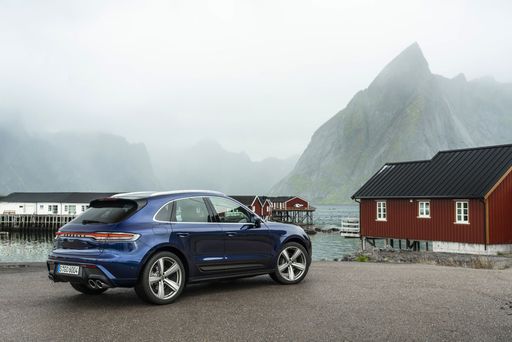
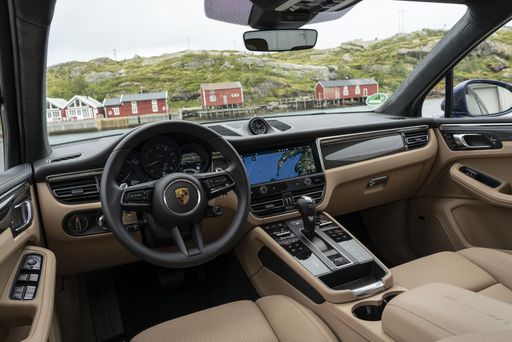
VS

SERES 5 vs Porsche Macan comparison

Compare performance (585 HP vs 571 HP), boot space and price (55,700 £ vs 89,300 £ ) at a glance. Find out which car is the better choice for you – SERES 5 or Porsche Macan?

SERES 5 vs Porsche Macan: Key differences

SERES 5

4.7 (1 Reviews)
rate
  • considerably cheaper
  • very slightly more power
  • marginally lighter
details

Porsche Macan

  • only slightly more efficient
  • visibly more electric range
  • only slightly quicker 0–100 km/h
  • clearly more trunk space
details

By Achim Sedelmaier

5

The automotive landscape is evolving rapidly, particularly with the advent of electric vehicles (EVs). Among the notable competitors in the luxury SUV segment are the Porsche Macan and the SERES 5. Each vehicle offers unique attributes and cutting-edge technology, making them worthy of comparison. This article delves into the technical aspects and innovations of these two electrifying SUVs.
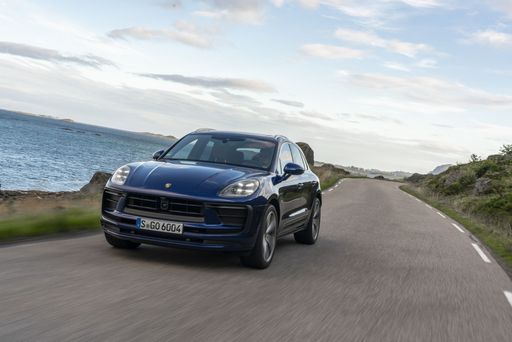
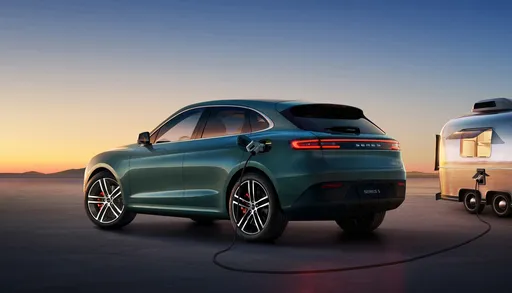
Macan

Power and Performance

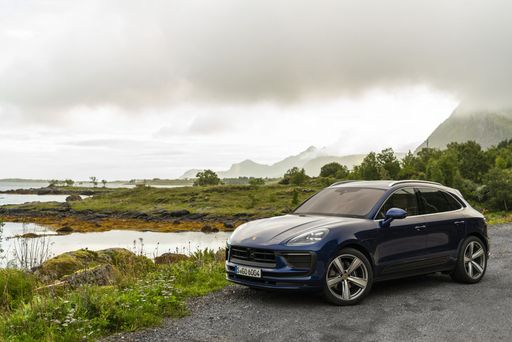
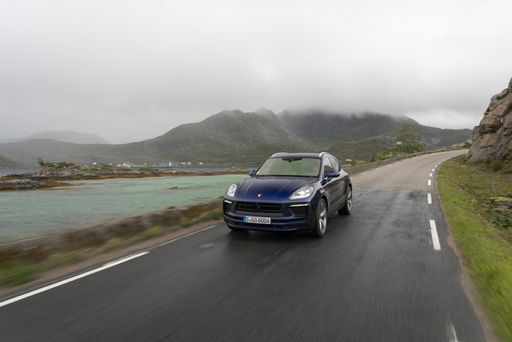
The Porsche Macan stands out with multiple powertrain options, ranging from 360 HP to an impressive 639 HP in its high-performance trims. The available acceleration times are equally exhilarating, allowing the Macan to achieve 0-100 km/h in as little as 3.3 seconds. This stunning performance is complemented by rear-wheel drive and all-wheel drive configurations, providing flexibility for varied driving conditions.

In contrast, the SERES 5 boasts a robust output of 646 HP, with a remarkable acceleration time of 0-100 km/h in just 4.1 seconds. The SERES 5 employs an all-wheel-drive system, contributing to its traction and stability on the road. While it doesn't quite match the Macan's high-end power variants, its performance is still noteworthy in the competitive EV market.

Electric Efficiency

When it comes to energy consumption, the Porsche Macan offers a competitive average of 17–18.8 kWh/100km, depending on the variant. The vehicle features a substantial battery capacity of 96 kWh, providing an electric range of up to 644 km. This impressive range ensures that owners can enjoy extended journeys with minimal charging interruptions.

On the flip side, the SERES 5 has a slightly higher consumption rate at 18.6 kWh/100km but compensates for it with its robust power output. The electric range of the SERES 5 is comparatively shorter at 430 km, which may influence potential buyers who prioritize distance over power.

Design and Dimensions

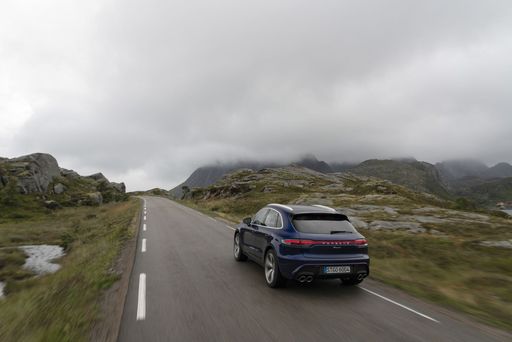
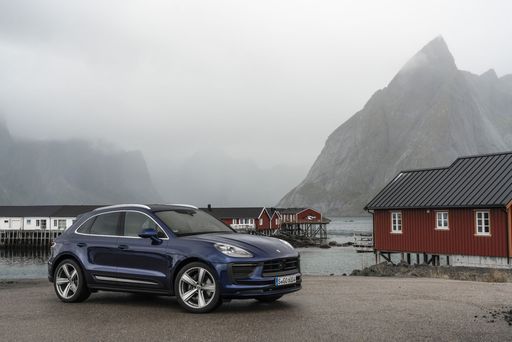
Dimensions play a significant role in practicality and aesthetics. The Porsche Macan measures 4784 mm in length, 1938 mm in width, and varies in height from 1621 mm to 1623 mm across its models. These dimensions provide a spacious interior with a trunk capacity of up to 540 liters, making it an excellent choice for families and road trips.

Meanwhile, the SERES 5 measures 4700 mm in length and 1930 mm in width, giving it a slightly more compact profile but with a height of 1625 mm. Its trunk capacity of 367 liters is suitable for everyday use, yet it's less versatile than its Porsche counterpart. The design ethos of the SERES 5 exudes modern elegance, appealing to consumers drawn to innovative aesthetics.

Technological Innovations

Both vehicles showcase state-of-the-art technologies aimed at enhancing the driving experience. The Porsche Macan integrates a range of high-tech features, including advanced infotainment systems, digital cockpit displays, and driver-assistance technologies, ensuring both convenience and safety on the road.

The SERES 5, while lesser-known, offers its own suite of technological innovations, including an extensive infotainment system and advanced safety features designed to provide a secure driving environment. The approach taken by SERES is laser-focused on user experience, employing intuitive interfaces and connectivity options that complement its electric nature.

Conclusion

In summary, the Porsche Macan and SERES 5 each have their unique strengths within the luxury electric SUV market. The Macan is undeniably powerful and offers an impressive range, making it a formidable option for performance enthusiasts. On the other hand, the SERES 5, with its striking design and solid performance, carves out a niche that appeals to modern consumers seeking a blend of style and practicality.

The decision between the two ultimately hinges on individual preferences regarding power, efficiency, and design. As both manufacturers continue to innovate in the electric vehicle space, prospective buyers can expect exciting developments ahead.

Here’s where it gets real: The technical differences in detail

5

Costs and Efficiency:

When it comes to price and running costs, the biggest differences usually appear. This is often where you see which car fits your budget better in the long run.

SERES 5 is considerably cheaper – starting at 55,700 £ , while the Porsche Macan costs 89,300 £ . That’s a price difference of around 33,609 £.

In terms of energy consumption, the Porsche Macan is only slightly more efficient: consuming 18.5 kWh/100km compared to 18.6 kWh/100km for the SERES 5. That’s a difference of about 0.1 kWh/100km.

As for electric range, the Porsche Macan offers visibly more range – reaching up to 585 km, about 155 km more than the SERES 5.

Macan

Engine and Performance:

Power, torque and acceleration are the classic benchmarks for car enthusiasts – and here, some clear differences start to show.

When it comes to engine power, the SERES 5 offers very slightly more power – delivering 585 HP compared to 571 HP. That’s roughly 14 HP more horsepower.

When accelerating from 0 to 100 km/h, the Porsche Macan is only slightly quicker – completing the sprint in 3.8 s, while the SERES 5 takes 4.1 s. That’s about 0.3 s quicker.

There’s also a difference in torque: the Porsche Macan delivers barely more torque with 955 Nm compared to 940 Nm. That’s about 15 Nm more.

Space and Everyday Use:

Cabin size, boot volume and payload all play a role in everyday practicality. Here, comfort and flexibility make the difference.

Both vehicles offer seating for 5 people.

In terms of curb weight, SERES 5 is marginally lighter – 2,360 kg compared to 2,470 kg. The difference is around 110 kg.

Looking at boot space, the Porsche Macan offers clearly more boot space – 476 L compared to 367 L. That’s a difference of about 109 L.

When it comes to payload, the Porsche Macan carries clearly more – 470 kg compared to 375 kg. That’s a difference of about 95 kg.

Who wins the race in the data check?

The Porsche Macan has only a minor advantage in the objective data comparison.
This result only shows which model scores more points on paper – not which of the two cars feels right for you.

£89,314
Macan

Porsche Macan

  • Engine Type Electric
  • Transmission Automatic
  • Drive Type All-Wheel Drive
  • Power HP 571 HP
  • Consumption kWh/100km 18.5 kWh/100km
  • Electric Range 585 km
SERES 5
Porsche Macan

Costs and Consumption

View detailed analysis

Engine and Performance

View detailed analysis

Dimensions and Body

View detailed analysis

SERES 5

The Seres 5 carves a convincing niche in the crowded compact crossover market with bold styling and a surprisingly upscale cabin that feels larger than its footprint suggests. It’s an easy, fuss-free choice for shoppers after modern EV practicality and sensible running costs, delivered with a friendly personality that won’t try to outshine more expensive rivals.

details

Porsche Macan

The Porsche Macan feels like a compact sports car dressed in SUV clothes, delivering razor-sharp handling and a cabin that somehow mixes luxury with everyday practicality. For buyers who crave driving thrills without sacrificing usability, the Macan is a rare breed that makes running errands feel like a weekend blast and manages to look smugly good in the process.

details
SERES 5
Porsche Macan

Costs and Consumption

Price
55,700 £
Price
89,300 £
Consumption L/100km
-
Consumption L/100km
-
Consumption kWh/100km
18.6 kWh/100km
Consumption kWh/100km
18.5 kWh/100km
Electric Range
430 km
Electric Range
585 km
Battery Capacity
-
Battery Capacity
-
co2
0 g/km
co2
0 g/km
Fuel tank capacity
-
Fuel tank capacity
-

Dimensions and Body

Body Type
SUV
Body Type
SUV
Seats
5
Seats
5
Doors
-
Doors
-
Curb weight
2,360 kg
Curb weight
2,470 kg
Trunk capacity
367 L
Trunk capacity
476 L
Length
-
Length
-
Width
1,930 mm
Width
1,952 mm
Height
-
Height
-
Max trunk capacity
-
Max trunk capacity
-
Payload
375 kg
Payload
470 kg

Engine and Performance

Engine Type
Electric
Engine Type
Electric
Transmission
Automatic
Transmission
Automatic
Transmission Detail
Reduction Gearbox
Transmission Detail
Reduction Gearbox
Drive Type
All-Wheel Drive
Drive Type
All-Wheel Drive
Power HP
585 HP
Power HP
571 HP
Acceleration 0-100km/h
4.1 s
Acceleration 0-100km/h
3.8 s
Max Speed
-
Max Speed
-
Torque
940 Nm
Torque
955 Nm
Number of Cylinders
-
Number of Cylinders
-
Power kW
430 kW
Power kW
420 kW
Engine capacity
-
Engine capacity
-

General

Model Year
2024
Model Year
2025
CO2 Efficiency Class
A
CO2 Efficiency Class
A
Brand
SERES
Brand
Porsche
DriveDuel uses data analysis and artificial intelligence to evaluate vehicle data and create content. Content is regularly reviewed and improved. The displayed prices are estimates based on German list prices, adjusted to the respective country’s VAT. Country-specific registration taxes are not included. This information is not legally binding.