VS

Skoda Epiq vs Kia EV2 comparison

Compare performance (211 HP vs 147 HP), boot space and price (22,200 £ vs 22,800 £ ) at a glance. Find out which car is the better choice for you – Skoda Epiq or Kia EV2?

Skoda Epiq vs Kia EV2: Key differences

Skoda Epiq

  • very slightly cheaper
  • markedly more power
  • moderately more efficient
  • clearly quicker 0–100 km/h
details

Kia EV2

3.8 (1 Reviews)
rate
  • only slightly more electric range
  • marginally lighter
details

By Achim Sedelmaier

Epiq

Quick head-to-head: Kia EV2 VS Skoda Epiq

Kia EV2 and Skoda Epiq approach the compact electric-SUV class from different angles: the EV2 leans toward quiet refinement and clever flexibility, while the Epiq pitches practical space and straightforward utility. In everyday terms that means the EV2 feels like a calm, well-damped commuter that rewards relaxed driving, whereas the Epiq makes its case by swallowing luggage and chores with less fuss. Both cars will do city runs and weekend trips, but they give different kinds of confidence — the EV2 through a composed cabin and feature tricks, the Epiq through obvious cargo capacity and tidy ergonomics. For shoppers landing on this page, the trade-off is clear: pick the atmosphere and small-features polish (EV2) or the blunt practicality and usable boot (Epiq). This comparison teases out those real-world differences so you can match them to how you actually use a car.
EV2

Driving character and comfort

The Kia EV2 is tuned for a soft, hushed ride that soothes commuters and makes motorway miles less fatiguing, while the Skoda Epiq favours a composed but slightly firmer setup that highlights usability over serenity. EV2’s steering and chassis prioritise ease rather than engagement, so drivers who want crisp turn-in will feel the Epiq is the marginally more planted option. Noise insulation in the EV2 gives it a bigger-car feel at speed, whereas the Epiq trades some acoustic refinement for an honest, predictable road feel. If you value cushioned long-distance cruising pick the EV2; if you prefer a bit more feedback and a utilitarian, steady demeanor choose the Epiq.

Epiq

Practicality and everyday usability

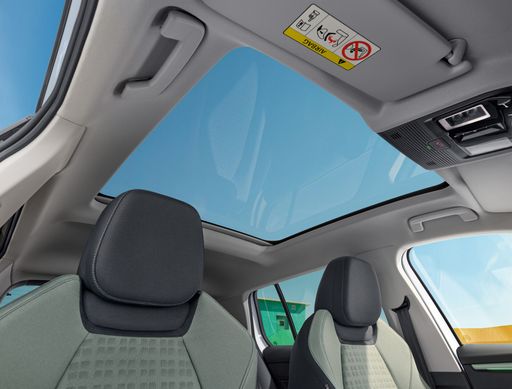
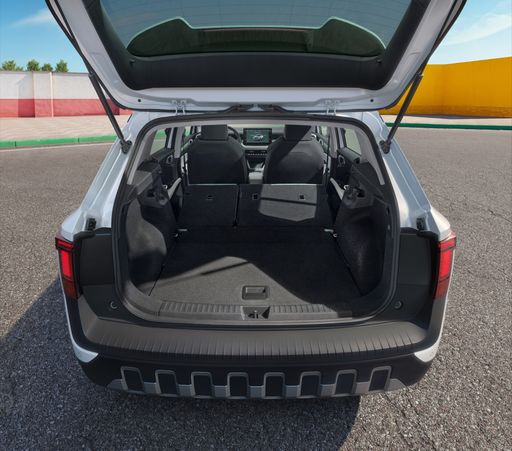
Here the Skoda Epiq takes the headline — its boot and flexible load floor make packing for a family weekend straightforward, and practical details such as a frunk and tidy cable storage underline the point. The Kia EV2 fights back with clever interior packaging: shorter exterior dimensions, optional sliding rear seats in some markets, and versatile floor configurations that make city parking and odd loads easier to manage. In daily use the Epiq’s larger, taller cargo box feels less fiddly when handling prams or suitcases, while the EV2’s modularity rewards buyers who need adaptable interior layouts more than sheer volume. Choose the Epiq if regular cargo hauling and maximum trunk usability matter; choose the EV2 if you prize flexible seating and easier urban manoeuvrability.

Cabin feel and perceived quality

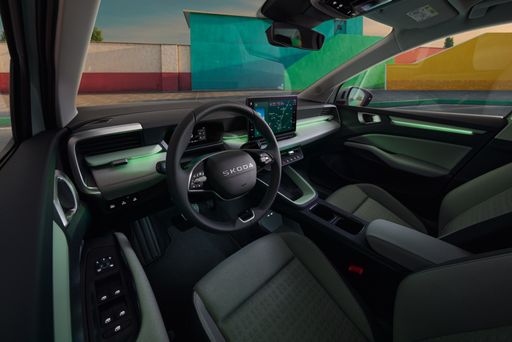
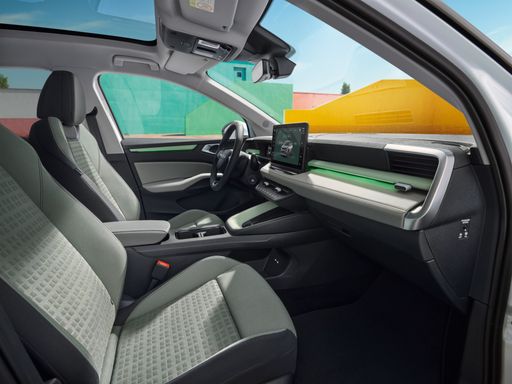
Both cabins are competent, but they deliver different impressions: the Kia EV2 presents a modern, somewhat tech-forward cockpit with physical climate controls that feel user-friendly, whereas the Skoda Epiq aims for pragmatic clarity with straightforward controls and a slightly more traditional layout. Materials in both cars are serviceable — Kia leans toward durable, recycled-feeling plastics and a neat screen layout, while Skoda offers a touch more space and some nicer finishes up front but simpler trims in less visible areas. The EV2’s acoustic calm gives it a slightly more premium vibe on the move, even if the surfaces aren’t luxurious; the Epiq communicates honesty and utility, which will appeal to buyers who prioritise function over flash. If perceived refinement and a tranquil cabin are top of your list, the EV2 nudges ahead; if tactile practicality and usable space feel more important, the Epiq is the more convincing daily environment.

Long-distance behaviour and charging practicality

On longer trips the contrast becomes operational rather than philosophical: the Skoda Epiq typically delivers stronger acceleration and a more efficient cruise that makes motorway overtakes feel easier and can reduce charging stops, whereas the Kia EV2 excels at quiet, comfortable cruising but may require more careful trip planning with smaller battery choices. Charging behaviour is a real-world differentiator — some Epiq versions are limited by modest fast-charge rates on the lower-powered packs, while the EV2 can be optioned with features that improve daily charging convenience, such as a higher-capacity onboard charger. That means frequent long-distance drivers should compare each car’s charging spec and battery option closely: the Epiq gives peppier performance and useful efficiency gains, the EV2 rewards those who prioritise comfort and home/AC charging flexibility. In short, pick the Epiq for punch and highway efficiency if you do lots of variable-speed driving; pick the EV2 if motorway refinement and practical AC charging at home are more important.

Buyer fit: who should choose which?

For urban and peri-urban buyers who want a serene cabin, easy parking, and clever seat packaging the Kia EV2 is a natural fit — especially if you value a quiet long-ride experience and options like faster AC charging or V2L for home flexibility. The Skoda Epiq suits buyers who regularly haul people and luggage, want the clearest day-to-day practicality and a more assertive powertrain, and who prioritise trunk usability over cabin polish. Families who need a big boot and low fuss will prefer the Epiq; commuters and buyers who like a composed, comfortable ambience and modular interiors will lean to the EV2. Use these tendencies to guide the technical deep-dive that follows: battery, charging and acceleration specs will decide how each car behaves for your exact mix of city trips and highway miles.

Here’s where it gets real: The technical differences in detail

Epiq

Costs and Efficiency:

Price and efficiency are key factors when choosing a car – and this is often where the real differences emerge.

Skoda Epiq is very slightly cheaper – starting at 22,200 £ , while the Kia EV2 costs 22,800 £ . That’s a price difference of around 600 £.

In terms of energy consumption, the Skoda Epiq is moderately more efficient: consuming 13.7 kWh/100km compared to 15.1 kWh/100km for the Kia EV2. That’s a difference of about 1.4 kWh/100km.

As for electric range, the Kia EV2 offers only slightly more range – reaching up to 453 km, about 13 km more than the Skoda Epiq.

EV2

Engine and Performance:

Under the bonnet, it becomes clear which model is tuned for sportiness and which one takes the lead when you hit the accelerator.

When it comes to engine power, the Skoda Epiq offers markedly more power – delivering 211 HP compared to 147 HP. That’s roughly 64 HP more horsepower.

When accelerating from 0 to 100 km/h, the Skoda Epiq is clearly quicker – completing the sprint in 7.1 s, while the Kia EV2 takes 8.7 s. That’s about 1.6 s quicker.

There’s also a difference in torque: the Skoda Epiq delivers moderately more torque with 290 Nm compared to 250 Nm. That’s about 40 Nm more.

Epiq

Space and Everyday Use:

Cabin size, boot volume and payload all play a role in everyday practicality. Here, comfort and flexibility make the difference.

Both vehicles offer seating for 5 people.

In terms of curb weight, Kia EV2 is marginally lighter – 1,620 kg compared to 1,625 kg. The difference is around 5 kg.

When it comes to payload, the Kia EV2 carries only slightly more – 475 kg compared to 455 kg. That’s a difference of about 20 kg.

Who wins the race in the data check?

The Skoda Epiq is clearly superior overall in the objective data comparison.
This result only shows which model scores more points on paper – not which of the two cars feels right for you.

from £22,200
Epiq

Skoda Epiq

  • Engine Type Electric
  • Transmission Automatic
  • Drive Type Front-Wheel Drive
  • Power HP 116 - 211 HP
  • Consumption kWh/100km 13.7 - 13.9 kWh/100km
  • Electric Range 310 - 440 km
Skoda Epiq
Kia EV2

Costs and Consumption

View detailed analysis

Engine and Performance

View detailed analysis

Dimensions and Body

View detailed analysis

Skoda Epiq

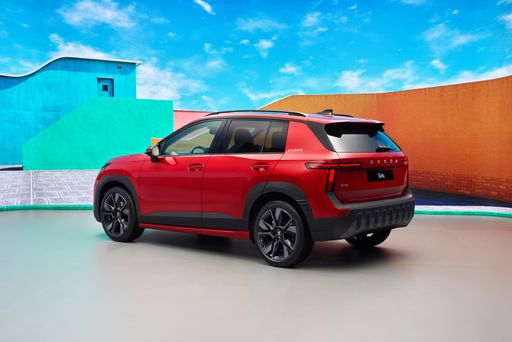
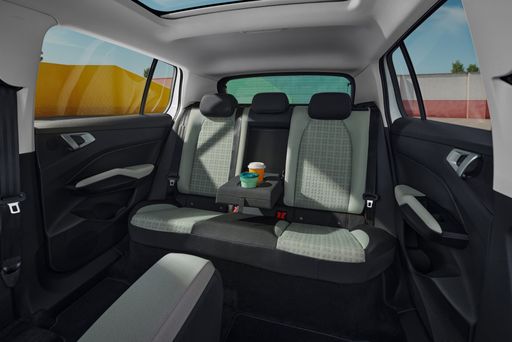
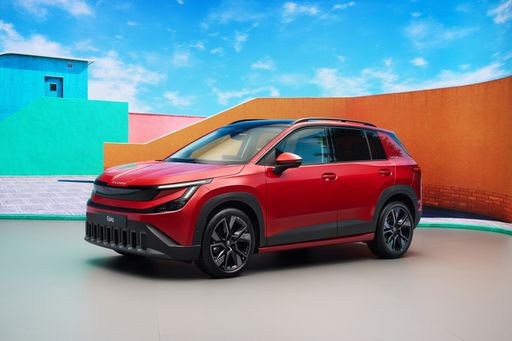
The Skoda Epiq is a sensible, well-packaged compact SUV that delivers a roomy cabin, practical storage and an easygoing driving character suited to everyday life. It prioritizes comfort and value with smart, user-friendly features rather than flashy performance.

details

Kia EV2

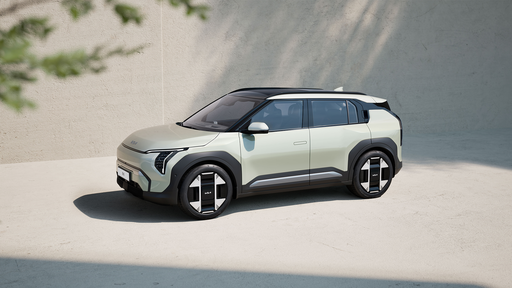
The Kia EV2 is a compact electric crossover aimed at buyers who want a practical, affordable EV with a modern, well-appointed cabin. It combines comfortable, predictable handling with straightforward tech and efficient everyday usability, making it a sensible choice for daily driving.

details
Skoda Epiq
Kia EV2

Costs and Consumption

Price
22,200 - 30,500 £
Price
22,800 - 31,600 £
Consumption L/100km
-
Consumption L/100km
-
Consumption kWh/100km
13.7 - 13.9 kWh/100km
Consumption kWh/100km
15.1 - 16.3 kWh/100km
Electric Range
310 - 440 km
Electric Range
317 - 453 km
Battery Capacity
-
Battery Capacity
-
co2
0 g/km
co2
0 g/km
Fuel tank capacity
-
Fuel tank capacity
-

Dimensions and Body

Body Type
SUV
Body Type
SUV
Seats
5
Seats
4 - 5
Doors
-
Doors
-
Curb weight
1,625 - 1,642 kg
Curb weight
1,620 - 1,625 kg
Trunk capacity
475 L
Trunk capacity
-
Length
-
Length
-
Width
1,798 mm
Width
1,800 mm
Height
-
Height
-
Max trunk capacity
-
Max trunk capacity
-
Payload
438 - 455 kg
Payload
400 - 475 kg

Engine and Performance

Engine Type
Electric
Engine Type
Electric
Transmission
Automatic
Transmission
Automatic
Transmission Detail
Reduction Gearbox
Transmission Detail
Reduction Gearbox
Drive Type
Front-Wheel Drive
Drive Type
Front-Wheel Drive
Power HP
116 - 211 HP
Power HP
135 - 147 HP
Acceleration 0-100km/h
7.1 s
Acceleration 0-100km/h
8.7 - 9.7 s
Max Speed
-
Max Speed
-
Torque
267 - 290 Nm
Torque
250 Nm
Number of Cylinders
-
Number of Cylinders
-
Power kW
85 - 155 kW
Power kW
100 - 108 kW
Engine capacity
-
Engine capacity
-

General

Model Year
2026
Model Year
2026
CO2 Efficiency Class
A
CO2 Efficiency Class
A
Brand
Skoda
Brand
Kia
DriveDuel uses data analysis and artificial intelligence to evaluate vehicle data and create content. Content is regularly reviewed and improved. The displayed prices are estimates based on German list prices, adjusted to the respective country’s VAT. Country-specific registration taxes are not included. This information is not legally binding.