VS

smart #5 vs Mercedes GLB comparison

Compare performance (646 HP vs 354 HP), boot space and price (39,300 £ vs 43,200 £ ) at a glance. Find out which car is the better choice for you – smart #5 or Mercedes GLB?

smart #5 vs Mercedes GLB: Key differences

smart #5

4.9 (5 Reviews)
rate
  • only slightly cheaper
  • significantly more power
  • significantly quicker 0–100 km/h
  • moderately more trunk space
details

Mercedes GLB

3.6 (4 Reviews)
rate
  • moderately more efficient
  • very slightly more electric range
  • a bit lighter
details

All details on performance, efficiency, range and trunk space can be found in the technical comparison below – including user reviews for both models.

By Achim Sedelmaier

#5

Street Stature vs City Chic

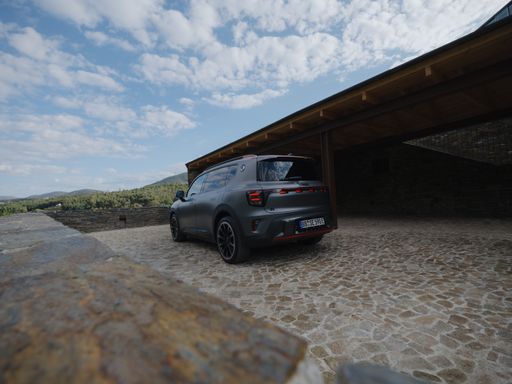
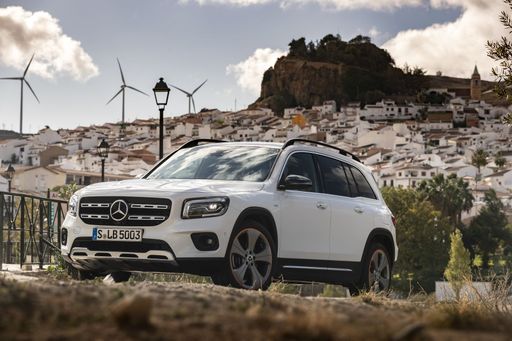
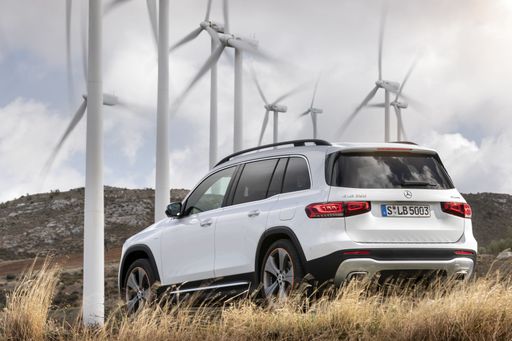
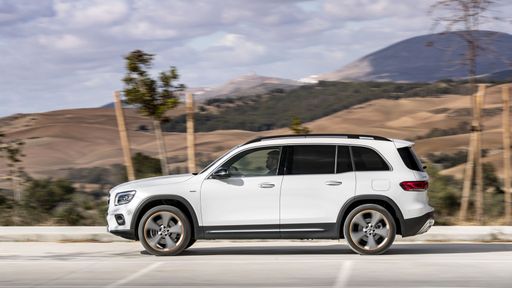
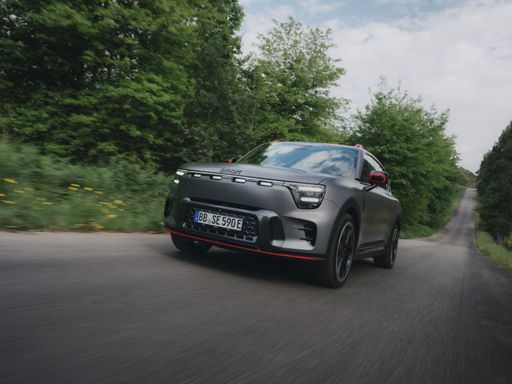
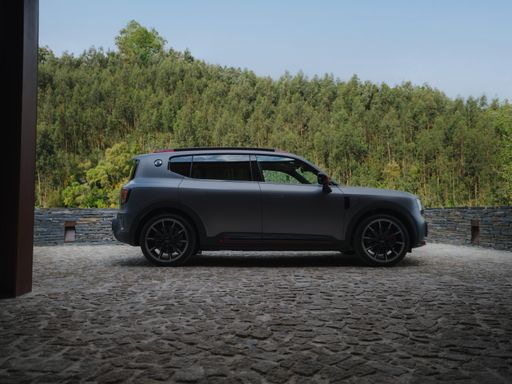
On the road the GLB wears its SUV roots like a blazer—solid, upright and immediately familiar to anyone who values presence over flash. The smart #5, by contrast, trades solemn authority for personality; it’s more compact in stance but deliberately showy, with angles and details that beg a second look. Together they make a neat contrast: one plays the respected family member, the other the tasteful rebel at the dinner table.
GLB

The feel on the tarmac

Take either into traffic and their characters sharpen: the GLB calms and steadies, smoothing out long miles with composed manners and predictable behavior. The smart #5 is livelier—instant responsiveness and nimble turn-in give it a cheeky advantage in city corners and quick lane changes. Both inspire confidence, but they do it with different voices: the GLB with quiet assurance, the smart with alert enthusiasm.

#5

Cabin comfort and daily living

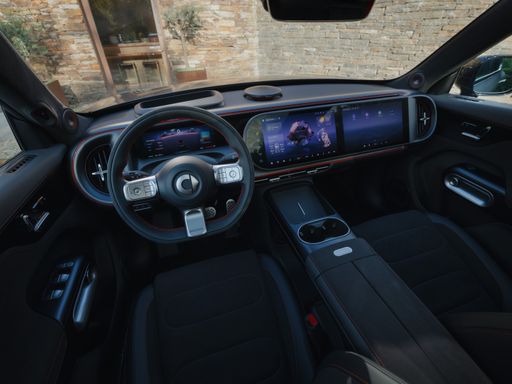
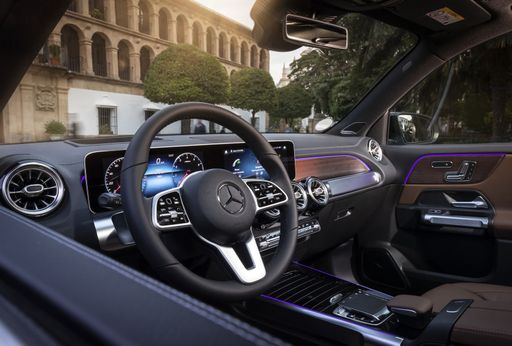
Inside, the GLB leans toward traditional luxury with material choices and an upright layout that makes long drives less fatiguing and transitions with family duties seamless. The smart #5 opts for a modern, tech-forward cabin where screens and clever cubbies speak louder than stitched leather—it's fresher and sometimes feels more playful than plush. Ergonomically both are friendly, but if you prefer a tactile classic cockpit the GLB edges toward familiarity, whereas the smart pushes a more contemporary, gadget-forward vibe.

GLB

Lunchbox errands and weekend hauls

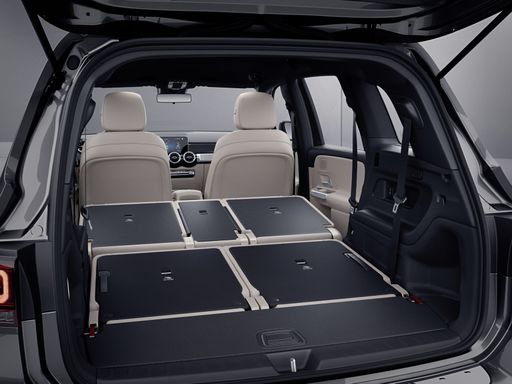
When it comes to everyday utility, both cope well but in different ways: the GLB is easier to imagine swallowing awkward loads and multi-kid routines without complaint. The smart #5, meanwhile, makes urban chores painless with easy parking and user-friendly storage that turns tight spaces into usable territory. If your life is a sequence of school runs or flatpack furniture missions you’ll find one speaks more directly to your calendar than the other.

#5

Ownership and pocket sense

Beyond the showroom the real cost of ownership shows through in options, servicing habits and how quickly you want to swap cars for something new. The smart #5 can feel fresher and less fussy day-to-day, while the GLB carries the badge cachet that tends to translate into different maintenance and insurance expectations. Either way, equipment lists and trim choices will push the perceived value one way or another, so a careful options check is as important as the test drive.

GLB

Matchmaking: which shortlist to write?

City commuters and style-conscious buyers who prize agility and a modern cabin will be drawn to the smart #5’s character and urban ease. Families, those who regularly tote extra people or luggage, and drivers who favour a conventional, composed ride will feel more at home in the GLB’s environment. Both have crossover appeal, but your week—school runs, motorway miles or mostly inner-city hops—should be the final arbiter.

#5

Keep reading — the showdown isn’t over

We’ve walked both routes, unpacked their personalities and pushed each into the kind of real-world situations buyers actually live with. Next up we’ll add final scoring and reveal which car takes the DriveDuel laurels, so keep reading to see how the contest finishes. Your perfect pick might already be obvious, but the full verdict still has a twist—don't miss the DriveDuel Champion announcement that follows.

Here’s where it gets real: The technical differences in detail

#5

Costs and Efficiency:

Looking at overall running costs, both models reveal some interesting differences in everyday economy.

smart #5 is only slightly cheaper – starting at 39,300 £ , while the Mercedes GLB costs 43,200 £ . That’s a price difference of around 3,855 £.

In terms of energy consumption, the Mercedes GLB is moderately more efficient: consuming 15.4 kWh/100km compared to 18.4 kWh/100km for the smart #5. That’s a difference of about 3 kWh/100km.

As for electric range, the Mercedes GLB offers very slightly more range – reaching up to 631 km, about 41 km more than the smart #5.

GLB

Engine and Performance:

Under the bonnet, it becomes clear which model is tuned for sportiness and which one takes the lead when you hit the accelerator.

When it comes to engine power, the smart #5 offers significantly more power – delivering 646 HP compared to 354 HP. That’s roughly 292 HP more horsepower.

When accelerating from 0 to 100 km/h, the smart #5 is significantly quicker – completing the sprint in 3.8 s, while the Mercedes GLB takes 5.5 s. That’s about 1.7 s quicker.

There’s also a difference in torque: the smart #5 delivers clearly more torque with 710 Nm compared to 515 Nm. That’s about 195 Nm more.

#5

Space and Everyday Use:

Cabin size, boot volume and payload all play a role in everyday practicality. Here, comfort and flexibility make the difference.

Both vehicles offer seating for 5 people.

In terms of curb weight, Mercedes GLB is a bit lighter – 1,840 kg compared to 2,200 kg. The difference is around 360 kg.

Looking at boot space, the smart #5 offers moderately more boot space – 630 L compared to 540 L. That’s a difference of about 90 L.

When it comes to payload, the Mercedes GLB carries barely more – 505 kg compared to 502 kg. That’s a difference of about 3 kg.

Who wins the race in the data check?

The smart #5 is clearly superior overall in the objective data comparison.
This result only shows which model scores more points on paper – not which of the two cars feels right for you.

from £39,300
#5

smart #5

  • Engine Type : Electric
  • Transmission : Automatic
  • Drive Type : Rear-Wheel Drive, All-Wheel Drive
  • Power HP : 340 - 646 HP
  • Consumption kWh/100km : 18.4 - 19.9 kWh/100km
  • Electric Range : 465 - 590 km
smart #5
Mercedes GLB

Costs and Consumption

View detailed analysis

Engine and Performance

View detailed analysis

Dimensions and Body

View detailed analysis

smart #5

The Smart #5 continues to build on the brand's legacy of compact and efficient urban vehicles, now infused with a more modern and stylish design. Its sleek appearance is complemented by a spacious interior, offering comfort without compromising its compact nature. This model is ideal for city dwellers seeking a blend of innovation, practicality, and style in their daily drives.

details

Mercedes GLB

The Mercedes GLB is a practical compact SUV that mixes boxy, family-friendly space with premium German polish, making it an appealing choice for buyers who want usefulness without pretension. It drives with a confident, composed feel and somehow manages to look both rugged and refined — the grown-up SUV that still likes to have fun.

details
smart #5
Mercedes GLB

Costs and Consumption

Price
39,300 - 52,200 £
Price
43,200 - 62,400 £
Consumption L/100km
-
Consumption L/100km
5.7 - 6.1 L/100km
Consumption kWh/100km
18.4 - 19.9 kWh/100km
Consumption kWh/100km
15.4 - 15.9 kWh/100km
Electric Range
465 - 590 km
Electric Range
431 - 631 km
Battery Capacity
74.4 - 94 kWh
Battery Capacity
-
co2
0 g/km
co2
0 - 138 g/km
Fuel tank capacity
-
Fuel tank capacity
-

Dimensions and Body

Body Type
SUV
Body Type
SUV
Seats
5
Seats
5
Doors
5
Doors
-
Curb weight
2,200 - 2,378 kg
Curb weight
1,840 - 2,280 kg
Trunk capacity
630 L
Trunk capacity
540 L
Length
4,695 mm
Length
-
Width
1,920 mm
Width
1,861 mm
Height
1,705 mm
Height
-
Max trunk capacity
1,530 L
Max trunk capacity
-
Payload
475 - 502 kg
Payload
485 - 505 kg

Engine and Performance

Engine Type
Electric
Engine Type
Electric, Full Hybrid
Transmission
Automatic
Transmission
Automatic
Transmission Detail
Reduction Gearbox
Transmission Detail
Reduction Gearbox
Drive Type
Rear-Wheel Drive, All-Wheel Drive
Drive Type
Rear-Wheel Drive, All-Wheel Drive
Power HP
340 - 646 HP
Power HP
156 - 354 HP
Acceleration 0-100km/h
3.8 - 6.9 s
Acceleration 0-100km/h
5.5 - 9.7 s
Max Speed
200 - 210 km/h
Max Speed
-
Torque
373 - 710 Nm
Torque
280 - 515 Nm
Number of Cylinders
-
Number of Cylinders
4
Power kW
250 - 475 kW
Power kW
115 - 260 kW
Engine capacity
-
Engine capacity
1,499 cm3

General

Model Year
2025
Model Year
2026
CO2 Efficiency Class
A
CO2 Efficiency Class
A, D, E
Brand
smart
Brand
Mercedes-Benz
DriveDuel uses data analysis and artificial intelligence to evaluate vehicle data and create content. Content is regularly reviewed and improved. The displayed prices are estimates based on German list prices, adjusted to the respective country’s VAT. Country-specific registration taxes are not included. This information is not legally binding.