VS

Suzuki Ignis vs Fiat 500 comparison

Compare performance (83 HP vs 118 HP), boot space and price (15,600 £ vs 17,100 £ ) at a glance. Find out which car is the better choice for you – Suzuki Ignis or Fiat 500?

Suzuki Ignis vs Fiat 500: Key differences

Suzuki Ignis

4.7 (1 Reviews)
rate
  • marginally cheaper
  • marginally more efficient
  • clearly lighter
  • clearly more trunk space
details

Fiat 500

3.7 (1 Reviews)
rate
  • noticeably more power
  • substantially quicker 0–100 km/h
details

All details on performance, efficiency, range and trunk space can be found in the technical comparison below – including user reviews for both models.

By Achim Sedelmaier

Ignis

Compact Contest: Fiat 500 vs Suzuki Ignis

As urban mobility becomes increasingly significant, two compact contenders—Fiat 500 and Suzuki Ignis—offer distinct options for city dwellers seeking style, efficiency, and practicality. While both are pocket-sized, their technical complexities and innovations make them unique. This article delves into the essential details of each car to help you decide which is better suited to your needs.
500

Design and Dimensions

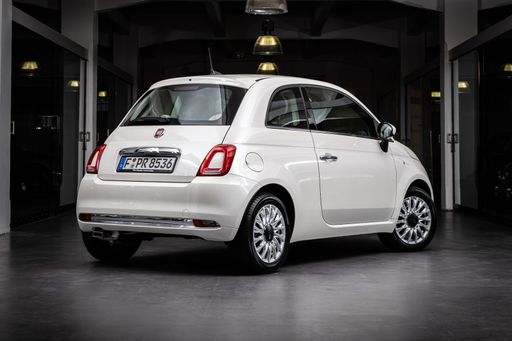
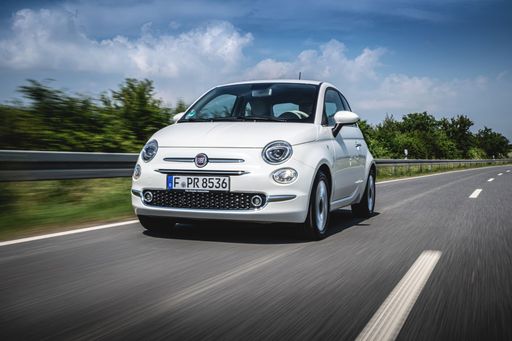
The Fiat 500, known for its classic retro styling, remains a staple in the small car category. It boasts a hatchback design, highlighting its iconic look. With dimensions of 3,632 mm in length, 1,683 mm in width, and a height of 1,527 mm, it’s crafted for maneuvering through tight city streets with ease.

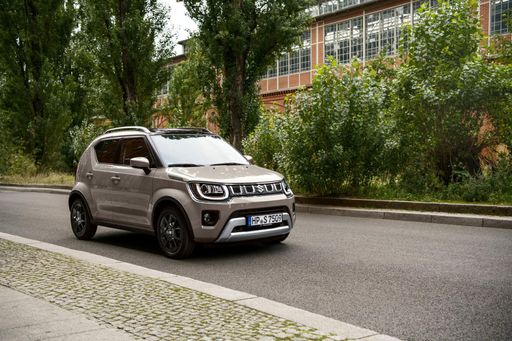
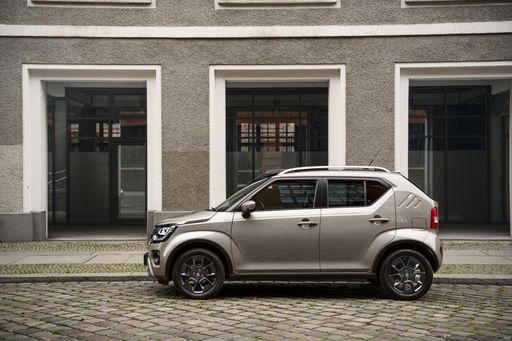
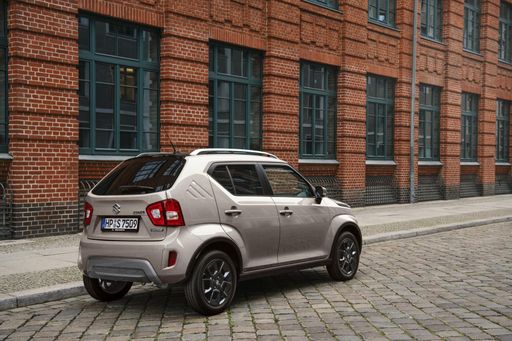
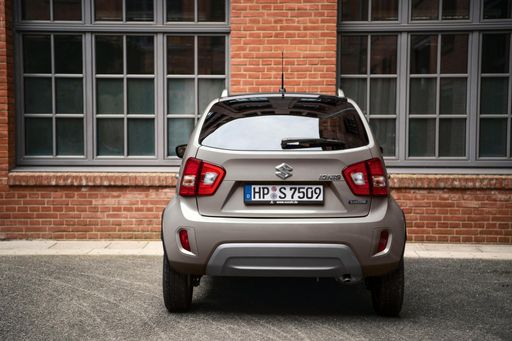
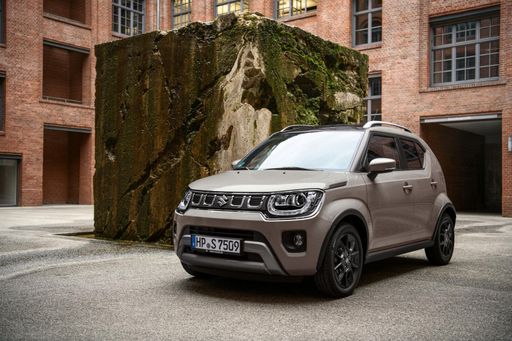
Meanwhile, the Suzuki Ignis distinguishes itself as a petite SUV, giving it a more rugged appeal despite its small stature. Measuring 3,700 mm in length, 1,690 mm in width, and standing taller at 1,605 mm, the Ignis offers a bit more presence while still remaining manageable.

Ignis

Power and Performance

The Fiat 500 shines with its environmentally-conscious electric engine, available in multiple power outputs of 118 HP and 95 HP, paired with an automatic transmission and front-wheel drive. The electric variant accelerates from 0 to 100 km/h in about 9 to 9.5 seconds, peaking at speeds between 135 to 150 km/h. Its electric efficiency ranges from 13 to 14.7 kWh/100 km, and it can travel up to 321 km on a full charge, depending on the battery capacity of 37.3 kWh or 21.3 kWh.

On the other hand, the Suzuki Ignis is powered by a petrol mild-hybrid engine with 83 HP, offering both manual and automatic (CVT) transmissions. It can be configured in front-wheel or all-wheel drive, with an acceleration time from 0 to 100 km/h in 12.7 to 12.8 seconds. With a top speed of 165 km/h, it demonstrates efficient fuel consumption ranging from 4.9 to 5.4 L/100 km.

500

Efficiency and Environmental Impact

The Fiat 500 zeroes in on zero emissions, thanks to its electric drivetrain. With a CO2 rating of 0 g/km, it stands out for eco-conscious drivers. Its competitive CO2 efficiency class is rated A, emphasizing its green credentials.

Conversely, the Suzuki Ignis, with its petrol MHEV engine, presents CO2 emissions between 110 to 122 g/km, placing it in the C to D efficiency classes. However, the mild hybrid system aids in reducing emissions compared to a conventional petrol engine.

Ignis

Practicality and Comfort

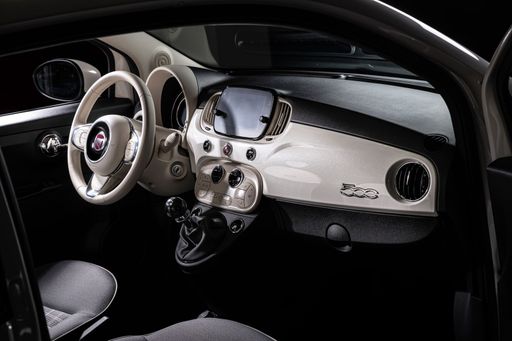
Inside, the Fiat 500 accommodates four passengers, offering a charming yet compact interior, complete with a trunk capacity of 185 L. Despite its small size, it provides a delightful urban driving experience.

The Suzuki Ignis, built for slightly larger loads and more passengers, seats up to five, with a flexible trunk space ranging from 204 to 267 L. Its SUV nature provides extra headroom and a more commanding road presence.

500

Final Thoughts

Choosing between the Fiat 500 and Suzuki Ignis hinges on your priorities. If eco-friendly driving with a touch of Italian style is essential, the electric Fiat 500 is your match. For those leaning towards versatility and the robust charm of an SUV, the Suzuki Ignis, with its practical mild-hybrid system, holds strong appeal. Whichever model you select, both cars promise to deliver an enjoyable driving experience tailored to urban adventures.

Here’s where it gets real: The technical differences in detail

Ignis

Costs and Efficiency:

When it comes to price and running costs, the biggest differences usually appear. This is often where you see which car fits your budget better in the long run.

Suzuki Ignis is marginally cheaper – starting at 15,600 £ , while the Fiat 500 costs 17,100 £ . That’s a price difference of around 1,526 £.

Fuel consumption also shows a difference: the Suzuki Ignis uses 4.9 L/100km and is marginally more efficient than the Fiat 500 with 5.2 L/100km. The difference is about 0.3 L/100km.

500

Engine and Performance:

Power, torque and acceleration say a lot about how a car feels on the road. This is where you see which model delivers more driving dynamics.

When it comes to engine power, the Fiat 500 offers noticeably more power – delivering 118 HP compared to 83 HP. That’s roughly 35 HP more horsepower.

When accelerating from 0 to 100 km/h, the Fiat 500 is substantially quicker – completing the sprint in 9 s, while the Suzuki Ignis takes 12.7 s. That’s about 3.7 s quicker.

Looking at top speed, the Suzuki Ignis is only slightly faster – reaching 165 km/h, while the Fiat 500 tops out at 155 km/h. The difference is around 10 km/h.

There’s also a difference in torque: the Fiat 500 delivers significantly more torque with 220 Nm compared to 107 Nm. That’s about 113 Nm more.

Ignis

Space and Everyday Use:

Beyond pure performance, interior space and usability matter most in daily life. This is where you see which car is more practical and versatile.

Seats: Suzuki Ignis offers more seats – 5 vs 4.

In terms of curb weight, Suzuki Ignis is clearly lighter – 935 kg compared to 1,130 kg. The difference is around 195 kg.

Looking at boot space, the Suzuki Ignis offers clearly more boot space – 267 L compared to 185 L. That’s a difference of about 82 L.

For maximum load capacity, the Suzuki Ignis offers considerably more capacity – up to 1,100 L, about 660 L more than the Fiat 500.

When it comes to payload, the Suzuki Ignis carries somewhat more – 395 kg compared to 325 kg. That’s a difference of about 70 kg.

Who wins the race in the data check?

The Fiat 500 holds a narrow overall lead in the objective data comparison.
This result only shows which model scores more points on paper – not which of the two cars feels right for you.

from £17,100
500

Fiat 500

  • Engine Type : Electric, Petrol MHEV
  • Transmission : Automatic, Manuel
  • Drive Type : Front-Wheel Drive
  • Power HP : 65 - 118 HP
  • Consumption L/100km : 5.2 - 5.3 L/100km
  • Consumption kWh/100km : 13 - 14.7 kWh/100km
  • Electric Range : 190 - 331 km
Suzuki Ignis
Fiat 500

Costs and Consumption

View detailed analysis

Engine and Performance

View detailed analysis

Dimensions and Body

View detailed analysis

Suzuki Ignis

The Suzuki Ignis is a cheeky compact crossover that turns city chores into cheerful adventures, with chunky styling and a surprisingly practical cabin. It won't pretend to be a sports car, but its nimble manners, low running costs and ample personality make it an ideal pick for urban buyers who want fun without pretension.

details

Fiat 500

The Fiat 500 is a cheeky, retro‑styled city car that turns heads with its iconic looks and playful personality. Perfect for weaving through tight streets and easing into tiny parking spots, it’s aimed at buyers who want style and character more than grand touring prowess.

details
Suzuki Ignis
Fiat 500

Costs and Consumption

Price
15,600 - 19,500 £
Price
17,100 - 27,400 £
Consumption L/100km
4.9 - 5.4 L/100km
Consumption L/100km
5.2 - 5.3 L/100km
Consumption kWh/100km
-
Consumption kWh/100km
13 - 14.7 kWh/100km
Electric Range
-
Electric Range
190 - 331 km
Battery Capacity
-
Battery Capacity
-
co2
110 - 122 g/km
co2
0 - 121 g/km
Fuel tank capacity
30 - 32 L
Fuel tank capacity
-

Dimensions and Body

Body Type
SUV
Body Type
Hatchback
Seats
4 - 5
Seats
4
Doors
5
Doors
3
Curb weight
935 - 995 kg
Curb weight
1,130 - 1,475 kg
Trunk capacity
204 - 267 L
Trunk capacity
183 - 185 L
Length
3,700 mm
Length
3,631 mm
Width
1,690 mm
Width
1,683 - 1,684 mm
Height
1,605 mm
Height
1,532 mm
Max trunk capacity
1,086 - 1,100 L
Max trunk capacity
440 L
Payload
335 - 395 kg
Payload
250 - 325 kg

Engine and Performance

Engine Type
Petrol MHEV
Engine Type
Electric, Petrol MHEV
Transmission
Manuel, Automatic
Transmission
Automatic, Manuel
Transmission Detail
Manual Gearbox, CVT
Transmission Detail
Reduction Gearbox, Manual Gearbox
Drive Type
Front-Wheel Drive, All-Wheel Drive
Drive Type
Front-Wheel Drive
Power HP
83 HP
Power HP
65 - 118 HP
Acceleration 0-100km/h
12.7 - 12.8 s
Acceleration 0-100km/h
9 - 16.2 s
Max Speed
155 - 165 km/h
Max Speed
155 km/h
Torque
107 Nm
Torque
92 - 220 Nm
Number of Cylinders
4
Number of Cylinders
3
Power kW
61 kW
Power kW
48 - 87 kW
Engine capacity
1,197 cm3
Engine capacity
999 cm3

General

Model Year
2020
Model Year
2025
CO2 Efficiency Class
C, D
CO2 Efficiency Class
A, D
Brand
Suzuki
Brand
Fiat
DriveDuel uses data analysis and artificial intelligence to evaluate vehicle data and create content. Content is regularly reviewed and improved. The displayed prices are estimates based on German list prices, adjusted to the respective country’s VAT. Country-specific registration taxes are not included. This information is not legally binding.