VS

Suzuki Ignis vs Fiat Panda comparison

Compare performance (83 HP vs 70 HP), boot space and price (15,600 £ vs 14,100 £ ) at a glance. Find out which car is the better choice for you – Suzuki Ignis or Fiat Panda?

Suzuki Ignis vs Fiat Panda: Key differences

Suzuki Ignis

4.7 (1 Reviews)
rate
  • a bit more power
  • very slightly more efficient
  • marginally quicker 0–100 km/h
  • slightly lighter
  • a bit more trunk space
details

Fiat Panda

4.5 (3 Reviews)
rate
  • slightly cheaper
details

By Achim Sedelmaier

Ignis

Introduction: Urban Efficiency Meets Rugged Compactness

When it comes to choosing a small car that perfectly balances urban practicality with innovation, the Fiat Panda and Suzuki Ignis have long been contenders. While each car offers its own unique advantages, understanding the technical aspects and innovations can greatly influence your choice. Let's dive into a comparative analysis of these two remarkable compact vehicles.
Panda

Design and Body Type: Hatchback Versus SUV

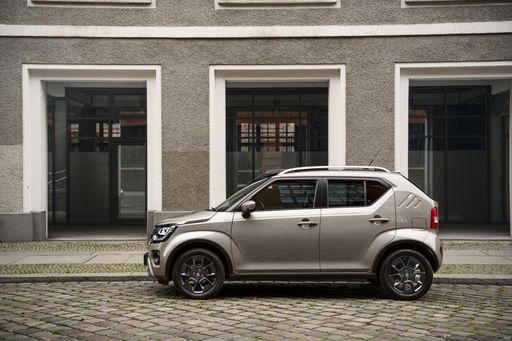
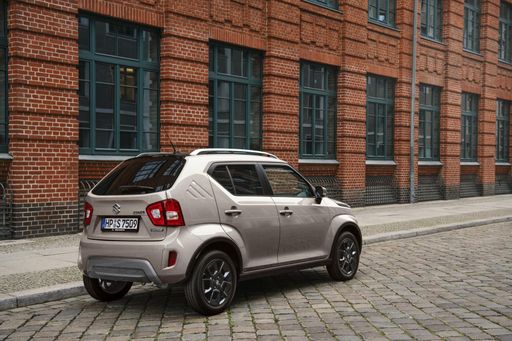
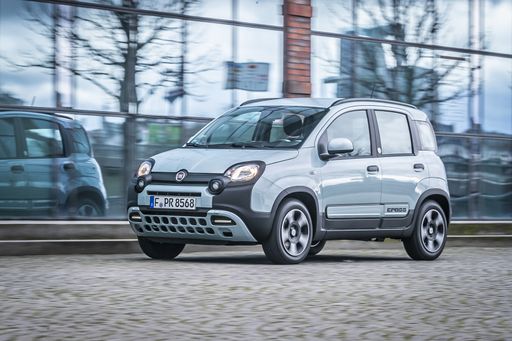
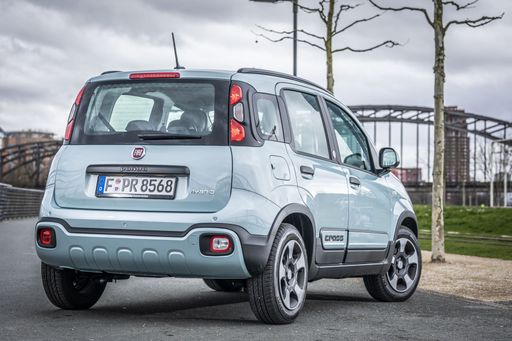
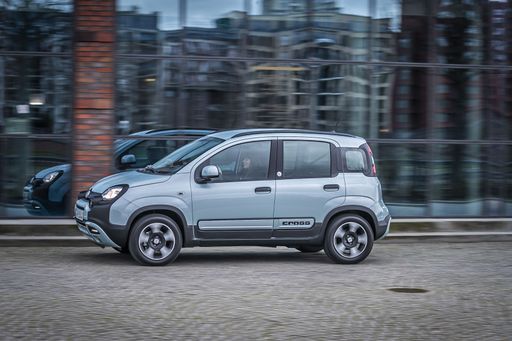
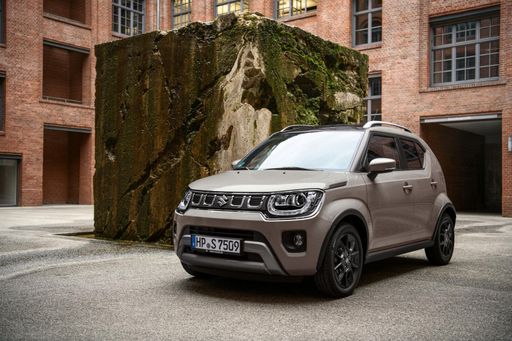
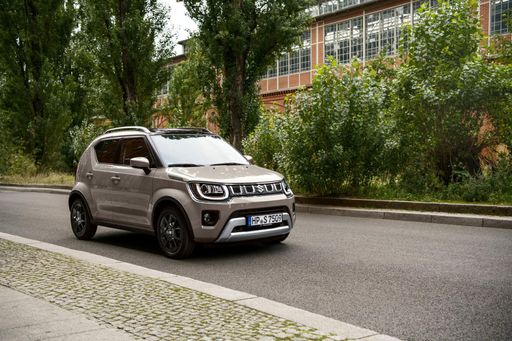
The Fiat Panda presents itself as a traditional hatchback, with a length ranging from 3653 to 3705 mm. Its compact dimensions make it ideal for city driving and tight parking spaces. Meanwhile, the Suzuki Ignis boasts an SUV design, offering that elevated view many drivers appreciate. At 3700 mm in length, it maintains compactness while delivering an SUV's robust feel, aided further by its additional width and height.

Ignis

Engine and Performance: MHEV Technology in Action

Both the Fiat Panda and Suzuki Ignis feature modern micro-hybrid electric vehicle (MHEV) technology, enhancing fuel efficiency and reducing emissions. The Panda is powered by a 999 cm3 3-cylinder engine delivering 70 HP, while the Ignis houses a slightly larger 1197 cm3 4-cylinder engine with 83 HP. Despite their compact size, both cars emphasize efficiency and manage city commutes with efficiency, presenting different performance levels.

Panda

Transmission: Manual Control vs. Versatile Options

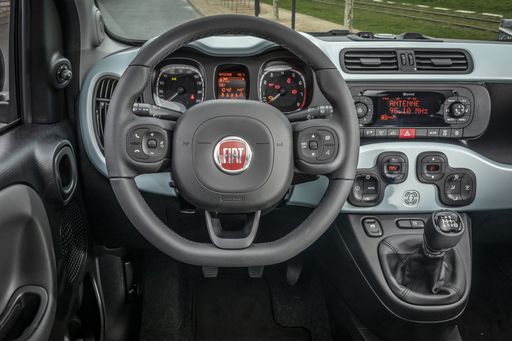
Fiat Panda drivers will experience the tactile feel of a manual gearbox paired with a front-wheel-drive system—ideal for those who relish a more engaged driving experience. In contrast, the Ignis offers both manual and CVT options, catering to a broader range of driving preferences, as well as optional all-wheel drive for enhanced traction control.

Ignis

Interior Space and Comfort: Room for More

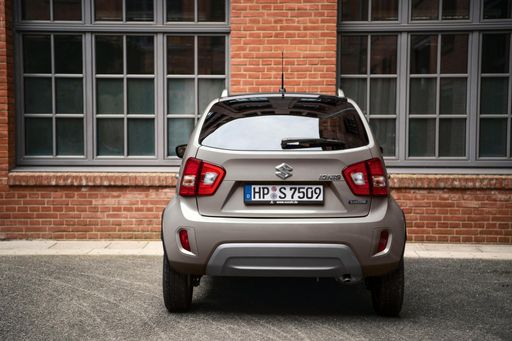
The Panda can accommodate 4 to 5 seats, depending on the configuration, and offers a trunk capacity of 225 liters. The Ignis, with seating for 5, extends slightly greater trunk space ranging from 204 to 267 liters. While the Panda focuses on an efficient use of space for urban environments, the Ignis offers versatility, with additional cargo capacity reflecting its SUV nature.

Panda

Fuel Efficiency and Environmental Impact: Consumption and Emissions

With a focus on eco-friendliness, both models offer commendable fuel consumption rates. The Ignis delivers a slightly superior range with an economy as efficient as 4.9 L/100km, compared to Panda's 5.0 to 5.1 L/100km. CO2 emissions are similar, yet the Ignis manages a lower impact with figures starting at 110 g/km compared to the Panda's minimum of 113 g/km. Both cars align closely with CO2 efficiency class C and D, underscoring their efforts towards sustainability.

Ignis

Capacity and Payload: Carrying Capacity Compared

Fiat's Panda supports a payload of 365 kg, while the Ignis offers between 335 to 395 kg. This difference can be crucial for users wanting to maximize vehicle load without compromising performance. The additional payload of the Ignis complements its versatility and role as a mini-SUV.

Panda

Conclusion: Choosing the Right Companion

In summary, choosing between the Fiat Panda and the Suzuki Ignis depends largely on personal needs and preferences. For urbanites seeking nimble handling and minimalistic design, the Fiat Panda excels. However, for those desiring a combination of SUV presence with city-friendly dimensions, the Suzuki Ignis provides an enticing package. Both vehicles succeed in offering innovative solutions to modern driving challenges, leaving consumers with a choice that reflects their individual lifestyle requirements.

Here’s where it gets real: The technical differences in detail

Ignis

Costs and Efficiency:

Looking at overall running costs, both models reveal some interesting differences in everyday economy.

Fiat Panda is slightly cheaper – starting at 14,100 £ , while the Suzuki Ignis costs 15,600 £ . That’s a price difference of around 1,474 £.

Fuel consumption also shows a difference: the Suzuki Ignis uses 4.9 L/100km and is very slightly more efficient than the Fiat Panda with 5 L/100km. The difference is about 0.1 L/100km.

Panda

Engine and Performance:

Power, torque and acceleration say a lot about how a car feels on the road. This is where you see which model delivers more driving dynamics.

When it comes to engine power, the Suzuki Ignis offers a bit more power – delivering 83 HP compared to 70 HP. That’s roughly 13 HP more horsepower.

When accelerating from 0 to 100 km/h, the Suzuki Ignis is marginally quicker – completing the sprint in 12.7 s, while the Fiat Panda takes 13.9 s. That’s about 1.2 s quicker.

Looking at top speed, the Suzuki Ignis is barely faster – reaching 165 km/h, while the Fiat Panda tops out at 164 km/h. The difference is around 1 km/h.

There’s also a difference in torque: the Suzuki Ignis delivers a bit more torque with 107 Nm compared to 92 Nm. That’s about 15 Nm more.

Ignis

Space and Everyday Use:

Beyond pure performance, interior space and usability matter most in daily life. This is where you see which car is more practical and versatile.

Seats: Suzuki Ignis offers more seats – 5 vs 4.

In terms of curb weight, Suzuki Ignis is slightly lighter – 935 kg compared to 1,055 kg. The difference is around 120 kg.

Looking at boot space, the Suzuki Ignis offers a bit more boot space – 267 L compared to 225 L. That’s a difference of about 42 L.

For maximum load capacity, the Suzuki Ignis offers noticeably more capacity – up to 1,100 L, about 230 L more than the Fiat Panda.

When it comes to payload, the Suzuki Ignis carries only slightly more – 395 kg compared to 365 kg. That’s a difference of about 30 kg.

Who wins the race in the data check?

The Suzuki Ignis is decisively ahead in the objective data comparison.
This result only shows which model scores more points on paper – not which of the two cars feels right for you.

from £15,600
Ignis

Suzuki Ignis

  • Engine Type : Petrol MHEV
  • Transmission : Manuel, Automatic
  • Drive Type : Front-Wheel Drive, All-Wheel Drive
  • Power HP : 83 HP
  • Consumption L/100km : 4.9 - 5.4 L/100km
Suzuki Ignis
Fiat Panda

Costs and Consumption

View detailed analysis

Engine and Performance

View detailed analysis

Dimensions and Body

View detailed analysis

Suzuki Ignis

The Suzuki Ignis is a cheeky compact crossover that turns city chores into cheerful adventures, with chunky styling and a surprisingly practical cabin. It won't pretend to be a sports car, but its nimble manners, low running costs and ample personality make it an ideal pick for urban buyers who want fun without pretension.

details

Fiat Panda

The Panda is a charming, no-nonsense city companion that mixes cheerful Italian flair with genuinely useful practicality, making tight streets and daily errands feel less of a chore. Its honest simplicity, clever packaging and a dash of cheeky character make it a smart, low-stress buy for people who prefer sensible perks over showroom flash.

details
Suzuki Ignis
Fiat Panda

Costs and Consumption

Price
15,600 - 19,500 £
Price
14,100 £
Consumption L/100km
4.9 - 5.4 L/100km
Consumption L/100km
5 L/100km
Consumption kWh/100km
-
Consumption kWh/100km
-
Electric Range
-
Electric Range
-
Battery Capacity
-
Battery Capacity
-
co2
110 - 122 g/km
co2
113 g/km
Fuel tank capacity
30 - 32 L
Fuel tank capacity
38 L

Dimensions and Body

Body Type
SUV
Body Type
Hatchback
Seats
4 - 5
Seats
4
Doors
5
Doors
5
Curb weight
935 - 995 kg
Curb weight
1,055 kg
Trunk capacity
204 - 267 L
Trunk capacity
225 L
Length
3,700 mm
Length
3,635 mm
Width
1,690 mm
Width
1,643 mm
Height
1,605 mm
Height
1,551 mm
Max trunk capacity
1,086 - 1,100 L
Max trunk capacity
870 L
Payload
335 - 395 kg
Payload
365 kg

Engine and Performance

Engine Type
Petrol MHEV
Engine Type
Petrol MHEV
Transmission
Manuel, Automatic
Transmission
Manuel
Transmission Detail
Manual Gearbox, CVT
Transmission Detail
Manual Gearbox
Drive Type
Front-Wheel Drive, All-Wheel Drive
Drive Type
Front-Wheel Drive
Power HP
83 HP
Power HP
70 HP
Acceleration 0-100km/h
12.7 - 12.8 s
Acceleration 0-100km/h
13.9 s
Max Speed
155 - 165 km/h
Max Speed
164 km/h
Torque
107 Nm
Torque
92 Nm
Number of Cylinders
4
Number of Cylinders
3
Power kW
61 kW
Power kW
51 kW
Engine capacity
1,197 cm3
Engine capacity
999 cm3

General

Model Year
2020
Model Year
2024
CO2 Efficiency Class
C, D
CO2 Efficiency Class
C
Brand
Suzuki
Brand
Fiat
DriveDuel uses data analysis and artificial intelligence to evaluate vehicle data and create content. Content is regularly reviewed and improved. The displayed prices are estimates based on German list prices, adjusted to the respective country’s VAT. Country-specific registration taxes are not included. This information is not legally binding.