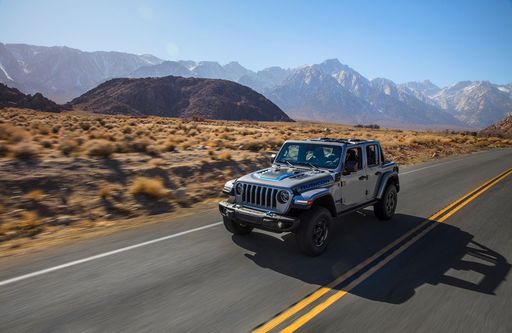
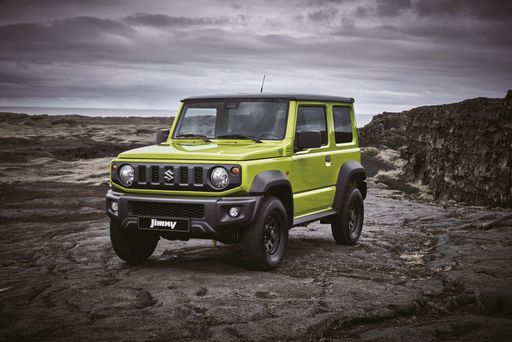
VS

Suzuki Jimny vs Jeep Wrangler comparison

Compare performance (102 HP vs 272 HP), boot space and price (25,300 £ vs 60,800 £ ) at a glance. Find out which car is the better choice for you – Suzuki Jimny or Jeep Wrangler?

Suzuki Jimny vs Jeep Wrangler: Key differences

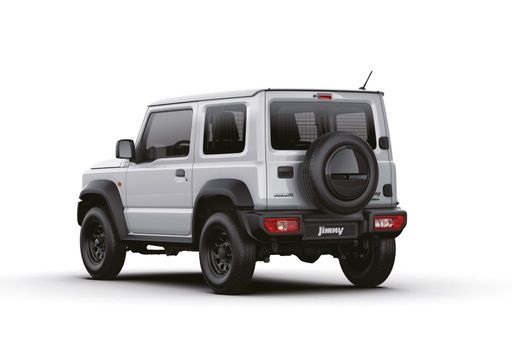
Suzuki Jimny

  • substantially cheaper
  • clearly more efficient
  • clearly lighter

Jeep Wrangler

  • substantially more power
  • significantly quicker 0–100 km/h
Jimny

Jeep Wrangler vs Suzuki Jimny: The Clash of Off-Road Titans

When it comes to rugged off-roaders, few names resonate as strongly as the Jeep Wrangler and Suzuki Jimny. Both bring a storied history of tackling challenging terrains, yet they offer distinct experiences tailored to different adventurers. Let's dive into their technical prowess and innovative features to see how these popular models measure up against each other.
Wrangler

Performance and Power

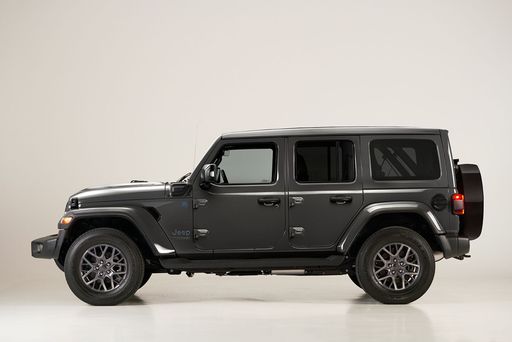
The Jeep Wrangler, with its 2024 model year, boasts a formidable performance backed by a plugin hybrid engine. Packing 380 horsepower and an impressive 637 Nm of torque, the Wrangler accelerates from 0 to 100 km/h in a brisk 6.5 seconds. It features all-wheel drive, ensuring that the power distribution is optimal for any off-road condition. In contrast, the Suzuki Jimny adopts a simpler approach with a 1.5-liter petrol engine offering 102 horsepower and 130 Nm of torque. The Jimny's 0 to 100 km/h time is a modest 12.8 seconds, but its lighter weight and manual transmission provide a highly engaging driving experience, especially for purists who enjoy a more tactile connection with their vehicle.

Jimny

Fuel Efficiency and Range

Fuel efficiency is an important consideration for off-road enthusiasts planning extended adventures. The Jeep Wrangler incorporates plugin hybrid technology, achieving an impressive consumption rate of 3.3 to 4 L/100km with an electric range of 38 to 42 km. Its CO2 emissions range from 74 to 91 g/km, placing it in the B category of CO2 efficiency. On the other hand, the Suzuki Jimny relies on its traditional petrol engine with an average consumption of 7.7 L/100km and CO2 emissions at 173 g/km, categorized under CO2 efficiency class F.

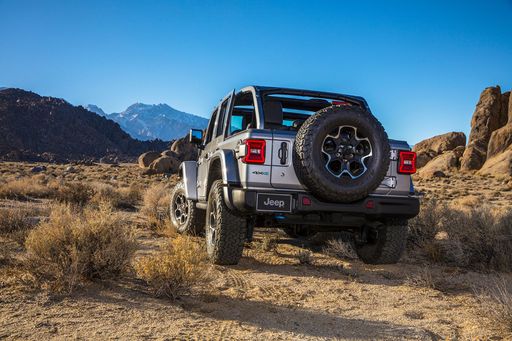
Wrangler

Design and Dimensions

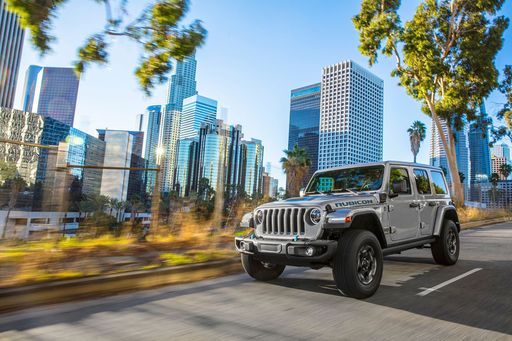
A unique differentiator between these two is their physical size. The Jeep Wrangler, at 4882 mm in length and 1894 mm in width, has a commanding road presence, offering ample room for five passengers. It stands at a height of up to 1848 mm, providing a substantial 533-liter trunk capacity, perfect for hauling gear. Conversely, the Jimny is distinctly compact, measuring 3645 mm in length and 1645 mm in width, with a height of 1705 mm. It seats only two, with a design focused on nimbleness and agility - ideal for narrow trails and urban environments.

Jimny

Tech and Innovation

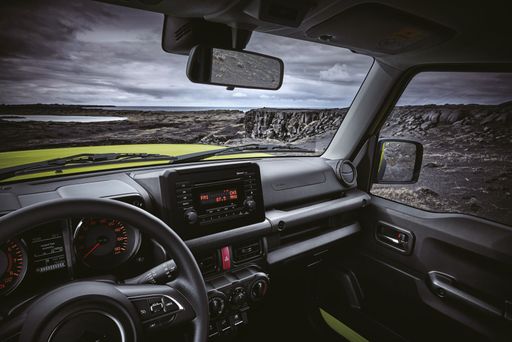
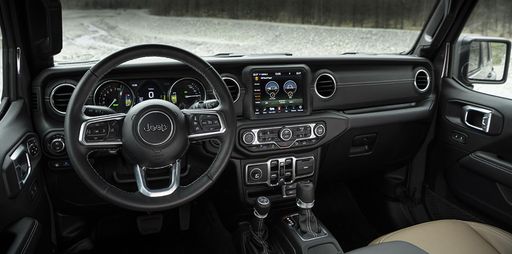
In terms of technology, the Jeep Wrangler leads with modern conveniences tailored for both on and off-road scenarios, incorporating advanced hybrid functionality and a suite of digital integrations aimed at enhancing navigation and connectivity. The Jimny, while more minimalist, provides a back-to-basics appeal, offering straightforward and practical features that prioritize reliability and ease of use in challenging conditions.

Wrangler

The Verdict

Ultimately, choosing between the Jeep Wrangler and Suzuki Jimny boils down to individual priorities. The Wrangler offers a powerful and luxurious experience with hybrid efficiency and spaciousness, making it ideal for those wild escapades without compromising on comfort. The Jimny, however, represents the true essence of a no-frills off-roading adventure, excellent for those who cherish mechanical simplicity and maneuverability in a more affordable and compact package. Both vehicles pay homage to the spirit of off-roading, each promising unique adventures in the great outdoors.

Here’s where it gets real: The technical differences in detail

Jimny

Costs and Efficiency:

Price and efficiency are often the first things buyers look at. Here it becomes clear which model has the long-term edge – whether at the pump, the plug, or in purchase price.

Suzuki Jimny is substantially cheaper – starting at 25,300 £ , while the Jeep Wrangler costs 60,800 £ . That’s a price difference of around 35,494 £.

Fuel consumption also shows a difference: the Suzuki Jimny uses 7.7 L/100km and is clearly more efficient than the Jeep Wrangler with 11.1 L/100km. The difference is about 3.4 L/100km.

Wrangler

Engine and Performance:

Power, torque and acceleration say a lot about how a car feels on the road. This is where you see which model delivers more driving dynamics.

When it comes to engine power, the Jeep Wrangler offers substantially more power – delivering 272 HP compared to 102 HP. That’s roughly 170 HP more horsepower.

When accelerating from 0 to 100 km/h, the Jeep Wrangler is significantly quicker – completing the sprint in 7.6 s, while the Suzuki Jimny takes 12.8 s. That’s about 5.2 s quicker.

There’s also a difference in torque: the Jeep Wrangler delivers substantially more torque with 400 Nm compared to 130 Nm. That’s about 270 Nm more.

Jimny

Space and Everyday Use:

Whether family car or daily driver – which one offers more room, flexibility and comfort?

Seats: Jeep Wrangler offers more seats – 5 vs 2.

In terms of curb weight, Suzuki Jimny is clearly lighter – 1,165 kg compared to 1,938 kg. The difference is around 773 kg.

When it comes to payload, the Jeep Wrangler carries clearly more – 556 kg compared to 270 kg. That’s a difference of about 286 kg.

Who wins the race in the data check?

The Jeep Wrangler is clearly superior overall in the objective data comparison.
This result only shows which model scores more points on paper – not which of the two cars feels right for you.

from £60,800
Wrangler

Jeep Wrangler

  • Engine Type : Petrol
  • Transmission : Automatic
  • Drive Type : All-Wheel Drive
  • Power HP : 272 HP
  • Consumption L/100km : 11.1 - 11.9 L/100km
Suzuki Jimny
Jeep Wrangler

Costs and Consumption

View detailed analysis

Engine and Performance

View detailed analysis

Dimensions and Body

View detailed analysis

Suzuki Jimny

Brimming with raucous charm and unabashed off-road spirit, the Suzuki Jimny makes light work of rough tracks while remaining surprisingly at home in city streets. It's a cheeky, no-nonsense companion for buyers who prefer character over conformity — think go-anywhere attitude in a pocket-sized package.

details

Jeep Wrangler

The Jeep Wrangler wears its go-anywhere attitude on its boxy shoulders, with exposed hinges, a removable top and a look that practically dares the tarmac to get in its way. Inside it’s simple and tough-minded, ready to swallow muddy boots and weekend gear, so if you crave honest off-road thrills rather than refined suburbia polish, the Wrangler is your unapologetic partner in adventure.

details
Suzuki Jimny
Jeep Wrangler

Costs and Consumption

Price
25,300 - 27,700 £
Price
60,800 - 62,500 £
Consumption L/100km
7.7 L/100km
Consumption L/100km
11.1 - 11.9 L/100km
Consumption kWh/100km
-
Consumption kWh/100km
-
Electric Range
-
Electric Range
-
Battery Capacity
-
Battery Capacity
-
co2
173 g/km
co2
250 - 269 g/km
Fuel tank capacity
40 L
Fuel tank capacity
-

Dimensions and Body

Body Type
Off-Roader
Body Type
Off-Roader
Seats
2
Seats
5
Doors
3
Doors
-
Curb weight
1,165 kg
Curb weight
1,938 - 2,028 kg
Trunk capacity
-
Trunk capacity
533 L
Length
3,645 mm
Length
-
Width
1,645 mm
Width
1,894 mm
Height
1,705 mm
Height
-
Max trunk capacity
863 L
Max trunk capacity
-
Payload
270 kg
Payload
546 - 556 kg

Engine and Performance

Engine Type
Petrol
Engine Type
Petrol
Transmission
Manuel
Transmission
Automatic
Transmission Detail
Manual Gearbox
Transmission Detail
Automatic Gearbox
Drive Type
All-Wheel Drive
Drive Type
All-Wheel Drive
Power HP
102 HP
Power HP
272 HP
Acceleration 0-100km/h
12.8 s
Acceleration 0-100km/h
7.6 s
Max Speed
145 km/h
Max Speed
-
Torque
130 Nm
Torque
400 Nm
Number of Cylinders
4
Number of Cylinders
4
Power kW
75 kW
Power kW
200 kW
Engine capacity
1,462 cm3
Engine capacity
1,995 cm3

General

Model Year
2,021 - 2,024
Model Year
2,024
CO2 Efficiency Class
F
CO2 Efficiency Class
G
Brand
Suzuki
Brand
Jeep
DriveDuel uses data analysis and artificial intelligence to evaluate vehicle data and create content. Content is regularly reviewed and improved. The displayed prices are estimates based on German list prices, adjusted to the respective country’s VAT. Country-specific registration taxes are not included. This information is not legally binding.