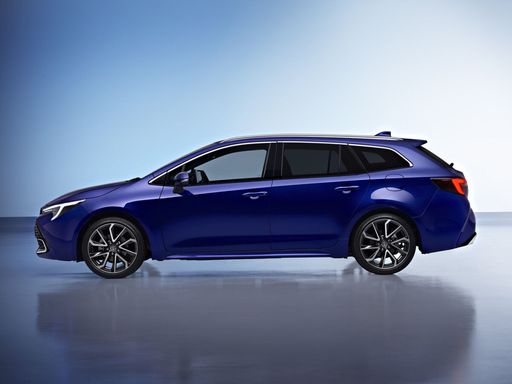
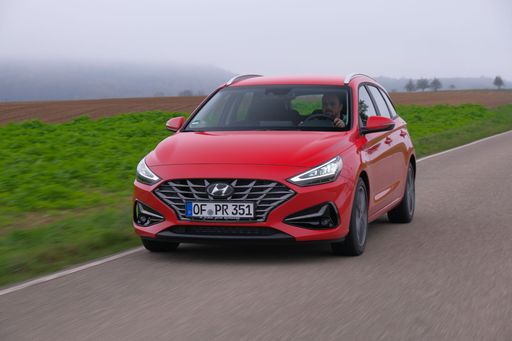
VS

Toyota Corolla Touring Sports vs Hyundai i30 Wagon comparison

Compare performance (178 HP vs 150 HP), boot space and price (29,600 £ vs 25,400 £ ) at a glance. Find out which car is the better choice for you – Toyota Corolla Touring Sports or Hyundai i30 Wagon?

Toyota Corolla Touring Sports vs Hyundai i30 Wagon: Key differences

Toyota Corolla Touring Sports

4.7 (1 Reviews)
rate
  • somewhat more power
  • visibly more efficient
  • clearly quicker 0–100 km/h
details

Hyundai i30 Wagon

4.3 (2 Reviews)
rate
  • moderately cheaper
  • slightly lighter
  • marginally more trunk space
details

All details on performance, efficiency, range and trunk space can be found in the technical comparison below – including user reviews for both models.

By Achim Sedelmaier

Corolla Touring Sports

Hyundai i30 Kombi vs. Toyota Corolla Touring Sports: A Comprehensive Comparison

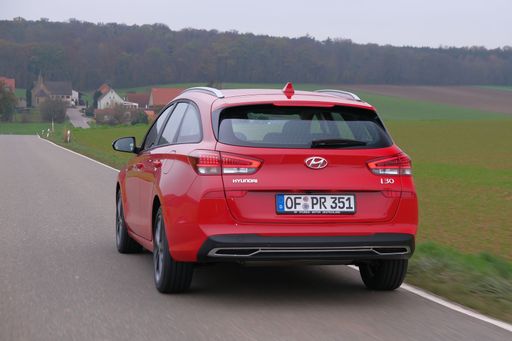
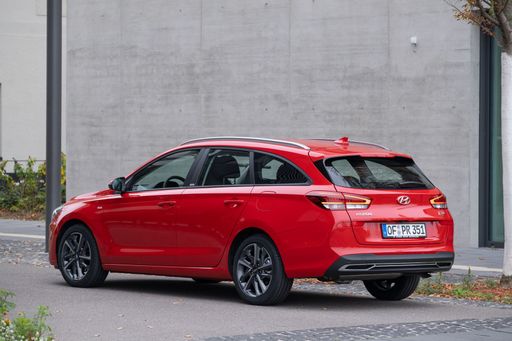
When it comes to practicality, style, and overall performance, the Hyundai i30 Kombi and Toyota Corolla Touring Sports have carved out their niches in the wagon segment. Both cars feature a spacious interior and innovative technology, but they also come with their unique sets of strengths and weaknesses. In this comparison, we'll delve into the technical aspects, innovations, and which of these two compact wagons reigns supreme.
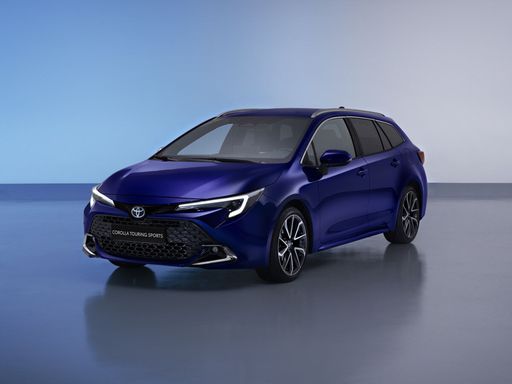
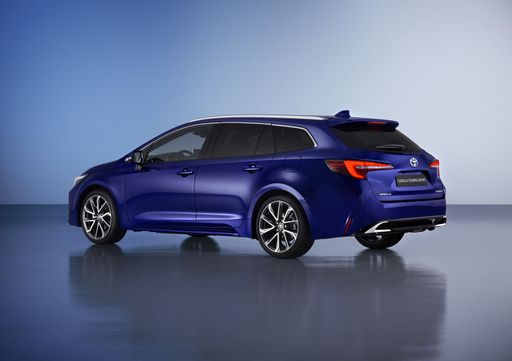
i30 Wagon

Engine and Performance: Power Under the Hood

In terms of engines, the Hyundai i30 Kombi offers a choice between petrol and mild hybrid configurations, with power outputs ranging from 100 HP to 140 HP. The available engines include a 998 cm³ three-cylinder and a 1482 cm³ four-cylinder, ensuring options for performance and efficiency. For those craving speed, the i30 Kombi can accelerate from 0 to 100 km/h in as little as 9.8 seconds for the more powerful variant, reaching a top speed of 197 km/h.

On the other hand, the Toyota Corolla Touring Sports features a more limited range of engine options, primarily focusing on full hybrid powertrains. The 1.8L and 2.0L four-cylinder engines deliver 140 HP and 196 HP, respectively, paired exclusively with a CVT transmission. The Corolla boasts impressive acceleration, hitting 100 km/h in just 7.5 seconds, with a maximum speed of 180 km/h.

Corolla Touring Sports

Fuel Efficiency and Eco-Friendliness

Fuel efficiency is a significant consideration in the compact wagon segment, and here, the Toyota Corolla Touring Sports takes the lead. With consumption figures as low as 4.4 L/100 km and CO2 emissions of only 100 g/km, it sets a benchmark for eco-conscious consumers.

In contrast, the Hyundai i30 Kombi offers several petrol configurations, with consumption rates ranging from 5.6 to 5.9 L/100 km, translating to CO2 emissions between 126 to 133 g/km. While still respectable, the i30 Kombi lags behind the Corolla in terms of environmental impact, making the latter the more enticing choice for the eco-friendly driver.

i30 Wagon

Interior and Comfort: Space and Technology

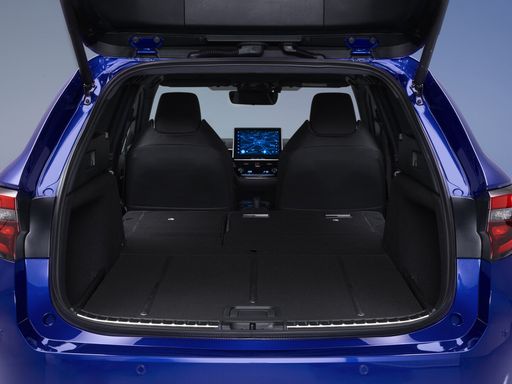
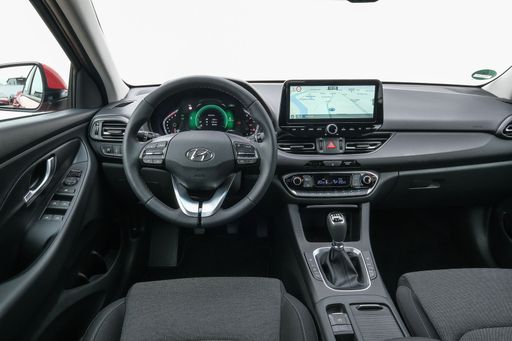
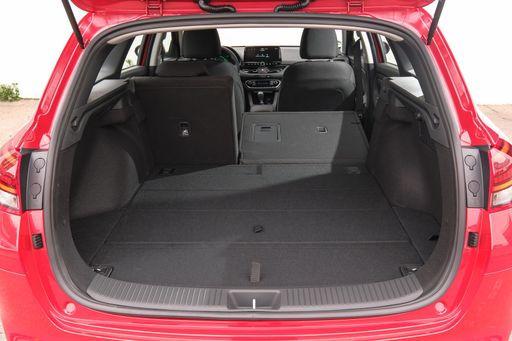
Both vehicles accommodate five passengers and prioritize comfort. The Hyundai i30 Kombi boasts an impressive trunk capacity of 602 liters, making it more suitable for those needing extra cargo space. The interior space is both stylish and functional, featuring high-quality materials and advanced infotainment systems, including a user-friendly touchscreen interface.

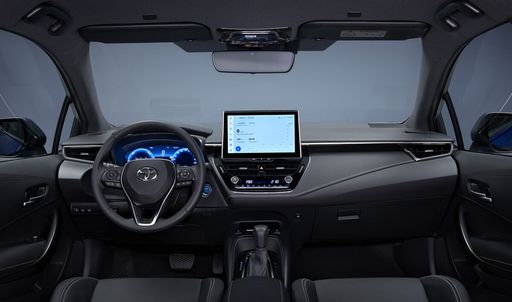
The Toyota Corolla Touring Sports, on the other hand, offers a slightly smaller trunk space ranging from 581 to 596 liters, depending on the trim. However, it compensates with a well-designed cabin that features comfortable seating and an intuitive layout. Toyota's focus on technology shines through with standard features like Apple CarPlay and Android Auto, providing seamless connectivity on the go.

Corolla Touring Sports

Safety Features: Driving with Confidence

When it comes to safety, both cars offer a comprehensive suite of features. The Hyundai i30 Kombi comes equipped with Hyundai's SmartSense safety technology, which includes advanced driver assistance systems such as lane-keeping assist, blind-spot monitoring, and automatic emergency braking. These features contribute to a high safety rating in crash tests.

The Toyota Corolla Touring Sports follows suit with its Toyota Safety Sense package, which includes adaptive cruise control, lane tracing assist, and pre-collision systems. This commitment to safety ensures that both vehicles provide a secure driving experience.

i30 Wagon

Conclusion: Choosing the Right Compact Wagon

Ultimately, the choice between the Hyundai i30 Kombi and Toyota Corolla Touring Sports comes down to personal priorities. The i30 Kombi shines with its spacious interior and versatile engine options, making it an excellent choice for families and those needing extra space. Meanwhile, the Corolla Touring Sports stands out for its exceptional fuel efficiency and advanced hybrid technology, appealing to drivers seeking an eco-friendly option.

In summary, both the Hyundai i30 Kombi and Toyota Corolla Touring Sports have their merits. It's advisable for potential buyers to consider their lifestyle needs, driving habits, and preferences to make an informed decision that best suits their requirements.

Here’s where it gets real: The technical differences in detail

Corolla Touring Sports

Costs and Efficiency:

When it comes to price and running costs, the biggest differences usually appear. This is often where you see which car fits your budget better in the long run.

Hyundai i30 Wagon is moderately cheaper – starting at 25,400 £ , while the Toyota Corolla Touring Sports costs 29,600 £ . That’s a price difference of around 4,191 £.

Fuel consumption also shows a difference: the Toyota Corolla Touring Sports uses 4.4 L/100km and is visibly more efficient than the Hyundai i30 Wagon with 5.9 L/100km. The difference is about 1.5 L/100km.

i30 Wagon

Engine and Performance:

Power, torque and acceleration are the classic benchmarks for car enthusiasts – and here, some clear differences start to show.

When it comes to engine power, the Toyota Corolla Touring Sports offers somewhat more power – delivering 178 HP compared to 150 HP. That’s roughly 28 HP more horsepower.

When accelerating from 0 to 100 km/h, the Toyota Corolla Touring Sports is clearly quicker – completing the sprint in 7.5 s, while the Hyundai i30 Wagon takes 9.1 s. That’s about 1.6 s quicker.

Corolla Touring Sports

Space and Everyday Use:

Cabin size, boot volume and payload all play a role in everyday practicality. Here, comfort and flexibility make the difference.

Both vehicles offer seating for 5 people.

In terms of curb weight, Hyundai i30 Wagon is slightly lighter – 1,340 kg compared to 1,485 kg. The difference is around 145 kg.

Looking at boot space, the Hyundai i30 Wagon offers marginally more boot space – 602 L compared to 596 L. That’s a difference of about 6 L.

When it comes to payload, the Hyundai i30 Wagon carries somewhat more – 490 kg compared to 440 kg. That’s a difference of about 50 kg.

Who wins the race in the data check?

The Toyota Corolla Touring Sports holds a decisive overall lead in the objective data comparison.
This result only shows which model scores more points on paper – not which of the two cars feels right for you.

from £29,600
Corolla Touring Sports

Toyota Corolla Touring Sports

  • Engine Type : Full Hybrid
  • Transmission : Automatic
  • Drive Type : Front-Wheel Drive
  • Power HP : 140 - 178 HP
  • Consumption L/100km : 4.4 L/100km
Toyota Corolla Touring Sports
Hyundai i30 Wagon

Costs and Consumption

View detailed analysis

Engine and Performance

View detailed analysis

Dimensions and Body

View detailed analysis

Toyota Corolla Touring Sports

The Toyota Corolla Touring Sports is a sensible yet stylish estate that blends everyday practicality with Toyota's trademark reliability, making it the kind of car that quietly gets on with family life without drama. Inside it's cleverly packaged for luggage and kids' gear and feels calm and comfortable on the road — sensible rather than flashy, but with enough character to make daily drives more enjoyable.

details

Hyundai i30 Wagon

The Hyundai i30 Wagon is a practical family hauler that pairs roomy, sensible packaging with clean, modern lines and a surprisingly composed chassis. Comfortable, well-equipped and priced to make rivals sweat, it quietly ticks the boxes for daily life and weekend escapes while still managing a little grin on twisty roads.

details
Toyota Corolla Touring Sports
Hyundai i30 Wagon

Costs and Consumption

Price
29,600 - 36,400 £
Price
25,400 - 32,300 £
Consumption L/100km
4.4 L/100km
Consumption L/100km
5.9 - 6.3 L/100km
Consumption kWh/100km
-
Consumption kWh/100km
-
Electric Range
-
Electric Range
-
Battery Capacity
-
Battery Capacity
-
co2
100 g/km
co2
134 - 142 g/km
Fuel tank capacity
43 L
Fuel tank capacity
-

Dimensions and Body

Body Type
Estate
Body Type
Estate
Seats
5
Seats
5
Doors
5
Doors
-
Curb weight
1,485 - 1,515 kg
Curb weight
1,340 - 1,460 kg
Trunk capacity
581 - 596 L
Trunk capacity
602 L
Length
4,650 mm
Length
-
Width
1,790 mm
Width
1,795 mm
Height
1,435 mm
Height
-
Max trunk capacity
1,591 - 1,606 L
Max trunk capacity
-
Payload
400 - 440 kg
Payload
450 - 490 kg

Engine and Performance

Engine Type
Full Hybrid
Engine Type
Petrol
Transmission
Automatic
Transmission
Manuel, Automatic
Transmission Detail
CVT
Transmission Detail
Manual Gearbox, Dual-Clutch Automatic
Drive Type
Front-Wheel Drive
Drive Type
Front-Wheel Drive
Power HP
140 - 178 HP
Power HP
115 - 150 HP
Acceleration 0-100km/h
7.5 - 9.2 s
Acceleration 0-100km/h
9.1 - 11.9 s
Max Speed
180 km/h
Max Speed
-
Torque
-
Torque
172 - 250 Nm
Number of Cylinders
4
Number of Cylinders
3 - 4
Power kW
103 - 131 kW
Power kW
85 - 110 kW
Engine capacity
1,798 - 1,987 cm3
Engine capacity
998 - 1,598 cm3

General

Model Year
2025
Model Year
2026
CO2 Efficiency Class
C
CO2 Efficiency Class
D, E
Brand
Toyota
Brand
Hyundai
DriveDuel uses data analysis and artificial intelligence to evaluate vehicle data and create content. Content is regularly reviewed and improved. The displayed prices are estimates based on German list prices, adjusted to the respective country’s VAT. Country-specific registration taxes are not included. This information is not legally binding.