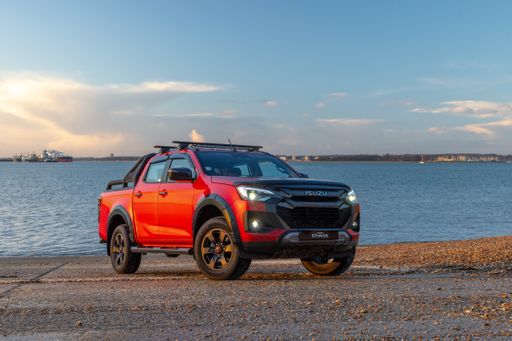
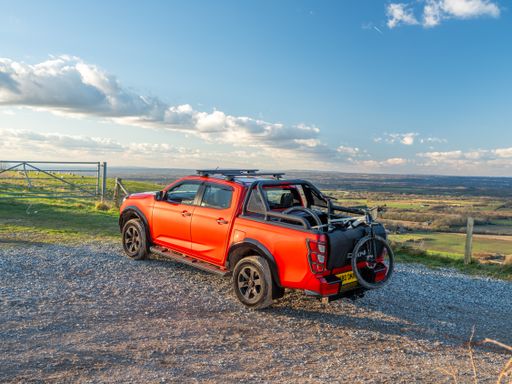
VS

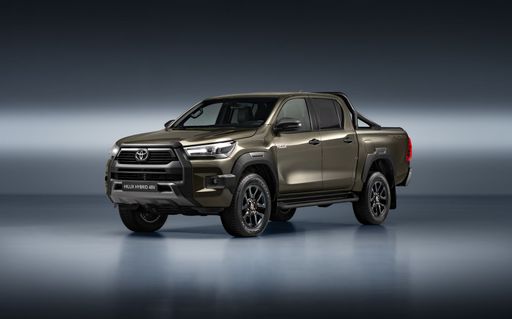
Toyota Hilux vs Isuzu D-Max comparison

Compare performance (204 HP vs 163 HP), boot space and price (45,800 £ vs 35,900 £ ) at a glance. Find out which car is the better choice for you – Toyota Hilux or Isuzu D-Max?

Toyota Hilux vs Isuzu D-Max: Key differences

Toyota Hilux

4.2 (3 Reviews)
rate
  • noticeably more power
details

Isuzu D-Max

4.7 (2 Reviews)
rate
  • clearly cheaper
  • slightly more efficient
  • slightly lighter
details

All details on performance, efficiency, range and trunk space can be found in the technical comparison below – including user reviews for both models.

By Achim Sedelmaier

Hilux

Isuzu D‑Max vs Toyota Hilux: which pick-up fits you?

The Isuzu D-Max and Toyota Hilux are workhorse icons, but they go about the job differently. In this direct Isuzu D-Max VS Toyota Hilux comparison, the Isuzu leans on value, safety tech and everyday usability, while the Toyota trades on effortless shove and hard-earned toughness. Day to day, that means the D‑Max feels pragmatic and cost-savvy, the Hilux more brawny and unflustered with a load. Both are undeniably trucks in their manners, yet their personalities and running costs point to different buyers. Here’s how those contrasts play out in real life.
D-Max

Driving character and power delivery

The Hilux’s engine serves up a stronger low‑down push, so it feels more relaxed when pulling up hills or getting a trailer moving. The D‑Max is no slouch, but it asks for a bit more throttle and the gearbox works harder if you’re hauling, which some drivers will notice on undulating routes. Unladen, both can hop over sharp bumps, with the Hilux settling as you add weight and the D‑Max feeling tidier the moment there’s gear in the back. The Hilux GR Sport II brings a touch more precision and confidence at speed, while the D‑Max counters with effective traction aids that make rough tracks feel straightforward. If you value easy torque, the Toyota suits; if you prefer predictable responses and strong electronic support off‑road, the Isuzu appeals.

Hilux

Ride comfort and cabin feel

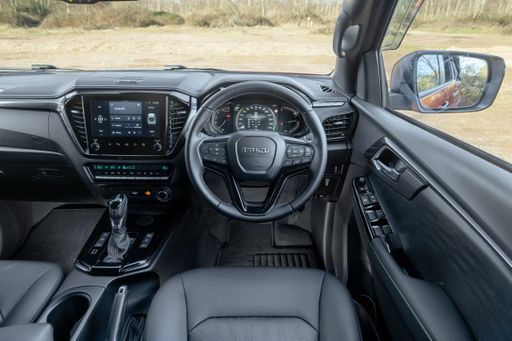
Neither chases SUV plushness, but they prioritize comfort differently. The D‑Max’s cabin is tidy and logical, with supportive seats and a driving position that suits long hours, though engine and road noise are more present than in the cushiest rivals. The Hilux sits you more upright and its rear bench is steeper, which taller passengers feel on longer trips, yet the front seats give a commanding view and the truck feels solidly screwed together. Infotainment is the weak link on both: the D‑Max’s smartphone mirroring helps but built‑in navigation is absent, while the Hilux’s screen and camera look dated. Safety kit is a D‑Max strong suit, coming generously as standard, whereas the Hilux keeps things straightforward but less feature‑rich by default.

D-Max

Practicality, load bed and working life

Both trucks are built to graft, yet they prioritize utility in different ways. The D‑Max tends to carry a touch more in the bed and offers a broad accessory ecosystem, making it easy to tailor for trades, towing gear or leisure lids and racks. The Hilux matches the spirit with a tough load bay and the handy trick of a flip‑up rear bench, creating secure interior space for tools when the weather turns. Tie‑downs, step‑in height and robust plastics are work‑ready in either, but the Isuzu’s value‑oriented trim walk makes speccing a business fleet simpler. If your week swings between payload, trailer duty and kit organization, the D‑Max’s configurability stands out; if you want rugged cabin flexibility and a famously tough bed, the Hilux delivers.

City manners and long‑distance behavior

In town, both are big, yet the D‑Max is a shade friendlier to place, helped by clearer cameras and straightforward controls. The Hilux’s turning circle feels broader and its camera feed looks grainier, so tight multi‑storeys demand patience and mirrors. On the motorway, the Hilux tracks with calm authority and its stronger pull means fewer kickdowns on long inclines. The D‑Max cruises securely too, but you hear a bit more wind and tyre roar; in return, it generally sips less fuel on like‑for‑like journeys. If your life mixes urban errands with A‑road slogs, the Isuzu is the easier live‑with pick; for long rural stints and heavy‑load autoroute runs, the Toyota’s laid‑back stride convinces.

Value, ownership and who each suits

The D‑Max undercuts the Hilux to buy and tends to run leaner at the pumps, while packing in driver‑assist and safety features that appeal to fleets and family users alike. That makes it a compelling fit for cost‑focused businesses, regular towers who watch fuel bills, and buyers who want modern safety without climbing the price ladder. The Hilux asks more upfront, but answers with renowned robustness, strong residuals and that easy torque that keeps tough jobs feeling simple. If you spend real time off‑road, venture to remote sites or tow heavy gear in hilly country, the Toyota’s character pays off. If you prioritize value, day‑to‑day usability and safety kit, the Isuzu lines up better—read on for the technical comparison that underpins these differences.

Here’s where it gets real: The technical differences in detail

Hilux

Costs and Efficiency:

When it comes to price and running costs, the biggest differences usually appear. This is often where you see which car fits your budget better in the long run.

Isuzu D-Max is clearly cheaper – starting at 35,900 £ , while the Toyota Hilux costs 45,800 £ . That’s a price difference of around 9,944 £.

Fuel consumption also shows a difference: the Isuzu D-Max uses 8.6 L/100km and is slightly more efficient than the Toyota Hilux with 9.8 L/100km. The difference is about 1.2 L/100km.

D-Max

Engine and Performance:

Power, torque and acceleration are the classic benchmarks for car enthusiasts – and here, some clear differences start to show.

When it comes to engine power, the Toyota Hilux offers noticeably more power – delivering 204 HP compared to 163 HP. That’s roughly 41 HP more horsepower.

There’s also a difference in torque: the Toyota Hilux delivers slightly more torque with 500 Nm compared to 400 Nm. That’s about 100 Nm more.

Hilux

Space and Everyday Use:

Whether family car or daily driver – which one offers more room, flexibility and comfort?

Both vehicles offer seating for 5 people.

In terms of curb weight, Isuzu D-Max is slightly lighter – 1,900 kg compared to 2,250 kg. The difference is around 350 kg.

When it comes to payload, the Isuzu D-Max carries somewhat more – 1,115 kg compared to 960 kg. That’s a difference of about 155 kg.

Who wins the race in the data check?

The Toyota Hilux holds a decisive overall lead in the objective data comparison.
This result only shows which model scores more points on paper – not which of the two cars feels right for you.

from £45,800
Hilux

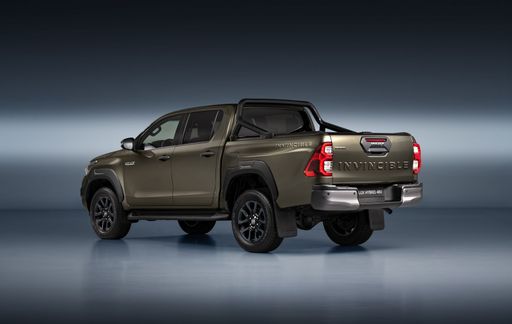
Toyota Hilux

  • Engine Type Diesel MHEV, Electric
  • Transmission Automatic
  • Drive Type All-Wheel Drive
  • Power HP 196 - 204 HP
  • Consumption L/100km 9.8 - 10 L/100km
  • Consumption kWh/100km 24.3 kWh/100km
  • Electric Range 257 km
Toyota Hilux
Isuzu D-Max

Costs and Consumption

View detailed analysis

Engine and Performance

View detailed analysis

Dimensions and Body

View detailed analysis

Toyota Hilux

The Toyota Hilux is a no-nonsense pick-up that blends worksite toughness with proper off-road ability, built to shrug off punishment and keep going long after fancier rivals give up. It won’t win any beauty contests, but buyers who want a practical, rugged truck that simply gets the job done will appreciate its honest, hard-working character.

details

Isuzu D-Max

The Isuzu D-Max wears its workhorse credentials with quiet confidence, delivering rugged practicality and a cabin that keeps things simple and sensible. If you want a dependable truck that gets on with the job without fuss—and even manages a bit of comfort on the road—the D-Max is a smart, no-nonsense pick.

details
Toyota Hilux
Isuzu D-Max

Costs and Consumption

Price
45,800 - 65,500 £
Price
35,900 - 52,500 £
Consumption L/100km
9.8 - 10 L/100km
Consumption L/100km
8.6 - 9.1 L/100km
Consumption kWh/100km
24.3 kWh/100km
Consumption kWh/100km
-
Electric Range
257 km
Electric Range
-
Battery Capacity
-
Battery Capacity
-
co2
0 - 264 g/km
co2
225 - 237 g/km
Fuel tank capacity
-
Fuel tank capacity
-

Dimensions and Body

Body Type
Pickup
Body Type
Pickup
Seats
5
Seats
2 - 5
Doors
-
Doors
-
Curb weight
2,250 - 2,420 kg
Curb weight
1,900 - 2,130 kg
Trunk capacity
-
Trunk capacity
-
Length
-
Length
-
Width
1,855 - 1,885 mm
Width
1,810 - 1,870 mm
Height
-
Height
-
Max trunk capacity
-
Max trunk capacity
-
Payload
715 - 960 kg
Payload
970 - 1,115 kg

Engine and Performance

Engine Type
Diesel MHEV, Electric
Engine Type
Diesel
Transmission
Automatic
Transmission
Manuel, Automatic
Transmission Detail
Automatic Gearbox, Reduction Gearbox
Transmission Detail
Manual Gearbox, Automatic Gearbox
Drive Type
All-Wheel Drive
Drive Type
Rear-Wheel Drive, All-Wheel Drive
Power HP
196 - 204 HP
Power HP
163 HP
Acceleration 0-100km/h
9.9 s
Acceleration 0-100km/h
-
Max Speed
-
Max Speed
-
Torque
474 - 500 Nm
Torque
400 Nm
Number of Cylinders
4
Number of Cylinders
4
Power kW
144 - 150 kW
Power kW
120 kW
Engine capacity
2,755 cm3
Engine capacity
2,164 cm3

General

Model Year
2,024 - 2,026
Model Year
2026
CO2 Efficiency Class
G, A
CO2 Efficiency Class
G
Brand
Toyota
Brand
Isuzu
DriveDuel uses data analysis and artificial intelligence to evaluate vehicle data and create content. Content is regularly reviewed and improved. The displayed prices are estimates based on German list prices, adjusted to the respective country’s VAT. Country-specific registration taxes are not included. This information is not legally binding.