VS

Toyota Urban Cruiser vs Suzuki Across comparison

Compare performance (184 HP vs 306 HP), boot space and price (33,400 £ vs 49,900 £ ) at a glance. Find out which car is the better choice for you – Toyota Urban Cruiser or Suzuki Across?

Toyota Urban Cruiser vs Suzuki Across: Key differences

Toyota Urban Cruiser

4 (1 Reviews)
rate
  • substantially cheaper
  • clearly more electric range
  • a bit lighter
details

Suzuki Across

5 (1 Reviews)
rate
  • noticeably more power
  • visibly quicker 0–100 km/h
  • noticeably more trunk space
details

By Achim Sedelmaier

Urban Cruiser

Overview: Suzuki Across VS Toyota Urban Cruiser — two different ideas of a small SUV

Suzuki Across VS Toyota Urban Cruiser pairs a spacious, plug‑in‑focused SUV against a city‑centric electric B‑SUV, and that framing explains most buyer decisions right away. The Suzuki Across feels like a deliberately practical long‑distance tool with PHEV reserves and a very roomy rear, while the Toyota Urban Cruiser is designed to be easy to live with in tight streets and busy parking lots. Across asks you to accept a higher purchase price and a heavier presence for the benefits of traction, towing flexibility and real battery‑first daily driving when you plug in. The Urban Cruiser trades those long‑range comforts for nimble city manners, a sliding rear bench and simpler running costs if you mostly drive locally. Read on for how those trade‑offs play out in comfort, practicality and everyday usability before the technical figures make them official.
Across

Character and driving feel

The Suzuki Across drives with punch and purpose: acceleration is strong and its drivetrain gives a confident, almost effortless surge, but that comes with a heavier, more planted feel and the typical drivetrain noise under load. The Toyota Urban Cruiser feels lighter on its feet, steering and parking are easier, and the optional AWD gives it surprising grip for a small EV, but it never has the Across’s momentum or highway composure. Where the Across rewards steady, longer runs with a surefooted gait, the Urban Cruiser makes city manoeuvres and short hops feel more engaging and less fussy. Choosing between them is a question of temperament — steady, powerful progress with the Across versus agile, urban‑minded responsiveness with the Urban Cruiser.

Comfort and long‑distance behavior

For long motorway days the Suzuki Across provides more space and a higher seating position that soothes fatigue, though wind and drivetrain noise become noticeable at speed and the ride can feel weighty over short, sharp imperfections. The Toyota Urban Cruiser is pleasant around town and can be comfortable on short intercity trips, but its suspension sometimes polters and the cabin gets busy on sustained faster roads. If you prioritise rear‑seat comfort and less frequent charging, the Across’s packaging and seat room make long stints easier on passengers. If most of your miles are city or short bursts, the Urban Cruiser’s compactness and easy controls produce a more relaxing daily experience despite less highway serenity.

Practicality and family use

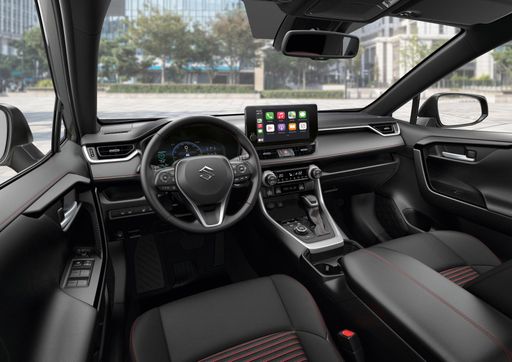
The Suzuki Across is the more pragmatic family carrier when it comes to outright space: its rear room and luggage area are noticeably more generous and the layout suits taller passengers and loaded trunk use. The Toyota Urban Cruiser answers with clever everyday flexibility — a sliding, split rear bench and configurable seats make it easier to juggle child seats and passengers, but that flexibility comes at the cost of a much smaller usable boot when the bench is positioned for legroom. Across brings simple, straightforward storage and bulk capability; Urban Cruiser offers modularity and smarter in‑day adjustments. Families will pick based on whether they need raw cargo and rear space (Across) or day‑to‑day configurability and easier access (Urban Cruiser).

City friendliness and daily usability

In dense urban settings the Toyota Urban Cruiser clearly has the edge: short turning, lighter steering, intuitive controls and features like wireless phone mirroring and thermal management that make cold mornings easier. The Suzuki Across can run quietly in electric mode for daily errands and offers strong traction for slippery suburban drives, but its larger footprint and higher price make it less convenient in tight parking or narrow streets. Urban Cruiser’s packaging prioritises small‑car convenience, while Across prioritises usable electric range and robustness for mixed driving. Your daily pattern — cramped city runs or mixed urban‑motorway life — will determine which usability wins out.

Buyer fit: who each car really suits

If you plug in every day, carry taller passengers, need a roomy boot and value strong on‑demand performance (and are willing to accept a higher purchase price and some highway noise), the Suzuki Across is the more suitable pick. If your life is mainly urban, you prize easy parking, a sliding rear bench for child seats and straightforward EV ownership with a lower asking price, the Toyota Urban Cruiser fits better. The Across leans toward duty‑bound families and commuters who can use its battery and traction regularly, while the Urban Cruiser targets first‑time EV buyers, city dwellers and those who value manoeuvrability over long‑distance polish. Read the technical comparison next to see how range, charging, power and luggage numbers translate the practical differences described here into measurable trade‑offs.

Here’s where it gets real: The technical differences in detail

Urban Cruiser

Costs and Efficiency:

Looking at overall running costs, both models reveal some interesting differences in everyday economy.

Toyota Urban Cruiser is substantially cheaper – starting at 33,400 £ , while the Suzuki Across costs 49,900 £ . That’s a price difference of around 16,457 £.

As for electric range, the Toyota Urban Cruiser offers clearly more range – reaching up to 426 km, about 351 km more than the Suzuki Across.

Across

Engine and Performance:

Under the bonnet, it becomes clear which model is tuned for sportiness and which one takes the lead when you hit the accelerator.

When it comes to engine power, the Suzuki Across offers noticeably more power – delivering 306 HP compared to 184 HP. That’s roughly 122 HP more horsepower.

When accelerating from 0 to 100 km/h, the Suzuki Across is visibly quicker – completing the sprint in 6 s, while the Toyota Urban Cruiser takes 7.4 s. That’s about 1.4 s quicker.

Space and Everyday Use:

Whether family car or daily driver – which one offers more room, flexibility and comfort?

Both vehicles offer seating for 5 people.

In terms of curb weight, Toyota Urban Cruiser is a bit lighter – 1,839 kg compared to 2,075 kg. The difference is around 236 kg.

Looking at boot space, the Suzuki Across offers noticeably more boot space – 490 L compared to 310 L. That’s a difference of about 180 L.

When it comes to payload, the Suzuki Across carries marginally more – 435 kg compared to 421 kg. That’s a difference of about 14 kg.

Who wins the race in the data check?

The Toyota Urban Cruiser stands well ahead of its rival in the objective data comparison.
This result only shows which model scores more points on paper – not which of the two cars feels right for you.

from £33,400
Urban Cruiser

Toyota Urban Cruiser

  • Engine Type Electric
  • Transmission Automatic
  • Drive Type Front-Wheel Drive, All-Wheel Drive
  • Power HP 174 - 184 HP
  • Consumption kWh/100km 15.1 - 16.6 kWh/100km
  • Electric Range 395 - 426 km
Toyota Urban Cruiser
Suzuki Across

Costs and Consumption

View detailed analysis

Engine and Performance

View detailed analysis

Dimensions and Body

View detailed analysis

Toyota Urban Cruiser

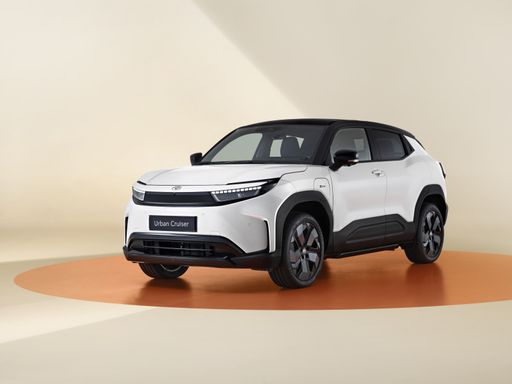
The Toyota Urban Cruiser is a compact SUV that offers a blend of style and practicality, making it well-suited for urban living. It captures attention with its bold design, while providing a high driving position that enhances visibility and control on city roads. Inside, the Urban Cruiser offers comfortable seating and a range of features that cater to both driver and passengers, emphasizing convenience and everyday usability.

details

Suzuki Across

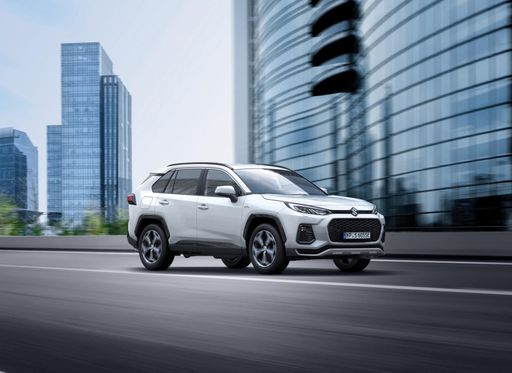
The Suzuki Across is Suzuki's take on a roomy, efficient plug-in SUV handed down from its Toyota cousin, marrying sensible practicality with a polished, grown-up driving character. It won't thrill those chasing sporty drama, but for buyers who value measured refinement, low running costs and lots of usable space, it's an unexpectedly accomplished and subtly premium package.

details
Toyota Urban Cruiser
Suzuki Across

Costs and Consumption

Price
33,400 - 38,600 £
Price
49,900 £
Consumption L/100km
-
Consumption L/100km
1 L/100km
Consumption kWh/100km
15.1 - 16.6 kWh/100km
Consumption kWh/100km
-
Electric Range
395 - 426 km
Electric Range
75 km
Battery Capacity
-
Battery Capacity
-
co2
0 g/km
co2
22 g/km
Fuel tank capacity
-
Fuel tank capacity
55 L

Dimensions and Body

Body Type
SUV
Body Type
SUV
Seats
5
Seats
5
Doors
-
Doors
5
Curb weight
1,839 - 1,939 kg
Curb weight
2,075 kg
Trunk capacity
306 - 310 L
Trunk capacity
490 L
Length
-
Length
4,635 mm
Width
1,800 mm
Width
1,855 mm
Height
-
Height
1,690 mm
Max trunk capacity
-
Max trunk capacity
1,604 L
Payload
411 - 421 kg
Payload
435 kg

Engine and Performance

Engine Type
Electric
Engine Type
Plugin Hybrid
Transmission
Automatic
Transmission
Automatic
Transmission Detail
Reduction Gearbox
Transmission Detail
CVT
Drive Type
Front-Wheel Drive, All-Wheel Drive
Drive Type
All-Wheel Drive
Power HP
174 - 184 HP
Power HP
306 HP
Acceleration 0-100km/h
7.4 - 8.7 s
Acceleration 0-100km/h
6 s
Max Speed
-
Max Speed
180 km/h
Torque
193 - 307 Nm
Torque
-
Number of Cylinders
-
Number of Cylinders
4
Power kW
128 - 135 kW
Power kW
225 kW
Engine capacity
-
Engine capacity
2,487 cm3

General

Model Year
2026
Model Year
2024
CO2 Efficiency Class
A
CO2 Efficiency Class
B
Brand
Toyota
Brand
Suzuki
DriveDuel uses data analysis and artificial intelligence to evaluate vehicle data and create content. Content is regularly reviewed and improved. The displayed prices are estimates based on German list prices, adjusted to the respective country’s VAT. Country-specific registration taxes are not included. This information is not legally binding.