
 Deutschland
 France
 Nederland
 Great Britain
 Sverige
 Danmark
 Suomi
Suomi Italia
 Polska
 Česko
Česko España
EX90
VS
Volvo EX90 vs Kia EV9 comparison
Compare performance (680 HP vs 508 HP), boot space and price (72,200 £ vs 54,600 £ ) at a glance. Find out which car is the better choice for you – Volvo EX90 or Kia EV9?
Volvo EX90 vs Kia EV9: Key differences
All details on performance, efficiency, range and trunk space can be found in the technical comparison below – including user reviews for both models.
EV9
Introducing the Battle of the Electric SUVs: Kia EV9 vs. Volvo EX90
The automotive landscape is rapidly changing, with electric vehicles leading the way towards a more sustainable future. Among the latest contenders in the electric SUV segment are the Kia EV9 and the Volvo EX90. Both models embody the innovative spirit of their respective brands while offering unique features and capabilities that cater to the diverse needs of modern drivers. In this comparison, we will delve into their technical specifications, innovative technologies, and overall performance to help you decide which electric SUV reigns supreme.
EX90
Performance and Powertrains
When it comes to performance, the Kia EV9 offers an impressive selection of powertrains tailored to various driving preferences. With two configurations—both Rear-Wheel Drive (RWD) and All-Wheel Drive (AWD)—the EV9 boasts power outputs ranging from 204 HP to a staggering 385 HP. The EV9 is equipped with a 99.8 kWh battery, translating to an electric range of up to 563 km. Accelerating from 0 to 100 km/h takes as little as 5.3 seconds, showcasing its robust performance capabilities.
On the other hand, while specific performance metrics for the Volvo EX90 have yet to be released, the vehicle is expected to emphasize performance coupled with safety. Historically, Volvo vehicles have balanced power and efficiency, and we can expect the EX90 to follow suit with a competitive range and impressive acceleration. Anticipated power outputs may aim to complement its reputation for being a family-friendly yet performance-oriented SUV.
EV9
Design and Dimensions
The Kia EV9 features a bold and angular design that is both modern and functional. Its dimensions are generous, with a length of 5010 mm, width of 1980 mm, and height of 1755 mm. This ample size provides not only a striking road presence but also a spacious interior that accommodates 6 to 7 passengers, along with a trunk capacity of 333 liters, perfect for all your cargo needs.
The Volvo EX90 also promises a striking design, though exact specifications are still under wraps. Historical trends suggest that Volvo will likely continue its tradition of elegant Scandinavian design, with a focus on aerodynamics and aesthetics that enhance overall efficiency. Spaciousness is expected to be a hallmark of the EX90, catering to family comfort and versatility.
EX90
Safety Innovations
Safety remains a critical factor for many buyers, and here is where Volvo shines. The brand has long been synonymous with safety innovations, and the EX90 is anticipated to include cutting-edge safety features that may include advanced driver-assistance systems, a robust suite of sensors, and potentially even autonomous driving capabilities. This commitment to safety seeks to enhance peace of mind for drivers and passengers alike.
In contrast, Kia is also making strides in safety with the EV9. With innovations such as advanced lane-keeping assist, adaptive cruise control, and a comprehensive airbag system, the EV9 is designed to keep its occupants safe. Both models are expected to earn high safety ratings, but Volvo may edge out the competition given its reputation and experience in safety engineering.
EV9
Charging and Efficiency
Efficiency is crucial for electric SUVs, and the Kia EV9 does not disappoint. With energy consumption figures ranging from 20.2 to 22.8 kWh/100km, the EV9 strikes a balance between performance and energy efficiency. Additionally, its 99.8 kWh battery not only powers the vehicle effectively but also supports fast charging capabilities, allowing drivers to recharge their vehicles quickly at compatible stations.
While specific figures for the Volvo EX90’s charging capabilities are yet to be released, we expect it to align with industry standards, likely offering robust fast-charging infrastructure to enhance convenience for its drivers. As electric vehicle technology progresses, rapid charging and range efficiency will be critical factors in its appeal.
EX90
Conclusion: The Future Looks Bright
In the showdown between the Kia EV9 and the Volvo EX90, both electric SUVs bring unique strengths to the table. The EV9 grabs attention with its performance, spaciousness, and impressive range, while the Volvo EX90 is anticipated to uphold its reputation for safety and premium quality. Ultimately, your choice may hinge on personal brand preference, design choices, and which features resonate most with your lifestyle. As the electric vehicle market continues to flourish, both of these models are poised to make a significant impact as we transition to a greener automotive future.
Here’s where it gets real: The technical differences in detail
EX90
Costs and Efficiency:
Looking at overall running costs, both models reveal some interesting differences in everyday economy.
Kia EV9 is noticeably cheaper – starting at 54,600 £ , while the Volvo EX90 costs 72,200 £ . That’s a price difference of around 17,571 £.
In terms of energy consumption, the Volvo EX90 is very slightly more efficient: consuming 17.8 kWh/100km compared to 19.5 kWh/100km for the Kia EV9. That’s a difference of about 1.7 kWh/100km.
As for electric range, the Volvo EX90 offers very slightly more range – reaching up to 620 km, about 57 km more than the Kia EV9.
EV9
Engine and Performance:
Under the bonnet, it becomes clear which model is tuned for sportiness and which one takes the lead when you hit the accelerator.
When it comes to engine power, the Volvo EX90 offers clearly more power – delivering 680 HP compared to 508 HP. That’s roughly 172 HP more horsepower.
When accelerating from 0 to 100 km/h, the Volvo EX90 is barely quicker – completing the sprint in 4.2 s, while the Kia EV9 takes 4.6 s. That’s about 0.4 s quicker.
There’s also a difference in torque: the Volvo EX90 delivers a bit more torque with 870 Nm compared to 740 Nm. That’s about 130 Nm more.
EX90
Space and Everyday Use:
Whether family car or daily driver – which one offers more room, flexibility and comfort?
Both vehicles offer seating for 7 people.
In terms of curb weight, Kia EV9 is barely lighter – 2,392 kg compared to 2,555 kg. The difference is around 163 kg.
When it comes to payload, the Kia EV9 carries marginally more – 615 kg compared to 605 kg. That’s a difference of about 10 kg.
Who wins the race in the data check?
The Volvo EX90 stands out in the key areas in the objective data comparison.
This result only shows which model scores more points on paper – not which of the two cars feels right for you.
from £72,200
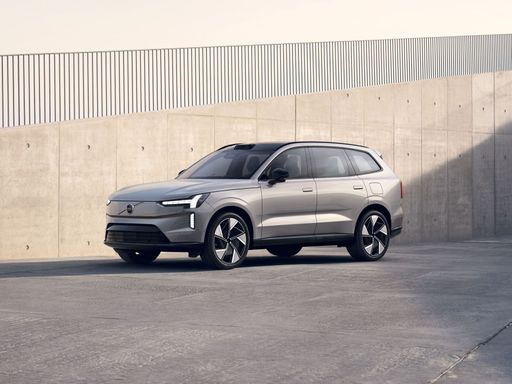
Volvo EX90
Volvo EX90
Kia EV9
Costs and Consumption
View detailed analysis
View detailed analysis
Engine and Performance
View detailed analysis
View detailed analysis
Dimensions and Body
View detailed analysis
View detailed analysis
Volvo EX90
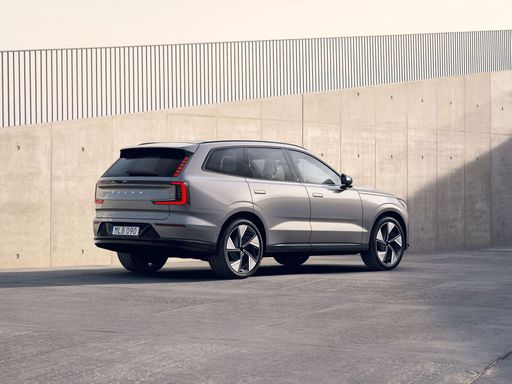
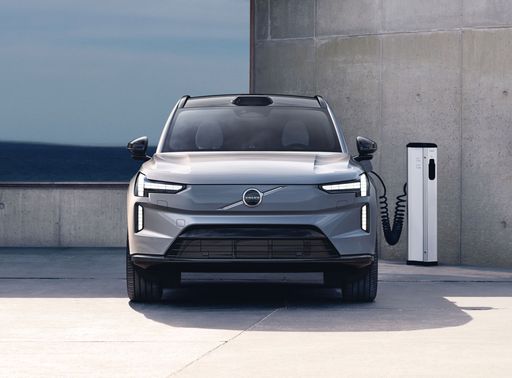
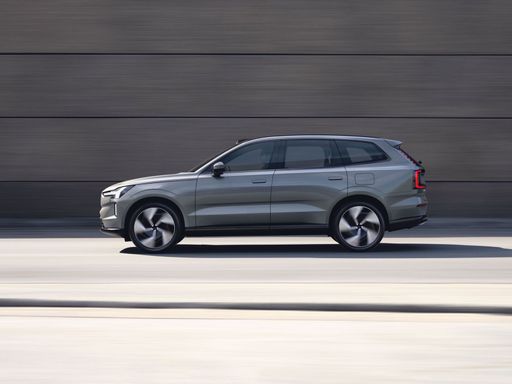
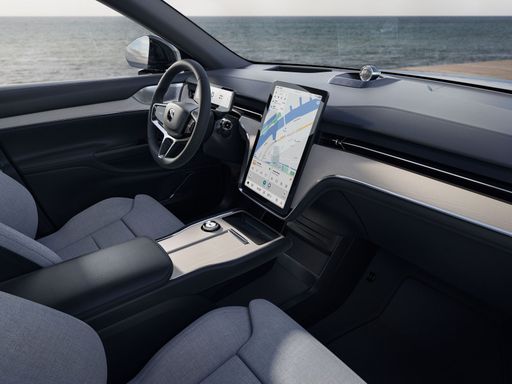
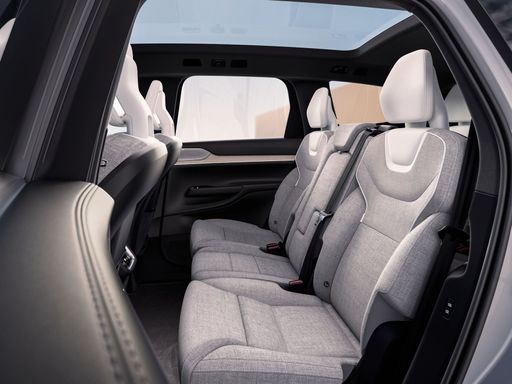
The Volvo EX90 feels like a Scandinavian fortress on wheels, combining serene luxury with smart safety features that make everyday driving remarkably calm and confident. It dresses cutting-edge electric technology in understated elegance, so buyers who want peace of mind without shouting about it will find it hard to resist.
details
Kia EV9
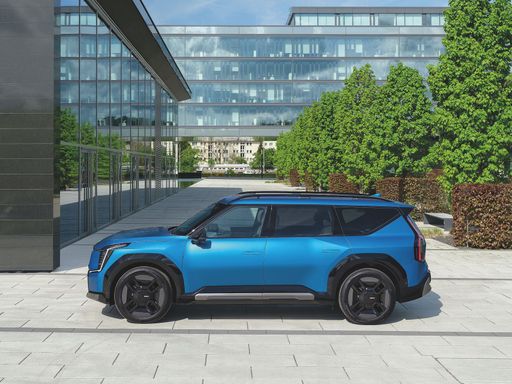
The Kia EV9 is a bold, boxy electric SUV that looks like it could swallow your luggage and the in‑laws, with an interior that feels more lounge than cockpit and a presence that makes smaller rivals suddenly feel shy. On the road it delivers calm long‑distance composure with enough shove to keep overtakes effortless, and its tech and practicality make it an easy, sensible choice for buyers who want electric without compromise.
details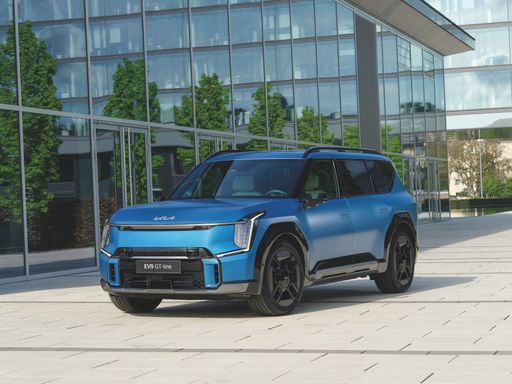

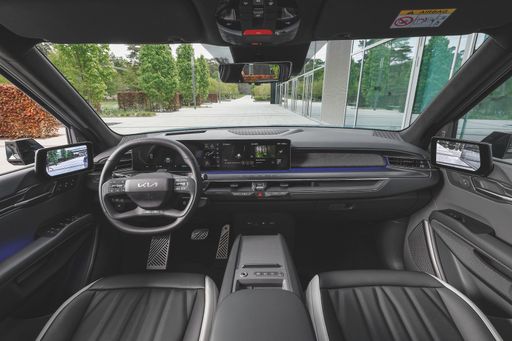
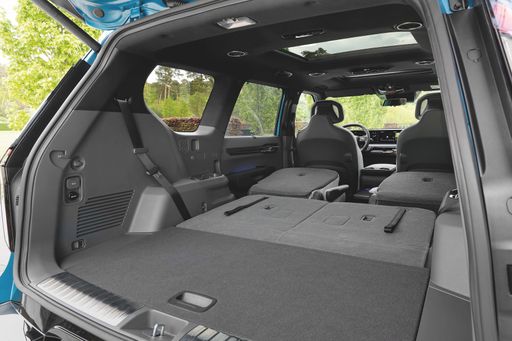
Volvo EX90
Kia EV9
Costs and Consumption |
|
|---|---|
|
Price
72,200 - 91,700 £
|
Price
54,600 - 78,400 £
|
|
Consumption L/100km
-
|
Consumption L/100km
-
|
|
Consumption kWh/100km
17.8 - 19.3 kWh/100km
|
Consumption kWh/100km
19.5 - 22.8 kWh/100km
|
|
Electric Range
570 - 620 km
|
Electric Range
443 - 563 km
|
|
Battery Capacity
-
|
Battery Capacity
-
|
|
co2
0 g/km
|
co2
0 g/km
|
|
Fuel tank capacity
-
|
Fuel tank capacity
-
|
Dimensions and Body |
|
|---|---|
|
Body Type
SUV
|
Body Type
SUV
|
|
Seats
6 - 7
|
Seats
6 - 7
|
|
Doors
-
|
Doors
-
|
|
Curb weight
2,555 - 2,765 kg
|
Curb weight
2,392 - 2,664 kg
|
|
Trunk capacity
-
|
Trunk capacity
333 L
|
|
Length
-
|
Length
-
|
|
Width
1,964 mm
|
Width
1,980 mm
|
|
Height
-
|
Height
-
|
|
Max trunk capacity
-
|
Max trunk capacity
-
|
|
Payload
545 - 605 kg
|
Payload
542 - 615 kg
|
Engine and Performance |
|
|---|---|
|
Engine Type
Electric
|
Engine Type
Electric
|
|
Transmission
Automatic
|
Transmission
Automatic
|
|
Transmission Detail
Reduction Gearbox
|
Transmission Detail
Reduction Gearbox
|
|
Drive Type
Rear-Wheel Drive, All-Wheel Drive
|
Drive Type
Rear-Wheel Drive, All-Wheel Drive
|
|
Power HP
333 - 680 HP
|
Power HP
204 - 508 HP
|
|
Acceleration 0-100km/h
4.2 - 6.8 s
|
Acceleration 0-100km/h
4.6 - 9.4 s
|
|
Max Speed
-
|
Max Speed
-
|
|
Torque
480 - 870 Nm
|
Torque
350 - 740 Nm
|
|
Number of Cylinders
-
|
Number of Cylinders
-
|
|
Power kW
245 - 500 kW
|
Power kW
150 - 374 kW
|
|
Engine capacity
-
|
Engine capacity
-
|
General |
|
|---|---|
|
Model Year
2,025 - 2,026
|
Model Year
2025
|
|
CO2 Efficiency Class
A
|
CO2 Efficiency Class
A
|
|
Brand
Volvo
|
Brand
Kia
|
DriveDuel uses data analysis and artificial intelligence to evaluate vehicle data and create content. Content is regularly reviewed and improved.
The displayed prices are estimates based on German list prices, adjusted to the respective country’s VAT. Country-specific registration taxes are not included. This information is not legally binding.