
 Deutschland
 France
 Nederland
 Great Britain
 Sverige
 Norge
Norge Danmark
 Suomi
Suomi Italia
 Polska
 España
VS
Volvo EX90 vs Voyah Free - Differences and prices compared
EX90
@ Volvo Cars
Costs and Efficiency:
Looking at overall running costs, both models reveal some interesting differences in everyday economy.
Voyah Free has a convincingly advantage in terms of price – it starts at 51400 £, while the Volvo EX90 costs 73700 £. That’s a price difference of around 22285 £.
In terms of energy consumption, the advantage goes to the Volvo EX90: with 17.80 kWh per 100 km, it’s slightly more efficient than the Voyah Free with 20.20 kWh. That’s a difference of about 2.40 kWh.
As for range, the Volvo EX90 performs a bit better – achieving up to 620 km, about 120 km more than the Voyah Free.
EX90
@ Volvo Cars
Engine and Performance:
Under the bonnet, it becomes clear which model is tuned for sportiness and which one takes the lead when you hit the accelerator.
When it comes to engine power, the Volvo EX90 has a clearly perceptible edge – offering 680 HP compared to 490 HP. That’s roughly 190 HP more horsepower.
In acceleration from 0 to 100 km/h, the Volvo EX90 is minimal quicker – completing the sprint in 4.20 s, while the Voyah Free takes 4.40 s. That’s about 0.20 s faster.
In terms of top speed, the Voyah Free performs minimal better – reaching 200 km/h, while the Volvo EX90 tops out at 180 km/h. The difference is around 20 km/h.
There’s also a difference in torque: Volvo EX90 pulls somewhat stronger with 870 Nm compared to 720 Nm. That’s about 150 Nm difference.
EX90
@ Volvo Cars
Space and Everyday Use:
Cabin size, boot volume and payload all play a role in everyday practicality. Here, comfort and flexibility make the difference.
Seats: Volvo EX90 offers noticeable more seating capacity – 7 vs 5.
In curb weight, Voyah Free is to a small extent lighter – 2150 kg compared to 2556 kg. The difference is around 406 kg.
In terms of boot space, the Voyah Free offers convincingly more room – 560 L compared to 324 L. That’s a difference of about 236 L.
In maximum load capacity, the Volvo EX90 performs clearly perceptible better – up to 2135 L, which is about 815 L more than the Voyah Free.
When it comes to payload, Voyah Free hardly perceptible takes the win – 605 kg compared to 585 kg. That’s a difference of about 20 kg.
Who comes out on top?
Overall, the Volvo EX90 shows itself to be secures victory with a clear margin and secures the title of DriveDuel Champion.
It convinces with the more balanced overall package and proves to be the more versatile choice for everyday use.
from about £73,700
 @ Volvo Cars
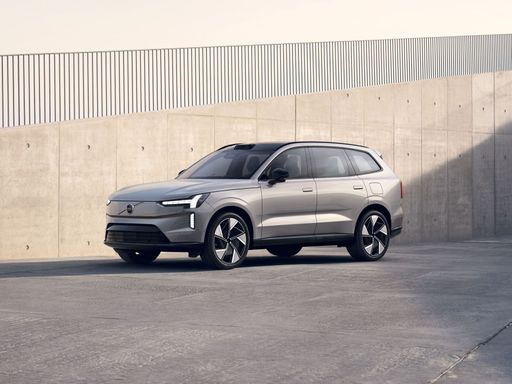
Volvo EX90
Volvo EX90
Voyah Free
Costs and Consumption
View detailed analysis
View detailed analysis
Engine and Performance
View detailed analysis
View detailed analysis
Dimensions and Body
View detailed analysis
View detailed analysis
Volvo EX90
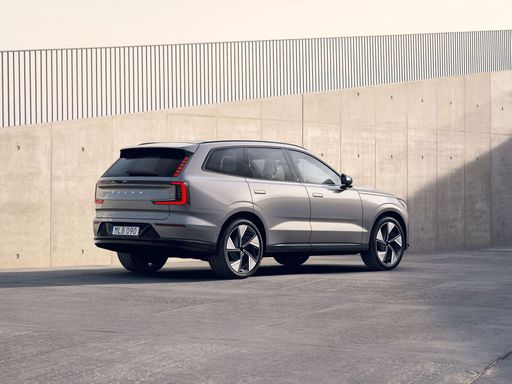
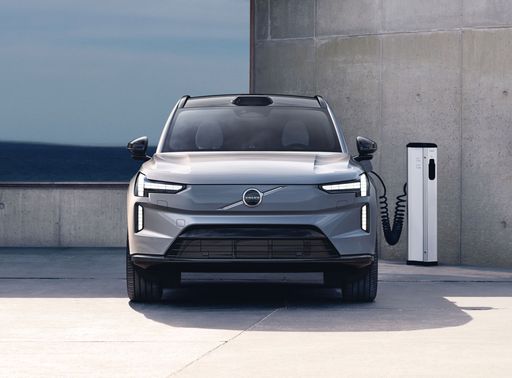
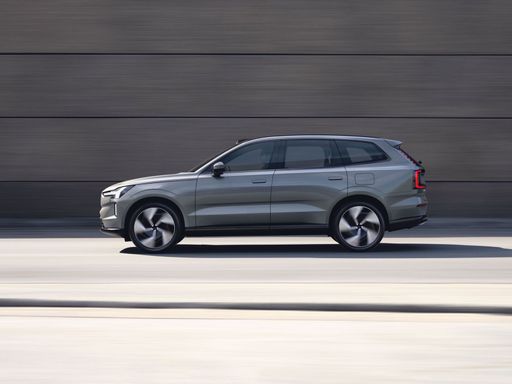
The Volvo EX90 feels like a Scandinavian fortress on wheels, combining serene luxury with smart safety features that make everyday driving remarkably calm and confident. It dresses cutting-edge electric technology in understated elegance, so buyers who want peace of mind without shouting about it will find it hard to resist.
details
@ Volvo Cars
 @ Volvo Cars
 @ Volvo Cars
 @ Volvo Cars
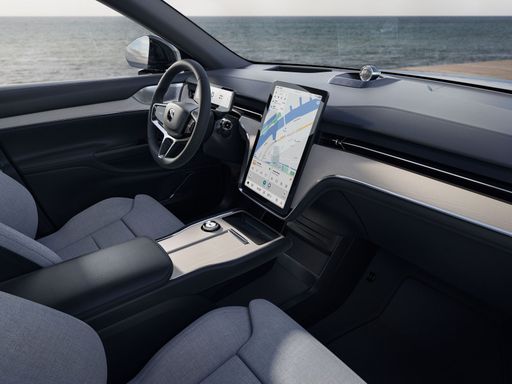 @ Volvo Cars
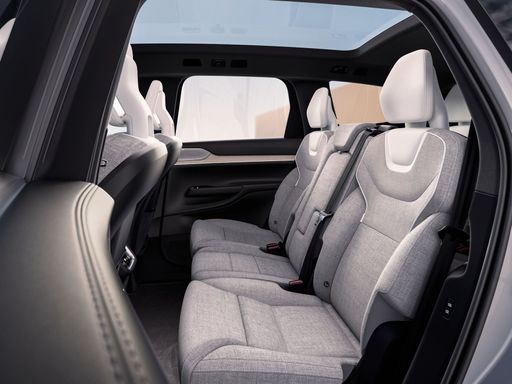 @ Volvo Cars
Voyah Free
The Voyah Free arrives with a striking, modern presence that blends Chinese flair and premium intent, turning heads without shouting for attention. Inside it serves a calm, tech-rich cabin and cushy seats that make daily driving feel a little more grown-up — a solid pick for buyers after EV luxury without the traditional badge premium.
details
Volvo EX90
Voyah Free
|
@ Volvo Cars
|
|
|
|
|
Costs and Consumption |
|
|---|---|
|
Price
73700 - 94100 £
|
Price
51400 - 66000 £
|
|
Consumption L/100km
-
|
Consumption L/100km
-
|
|
Consumption kWh/100km
17.8 - 19.3 kWh
|
Consumption kWh/100km
20.20 kWh
|
|
Electric Range
570 - 620 km
|
Electric Range
259 - 500 km
|
|
Battery Capacity
88 - 102 kWh
|
Battery Capacity
-
|
|
co2
0 g/km
|
co2
0 g/km
|
|
Fuel tank capacity
-
|
Fuel tank capacity
-
|
Dimensions and Body |
|
|---|---|
|
Body Type
SUV
|
Body Type
SUV
|
|
Seats
6 - 7
|
Seats
5
|
|
Doors
5
|
Doors
5
|
|
Curb weight
2556 - 2764 kg
|
Curb weight
2150 - 2340 kg
|
|
Trunk capacity
324 L
|
Trunk capacity
560 L
|
|
Length
5037 mm
|
Length
4905 mm
|
|
Width
1964 mm
|
Width
1950 mm
|
|
Height
1744 mm
|
Height
1645 mm
|
|
Max trunk capacity
2082 - 2135 L
|
Max trunk capacity
1320 L
|
|
Payload
375 - 585 kg
|
Payload
605 kg
|
Engine and Performance |
|
|---|---|
|
Engine Type
Electric
|
Engine Type
Electric, Plugin Hybrid
|
|
Transmission
Automatic
|
Transmission
Automatic
|
|
Transmission Detail
Reduction Gearbox
|
Transmission Detail
Reduction Gearbox
|
|
Drive Type
Rear-Wheel Drive, All-Wheel Drive
|
Drive Type
All-Wheel Drive, Rear-Wheel Drive
|
|
Power HP
333 - 680 HP
|
Power HP
272 - 490 HP
|
|
Acceleration 0-100km/h
4.2 - 6.8 s
|
Acceleration 0-100km/h
4.4 - 7.6 s
|
|
Max Speed
180 km/h
|
Max Speed
180 - 200 km/h
|
|
Torque
480 - 870 Nm
|
Torque
410 - 720 Nm
|
|
Number of Cylinders
-
|
Number of Cylinders
4
|
|
Power kW
245 - 500 kW
|
Power kW
200 - 360 kW
|
|
Engine capacity
-
|
Engine capacity
1499 cm3
|
General |
|
|---|---|
|
Model Year
2025
|
Model Year
2024 - 2025
|
|
CO2 Efficiency Class
A
|
CO2 Efficiency Class
A
|
|
Brand
Volvo
|
Brand
Voyah
|
What drivetrain options does the Volvo EX90 have?
The Volvo EX90 is offered with Rear-Wheel Drive or All-Wheel Drive.
The prices and data displayed are estimates based on German list prices and may vary by country. This information is not legally binding.