
 Deutschland
 France
 Nederland
 Great Britain
 Sverige
 Danmark
 Suomi
Suomi Italia
 Polska
 España
VS
Volvo S90 vs Ferrari SF90 Coupe comparison
Compare performance (455 HP vs 1,000 HP), boot space and price (62,200 £ vs 377,100 £ ) at a glance. Find out which car is the better choice for you – Volvo S90 or Ferrari SF90 Coupe?
S90
Costs and Efficiency:
Price and efficiency are often the first things buyers look at. Here it becomes clear which model has the long-term edge – whether at the pump, the plug, or in purchase price.
Volvo S90 is considerably cheaper – starting at 62,200 £ , while the Ferrari SF90 Coupe costs 377,100 £ . That’s a price difference of around 314,914 £.
Fuel consumption also shows a difference: the Volvo S90 uses 0.8 L/100km and is considerably more efficient than the Ferrari SF90 Coupe with 6.5 L/100km. The difference is about 5.7 L/100km.
As for electric range, the Volvo S90 offers significantly more range – reaching up to 89 km, about 64 km more than the Ferrari SF90 Coupe.
S90
Engine and Performance:
Power, torque and acceleration say a lot about how a car feels on the road. This is where you see which model delivers more driving dynamics.
When it comes to engine power, the Ferrari SF90 Coupe offers significantly more power – delivering 1,000 HP compared to 455 HP. That’s roughly 545 HP more horsepower.
When accelerating from 0 to 100 km/h, the Ferrari SF90 Coupe is clearly quicker – completing the sprint in 2.5 s, while the Volvo S90 takes 4.7 s. That’s about 2.2 s quicker.
Looking at top speed, the Ferrari SF90 Coupe is clearly faster – reaching 340 km/h, while the Volvo S90 tops out at 180 km/h. The difference is around 160 km/h.
There’s also a difference in torque: the Ferrari SF90 Coupe delivers noticeably more torque with 1,066 Nm compared to 709 Nm. That’s about 357 Nm more.
S90
Space and Everyday Use:
Cabin size, boot volume and payload all play a role in everyday practicality. Here, comfort and flexibility make the difference.
Seats: Volvo S90 offers more seats – 5 vs 2.
In terms of curb weight, Ferrari SF90 Coupe is somewhat lighter – 1,645 kg compared to 1,912 kg. The difference is around 267 kg.
Looking at boot space, the Volvo S90 offers significantly more boot space – 453 L compared to 74 L. That’s a difference of about 379 L.
Who wins the race in the data check?
The Volvo S90 is clearly superior overall in the objective data comparison.
This result only shows which model scores more points on paper – not which of the two cars feels right for you.
from £62,200
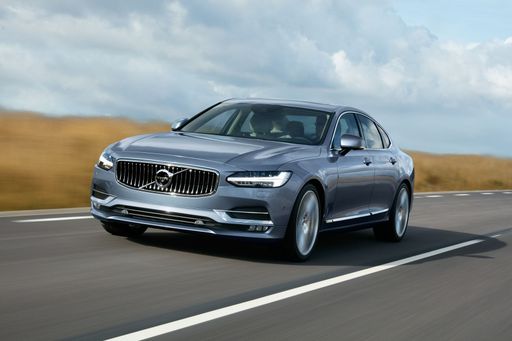
Volvo S90
Volvo S90
Ferrari SF90 Coupe
Costs and Consumption
View detailed analysis
View detailed analysis
Engine and Performance
View detailed analysis
View detailed analysis
Dimensions and Body
View detailed analysis
View detailed analysis
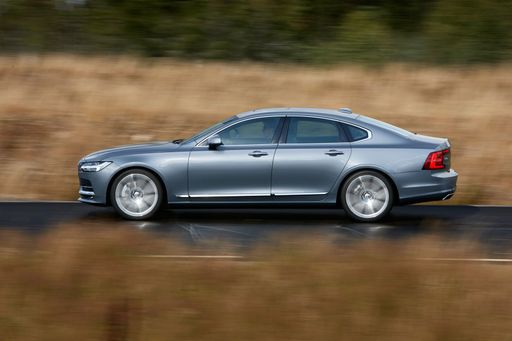
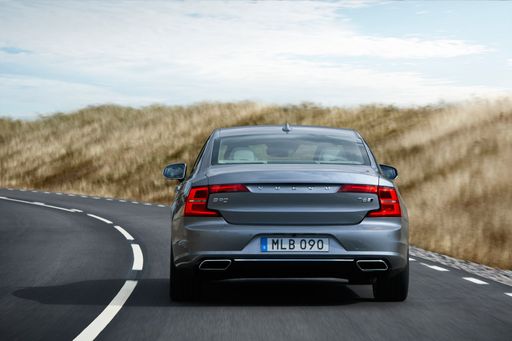
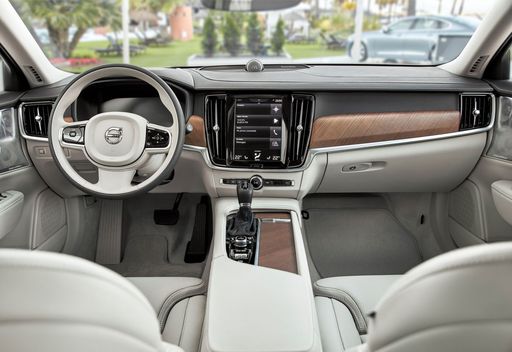
Volvo S90
The Volvo S90 is a composed, elegant luxury sedan that dresses Scandinavian restraint in a quietly imposing package. It prioritises serene highway manners and a calm, tech‑savvy cabin, making it a car that suggests you deserve the nicer things in life without ever raising its voice.
details
Ferrari SF90 Coupe
The Ferrari SF90 is a no-compromise halo car that marries raw supercar theatrics with an unexpectedly usable daily temperament, delivering hair-raising performance alongside civilized manners when you want them. For buyers after cutting-edge tech wrapped in prancing-horse glamour, the SF90 is intoxicating, attention-grabbing and guaranteed to put a grin on your face every time you press the loud pedal.
details
Volvo S90
Ferrari SF90 Coupe
Costs and Consumption |
|
|---|---|
|
Price
62,200 - 70,500 £
|
Price
377,100 £
|
|
Consumption L/100km
0.8 - 5.7 L/100km
|
Consumption L/100km
6.5 L/100km
|
|
Consumption kWh/100km
-
|
Consumption kWh/100km
-
|
|
Electric Range
89 km
|
Electric Range
25 km
|
|
Battery Capacity
14.7 kWh
|
Battery Capacity
-
|
|
co2
17 - 149 g/km
|
co2
169 g/km
|
|
Fuel tank capacity
60 L
|
Fuel tank capacity
68 L
|
Dimensions and Body |
|
|---|---|
|
Body Type
Sedan
|
Body Type
Coupe
|
|
Seats
5
|
Seats
2
|
|
Doors
4
|
Doors
2
|
|
Curb weight
1,912 - 2,119 kg
|
Curb weight
1,645 kg
|
|
Trunk capacity
431 - 453 L
|
Trunk capacity
74 L
|
|
Length
4,969 mm
|
Length
4,704 mm
|
|
Width
1,879 mm
|
Width
1,973 mm
|
|
Height
1,440 mm
|
Height
1,186 mm
|
|
Max trunk capacity
-
|
Max trunk capacity
-
|
|
Payload
451 - 518 kg
|
Payload
-
|
Engine and Performance |
|
|---|---|
|
Engine Type
Diesel MHEV, Plugin Hybrid
|
Engine Type
Plugin Hybrid
|
|
Transmission
Automatic
|
Transmission
Automatic
|
|
Transmission Detail
Automatic Gearbox
|
Transmission Detail
Dual-Clutch Automatic
|
|
Drive Type
All-Wheel Drive
|
Drive Type
All-Wheel Drive
|
|
Power HP
235 - 455 HP
|
Power HP
1,000 HP
|
|
Acceleration 0-100km/h
4.7 - 7 s
|
Acceleration 0-100km/h
2.5 s
|
|
Max Speed
180 km/h
|
Max Speed
340 km/h
|
|
Torque
480 - 709 Nm
|
Torque
1,066 Nm
|
|
Number of Cylinders
4
|
Number of Cylinders
8
|
|
Power kW
173 - 335 kW
|
Power kW
735 kW
|
|
Engine capacity
1,969 cm3
|
Engine capacity
3,990 cm3
|
General |
|
|---|---|
|
Model Year
2,022 - 2,024
|
Model Year
2,020
|
|
CO2 Efficiency Class
E, B
|
CO2 Efficiency Class
F
|
|
Brand
Volvo
|
Brand
Ferrari
|
DriveDuel uses data analysis and artificial intelligence to evaluate vehicle data and create content. Content is regularly reviewed and improved.
The displayed prices are estimates based on German list prices, adjusted to the respective country’s VAT. Country-specific registration taxes are not included. This information is not legally binding.