VS

Volvo V60 vs BMW 3 Series Touring comparison

Compare performance (455 HP vs 530 HP), boot space and price (41,600 £ vs 41,100 £ ) at a glance. Find out which car is the better choice for you – Volvo V60 or BMW 3 Series Touring?

Volvo V60 vs BMW 3 Series Touring: Key differences

Volvo V60

5 (1 Reviews)
rate
  • very slightly more efficient
  • very slightly more trunk space

BMW 3 Series Touring

4.3 (1 Reviews)
rate
  • marginally cheaper
  • slightly more power
  • barely more electric range
  • noticeably quicker 0–100 km/h
  • very slightly lighter

All details on performance, efficiency, range and trunk space can be found in the technical comparison below – including user reviews for both models.

V60

When it comes to combining luxury and practicality, two strong contenders in the automotive world are the BMW 3er Touring and the Volvo V60. Both of these wagons offer a perfect blend of style, technology, and performance. In this detailed comparison, we delve into their technical aspects, innovations, and overall driving experience to help you decide which one might suit your needs better.

3 Series Touring

Design and Aesthetics

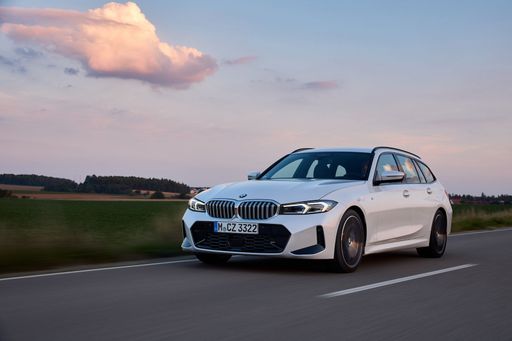
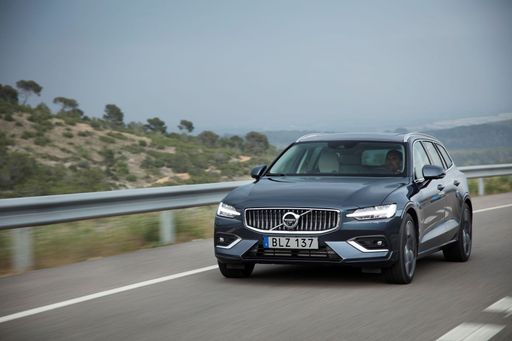
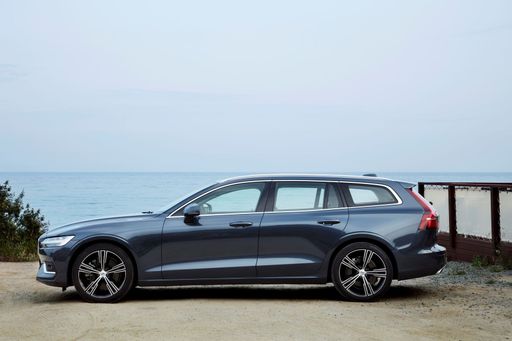
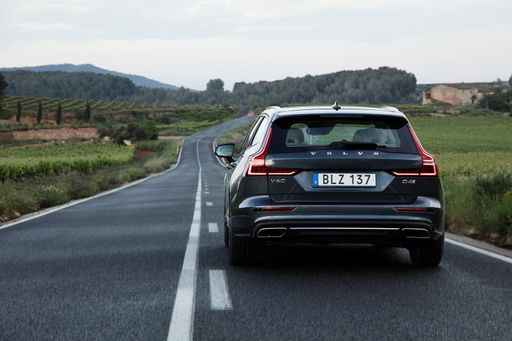
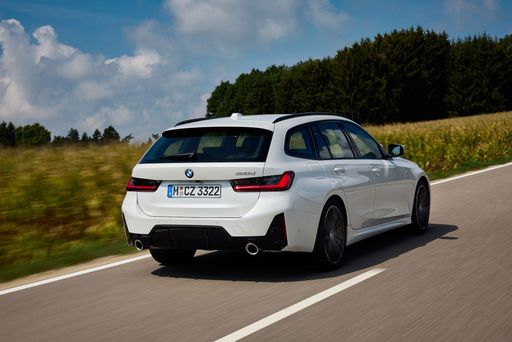
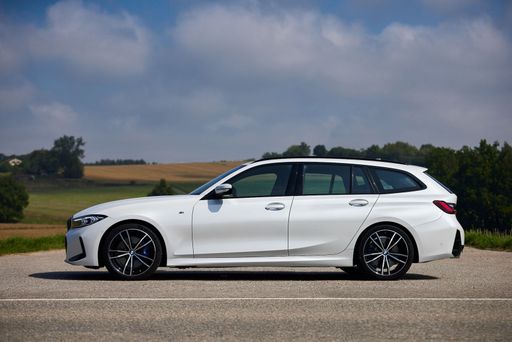
The BMW 3er Touring boasts a classic yet modern design that reflects the brand's sporty heritage. With sharp lines and an aggressive stance, it perfectly embodies the BMW DNA. On the other hand, the Volvo V60 represents Scandinavian minimalism with its clean lines and elegant curves. Both vehicles are 5-door configurations, providing ample access for passengers and cargo alike, but their design philosophies differ significantly.

V60

Engine Options and Performance

The BMW 3er Touring offers an extensive array of engine options, including Diesel MHEV, Petrol, Petrol MHEV, and Plugin Hybrid variants, with power outputs ranging from 150 to a staggering 530 HP. Its acceleration from 0 to 100 km/h spans from a smooth 4.6 seconds in the performance models to a more moderate 8.8 seconds in the base models. The V60 offers fewer choices, but with options like the powerful 398 HP engine, it still competes aggressively.

In terms of torque, the BMW offers between 250 and 700 Nm, while the V60 peaks at an impressive 659 Nm from its hybrid powertrain. Both vehicles feature automatic transmissions, but the BMW’s transmission is a more traditional automatic gearbox, whereas the V60 utilizes a dual-clutch system for a sportier driving experience.

3 Series Touring

Fuel Efficiency and Emissions

Fuel consumption is another vital aspect to consider. The BMW 3er Touring exhibits a broad spectrum of consumption rates, with figures ranging from a low of 5.1 L/100km to higher values in the performance models. The V60 shows a slightly lesser efficiency, with consumption figures between 6.2 and 7.4 L/100km, although its plugin hybrid offers a consumption rate of just 0.7 L/100km.

CO2 emissions are crucial for eco-conscious buyers, and here both cars show efficiency, but BMW's models emit from 134 to 182 g/km, while the V60's range is from 140 to 168 g/km. The V60 also leads with a smaller battery capacity at 14.7 kWh compared to the 3er Touring's 19.5 kWh, giving it a decent electric range of about 92 km.

V60

Interior Experience and Technology

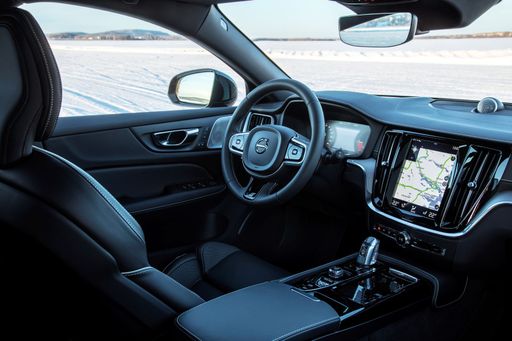
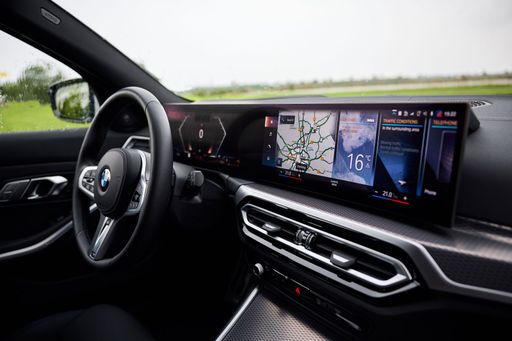
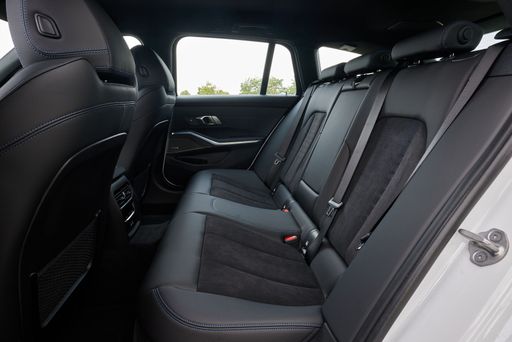
Inside the BMW 3er Touring, you’ll find a driver-focused cockpit filled with high-quality materials and cutting-edge technology. The infotainment system includes a large display with seamless connectivity options and integration of driving assistance features. Comfort is paramount, with spacious seating for up to five passengers and a substantial trunk capacity of up to 500 liters.

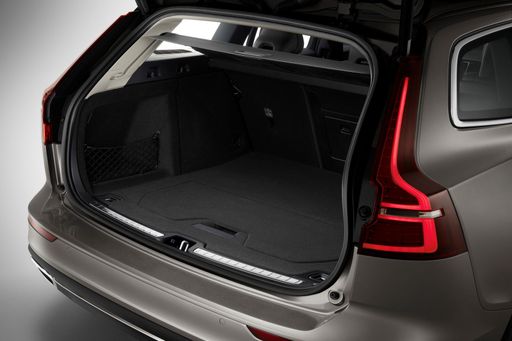
Conversely, the Volvo V60 focuses heavily on safety and comfort, showcasing a minimalist design that emphasizes functionality. With its impressive trunk capacity of 519 liters, it offers ample space for luggage. The V60’s infotainment system is equally sophisticated, with intuitive controls, ensuring a user-friendly experience for passengers. Volvo is well-known for its safety ratings, and the V60 continues this tradition with numerous integrated safety features.

3 Series Touring

Driving Experience

Driving dynamics set these two apart, with the BMW 3er Touring extensively embraced for its sporty handling and rear-wheel drive options for enthusiasts. Alternatively, the V60 offers a more comfort-oriented ride, while still providing decent sportiness in its all-wheel-drive configuration. Both vehicles deliver a solid driving experience, but the choice largely depends on individual driving preferences.

V60

Conclusion

In summary, the BMW 3er Touring and Volvo V60 are formidable competitors in the premium wagon segment. If you value sporty performance with a diverse range of engines and a dynamic driving experience, the BMW 3er Touring may be your best bet. However, if safety, comfort, and minimalistic elegance are higher on your list of priorities, the Volvo V60 will cater to your sensibilities. Ultimately, choosing between these two will come down to personal preference and specific needs.

Here’s where it gets real: The technical differences in detail

V60

Costs and Efficiency:

When it comes to price and running costs, the biggest differences usually appear. This is often where you see which car fits your budget better in the long run.

BMW 3 Series Touring is marginally cheaper – starting at 41,100 £ , while the Volvo V60 costs 41,600 £ . That’s a price difference of around 591 £.

Fuel consumption also shows a difference: the Volvo V60 uses 2.4 L/100km and is very slightly more efficient than the BMW 3 Series Touring with 2.5 L/100km. The difference is about 0.1 L/100km.

As for electric range, the BMW 3 Series Touring offers barely more range – reaching up to 97 km, about 4 km more than the Volvo V60.

3 Series Touring

Engine and Performance:

Power, torque and acceleration say a lot about how a car feels on the road. This is where you see which model delivers more driving dynamics.

When it comes to engine power, the BMW 3 Series Touring offers slightly more power – delivering 530 HP compared to 455 HP. That’s roughly 75 HP more horsepower.

When accelerating from 0 to 100 km/h, the BMW 3 Series Touring is noticeably quicker – completing the sprint in 3.6 s, while the Volvo V60 takes 4.6 s. That’s about 1 s quicker.

Looking at top speed, the BMW 3 Series Touring is noticeably faster – reaching 250 km/h, while the Volvo V60 tops out at 180 km/h. The difference is around 70 km/h.

There’s also a difference in torque: the Volvo V60 delivers only slightly more torque with 709 Nm compared to 700 Nm. That’s about 9 Nm more.

V60

Space and Everyday Use:

Whether family car or daily driver – which one offers more room, flexibility and comfort?

Both vehicles offer seating for 5 people.

In terms of curb weight, BMW 3 Series Touring is very slightly lighter – 1,650 kg compared to 1,734 kg. The difference is around 84 kg.

Looking at boot space, the Volvo V60 offers very slightly more boot space – 519 L compared to 500 L. That’s a difference of about 19 L.

For maximum load capacity, the BMW 3 Series Touring offers barely more capacity – up to 1,510 L, about 79 L more than the Volvo V60.

When it comes to payload, the BMW 3 Series Touring carries very slightly more – 520 kg compared to 506 kg. That’s a difference of about 14 kg.

Who wins the race in the data check?

The BMW 3 Series Touring is clearly superior overall in the objective data comparison.
This result only shows which model scores more points on paper – not which of the two cars feels right for you.

from £41,100
3 Series Touring

BMW 3 Series Touring

  • Engine Type : Diesel MHEV, Petrol, Petrol MHEV, Plugin Hybrid
  • Transmission : Automatic
  • Drive Type : Rear-Wheel Drive, All-Wheel Drive
  • Power HP : 150 - 530 HP
  • Consumption L/100km : 2.5 - 10.3 L/100km
  • Electric Range : 91 - 97 km
Volvo V60
BMW 3 Series Touring

Costs and Consumption

View detailed analysis

Engine and Performance

View detailed analysis

Dimensions and Body

View detailed analysis

Volvo V60

The Volvo V60 blends elegant Scandinavian design with a practical estate layout, making it a composed and sensible choice for buyers who want style without sacrifice. Inside, a serene cabin, clever safety features and a supple ride turn daily commutes and weekend getaways into effortless, grown-up motoring.

details

BMW 3 Series Touring

The BMW 3 Series Touring blends sporting poise with everyday practicality, wrapping sharp handling and a premium cabin into a wagon that actually makes errands feel enjoyable. It’s the kind of car that hides a family-hauler’s sense of duty beneath a driver's-car attitude — useful, classy, and just cheeky enough to make you smile on the open road.

details
Volvo V60
BMW 3 Series Touring

Costs and Consumption

Price
41,600 - 65,000 £
Price
41,100 - 91,900 £
Consumption L/100km
2.4 - 6.2 L/100km
Consumption L/100km
2.5 - 10.3 L/100km
Consumption kWh/100km
-
Consumption kWh/100km
-
Electric Range
93 km
Electric Range
91 - 97 km
Battery Capacity
-
Battery Capacity
19.5 kWh
co2
54 - 140 g/km
co2
57 - 233 g/km
Fuel tank capacity
60 L
Fuel tank capacity
40 - 59 L

Dimensions and Body

Body Type
Estate
Body Type
Estate
Seats
5
Seats
5
Doors
5
Doors
5
Curb weight
1,734 - 2,064 kg
Curb weight
1,650 - 2,025 kg
Trunk capacity
519 L
Trunk capacity
410 - 500 L
Length
4,778 mm
Length
4,713 mm
Width
1,850 mm
Width
1,827 - 1,903 mm
Height
1,432 mm
Height
1,440 - 1,448 mm
Max trunk capacity
1,431 L
Max trunk capacity
1,420 - 1,510 L
Payload
466 - 506 kg
Payload
430 - 520 kg

Engine and Performance

Engine Type
Petrol MHEV, Plugin Hybrid
Engine Type
Diesel MHEV, Petrol, Petrol MHEV, Plugin Hybrid
Transmission
Automatic
Transmission
Automatic
Transmission Detail
Dual-Clutch Automatic, Automatic Gearbox
Transmission Detail
Automatic Gearbox
Drive Type
Front-Wheel Drive, All-Wheel Drive
Drive Type
Rear-Wheel Drive, All-Wheel Drive
Power HP
197 - 455 HP
Power HP
150 - 530 HP
Acceleration 0-100km/h
4.6 - 7.6 s
Acceleration 0-100km/h
3.6 - 8.8 s
Max Speed
180 km/h
Max Speed
213 - 250 km/h
Torque
300 - 709 Nm
Torque
250 - 700 Nm
Number of Cylinders
4
Number of Cylinders
4 - 6
Power kW
145 - 335 kW
Power kW
110 - 390 kW
Engine capacity
1,969 cm3
Engine capacity
1,995 - 2,998 cm3

General

Model Year
2,024 - 2,025
Model Year
2,024 - 2,025
CO2 Efficiency Class
E, B
CO2 Efficiency Class
D, E, F, G, B
Brand
Volvo
Brand
BMW
DriveDuel uses data analysis and artificial intelligence to evaluate vehicle data and create content. Content is regularly reviewed and improved. The displayed prices are estimates based on German list prices, adjusted to the respective country’s VAT. Country-specific registration taxes are not included. This information is not legally binding.