VS

Volvo V60 vs Tesla Model Y comparison

Compare performance (455 HP vs 460 HP), boot space and price (41,600 £ vs 34,300 £ ) at a glance. Find out which car is the better choice for you – Volvo V60 or Tesla Model Y?

Volvo V60 vs Tesla Model Y: Key differences

Volvo V60

5 (1 Reviews)
rate
  • somewhat lighter

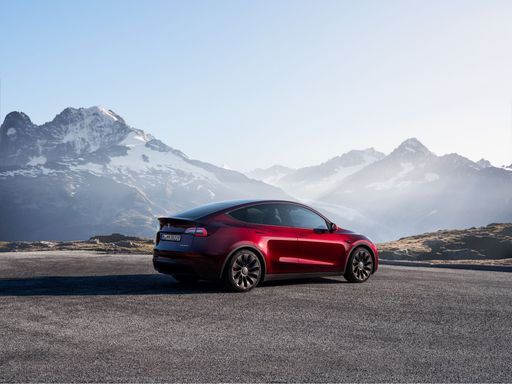
Tesla Model Y

4.5 (4 Reviews)
rate
  • markedly cheaper
  • only slightly more power
  • clearly more electric range
  • noticeably quicker 0–100 km/h
  • clearly more trunk space

All details on performance, efficiency, range and trunk space can be found in the technical comparison below – including user reviews for both models.

By Achim Sedelmaier

V60

Volvo V60 vs. Tesla Model Y: A Comprehensive Car Comparison

When it comes to selecting the perfect family vehicle, the choice often boils down to various factors including performance, efficiency, and technological innovations. In this article, we compare the Volvo V60 and Tesla Model Y, two of the most appealing options in their respective segments. While the V60 is a luxury wagon, the Model Y represents the versatile EV SUV category. Let’s dive into the details.
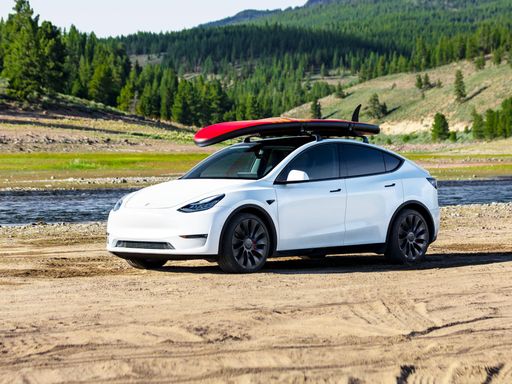
Model Y

Design and Body Type

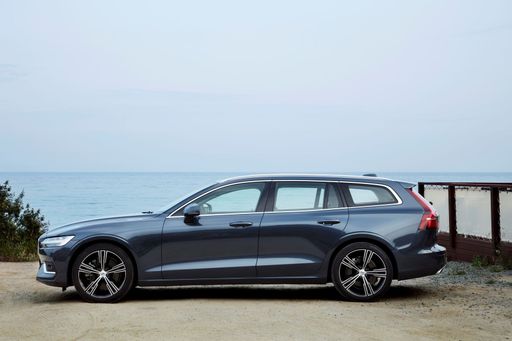
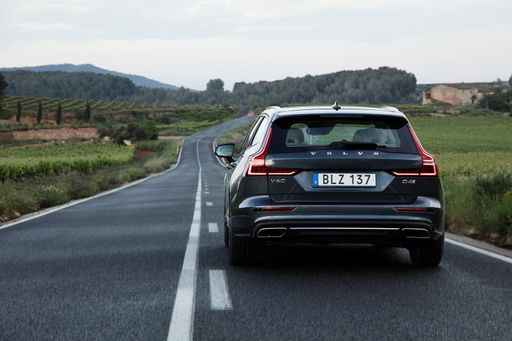
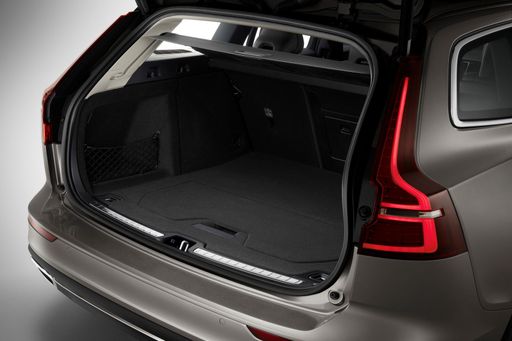
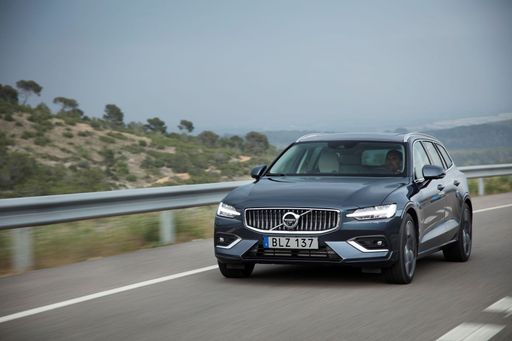
The Volvo V60, with its sleek wagon design, boasts a length of 4,778 mm, a width of 1,850 mm, and a height of 1,432 mm. This layout not only provides ample trunk capacity of 519 liters but also reflects the elegant Scandinavian design ethos that Volvo is renowned for.

On the other hand, the Tesla Model Y, known for its SUV characteristics, stands slightly taller at 1,624 mm and offers more room with a maximum trunk capacity of 854 liters, depending on seating configuration. Its dimensions of 4,751 mm in length and 1,921 mm in width provide a more commanding presence on the road.

V60

Powertrain and Performance

In terms of powertrains, the Volvo V60 offers multiple options including petrol mild hybrid, plugin hybrid, and diesel variants. Engine outputs range from 197 HP to a powerful 455 HP, with a 0-100 km/h acceleration time of as little as 4.6 seconds in its most powerful version. Its diesel model achieves a fuel consumption of 5.9 L/100 km, making it quite efficient for a wagon.

The Tesla Model Y, purely electric, has a range of power outputs from 299 HP to a staggering 534 HP. Acceleration prowess is evident, especially in its Performance variant, which rockets from 0-100 km/h in just 3.7 seconds. With an electric range of up to 600 km, the Model Y leads the way in efficiency, consuming only 14.9 kWh/100 km in the most efficient trim.

Model Y

Technological Innovations

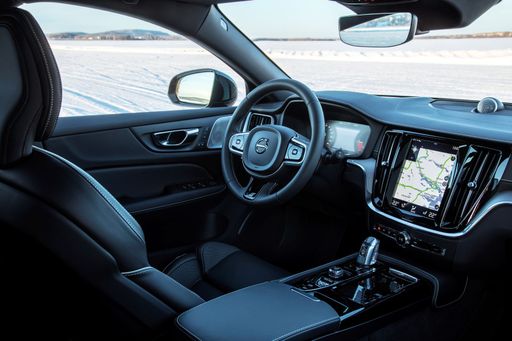
When it comes to technology, both vehicles are rich in features, but they are distinct in their approaches. The Volvo V60 integrates traditional luxury with a touch of modern tech, offering advanced safety features and an intuitive infotainment system that includes navigation, smartphone integration, and premium sound systems.

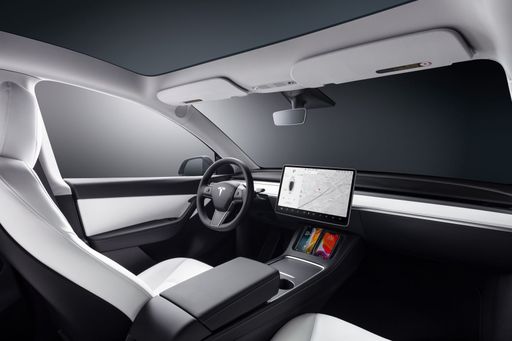
Conversely, the Tesla Model Y emphasizes cutting-edge technology with its minimalist interior dominated by a large touchscreen that controls almost all of the car’s functions. Over-the-air updates ensure that the car’s software is continuously improved, while features like Autopilot and Full Self-Driving capabilities are pushing the boundaries of vehicle automation.

V60

Interior Space and Comfort

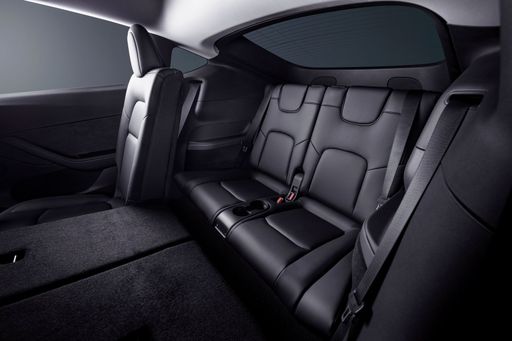
Both cars offer comfortable seating for five passengers, but the Tesla Model Y has the option to increase capacity to seven, making it a more practical choice for larger families. The interior of the Volvo V60 emphasizes high-quality materials and a premium feel, characteristic of Scandinavian design principles.

The Model Y, however, shifts towards a modern, spacious feel, and its elevated position provides good visibility, making it a favorite among SUV enthusiasts. The flexible cargo area and optional third-row seating truly enhance its utility for diverse lifestyles.

Model Y

Cost and Efficiency

Price points for both vehicles can vary significantly based on configurations. The Volvo V60 tends to have a more accessible starting price range while still providing premium features and performance. In contrast, the Tesla Model Y’s higher price tag reflects its advanced electric technology and extensive range.

Efficiency is where the Tesla Model Y shines, with zero CO2 emissions, which places it in the top-tier efficiency class (A). The V60, despite having options that deliver good mileage, emits CO2 ranging up to 168 g/km, earning it lower efficiency ratings (E and F).

V60

Conclusion: Who Wins?

The ultimate choice between the Volvo V60 and Tesla Model Y largely depends on personal preferences. If you prioritize luxurious craftsmanship and conventional powertrains, the Volvo V60 may be your best bet. Conversely, if you prefer an environmentally friendly vehicle equipped with cutting-edge technology and impressive electric performance, the Tesla Model Y stands out as a compelling option. Both cars bring something unique to the table, making them appetizing selections in today’s automotive marketplace.

Here’s where it gets real: The technical differences in detail

V60

Costs and Efficiency:

When it comes to price and running costs, the biggest differences usually appear. This is often where you see which car fits your budget better in the long run.

Tesla Model Y is markedly cheaper – starting at 34,300 £ , while the Volvo V60 costs 41,600 £ . That’s a price difference of around 7,371 £.

As for electric range, the Tesla Model Y offers clearly more range – reaching up to 657 km, about 564 km more than the Volvo V60.

Model Y

Engine and Performance:

Under the bonnet, it becomes clear which model is tuned for sportiness and which one takes the lead when you hit the accelerator.

When it comes to engine power, the Tesla Model Y offers only slightly more power – delivering 460 HP compared to 455 HP. That’s roughly 5 HP more horsepower.

When accelerating from 0 to 100 km/h, the Tesla Model Y is noticeably quicker – completing the sprint in 3.5 s, while the Volvo V60 takes 4.6 s. That’s about 1.1 s quicker.

Looking at top speed, the Tesla Model Y is a bit faster – reaching 201 km/h, while the Volvo V60 tops out at 180 km/h. The difference is around 21 km/h.

There’s also a difference in torque: the Volvo V60 delivers marginally more torque with 709 Nm compared to 660 Nm. That’s about 49 Nm more.

V60

Space and Everyday Use:

Whether family car or daily driver – which one offers more room, flexibility and comfort?

Seats: Tesla Model Y offers more seats – 7 vs 5.

In terms of curb weight, Volvo V60 is somewhat lighter – 1,734 kg compared to 1,953 kg. The difference is around 219 kg.

Looking at boot space, the Tesla Model Y offers clearly more boot space – 822 L compared to 519 L. That’s a difference of about 303 L.

For maximum load capacity, the Tesla Model Y offers markedly more capacity – up to 2,138 L, about 707 L more than the Volvo V60.

When it comes to payload, the Volvo V60 carries very slightly more – 506 kg compared to 472 kg. That’s a difference of about 34 kg.

Who wins the race in the data check?

The Tesla Model Y is decisively ahead in the objective data comparison.
This result only shows which model scores more points on paper – not which of the two cars feels right for you.

from £34,300
Model Y

Tesla Model Y

  • Engine Type : Electric
  • Transmission : Automatic
  • Drive Type : All-Wheel Drive, Rear-Wheel Drive
  • Power HP : 299 - 460 HP
  • Consumption kWh/100km : 12.7 - 16.2 kWh/100km
  • Electric Range : 534 - 657 km
Volvo V60
Tesla Model Y

Costs and Consumption

View detailed analysis

Engine and Performance

View detailed analysis

Dimensions and Body

View detailed analysis

Volvo V60

The Volvo V60 blends elegant Scandinavian design with a practical estate layout, making it a composed and sensible choice for buyers who want style without sacrifice. Inside, a serene cabin, clever safety features and a supple ride turn daily commutes and weekend getaways into effortless, grown-up motoring.

details

Tesla Model Y

The Tesla Model Y blends SUV practicality with sports-car poke, wrapping a roomy, minimalist cabin and handy hatch into a slick, aerodynamic package that feels more Silicon Valley gadget than garage ornament. It’s an ideal pick for buyers who want effortless electric driving, regular software improvements and access to Tesla’s convenient charging network, though style-conscious shoppers should know it’s more about tech and efficiency than classic luxury.

details
Volvo V60
Tesla Model Y

Costs and Consumption

Price
41,600 - 65,000 £
Price
34,300 - 53,100 £
Consumption L/100km
2.4 - 6.2 L/100km
Consumption L/100km
-
Consumption kWh/100km
-
Consumption kWh/100km
12.7 - 16.2 kWh/100km
Electric Range
93 km
Electric Range
534 - 657 km
Battery Capacity
-
Battery Capacity
64.5 - 83 kWh
co2
54 - 140 g/km
co2
0 g/km
Fuel tank capacity
60 L
Fuel tank capacity
-

Dimensions and Body

Body Type
Estate
Body Type
SUV
Seats
5
Seats
5 - 7
Doors
5
Doors
5
Curb weight
1,734 - 2,064 kg
Curb weight
1,953 - 2,108 kg
Trunk capacity
519 L
Trunk capacity
822 L
Length
4,778 mm
Length
4,790 - 4,797 mm
Width
1,850 mm
Width
1,920 - 1,921 mm
Height
1,432 mm
Height
1,621 - 1,624 mm
Max trunk capacity
1,431 L
Max trunk capacity
2,118 - 2,138 L
Payload
466 - 506 kg
Payload
435 - 472 kg

Engine and Performance

Engine Type
Petrol MHEV, Plugin Hybrid
Engine Type
Electric
Transmission
Automatic
Transmission
Automatic
Transmission Detail
Dual-Clutch Automatic, Automatic Gearbox
Transmission Detail
Reduction Gearbox
Drive Type
Front-Wheel Drive, All-Wheel Drive
Drive Type
All-Wheel Drive, Rear-Wheel Drive
Power HP
197 - 455 HP
Power HP
299 - 460 HP
Acceleration 0-100km/h
4.6 - 7.6 s
Acceleration 0-100km/h
3.5 - 7.2 s
Max Speed
180 km/h
Max Speed
201 km/h
Torque
300 - 709 Nm
Torque
420 - 660 Nm
Number of Cylinders
4
Number of Cylinders
-
Power kW
145 - 335 kW
Power kW
220 - 338 kW
Engine capacity
1,969 cm3
Engine capacity
-

General

Model Year
2,024 - 2,025
Model Year
2,025 - 2,026
CO2 Efficiency Class
E, B
CO2 Efficiency Class
A
Brand
Volvo
Brand
Tesla
DriveDuel uses data analysis and artificial intelligence to evaluate vehicle data and create content. Content is regularly reviewed and improved. The displayed prices are estimates based on German list prices, adjusted to the respective country’s VAT. Country-specific registration taxes are not included. This information is not legally binding.