VS

Tesla Model Y vs Volvo EX60 comparison

Compare performance (460 HP vs 680 HP), boot space and price (34,300 £ vs 54,000 £ ) at a glance. Find out which car is the better choice for you – Tesla Model Y or Volvo EX60?

Tesla Model Y vs Volvo EX60: Key differences

Tesla Model Y

4.5 (5 Reviews)
rate
  • significantly cheaper
  • somewhat more efficient
  • a bit quicker 0–100 km/h
  • a bit lighter
  • noticeably more trunk space
details

Volvo EX60

  • visibly more power
  • visibly more electric range
details

All details on performance, efficiency, range and trunk space can be found in the technical comparison below – including user reviews for both models.

By Achim Sedelmaier

Model Y

Overview: Tesla Model Y VS Volvo EX60 — who suits you?

Tesla Model Y VS Volvo EX60 sets up a clear contrast between a tech‑driven, efficiency‑focused SUV and a comfort‑and‑safety oriented contender. The Tesla Model Y trades a minimalist, software‑centric cabin and expansive usable space for a firmer ride and a very attractive price proposition. The Volvo EX60 leans the other way: quieter, more cushioned on the road and richly equipped, but arriving at a noticeably higher cost. Both aim at families and long‑distance users, yet they approach that goal from opposite angles — one prioritising low running costs and a big, flexible load area, the other prioritising serene cruising and a premium feel. Read on to see which trade‑offs matter most to your daily routine and travel patterns.
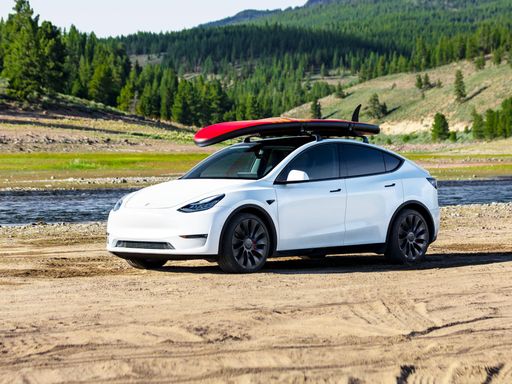
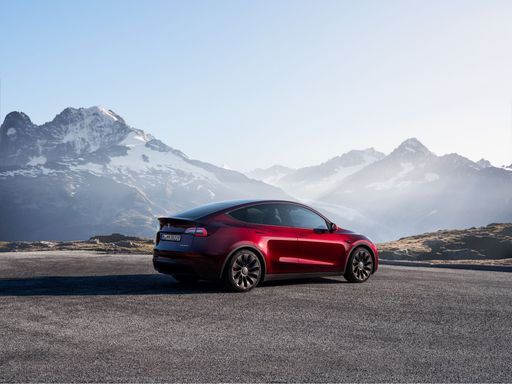
EX60

Comfort and long‑distance behavior

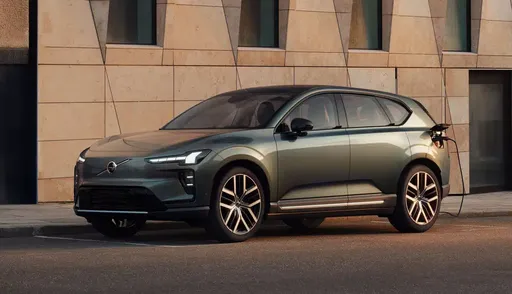
The Volvo EX60 feels engineered for calm: soft initial suspension response, a well‑tuned ride and a cabin that isolates road noise with obvious care, which makes long stints less fatiguing. The Tesla Model Y has become quieter and more settled after recent updates, but it still leans toward a firmer setup that transmits sharper bumps more readily — that translates to a tauter, more engaged highway ride rather than a floaty one. For drivers doing lots of miles, Model Y’s integration with a dense fast‑charging network simplifies planning and reduces charging friction, while Volvo answers with very quick high‑power charging that keeps stop time short. If you prize a plush lounge‑like feel on motorways, the EX60 will feel like the natural choice; if you prioritise predictable, efficient cruising and minimal running costs, the Model Y will be the more pragmatic tool. Both are stable at speed, but their emotional tone is different: Tesla is efficient and purposeful, Volvo is composed and relaxing.

Model Y

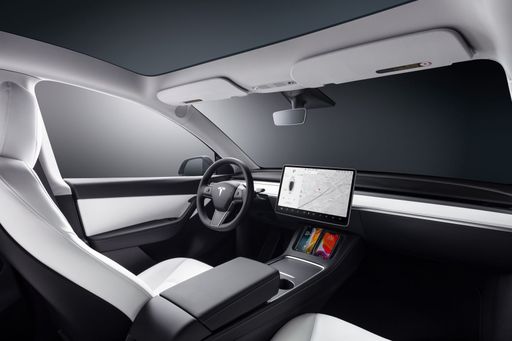
Cabin feel, controls and infotainment

Inside the Tesla Model Y the atmosphere is deliberately sparse and centred around a large touchscreen that controls almost everything, which some buyers find brilliantly simple and others find needlessly indirect. The Volvo EX60 keeps modern touches but mixes in physical ergonomics — a more traditional button layout on the wheel and Google‑based connectivity alongside Apple CarPlay — so everyday interactions feel familiar and less distracting. Material quality and fit give the EX60 a slightly more premium, tactile impression up front, while the Model Y scores on space optimisation and a techy, up‑to‑date software ecosystem. If you want immediate, tactile controls and proven smartphone integration, the Volvo will be easier to live with; if you like regular over‑the‑air improvements and integrated route/charger planning, the Tesla ecosystem has clear advantages. Both offer strong infotainment experiences, but their philosophies are opposite — deliberate simplicity versus layered, connected convenience.

EX60

Practicality and family usability

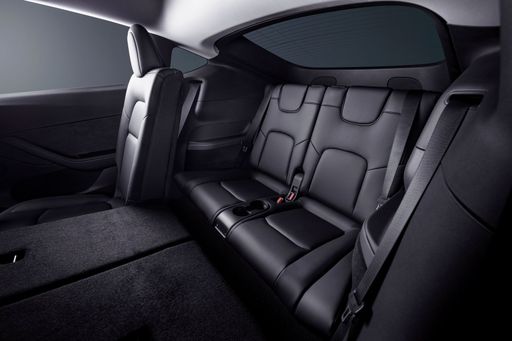
For families the Tesla Model Y stands out with exceptionally practical cargo solutions: a very large rear load area, additional front storage and an overall interior packaging that swallows bulky items with ease. The Volvo EX60 also offers generous rear space and the comfort of a flat floor for passengers, plus thoughtful safety kit that will reassure parents, but its boot and storage layout feel more traditionally premium than cavernous. Tesla’s optional extra seating or flexible layouts give it an edge for buyers who sometimes need more passengers, while Volvo’s attention to ISOFIX, comfort and safety innovations will attract those who prioritise passenger wellbeing above all. Day‑to‑day usability tilts toward the Model Y when moving furniture, luggage or prams; the EX60 wins on perceived comfort for rear occupants and on a more classical luxury family ambience. If you buy for maximum load flexibility the Model Y is compelling; buy for rear‑seat serenity and safety tech, and the EX60 is hard to beat.

Model Y

City manners and driving dynamics

In built‑up areas the Volvo EX60 hides its size better through fine throttle and brake modulation plus abundant parking aids, making tight manoeuvres feel easier despite a wide stance. The Tesla Model Y delivers brisker responses and sharper on‑road composure, which makes it feel livelier in traffic, but its large turning circle and restricted rear sightlines can turn tight ramps and narrow parks into a chore. Both pack cameras and sensors that compensate for blind spots, yet the EX60’s 360‑degree aids and more forgiving ride make it more user‑friendly in frequent stop‑and‑go situations. Drivers who value directness and quicker acceleration will prefer the Model Y’s character; drivers who value low‑stress urban commuting and confidence when parking will find the EX60 better suited. Each car compromises: agility versus manoeuvrability and engagement versus serenity — pick the balance that matches your daily streets.

Buyer fit and how to decide before the specs

The Tesla Model Y suits buyers focused on economy of use, maximum cargo flexibility and a slick charging and software ecosystem — it’s the pick for long‑distance commuters, large families on a budget, and tech‑savvy owners who like continuous improvements. The Volvo EX60 is aimed at buyers who will pay a premium for hush, comfort, safety innovation and a more conventional, tactile cabin experience — families and commuters who prioritise serenity and reassurance over lowest running cost. If you are price‑sensitive or need occasional extra seats and big luggage space, start your shortlist with the Model Y; if you want a quieter cabin, richer materials and built‑in smartphone friendliness, the EX60 deserves a longer look. Below we turn to the technical comparison so you can match the numbers and real‑world trade‑offs against your priorities without committing to an overall winner.

Here’s where it gets real: The technical differences in detail

Model Y

Costs and Efficiency:

Looking at overall running costs, both models reveal some interesting differences in everyday economy.

Tesla Model Y is significantly cheaper – starting at 34,300 £ , while the Volvo EX60 costs 54,000 £ . That’s a price difference of around 19,714 £.

In terms of energy consumption, the Tesla Model Y is somewhat more efficient: consuming 13.1 kWh/100km compared to 14.7 kWh/100km for the Volvo EX60. That’s a difference of about 1.6 kWh/100km.

As for electric range, the Volvo EX60 offers visibly more range – reaching up to 810 km, about 188 km more than the Tesla Model Y.

EX60

Engine and Performance:

Power, torque and acceleration say a lot about how a car feels on the road. This is where you see which model delivers more driving dynamics.

When it comes to engine power, the Volvo EX60 offers visibly more power – delivering 680 HP compared to 460 HP. That’s roughly 220 HP more horsepower.

When accelerating from 0 to 100 km/h, the Tesla Model Y is a bit quicker – completing the sprint in 3.5 s, while the Volvo EX60 takes 3.9 s. That’s about 0.4 s quicker.

There’s also a difference in torque: the Volvo EX60 delivers a bit more torque with 790 Nm compared to 660 Nm. That’s about 130 Nm more.

Model Y

Space and Everyday Use:

Whether family car or daily driver – which one offers more room, flexibility and comfort?

Seats: Tesla Model Y offers more seats – 7 vs 5.

In terms of curb weight, Tesla Model Y is a bit lighter – 1,976 kg compared to 2,190 kg. The difference is around 214 kg.

Looking at boot space, the Tesla Model Y offers noticeably more boot space – 836 L compared to 523 L. That’s a difference of about 313 L.

When it comes to payload, the Tesla Model Y carries only slightly more – 472 kg compared to 460 kg. That’s a difference of about 12 kg.

Who wins the race in the data check?

The Tesla Model Y leads convincingly in the objective data comparison.
This result only shows which model scores more points on paper – not which of the two cars feels right for you.

from £34,300
Model Y

Tesla Model Y

  • Engine Type : Electric
  • Transmission : Automatic
  • Drive Type : All-Wheel Drive, Rear-Wheel Drive
  • Power HP : 299 - 460 HP
  • Consumption kWh/100km : 13.1 - 16.2 kWh/100km
  • Electric Range : 534 - 622 km
Tesla Model Y
Volvo EX60

Costs and Consumption

View detailed analysis

Engine and Performance

View detailed analysis

Dimensions and Body

View detailed analysis

Tesla Model Y

The Tesla Model Y is a tech‑forward family SUV that marries blistering efficiency with enormous interior space, calm motorway manners and the obvious convenience of Tesla’s charging ecosystem and over‑the‑air updates. Its minimalist, screen‑centric cabin and rather firm ride — plus limited rear visibility and the absence of Apple CarPlay/Android Auto — are trade‑offs that will bother buyers who prioritise comfort or traditional ergonomics.

details

Volvo EX60

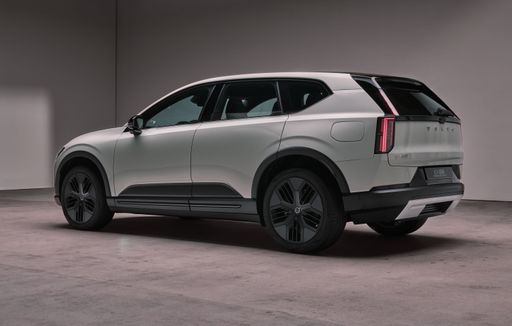
The Volvo EX60 arrives as a sleek, family-friendly electric SUV that blends Scandinavian restraint with a surprising dash of personality, wrapping a calm, premium cabin around practical everyday usability. It’s aimed at buyers who prize safety and comfort but still want a car that rewards an enthusiastic drive, proving that sensible can be quietly fun.

details
Tesla Model Y
Volvo EX60

Costs and Consumption

Price
34,300 - 53,100 £
Price
54,000 - 70,100 £
Consumption L/100km
-
Consumption L/100km
-
Consumption kWh/100km
13.1 - 16.2 kWh/100km
Consumption kWh/100km
14.7 - 16.2 kWh/100km
Electric Range
534 - 622 km
Electric Range
620 - 810 km
Battery Capacity
-
Battery Capacity
-
co2
0 g/km
co2
0 g/km
Fuel tank capacity
-
Fuel tank capacity
-

Dimensions and Body

Body Type
SUV
Body Type
SUV
Seats
5 - 7
Seats
5
Doors
-
Doors
-
Curb weight
1,976 - 2,108 kg
Curb weight
2,190 - 2,425 kg
Trunk capacity
822 - 836 L
Trunk capacity
523 L
Length
-
Length
-
Width
1,920 mm
Width
1,899 mm
Height
-
Height
-
Max trunk capacity
-
Max trunk capacity
-
Payload
435 - 472 kg
Payload
435 - 460 kg

Engine and Performance

Engine Type
Electric
Engine Type
Electric
Transmission
Automatic
Transmission
Automatic
Transmission Detail
Reduction Gearbox
Transmission Detail
Reduction Gearbox
Drive Type
All-Wheel Drive, Rear-Wheel Drive
Drive Type
Rear-Wheel Drive, All-Wheel Drive
Power HP
299 - 460 HP
Power HP
374 - 680 HP
Acceleration 0-100km/h
3.5 - 7.2 s
Acceleration 0-100km/h
3.9 - 5.9 s
Max Speed
-
Max Speed
-
Torque
420 - 660 Nm
Torque
480 - 790 Nm
Number of Cylinders
-
Number of Cylinders
-
Power kW
220 - 338 kW
Power kW
275 - 500 kW
Engine capacity
-
Engine capacity
-

General

Model Year
2,025 - 2,026
Model Year
2,026 - 2,027
CO2 Efficiency Class
A
CO2 Efficiency Class
A
Brand
Tesla
Brand
Volvo
DriveDuel uses data analysis and artificial intelligence to evaluate vehicle data and create content. Content is regularly reviewed and improved. The displayed prices are estimates based on German list prices, adjusted to the respective country’s VAT. Country-specific registration taxes are not included. This information is not legally binding.