VS

Volvo V90 vs Volvo V60 comparison

Compare performance (455 HP vs 350 HP), boot space and price (62,300 £ vs 51,400 £ ) at a glance. Find out which car is the better choice for you – Volvo V90 or Volvo V60?

Volvo V90 vs Volvo V60: Key differences

Volvo V90

4 (1 Reviews)
rate
  • noticeably more power
  • substantially more efficient
  • moderately quicker 0–100 km/h
details

Volvo V60

5 (1 Reviews)
rate
  • visibly cheaper
  • slightly more electric range
  • somewhat lighter
  • only slightly more trunk space
details

All details on performance, efficiency, range and trunk space can be found in the technical comparison below – including user reviews for both models.

By Achim Sedelmaier

V90

Volvo V60 VS Volvo V90 — which estate fits your life?

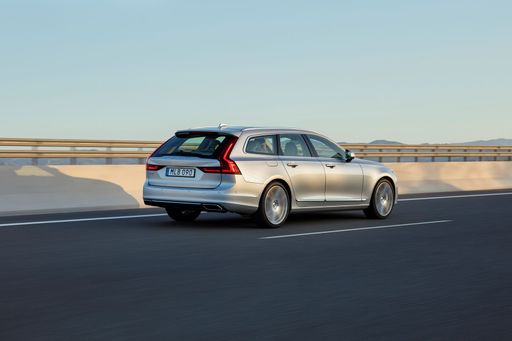
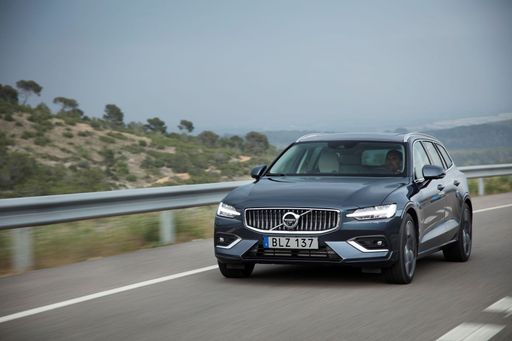
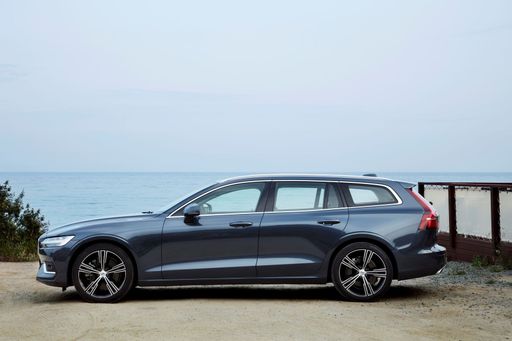
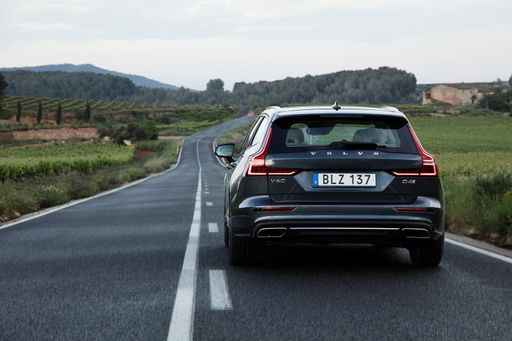
Volvo V60 VS Volvo V90 is the matchup most buyers ask about when they want a premium estate that favours calm rather than corner-carving. The Volvo V60 feels like the compact, everyday companion: easier to place in traffic, very comfortable for long runs and clever with practical boot details. The Volvo V90 moves that same calm up a notch into a roomier, more polished package that rewards long-haul miles and thoughtful materials. This comparison focuses on how each car behaves in real life — cabin feel, luggage usability, city manners and who will regret which compromise. Read on to decide which trade-offs suit your priorities before we dig into the specs below.
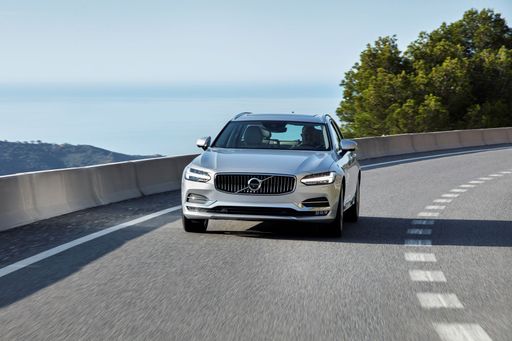
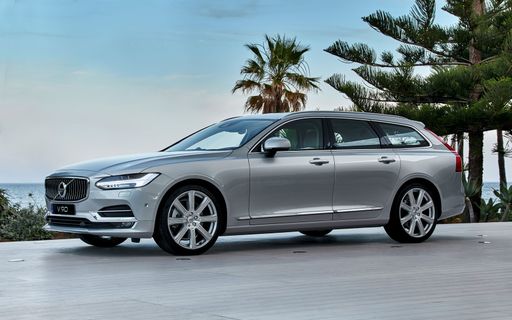
V60

Comfort and cabin character

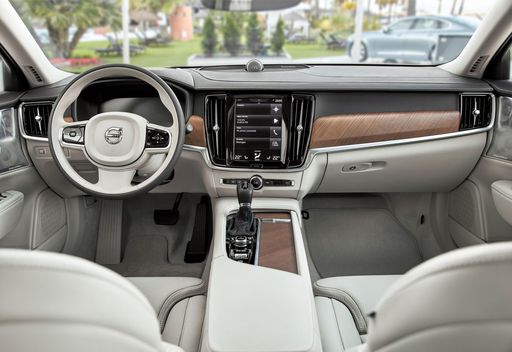
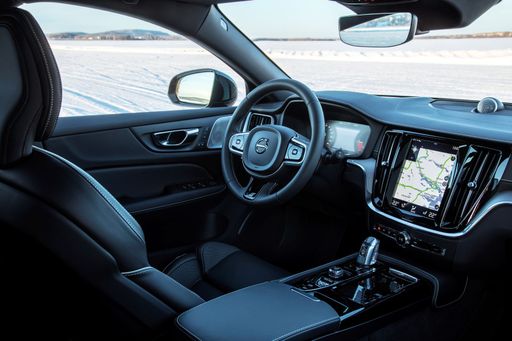
Both the Volvo V60 and the Volvo V90 aim for Scandinavian calm, but they reach it in slightly different tones: the Volvo V60 is quiet and supremely comfortable in its seats, giving a relaxed, almost cocooned feel on long runs, while the Volvo V90 leans more toward refined luxury with a bit more space and higher perceived material quality. The V90’s front seats and options like massage make long motorway stints marginally less fatiguing, whereas the V60’s lighter sense of scale makes everyday driving feel snug rather than grand. Wind and road noise are well suppressed in both, yet the V90’s greater mass smooths imperfections with a touch more serenity. If you prioritize an intimate, easy-to-handle cabin pick the V60; if you want an airier, more premium cockpit, the V90 is the natural step up.

V90

Practicality and family usability

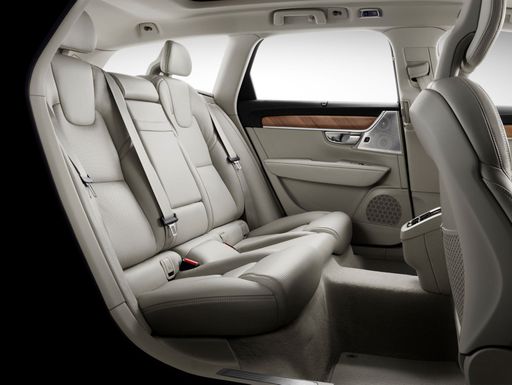
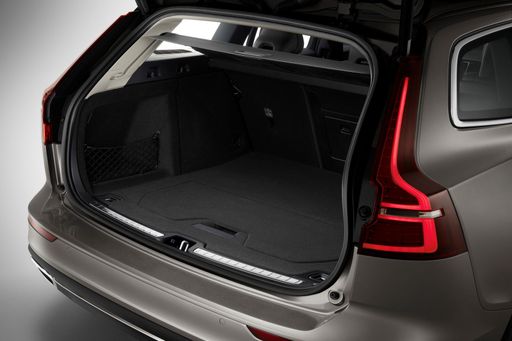
Practical differences are small but meaningful: the Volvo V60’s luggage bay is square and very user‑friendly with clever dividers and a low load lip that makes day-to-day loading simple, while the Volvo V90 trades some vertical space for a sleeker rear profile but compensates with a longer, more versatile footprint for transporting four adults comfortably. For families, the V90 gives better outer-seat room and a more luxurious rear experience, though the middle seat is compromised by a high tunnel in both cars. The V60’s pragmatic layout often makes packing bulky items easier despite a slightly smaller overall presence, and PHEV variants of either will affect usable boot depth — a real consideration if you need the full load bay. In short: choose the V60 for efficient everyday practicality, the V90 if rear comfort and effortless long-haul luggage shaping matter more.

V60

Driving character and long-distance behavior

On the move both estates prefer glide over grit: the Volvo V60 feels composed with a lighter steering touch that makes lane changes and town moves straightforward, whereas the Volvo V90’s extra heft and stronger drive options translate into a more effortless, planted feeling at motorway speeds. The V90 will mask long distances with a slightly more effortless shove and a sense of authority, which suits high-mileage commuters or towing duties, while the V60’s lower mass gives it a livelier response in everyday overtakes and makes it feel less ponderous. Neither is a sharpened sports estate — both favour comfort — but the V60 leans toward nimble usability and the V90 toward serene, sustained cruising. If your days are heavy on motorways and you value effortless momentum, the V90’s demeanour will appeal; if you mix city with country lanes, the V60’s balance is nicer.

V90

Tech, usability and city friendliness

Both Volvo V60 and Volvo V90 use touchscreen-forward systems and modern connectivity, and that architecture benefits daily navigation and voice control but also increases glance-time for some controls. The Volvo V60’s infotainment integration tends to feel snappier in navigation and is friendly for commuters who use built‑in services, while the Volvo V90’s cabin reinforces its premium stance with slightly nicer surfaces and a more serene cockpit environment. In towns the V60’s smaller footprint helps with parking and moving through tighter streets despite both cars having relatively large turning circles; the V90 relies more on cameras and aids to hide its bulk. If you prioritize slick, commuting-friendly tech and easier city manoeuvres, the V60 is the pragmatic pick; if you value a quieter, more luxurious tech experience in a bigger package, the V90 delivers.

V60

Who should buy which — clear buyer-fit trade-offs

Choose the Volvo V60 if you want a slightly more affordable, easier-to-place estate that still offers first-rate seats, clever load practicality and commuter-friendly electric capability in plug‑in variants. Opt for the Volvo V90 if you put premium cabin materials, maximum long‑distance serenity and stronger on-demand performance above tight‑city convenience and are prepared to accept a larger car and higher cost. The V60 suits families and commuters who value everyday practicality and agility; the V90 suits owners who prioritise rear-seat comfort, interior refinement and effortless motorway miles. Below this editorial comparison you’ll find the technical section that maps these real‑world differences to power, weight, range and price so you can match them precisely to your needs.

Here’s where it gets real: The technical differences in detail

V90

Costs and Efficiency:

Price and efficiency are often the first things buyers look at. Here it becomes clear which model has the long-term edge – whether at the pump, the plug, or in purchase price.

Volvo V60 is visibly cheaper – starting at 51,400 £ , while the Volvo V90 costs 62,300 £ . That’s a price difference of around 10,885 £.

Fuel consumption also shows a difference: the Volvo V90 uses 0.8 L/100km and is substantially more efficient than the Volvo V60 with 2 L/100km. The difference is about 1.2 L/100km.

As for electric range, the Volvo V60 offers slightly more range – reaching up to 99 km, about 11 km more than the Volvo V90.

V60

Engine and Performance:

Power, torque and acceleration are the classic benchmarks for car enthusiasts – and here, some clear differences start to show.

When it comes to engine power, the Volvo V90 offers noticeably more power – delivering 455 HP compared to 350 HP. That’s roughly 105 HP more horsepower.

When accelerating from 0 to 100 km/h, the Volvo V90 is moderately quicker – completing the sprint in 4.8 s, while the Volvo V60 takes 5.4 s. That’s about 0.6 s quicker.

There’s also a difference in torque: the Volvo V90 delivers slightly more torque with 709 Nm compared to 589 Nm. That’s about 120 Nm more.

V90

Space and Everyday Use:

Beyond pure performance, interior space and usability matter most in daily life. This is where you see which car is more practical and versatile.

Both vehicles offer seating for 5 people.

In terms of curb weight, Volvo V60 is somewhat lighter – 1,734 kg compared to 2,075 kg. The difference is around 341 kg.

Looking at boot space, the Volvo V60 offers only slightly more boot space – 519 L compared to 488 L. That’s a difference of about 31 L.

When it comes to payload, the Volvo V90 carries only slightly more – 515 kg compared to 506 kg. That’s a difference of about 9 kg.

Who wins the race in the data check?

The Volvo V90 is far ahead overall in the objective data comparison.
This result only shows which model scores more points on paper – not which of the two cars feels right for you.

from £62,300
V90

Volvo V90

  • Engine Type Plugin Hybrid
  • Transmission Automatic
  • Drive Type All-Wheel Drive
  • Power HP 398 - 455 HP
  • Consumption L/100km 0.8 L/100km
  • Electric Range 88 km
Volvo V90
Volvo V60

Costs and Consumption

View detailed analysis

Engine and Performance

View detailed analysis

Dimensions and Body

View detailed analysis

Volvo V90

The Volvo V90 blends Scandinavian elegance with estate practicality, delivering a composed ride and an interior that's both luxurious and perfectly sensible. Packed with clever storage and top-flight safety kit, it's the choice for buyers who want to look classy while hauling life's chaos — without making a fuss about it.

details

Volvo V60

The Volvo V60 blends elegant Scandinavian design with a practical estate layout, making it a composed and sensible choice for buyers who want style without sacrifice. Inside, a serene cabin, clever safety features and a supple ride turn daily commutes and weekend getaways into effortless, grown-up motoring.

details
Volvo V90
Volvo V60

Costs and Consumption

Price
62,300 - 71,700 £
Price
51,400 - 62,500 £
Consumption L/100km
0.8 L/100km
Consumption L/100km
2 - 6.2 L/100km
Consumption kWh/100km
-
Consumption kWh/100km
-
Electric Range
88 km
Electric Range
99 km
Battery Capacity
14.7 kWh
Battery Capacity
-
co2
18 g/km
co2
45 - 141 g/km
Fuel tank capacity
60 L
Fuel tank capacity
-

Dimensions and Body

Body Type
Estate
Body Type
Estate
Seats
5
Seats
5
Doors
5
Doors
-
Curb weight
2,075 kg
Curb weight
1,734 - 2,070 kg
Trunk capacity
488 L
Trunk capacity
519 L
Length
4,945 mm
Length
-
Width
1,879 mm
Width
1,850 mm
Height
1,472 mm
Height
-
Max trunk capacity
1,454 L
Max trunk capacity
-
Payload
515 kg
Payload
460 - 506 kg

Engine and Performance

Engine Type
Plugin Hybrid
Engine Type
Petrol MHEV, Plugin Hybrid
Transmission
Automatic
Transmission
Automatic
Transmission Detail
Automatic Gearbox
Transmission Detail
Dual-Clutch Automatic, Automatic Gearbox
Drive Type
All-Wheel Drive
Drive Type
Front-Wheel Drive, All-Wheel Drive
Power HP
398 - 455 HP
Power HP
197 - 350 HP
Acceleration 0-100km/h
4.8 - 5.5 s
Acceleration 0-100km/h
5.4 - 7.6 s
Max Speed
180 km/h
Max Speed
-
Torque
659 - 709 Nm
Torque
300 - 589 Nm
Number of Cylinders
4
Number of Cylinders
4
Power kW
293 - 335 kW
Power kW
145 - 247 kW
Engine capacity
1,969 cm3
Engine capacity
1,969 cm3

General

Model Year
2024
Model Year
2,024 - 2,026
CO2 Efficiency Class
B
CO2 Efficiency Class
E, B
Brand
Volvo
Brand
Volvo
DriveDuel uses data analysis and artificial intelligence to evaluate vehicle data and create content. Content is regularly reviewed and improved. The displayed prices are estimates based on German list prices, adjusted to the respective country’s VAT. Country-specific registration taxes are not included. This information is not legally binding.