VS

VW Arteon vs Skoda Superb Combi comparison

Compare performance (320 HP vs 265 HP), boot space and price (43,300 £ vs 36,100 £ ) at a glance. Find out which car is the better choice for you – VW Arteon or Skoda Superb Combi?

VW Arteon vs Skoda Superb Combi: Key differences

VW Arteon

5 (1 Reviews)
rate
  • a bit more power
  • slightly quicker 0–100 km/h
details

Skoda Superb Combi

  • somewhat cheaper
  • considerably more efficient
  • very slightly lighter
  • slightly more trunk space
details

By Achim Sedelmaier

Arteon

Skoda Superb Combi vs. VW Arteon: A Battle of Elegance and Power

In the world of spacious wagons, the Skoda Superb Combi and the VW Arteon stand out with their blend of elegance, practicality, and innovative technology. Both hailing from the Volkswagen Group, these models share a lineage rooted in craftsmanship and technological advancement. Yet, each offers unique features that cater to distinct preferences. As the adoption of hybrid powertrains and advanced safety technology becomes ever more prevalent, these vehicles present compelling choices for discerning drivers in 2024.
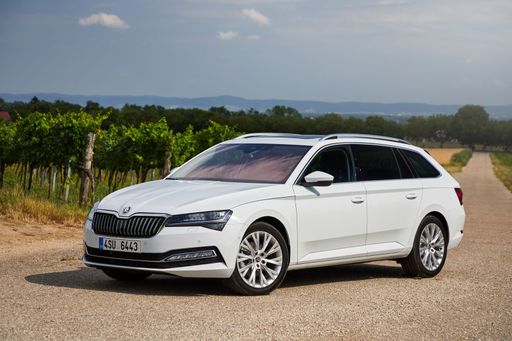
Superb Combi

Design and Dimensions

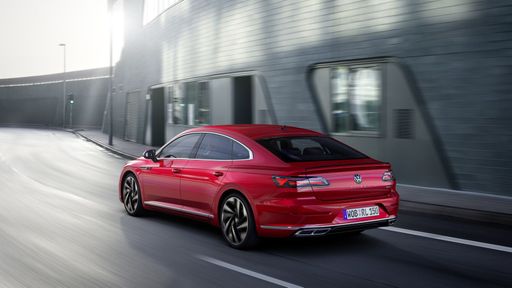
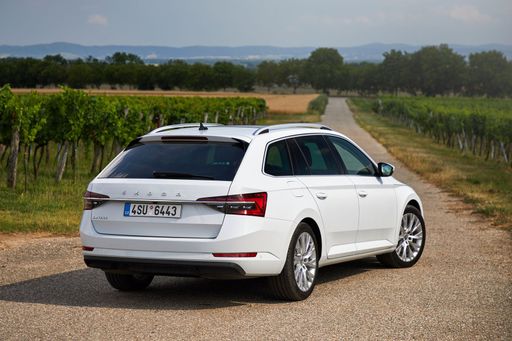
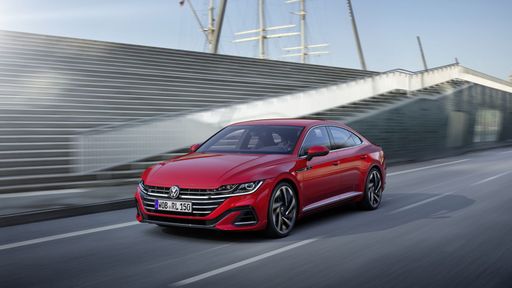
When it comes to aesthetics and size, both the Skoda Superb Combi and VW Arteon exude sophistication. The Superb Combi measures 4,902 mm in length, 1,849 mm in width, and stands at a height of up to 1,521 mm, offering a massive trunk capacity of 690 liters. The Arteon, on the other hand, measures slightly shorter at 4,866 mm, with a width of 1,871 mm and is less tall with a height range up to 1,451 mm, providing a trunk space of 590 liters.

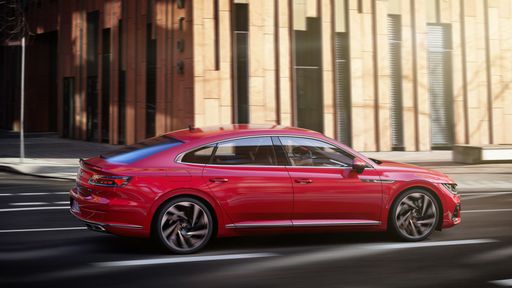
Both vehicles feature a sleek, modern design, yet the Superb Combi leans more towards practicality with its higher cargo capacity, while the Arteon’s focus dwells on sporting elegance with its streamlined silhouette.

Arteon

Engine Varieties and Performance

The Superb Combi and Arteon both offer diverse engine options to cater to various driving philosophies. The Superb Combi includes petrol, diesel, and even a plug-in hybrid version. Its power ranges from 150 HP to 265 HP, with a torque up to 400 Nm provided by a four-cylinder engine. Notably, the hybrid model shines with an electric range of 125 km, appealing to eco-conscious drivers.

Contrarily, the Arteon focuses on traditional diesel and petrol engines, with power outputs from 150 HP to a robust 320 HP. The top-tier option features a 4.9-second sprint from 0 to 100 km/h, a highlight for performance enthusiasts. Both models come exclusively with dual-clutch automatic transmissions, providing seamless gear shifts that enhance the driving experience.

Superb Combi

Driving Dynamics and Fuel Efficiency

Both wagons offer front-wheel and all-wheel drive, ensuring versatility across various driving conditions. The Superb Combi boasts fuel consumption ranging from an impressive 4.9 L/100 km for hybrid models to 7.9 L/100 km for the more powerful petrol variants. The Arteon, similarly, offers a range from 5.1 L/100 km to 8.6 L/100 km, depending on the engine choice.

The driving dynamics of both vehicles reflect their engineering pedigree, with the Superb Combi focusing on delivering a balanced blend of comfort and efficiency, whereas the Arteon places an emphasis on dynamic performance and agility.

Arteon

Technology and Safety

The 2024 iterations of both these models are loaded with the latest in-car technology. The Superb Combi garners attention with its tech-forward approach, integrating advanced driver-assistance systems (ADAS) and a suite of smart connectivity features that keep drivers engaged and passengers entertained.

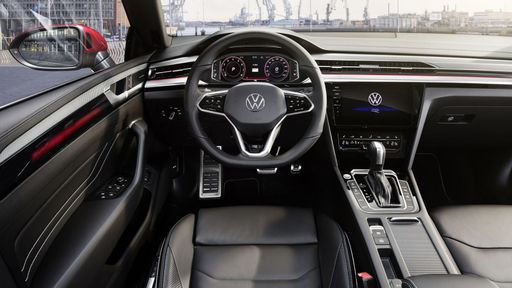
Meanwhile, the Arteon ups the ante with a cutting-edge infotainment system and numerous driver-assist functionalities, such as adaptive cruise control and lane-keeping assist, promising a safer, more connected journey.

Conclusion: Choosing the Right Wagon

In conclusion, the decision between the Skoda Superb Combi and VW Arteon will largely depend on what suits a buyer's lifestyle best. For those prioritizing space, efficiency, and hybrid technology, the Superb Combi presents an irresistible case. Meanwhile, the Arteon captures the hearts of those who lean towards a performance-oriented, stylish ride with modern technological enhancements.

In essence, both models exemplify fine craftsmanship and innovation, offering diverse driving elements tailored to different tastes and preferences, making them excellent contenders in the competitive wagon segment.

Here’s where it gets real: The technical differences in detail

Arteon

Costs and Efficiency:

Price and efficiency are key factors when choosing a car – and this is often where the real differences emerge.

Skoda Superb Combi is somewhat cheaper – starting at 36,100 £ , while the VW Arteon costs 43,300 £ . That’s a price difference of around 7,196 £.

Fuel consumption also shows a difference: the Skoda Superb Combi uses 1.2 L/100km and is considerably more efficient than the VW Arteon with 5.1 L/100km. The difference is about 3.9 L/100km.

Superb Combi

Engine and Performance:

Power, torque and acceleration are the classic benchmarks for car enthusiasts – and here, some clear differences start to show.

When it comes to engine power, the VW Arteon offers a bit more power – delivering 320 HP compared to 265 HP. That’s roughly 55 HP more horsepower.

When accelerating from 0 to 100 km/h, the VW Arteon is slightly quicker – completing the sprint in 4.9 s, while the Skoda Superb Combi takes 5.7 s. That’s about 0.8 s quicker.

Looking at top speed, the VW Arteon is only slightly faster – reaching 250 km/h, while the Skoda Superb Combi tops out at 232 km/h. The difference is around 18 km/h.

There’s also a difference in torque: the VW Arteon delivers very slightly more torque with 420 Nm compared to 400 Nm. That’s about 20 Nm more.

Arteon

Space and Everyday Use:

Cabin size, boot volume and payload all play a role in everyday practicality. Here, comfort and flexibility make the difference.

Both vehicles offer seating for 5 people.

In terms of curb weight, Skoda Superb Combi is very slightly lighter – 1,575 kg compared to 1,607 kg. The difference is around 32 kg.

Looking at boot space, the Skoda Superb Combi offers slightly more boot space – 690 L compared to 590 L. That’s a difference of about 100 L.

For maximum load capacity, the Skoda Superb Combi offers moderately more capacity – up to 1,920 L, about 288 L more than the VW Arteon.

When it comes to payload, the Skoda Superb Combi carries very slightly more – 584 kg compared to 569 kg. That’s a difference of about 15 kg.

Who wins the race in the data check?

The Skoda Superb Combi is decisively ahead in the objective data comparison.
This result only shows which model scores more points on paper – not which of the two cars feels right for you.

from £36,100
Superb Combi

Skoda Superb Combi

  • Engine Type : Petrol, Petrol MHEV, Diesel, Plugin Hybrid
  • Transmission : Automatic
  • Drive Type : Front-Wheel Drive, All-Wheel Drive
  • Power HP : 150 - 265 HP
  • Consumption L/100km : 1.2 - 7.8 L/100km
  • Electric Range : 128 - 137 km
VW Arteon
Skoda Superb Combi

Costs and Consumption

View detailed analysis

Engine and Performance

View detailed analysis

Dimensions and Body

View detailed analysis

VW Arteon

The VW Arteon cuts a fastback silhouette that manages to look more expensive than it is, with a cabin that feels calm, roomy and smartly finished. It blends relaxed long distance comfort with a touch of sporting poise, making it a clever choice for buyers who want grand touring polish without shouting for attention.

details

Skoda Superb Combi

The Skoda Superb Combi is the practical hero of the estate world, offering cavernous space and a calm, refined ride that makes family life feel effortless. Its clever features, understated design and no-nonsense value make it a smart pick for buyers who want Germanic engineering without the badge premium — and it even manages to stay surprisingly stylish while doing all the heavy lifting.

details
VW Arteon
Skoda Superb Combi

Costs and Consumption

Price
43,300 - 60,800 £
Price
36,100 - 52,300 £
Consumption L/100km
5.1 - 8.6 L/100km
Consumption L/100km
1.2 - 7.8 L/100km
Consumption kWh/100km
-
Consumption kWh/100km
-
Electric Range
-
Electric Range
128 - 137 km
Battery Capacity
-
Battery Capacity
-
co2
133 - 195 g/km
co2
28 - 178 g/km
Fuel tank capacity
66 L
Fuel tank capacity
66 L

Dimensions and Body

Body Type
Estate
Body Type
Estate
Seats
5
Seats
5
Doors
5
Doors
5
Curb weight
1,607 - 1,773 kg
Curb weight
1,575 - 1,853 kg
Trunk capacity
590 L
Trunk capacity
510 - 690 L
Length
4,866 mm
Length
4,902 mm
Width
1,871 mm
Width
1,849 mm
Height
1,434 - 1,451 mm
Height
1,482 mm
Max trunk capacity
1,632 L
Max trunk capacity
1,920 L
Payload
467 - 569 kg
Payload
497 - 584 kg

Engine and Performance

Engine Type
Diesel, Petrol
Engine Type
Petrol, Petrol MHEV, Diesel, Plugin Hybrid
Transmission
Automatic
Transmission
Automatic
Transmission Detail
Dual-Clutch Automatic
Transmission Detail
Dual-Clutch Automatic
Drive Type
Front-Wheel Drive, All-Wheel Drive
Drive Type
Front-Wheel Drive, All-Wheel Drive
Power HP
150 - 320 HP
Power HP
150 - 265 HP
Acceleration 0-100km/h
4.9 - 9.4 s
Acceleration 0-100km/h
5.7 - 9.3 s
Max Speed
216 - 250 km/h
Max Speed
232 km/h
Torque
320 - 420 Nm
Torque
250 - 400 Nm
Number of Cylinders
4
Number of Cylinders
4
Power kW
110 - 235 kW
Power kW
110 - 195 kW
Engine capacity
1,968 - 1,984 cm3
Engine capacity
1,498 - 1,984 cm3

General

Model Year
2024
Model Year
2,024 - 2,025
CO2 Efficiency Class
D, E, F, G
CO2 Efficiency Class
E, F, D, G, B
Brand
VW
Brand
Skoda
DriveDuel uses data analysis and artificial intelligence to evaluate vehicle data and create content. Content is regularly reviewed and improved. The displayed prices are estimates based on German list prices, adjusted to the respective country’s VAT. Country-specific registration taxes are not included. This information is not legally binding.